
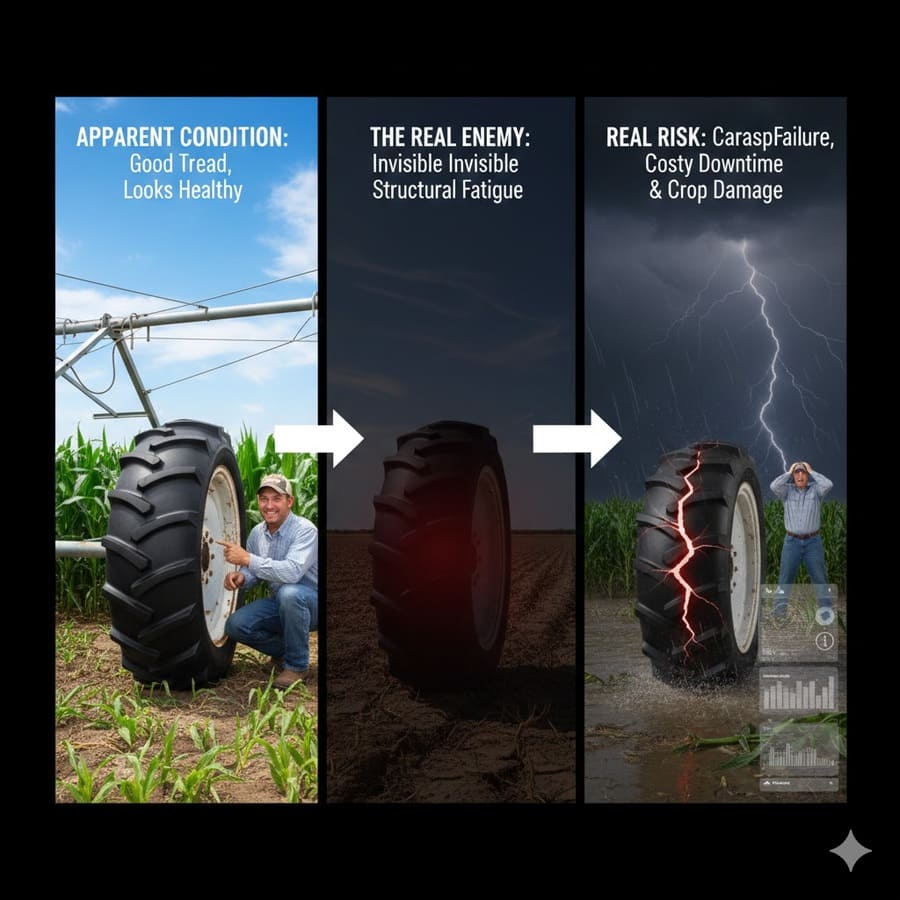
Your customer's irrigation tire looks great, with plenty of tread left. Yet it fails catastrophically during a critical growth stage, ruining their trust and your reputation. The real danger wasn't on the surface.
Tread wear only shows surface contact, but the real risk—structural fatigue1—develops invisibly within the tire's internal cords and rubber2 from constant pressure and bending. A good-looking tread can dangerously mask a tire that is on the verge of collapse.
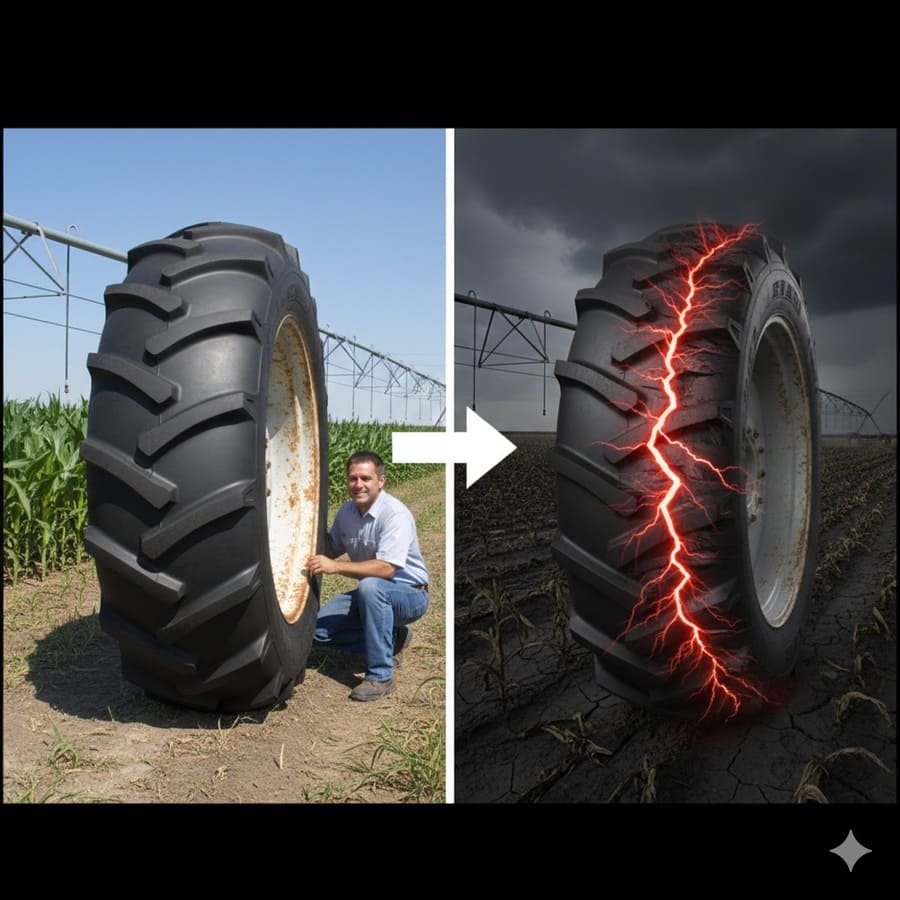
I've spent over a decade in the agricultural tire business, and one of the hardest lessons for my partners to learn is that an irrigation tire is not like a car tire. With car tires, we're all trained to look at the tread. But for a center pivot tire3, that's like judging a book by its cover. I remember a call from a frustrated dealer whose client had a blowout on a tire that looked nearly new. He couldn't understand it. That's when I explained that the real enemy of an irrigation tire isn't mileage; it's time and pressure4. Let's break down why you can't trust the tread.
Why Is Internal Fatigue the Real Enemy, Not Surface Wear?
You judge a tire by its tread depth, assuming it's healthy. But inside, its structure is quietly breaking down, leading to a sudden, unexpected, and costly failure in the field.
Surface wear is just abrasion from rolling. Internal fatigue is the progressive weakening of the tire's internal structure—the fabric plies and rubber compounds5—from constant flexing and load. This invisible damage is the true cause of most sudden irrigation tire failures.
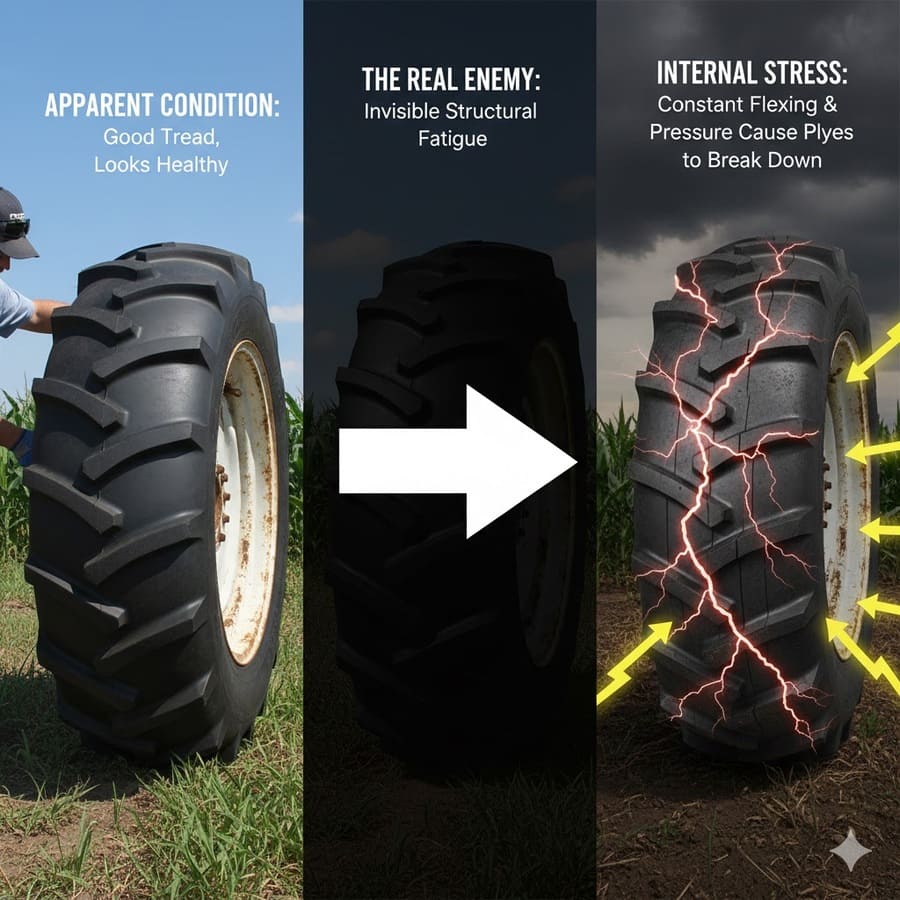
An irrigation tire lives a very different life from a tractor or truck tire. It doesn't travel far, but it's under constant stress6. Think of it like this: tread wear is like the paint on a bridge wearing off. It’s a cosmetic issue you can see. Internal fatigue, however, is like metal fatigue in the bridge’s support beams. It’s invisible from the outside but represents a catastrophic failure waiting to happen. The tire’s internal components—the rubber compounds and fabric cords—are designed to be flexible. But under the constant weight of a water-filled pivot, they are always in a state of deflection, or being squashed. This continuous bending and unbending, day after day, season after season, slowly breaks down their chemical bonds7 and physical structure. This is the fatigue that leads to sudden blowouts, even when the tread on the outside looks perfect.
How Does Constant Bending Secretly Destroy a Irrigation Tire?
The tire sits in the field, barely moving. It looks fine, so you assume it's under no stress. But this static load8 is silently doing more damage than high-speed driving ever could.
This constant bending, known as prolonged deflection9, relentlessly weakens the tire's internal integrity. Each fiber and rubber molecule is stretched and compressed, leading to microscopic cracks10 that grow over time until the entire structure fails from the inside out.
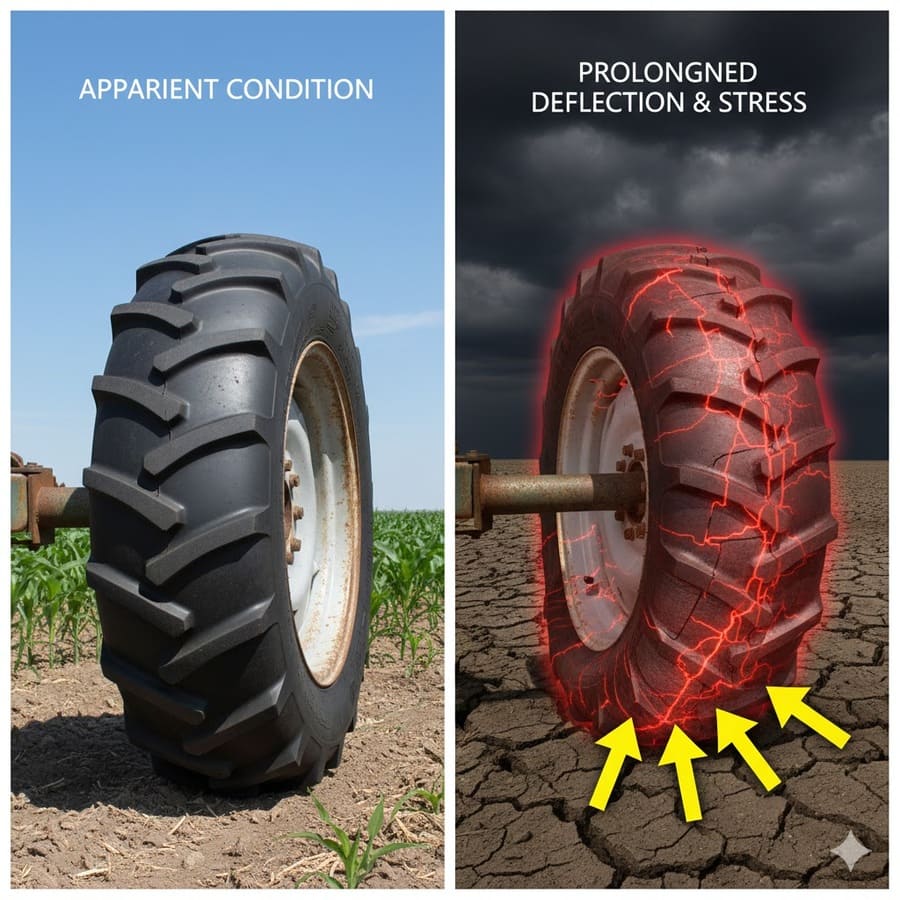
Imagine bending a paperclip back and forth. It doesn’t break on the first or second bend. It breaks after you’ve weakened the metal through repeated stress. A pivot tire experiences the exact same thing, just in slow motion. The bottom part of the tire is always compressed under the weight of the tower. As the pivot inches along, a new section of the irrigation tire rotates into that compressed position. This cycle of deflection and recovery happens thousands of times in a season. It generates internal heat and puts immense strain on the bonds between the rubber and the internal fabric plies. The damage starts on a microscopic level, completely invisible to the naked eye. But with every passing season, those tiny failures link up, creating a major weak point inside the tire wall. This is why a five-year-old tire with great tread can be far more dangerous than a two-year-old tire with visible wear.
Why Is Slow and Heavy Worse Than Fast and Light?
We associate irrigation tire damage with high speeds and rough roads. So why do slow-moving pivot tires fail so dramatically? It seems counterintuitive, but the physics are clear.
Fatigue is driven by the number of stress cycles and the duration of the load, not by surface speed. A pivot tire’s low-speed, high-load, long-duration work is the perfect recipe for accelerating internal fatigue11, making it more damaging than high-speed operation.
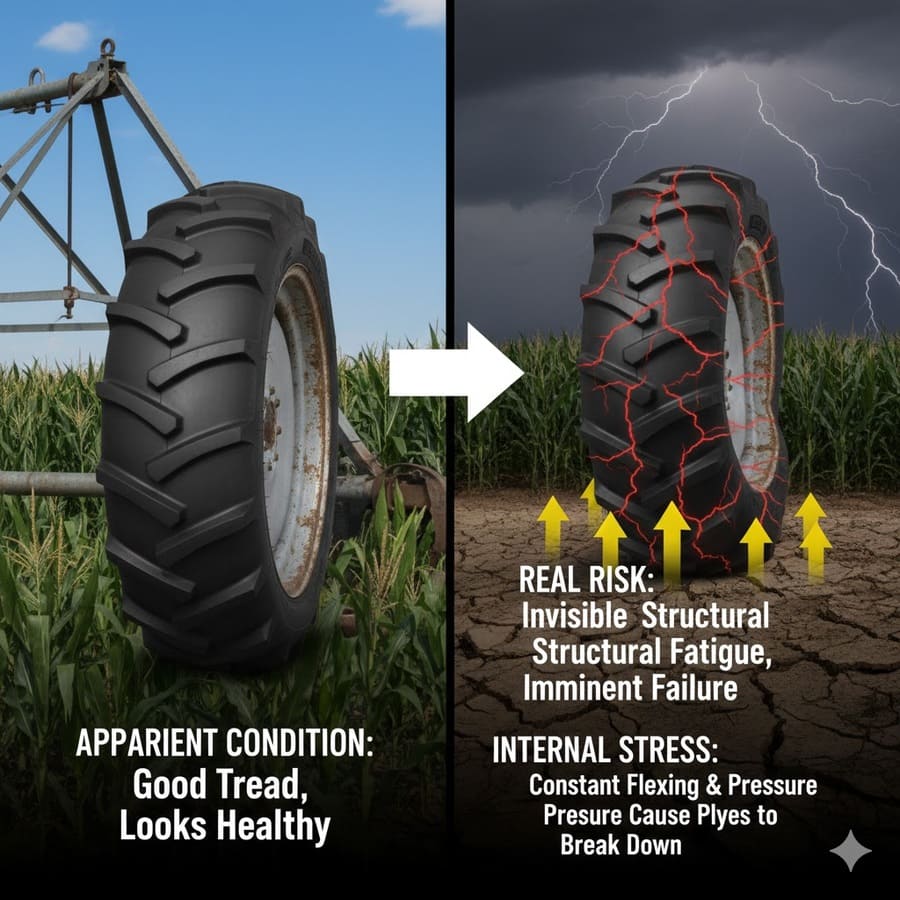
Let’s compare two scenarios. A truck tire on a highway gets hot and wears down, but its deflection cycle is very short. It hits the pavement and rebounds in a fraction of a second. An irrigation tire, however, sits under a heavy, static load8 for hours or days at a time. This prolonged stress gives heat more time to build up inside the tire's structure, which accelerates the breakdown of the rubber compounds. It's the difference between a quick punch and a constant, heavy push. The punch might sting, but the constant push is what breaks things.
Factors Driving Internal Fatigue in Irrigation Tires:
| Factor | Description | Impact |
|---|---|---|
| Static Load | The constant weight of the pivot tower. | Causes prolonged deflection9 and internal heat buildup. |
| Low Speed | The tire rotates very slowly, keeping one section under stress for longer. | Maximizes the duration of each stress cycle. |
| UV Exposure12 | Constant exposure to the sun. | Degrades the rubber compounds on the surface and deep within. |
| Inflation Pressure13 | Fluctuations from day/night temperatures. | Creates cycles of under- and over-inflation, stressing the casing. |
How Can a "Good-Looking" Irrigation Tire Be Your Biggest Liability?
A customer points to the deep tread on their tire and asks why you recommend replacing it. Selling them a new one feels wrong, but you know the hidden risk is real.
A good-looking exterior creates a false sense of security14. This appearance delays the decision to replace the tire, allowing invisible internal damage to grow until it's out of control. When it finally fails, the damage and loss of trust are much greater.
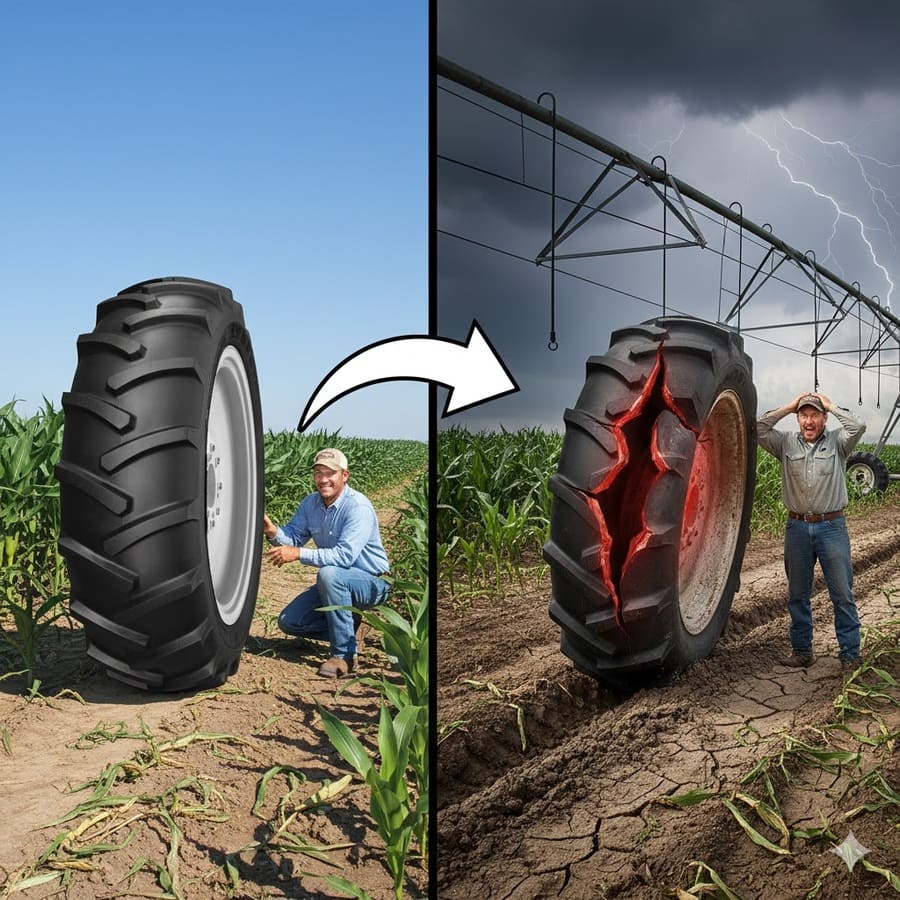
This is the most dangerous trap in managing irrigation tires. As a dealer, your credibility is on the line. When you look at a tire with 80% of its tread left, it feels impossible to justify a replacement. The farmer sees a perfectly good tire; you see a potential liability. The problem is that by the time you can see external signs of structural failure—like a bulge or a crack—the tire is already far past the point of being safe. Relying on tread wear as your guide means you will always be one step behind the risk. The most successful dealers I work with have shifted their mindset. They educate their customers about the five-to-seven-year service life15 of a pivot tire, regardless of appearance. They explain that it’s not about wear; it’s about age, sun exposure16, and the number of seasons it has endured under load.
Conclusion
Stop judging irrigation tires by their tread. The real danger is the invisible structural fatigue1 building up inside. Proactive replacement based on age and service life is the only way to prevent costly failures.
Understanding structural fatigue helps prevent unexpected tire failures, ensuring reliability and safety in agricultural operations. ↩
Exploring the role of internal cords and rubber reveals why tires may fail despite appearing in good condition externally. ↩
Learning about center pivot tires helps in making informed decisions about tire maintenance and replacement. ↩
Understanding the impact of time and pressure on tires can prevent catastrophic failures and improve tire management. ↩
Exploring these components helps in understanding the hidden risks in tire structure and preventing failures. ↩
Understanding constant stress on tires aids in recognizing potential risks and implementing preventive measures. ↩
Learning about chemical bond degradation helps in assessing tire lifespan and scheduling replacements. ↩
Understanding static load effects helps in managing tire stress and extending tire life. ↩
Understanding prolonged deflection helps in identifying hidden damage and preventing tire blowouts. ↩
Knowing about microscopic cracks aids in early detection of tire issues, preventing costly failures. ↩
Knowing how internal fatigue causes tire failure can guide proactive maintenance and replacement strategies. ↩
Exploring UV exposure effects helps in protecting tires from environmental damage and prolonging their lifespan. ↩
Understanding inflation pressure fluctuations aids in maintaining tire integrity and preventing failures. ↩
Recognizing the risks of relying on appearance helps in making informed tire replacement decisions. ↩
Knowing the recommended service life helps in planning timely replacements and avoiding unexpected failures. ↩
Understanding sun exposure effects aids in protecting tires and extending their service life. ↩