
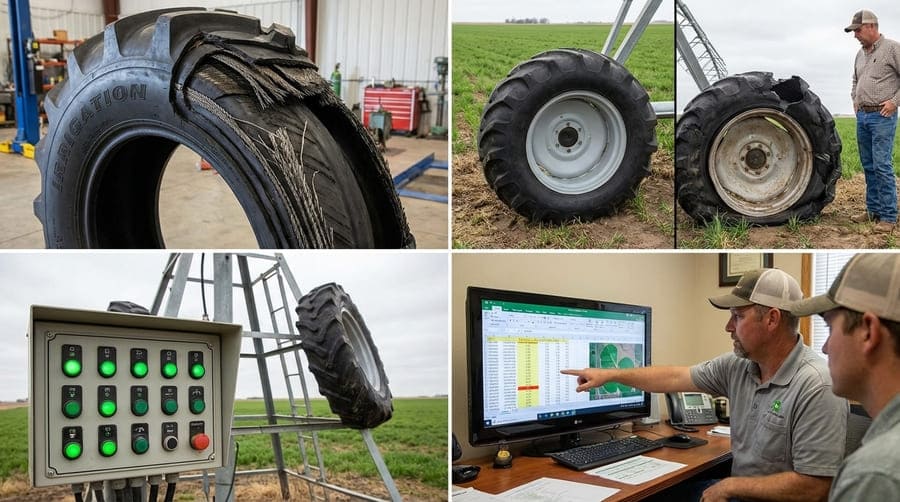
You trust your eyes to spot problems with your pivot tires. But the most dangerous failures build up silently, giving no warning before a catastrophic blowout during peak season.
Irrigation tire risk stays silent1 because the critical damage—internal structural fatigue2—is invisible. Without real-time system feedback3, this hidden damage accumulates until a sudden failure occurs, often long after the ideal time for intervention has passed, making visual checks4 an unreliable safety net.
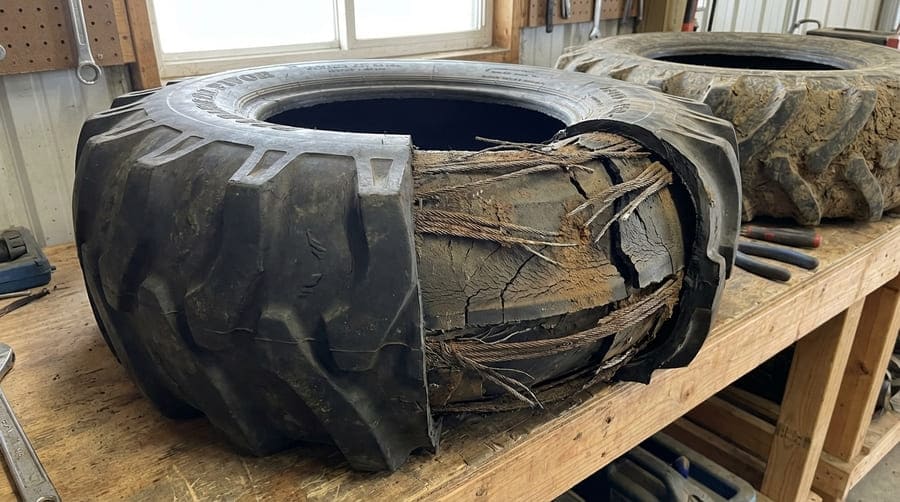
I remember talking to a frustrated farm manager who had just lost a pivot span. "I don't get it," he said. "I walked that line myself just yesterday. The tires looked fine. A little worn, maybe, but nothing alarming." He felt betrayed by his own experience. He was looking for a signal, a warning sign that he could see and react to. But the tire didn't give him one. The failure came from the inside out, a silent buildup of stress and fatigue that gave no outward clue until the structure finally gave way. His story is a powerful reminder that with irrigation tires, what you can't see is what can hurt you the most.
Why Do Tires Look Fine One Day and Fail the Next?
You check your irrigation tires, see decent tread, and assume you're safe. Then, a tire fails catastrophically without any obvious warning, leaving you confused and facing costly downtime.
Tires fail suddenly because the fatal damage is internal and invisible5. Microscopic tears in the rubber and steel belts accumulate silently from flexing and heat. By the time a bulge or crack appears on the outside, the internal structure is already critically compromised.
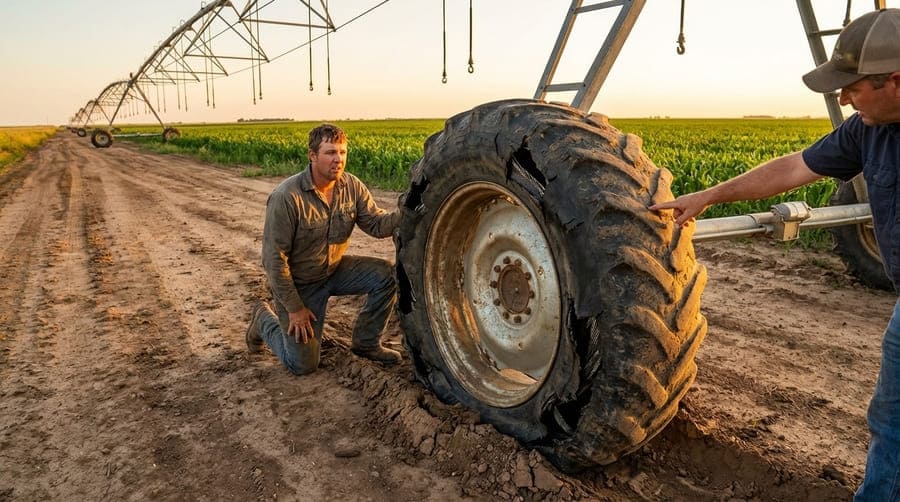
Think of it like metal fatigue in an airplane wing6. The material weakens over thousands of cycles, but you can't see the microscopic cracks growing inside. An irrigation tire endures the same process. Every revolution, every bump, and every hot day contributes to the breakdown of its internal structure—the plies, belts, and rubber compounds. This damage is cumulative. For most of the tire's life, these changes are harmless. But they reach a tipping point where the tire's integrity is fundamentally weakened. The visible signs we look for, like a bulge or a deep sidewall crack, are not early warnings. They are the final, desperate signals that the internal battle has already been lost. The optimal window for a safe, planned replacement closed long before that bulge ever appeared.
The Stages of a Silent Failure
| Stage | Internal State (Invisible) | External Appearance (Visible) |
|---|---|---|
| Early Life | Strong, flexible structure. No significant fatigue. | Looks new. Good tread depth. |
| Mid-Life | Micro-cracks begin to form in rubber and cords. Fatigue starts to accumulate. | Looks good. Normal tread wear. |
| Risk Window | Internal damage accelerates. Structural integrity is significantly reduced. | Still looks okay. Tread may be worn but appears serviceable. This is the silent danger zone7. |
| Imminent Failure | Widespread internal separation and breakdown. | A bulge, deep crack, or deformation may finally appear. It's already too late. |
If the System Isn't Alarming, Isn't It Safe?
Your pivot is running, the water is flowing, and no alarms are sounding. This quiet operation feels like a sign that everything is fine. But this silence is misleading.
An irrigation system’s silence doesn't mean safety; it means there's no feedback. Unlike an engine that overheats and triggers a light, a tire under growing stress sends no signal to the control panel. The risk remains in a prolonged “silent” state.
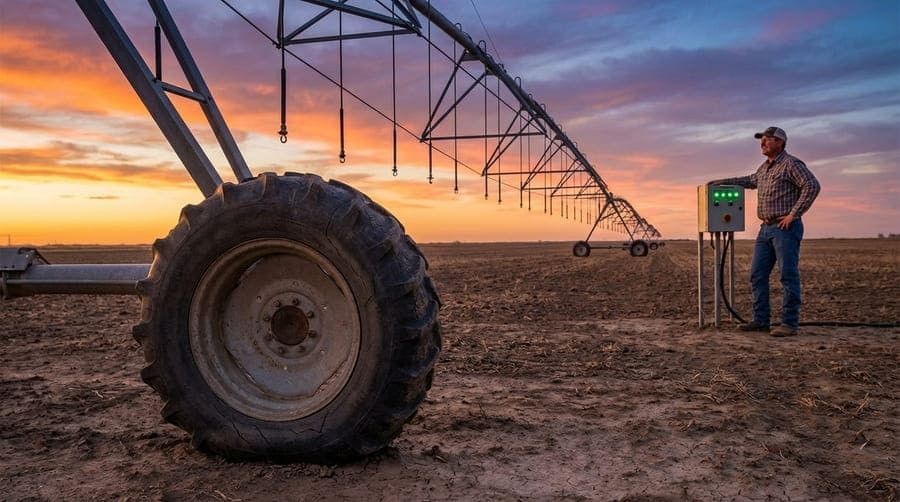
We are conditioned to manage by exception. If the system isn't telling us there's a problem, we assume there isn't one. The issue is that irrigation pivots are mechanically simple systems designed to move and spray water, not to monitor the health of their own components. There are no sensors measuring the internal temperature of a tire or the strain on its casing. The system is blind to the accelerating risk. It will continue to operate normally—pushing that tire through another revolution, forcing it to carry the load—right up to the second it fails. The absence of an alarm bell8 creates a false sense of security, encouraging a "run-to-failure" mindset. We wait for a signal that will never come, while the silent risk builds with every hour of operation.
How Can You Manage a Risk You Can't See?
You understand the risk is silent, but what can you do about it? Managing an invisible problem feels like guesswork, and replacing irrigation tires that look okay seems wasteful.
The real management challenge is not fixing visible problems, but making smart decisions without clear signals. This requires shifting from reactive repair to proactive risk management9 based on operational data, not just visual inspection.

Managing silent risk is about acting under uncertainty. Since you can't see the internal fatigue, you have to use other data points as proxies for risk. Instead of relying on your eyes, you rely on a system. This means tracking key metrics that correlate with a irrigation tire's journey into the risk window.
Key Metrics for Proactive Management
- Operating Hours: This is the most critical metric. Just like an engine, a tire has a finite operational life. Set a maximum hour limit based on your conditions and replace tires when they hit it.
- Tire Age10: Rubber degrades over time due to UV and ozone exposure, even with low use. An old, low-hour tire can be riskier than a newer, higher-hour one. A 7-year age limit is a common best practice.
- Position on Pivot11: Outer towers travel much farther and faster than inner towers. Tires on these spans experience more stress and wear. They should have a more aggressive replacement schedule.
By establishing these rules, you are no longer guessing. You are creating a disciplined framework that systematically removes high-risk tires from your operation before they can fail. It’s a deliberate strategy to trade a small, planned cost for the certainty of avoiding a large, unplanned catastrophe.
Conclusion
The silence of irrigation tire risk is its greatest threat. By managing with data instead of waiting for visible signs, you can take control and prevent catastrophic failures before they happen.
Understanding the silent risks can help you prevent catastrophic failures in your irrigation system. ↩
Learn about the hidden dangers of internal structural fatigue and how it affects tire performance. ↩
Explore how real-time feedback can enhance safety and prevent tire failures. ↩
Discover why relying solely on visual checks can be misleading and unsafe. ↩
Uncover the hidden threats of internal tire damage that can lead to sudden failures. ↩
Understand the parallels between metal fatigue in aircraft and tire wear to better manage risks. ↩
Identify the critical risk periods for tires to prevent unexpected failures. ↩
Learn how the lack of warning signals can lead to dangerous tire failures. ↩
Discover strategies for proactive risk management to enhance tire safety. ↩
Learn why tire age is a critical factor in maintaining safety and performance. ↩
Explore how the position of tires on a pivot influences their lifespan and replacement needs. ↩