
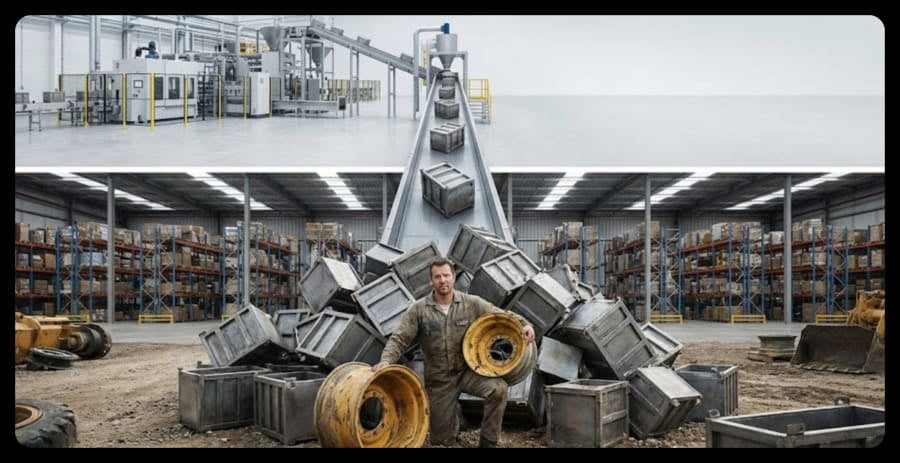
You get the angry call. A OTR rim you sold has cracked, and your customer’s machine is down. You call the manufacturer, who provides a certificate showing the otr rim met all specs. Now you're stuck.
Dealers end up explaining OTR rim failures1 because they are the final link in a supply chain2 that systematically pushes risk downstream. Manufacturers certify compliance, assume "standard" usage, and unknowingly pass the responsibility for real-world performance issues3 onto the dealer who faces the customer directly.
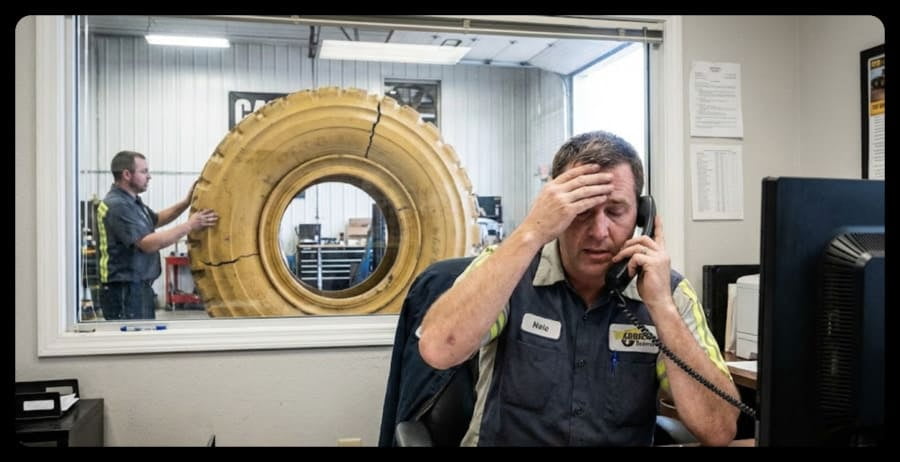
After more than a decade in this business, I've been on both ends of that stressful phone call. I've seen dealers feel betrayed and manufacturers feel unfairly blamed. The truth is, it's rarely one person's fault. It’s a systemic issue baked into the process of how OTR rims are made, certified, and sold. The responsibility for failure doesn't just appear out of nowhere; it follows a predictable path down the supply chain2, and it always stops at the person who made the final handshake with the buyer. Let’s follow that path.
How Can a 'Certified' Rim Still Be a High-Risk Product?
You ordered a rim with all the right certifications, like ISO 90014. This seal of approval should mean it's a safe bet. Yet, it failed, leaving you to question what that certificate is really worth.
Certification guarantees that a otr rim was manufactured according to a consistent, documented process. It does not, and cannot, guarantee the rim will survive the specific, often brutal, dynamic forces5 of your customer's unique application. It's a certificate of compliance, not invincibility.
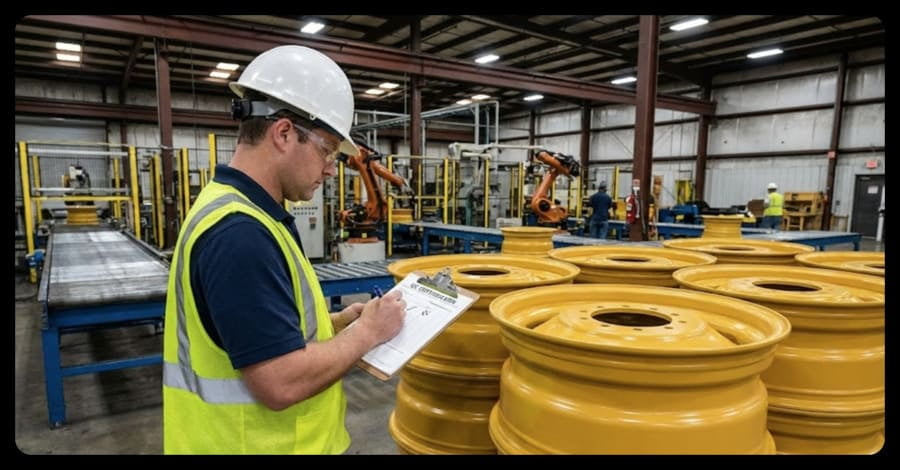
When we say our products are ISO 90014 certified, what we mean is that our process—from raw material inspection to final testing—is repeatable and meets a global standard for quality management. It proves we do what we say we do. But the standard has no idea if that rim is going on a loader in a hot salt mine or a grader on a perfectly flat highway. The manufacturer’s job is to build the otr rim to the blueprint. They test it to ensure it meets those design specs. The risk begins here because there's a huge gap between meeting a blueprint and meeting reality.
The Limits of a Certificate
A certificate is a starting point, not a finish line. It tells you what the manufacturer did, not what the rim will do.
- What Certification Confirms:
- The factory has a quality management system.
- The product was made according to its stated design.
- Processes are documented and consistent.
- What Certification Does Not Confirm:
- Suitability for a specific machine's duty cycle.
- Resistance to unique environmental factors6 (e.g., corrosion, extreme temperatures).
- Durability under overloading7 or unusual side-loading conditions.
In short, the manufacturer ensures the otr rim is compliant. The risk of what happens in the field is now ready to be passed to the next person in the chain.
Why Do Manufacturers Assume "Standard" Use for OTR Rims?
The spec sheet gives a load rating, which seems straightforward. But it's based on ideal conditions. It feels like the manufacturer is ignoring how these machines actually work in the real world.
Manufacturers assume "reasonable" or "standard" use because it's impossible to design a single product for every possible extreme application. This assumption creates a baseline for design and warranty, but it also silently transfers responsibility for any failure outside that narrow definition to the user.
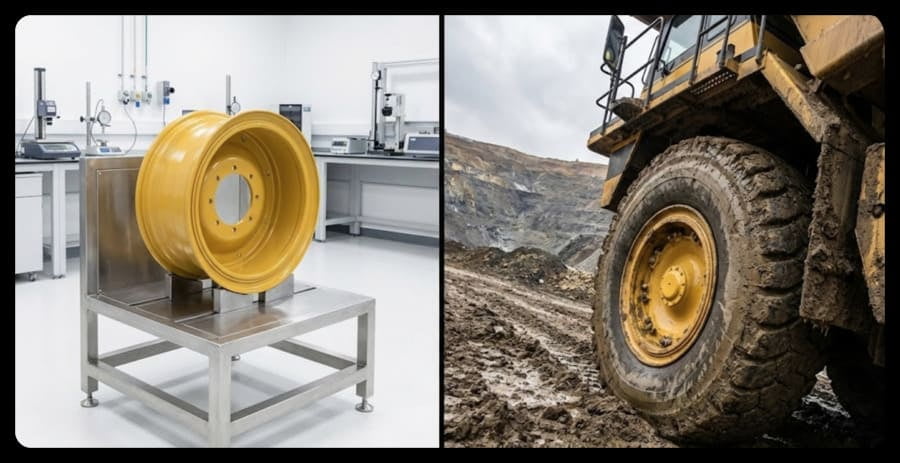
As a manufacturer myself, I can tell you this isn't done maliciously. It’s a practical necessity. When an engineer designs a rim, they use a set of standard parameters for load, speed, and terrain. They have to. They can't possibly account for the operator who consistently overloads their truck by 20% or the unique side-slope pressure of a specific worksite. So, they design for the 80% of "normal" applications. The problem is, many OTR machines live in the other 20%. The "assumption of reasonable use" is written into the DNA of the product. When a rim used in that tough 20% fails, the manufacturer can rightly say it was used outside its intended parameters. The risk has now moved further downstream.
The Responsibility Shift in Action
This shift isn't documented on any invoice. It's an unspoken transfer of risk.
| Stage | Action/Assumption | Who Holds the Risk? |
|---|---|---|
| Design | The otr rim is designed for a standard load and application. | The Manufacturer (for design compliance8). |
| Sale | The otr rim is sold as a part that "fits" the machine. | Risk is transferred. |
| Application | The rim is used in a real-world, non-standard environment. | The Dealer & End-User. |
| Failure | The rim cracks due to stresses the design didn't account for. | The Dealer (to explain it to the user). |
Why Do Dealers Become the Last Line of Defense for OTR Rim Failures?
The manufacturer proved the rim met spec. The customer proved it broke. You, the dealer, are caught in the middle with nowhere else to turn. It feels like the buck stops with you.
Dealers become the final buffer because they are the endpoint of the risk-transfer process. All the upstream assumptions and compliance checks culminate at the point of sale, leaving the dealer to absorb the financial and reputational impact9 when a real-world application exposes a design's limitations.
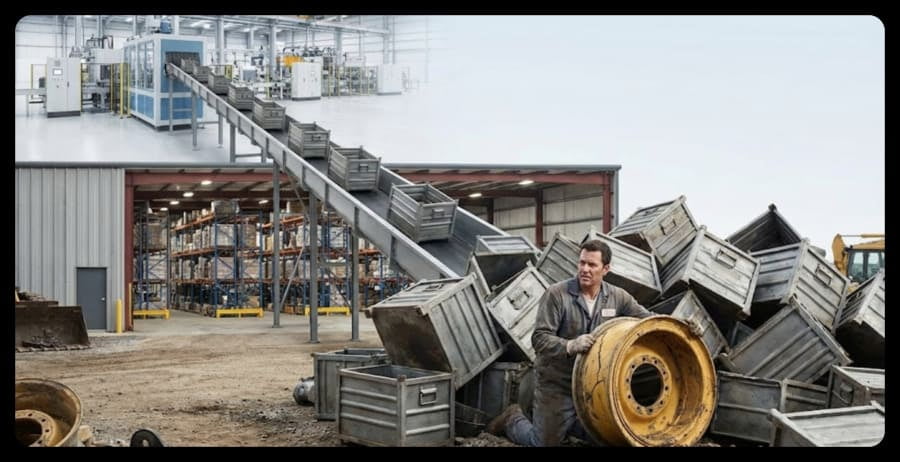
This isn't a conspiracy; it's a natural outcome of the supply chain2's structure. Think about it: the manufacturer is shielded by their certifications and design parameters. The distributor is often just moving boxes. They aren't on site, they don't know the customer's specific operation. You are. You are the one who looked the customer in the eye. Therefore, you hold the relationship. When the rim fails, the customer doesn't call the anonymous factory overseas; they call you. You have become the physical embodiment of the product's promise. And when that promise is broken, you are the one left to manage the consequences. The process is designed this way. Responsibility follows the product and stops at the person closest to the problem.
You Are Not a Reseller; You Are a Risk Manager
Your role is far more critical than just selling parts.
- Understanding the Gap: Your true value is understanding the gap between the manufacturer's product and the customer's reality.
- Asking the Right Questions: You must act as the application engineer10, asking about load, terrain, and usage to qualify the sale.
- Partnering Upstream: This is why it's vital to partner with a supplier like us, who understands this dynamic and works with you to provide customized solutions11, not just standard parts.
Conclusion
OTR Rim failures are explained by dealers because the industry process funnels risk down to them. To break this cycle, dealers must partner with manufacturers who engineer for application, not just compliance.
Understanding the causes of OTR rim failures can help you prevent future issues and improve customer satisfaction. ↩
Understanding the supply chain can help you identify where risks are transferred and how to manage them. ↩
Explore the challenges manufacturers face in ensuring products perform well in diverse conditions. ↩
Explore the significance of ISO 9001 certification to understand its impact on product quality and compliance. ↩
Discover how dynamic forces can impact the performance of OTR rims in real-world applications. ↩
Learn about environmental factors that can impact the durability and performance of OTR rims. ↩
Understanding the effects of overloading can help you make informed decisions about rim usage. ↩
Understanding design compliance can help you assess product quality and reliability. ↩
Learn about the consequences of product failures and how to mitigate their effects on your business. ↩
Learn how application engineers contribute to product success by aligning specifications with real-world needs. ↩
Explore the benefits of customized solutions over standard parts for better product performance. ↩