
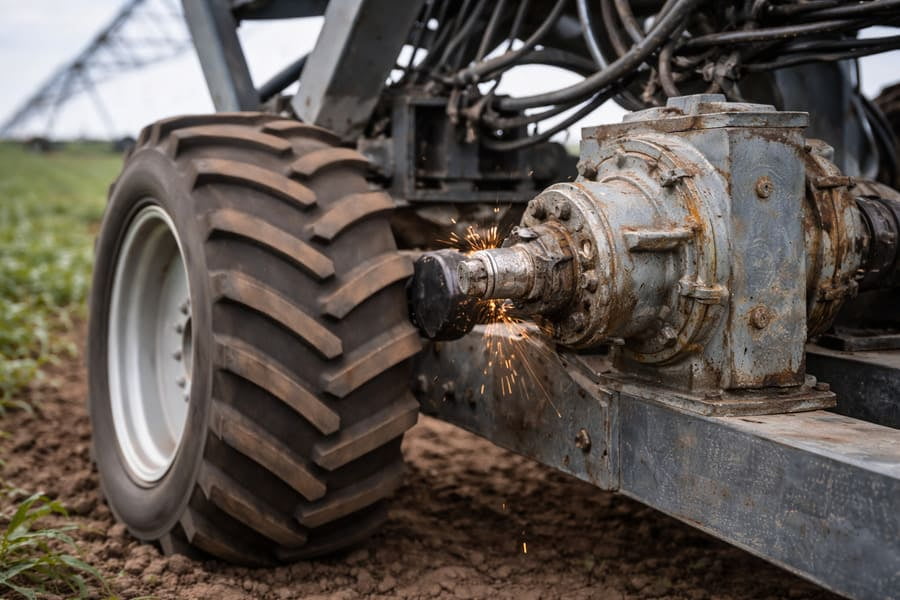
Worried about pivot tire blowouts1 during peak season? The real danger is the silent failure2 you don't see, the kind that quietly costs you trust and money.
Most irrigation tire failures are not dramatic blowouts. They are subtle structural degradations3 like carcass fatigue4 and bead instability5. These "soft failures" happen long before a tire pops, creating operational risks6 that are far more insidious than a simple puncture.
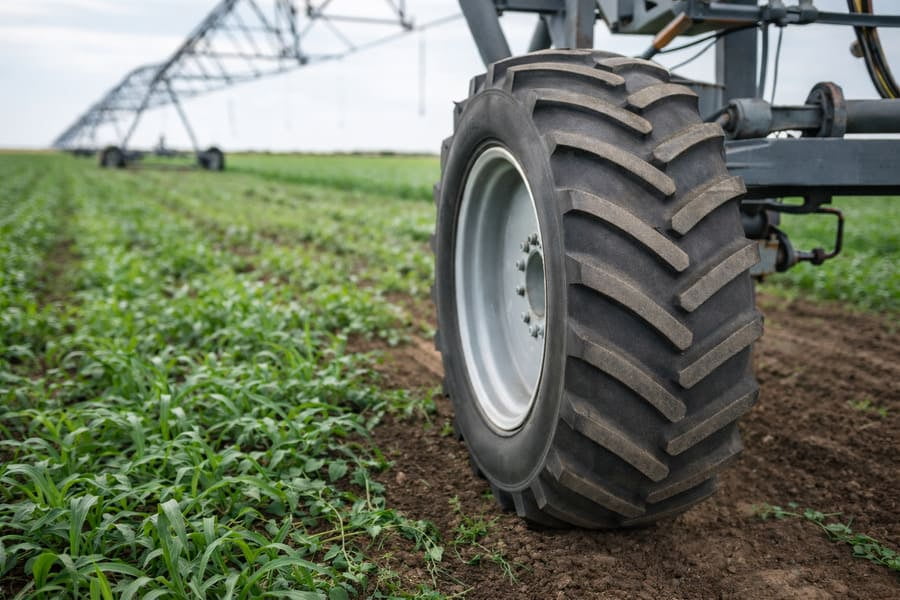
I remember walking a field with a dealer in Nebraska who was furious. Not because a irrigation tire had blown out, but because it hadn't. One of his customer's pivots was vibrating so badly that the farmer refused to run it. The irrigation tire looked fine—no holes, no deep cuts—but it had lost its structural integrity7. The dealer said, "I can't claim this on warranty, but I have to replace it for free to keep my customer." That day, I truly understood that the most expensive failures are the ones that don't leave a mark but destroy confidence completely.
If It's Still Turning, Isn't the Irrigation Tire Still Working?
Your pivot is still moving, so the irrigation tire must be fine, right? This assumption ignores the invisible line between just functioning and actually being safe, putting your entire system at risk.
A rotating irrigation tire is not necessarily a safe irrigation tire. "Still rotating" is just the minimum functional threshold. It doesn't signal structural integrity7 or reserve capacity, meaning the tire could be operating on the absolute edge of catastrophic failure8.
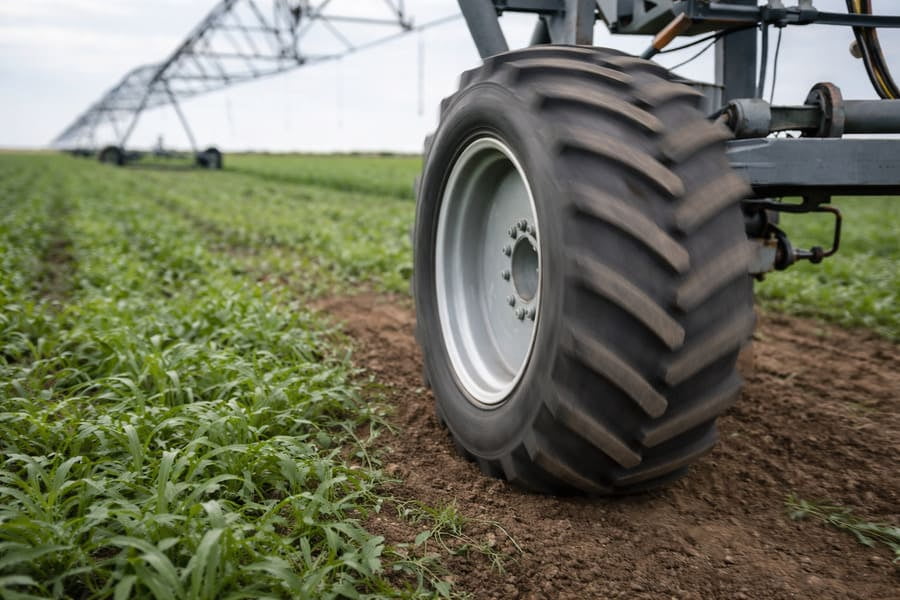
A tire's job is not just to rotate; it's to provide a stable foundation. Thinking a tire is fine just because it's turning is like thinking a building with cracked foundations is safe because it hasn't collapsed yet. The tire may be performing its most basic function, but it may have zero safety margin left. It has lost its ability to absorb any extra stress, like hitting a small rut or dealing with a slight shift in the pivot's weight. It’s in a state of silent crisis. This is where the real danger lies. The tire is no longer a reliable component but a ticking time bomb, and the final "event" that causes the collapse will be minor, masking the true cause which was the complete erosion of its internal strength.
Why Does a Moment of Hesitation Signal an Impending Failure?
The pivot seems to shudder or pause for just a second. You might dismiss it as a fluke. But that hesitation is a critical warning9 you can't afford to ignore.
That slight hesitation or wobble is a direct signal of instability. The system has sensed a loss of control. The irrigation tire is no longer providing consistent support, forcing the pivot's drivetrain to compensate, which introduces massive stress on the entire structure.
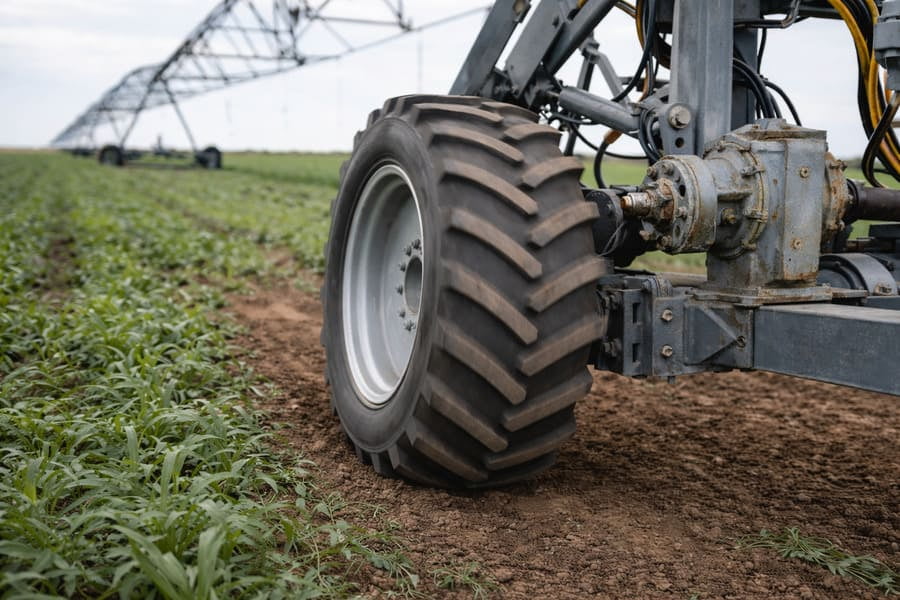
A pivot irrigation system is engineered for smooth, continuous motion. It's a balanced, interconnected machine. The moment one tire develops instability—from internal fatigue or bead issues—it breaks that harmony.
Reading the Language of the Machine
That wobble you see isn't just a irrigation tire problem; it's a system-wide alert. Here's what's happening:
- Loss of Foundation: The unstable tire is like a wobbly leg on a table. It can no longer provide consistent support.
- Drivetrain Shock: The gearbox and drive shaft now have to work harder, pushing and pulling against an unpredictable load. This accelerates wear and can lead to expensive mechanical failures.
- Frame Stress: The vibration travels up the tower, stressing welds and joints that were never designed to handle that kind of motion.
When you see that hesitation, the tire has already failed in its primary role. It has transformed from a supportive component into a source of destructive energy for the entire pivot.
Is Your Decision to Keep Running Based on Judgment or Just Luck?
You see the wobble, but the crop needs water. You decide to keep the pivot running, hoping it will hold on. This common decision is rarely based on sound judgment.
Deciding to continue operating a compromised pivot is a gamble, not a calculated risk. It's driven by hope and luck, and luck has never been a reliable engineering or farming strategy.
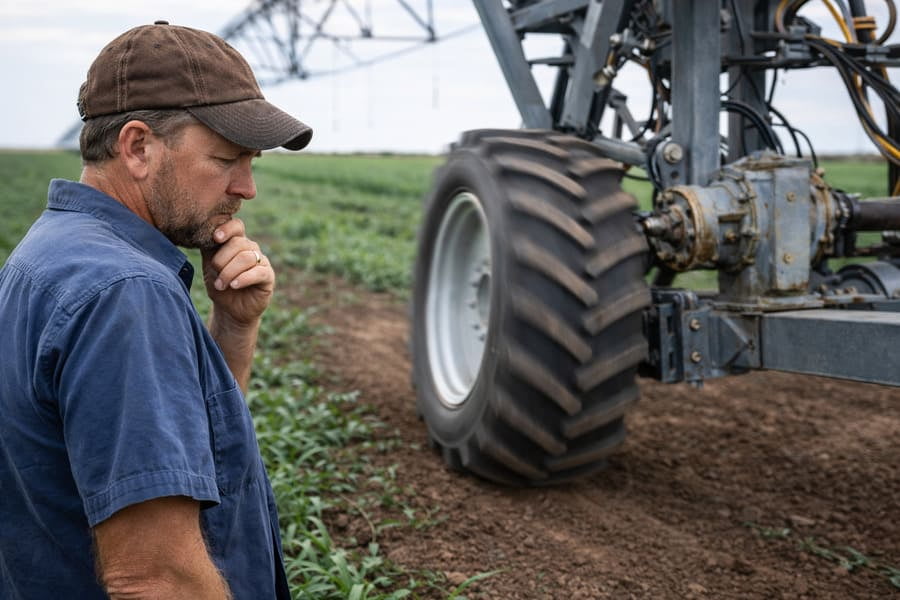
Let’s be honest about the thought process here. When a farmer or manager decides to keep a wobbly pivot running, they aren't making an engineering assessment. They can't possibly know how much structural margin is left in that irrigation tire or in the pivot's drivetrain. They are simply hoping for the best. They are weighing the immediate, certain cost of shutting down against the uncertain, potential cost of a catastrophic failure8. This is a bet against physics, and it's a bet that, sooner or later, will be lost. True risk management10 isn't about hoping a problem goes away; it's about addressing it at the first sign. A tire that creates this dilemma is a liability, regardless of whether it has officially "failed" yet.
| Decision Driver | Description | Outcome |
|---|---|---|
| Judgment | Based on data and clear safety margins. Uses reliable components to eliminate doubt. | Predictable, safe operation. |
| Luck | Based on hope and ignoring warning signs. Uses components of unknown reliability. | Unpredictable, high risk of failure. |
Conclusion
The most dangerous irrigation tire failures are the silent ones. They don't end in a blowout; they end in a loss of trust, forcing you to replace a tire that still holds air.
Understanding the causes of pivot tire blowouts can help you prevent costly failures and maintain operational efficiency. ↩
Understanding silent failures can help you identify hidden risks in your tire management strategy. ↩
Learn about structural degradations to better assess tire health and avoid unexpected failures. ↩
Explore the concept of carcass fatigue to understand how it affects tire performance and longevity. ↩
Discover how bead instability can lead to tire failure and what you can do to mitigate risks. ↩
Learn about operational risks to enhance your decision-making and improve system reliability. ↩
Assessing structural integrity is crucial for ensuring tire safety and preventing failures. ↩
Understanding the factors that lead to catastrophic failure can help you implement preventive measures. ↩
Identifying critical warnings can help you take proactive measures to avoid tire-related issues. ↩
Explore risk management strategies to enhance safety and reliability in your irrigation operations. ↩