
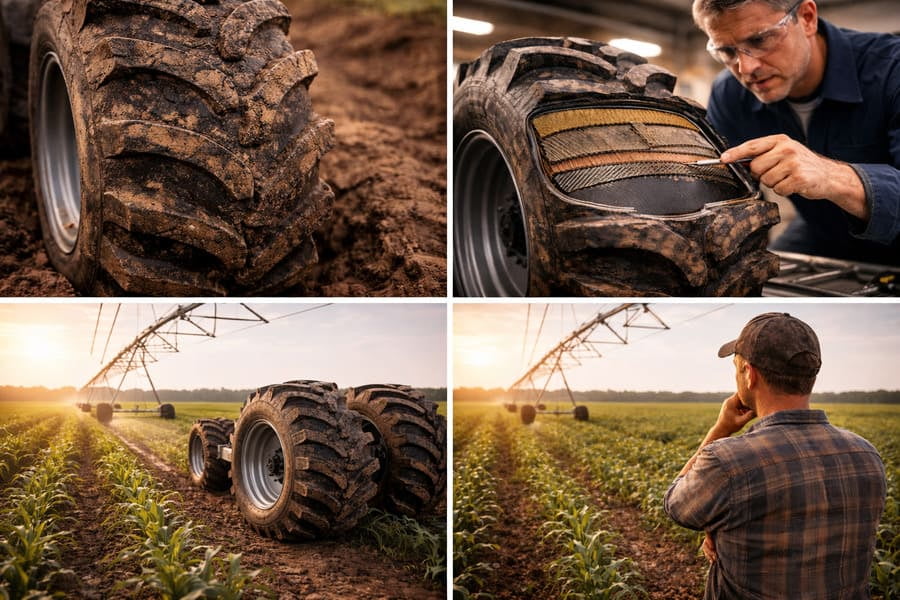
A pivot tire fails, and you blame the rut it just crossed. But the real cause has been building for months, silently, ensuring the next failure is just around the corner.
Irrigation tire failures1 are rarely caused by a single event. Instead, they are the result of cumulative, time-triggered fatigue2. Internal stress builds invisibly under constant load until it reaches a breaking point that appears sudden, but was inevitable.
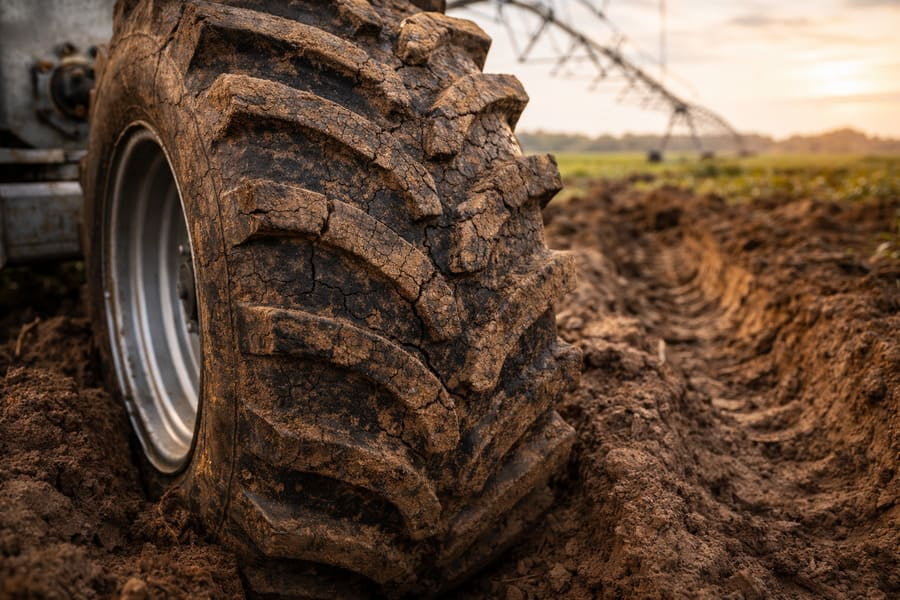
For years, I thought like everyone else. A irrigation tire blew? It must have hit something sharp. A sidewall gave out? It must have been a bad rut. It took a long, humbling conversation with one of our lead engineers for me to see the truth. We were all looking at the wrong culprit. The final event was just the straw that broke the camel's back. The real enemy wasn't an incident; it was the clock. Understanding this changes everything about how you select and manage your tires.
How Can a Irrigation Tire Look Fine One Day and Fail the Next?
You inspect your irrigation tires, and they look solid. The next week, there's a catastrophic failure3. This sudden change makes no sense if you think damage is linear, but it’s not.
Damage in irrigation tires remains largely invisible until the system approaches its fatigue threshold4. The tire’s low-speed operation5 masks the continuous internal strain, making the final failure seem abrupt and unexpected.
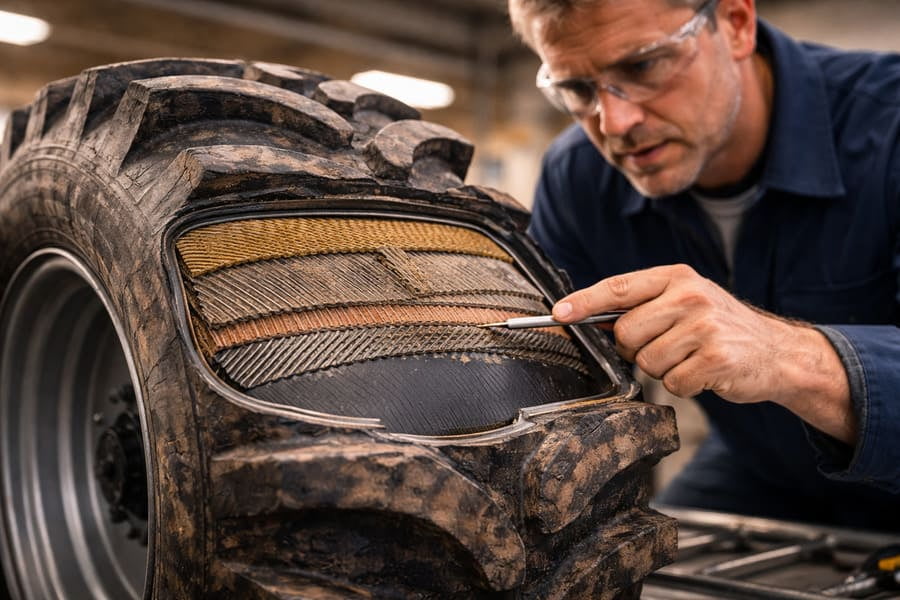
Think of bending a paperclip back and forth. For the first ten bends, it looks fine. On the eleventh, it suddenly snaps. Did the eleventh bend cause the failure? No, the cumulative stress of all eleven bends caused it. An irrigation tire is the same. It operates at low speeds, so it doesn't get hot or vibrate violently, which are the usual signs of stress we look for. But internally, the story is different. The cords and rubber are under constant tensile strain from the weight of the pivot. This continuous load is like that first bend of the paperclip, and every hour of operation is another bend. The damage is microscopic and accumulates deep inside the tire's structure, completely hidden from visual inspection. It's only when the material's fatigue limit is finally reached that the failure surfaces, appearing to come from nowhere.
Does a Stable Irrigation Tire Mean a Strong Tire?
Your pivot is running smoothly, and the tires look stable under load. This feels like a sign of strength and reliability6, but it can be a dangerously misleading observation.
Early-season stability only means the tire’s structural limit7 hasn’t been reached yet. It does not indicate that the tire has any meaningful reserve capacity8 or structural margin to handle future stress.
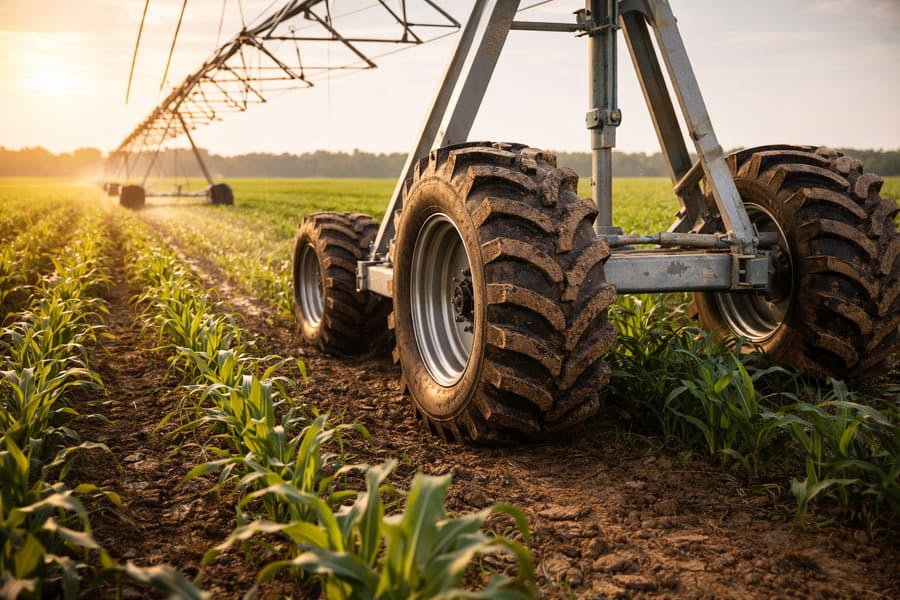
I once presented a irrigation tire to a dealer who was very focused on how it looked on the rim right after installation. "It looks solid," he said. My younger self would have taken that as a win. Now I know better. That initial stability is just the starting point, "Time Zero." It tells you nothing about how the tire will behave after 500 or 1,000 hours of operation. The tire’s internal structure has a fixed capacity for fatigue. Every hour of sunlight, every rotation under load, and every change in temperature consumes a small piece of that capacity. A irrigation tire might look perfectly stable for 90% of its fatigue life9, giving you a false sense of security. But in that last 10%, it's running on fumes with almost no structural margin left. The stability you see is not proof of strength; it's just an indication that the countdown to failure hasn't hit zero yet.
Are You Mistaking Luck for Reliability?
You’ve used the same brand of irrigation tires for years, and "nothing has happened yet." It’s easy to mistake this track record as validation that the tires are good and reliable.
Treating a lack of past failures as proof of future reliability6 is a critical error. You are confusing a probability condition—that failure hasn't occurred yet—with a concluded result that it won't.

This is one of the toughest biases to overcome. I hear it all the time: "We've been lucky with these." The key word there is lucky. It's a gambler's mindset, not an engineer's. Imagine a bucket being filled with water, one drop at a time. The tire's fatigue life9 is the bucket. You can't see how full it is. Saying "it hasn't overflowed yet" doesn't mean it's not about to. When you rely on tires that have a wide variance in manufacturing quality10, you are essentially gambling on how big each bucket is. Maybe you got a few with large capacities. But the next batch might have a much smaller one. Relying on "nothing has happened" is a strategy that works perfectly right up until the moment it catastrophically doesn't. True reliability6 comes from a process that ensures every bucket is the same large size, not from hoping you get a good one.
| Misconception | Reality |
|---|---|
| "Failure is an event." | Failure is the result of a process over time. |
| "A stable tire is a strong tire." | Stability is not an indicator of reserve capacity8. |
| "It looks fine, so it is fine." | The most critical damage is internal and invisible. |
| "No failures yet means it's reliable." | This confuses a lack of events with a guarantee of safety. |
Conclusion
Stop looking for the event that broke your tire. The true cause is time. A reliable irrigation tire isn't one that can withstand an event; it's one built to withstand the clock.
Understanding the causes of irrigation tire failures can help you prevent future issues and improve tire management. ↩
Explore how cumulative fatigue affects tire performance and longevity, ensuring better maintenance practices. ↩
Discover the factors that contribute to catastrophic tire failure to enhance your tire management strategies. ↩
Understanding the fatigue threshold can help you monitor tire health and prevent unexpected failures. ↩
Find out how low-speed operation influences tire wear and performance for better maintenance. ↩
Discover best practices for ensuring tire reliability to avoid costly failures and downtime. ↩
Explore the concept of structural limits in tires to ensure you choose the right products for your needs. ↩
Learn about reserve capacity in tires to ensure they can handle unexpected stresses during operation. ↩
Explore the factors that influence tire fatigue life to improve your tire management and selection. ↩
Understanding manufacturing quality can help you select tires that are more reliable and durable. ↩