
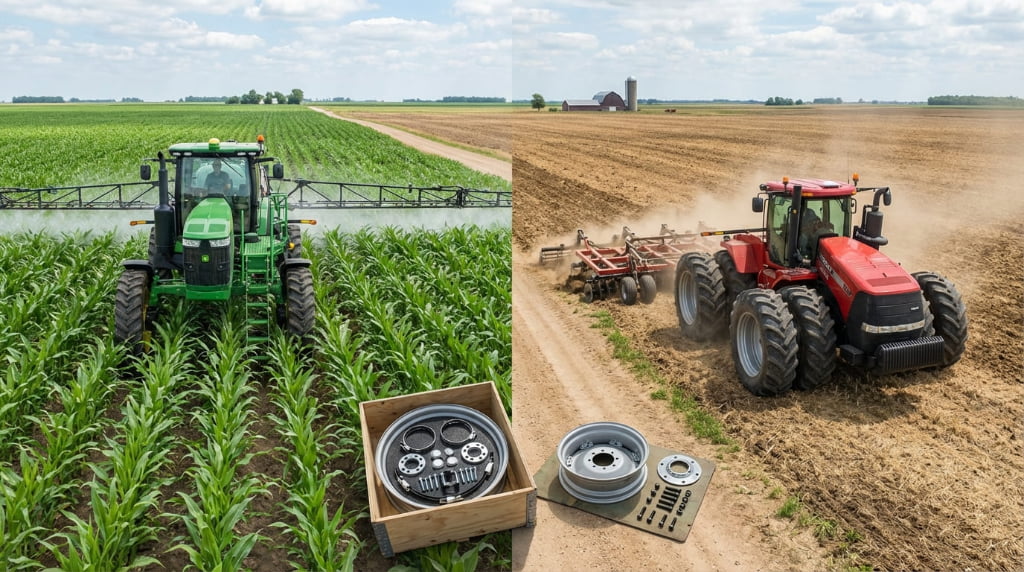
Our farmer customers are confused. They ask if they need narrow wheels or duals for their row crops, and giving the wrong advice could damage their crops or soil.
Use agricultural narrow wheels1 for in-season work like spraying2 to avoid crop damage3. Use agricultural dual wheels4 for pre-season tillage and planting to increase traction5 and reduce soil compaction6. The right choice depends entirely on the specific job.
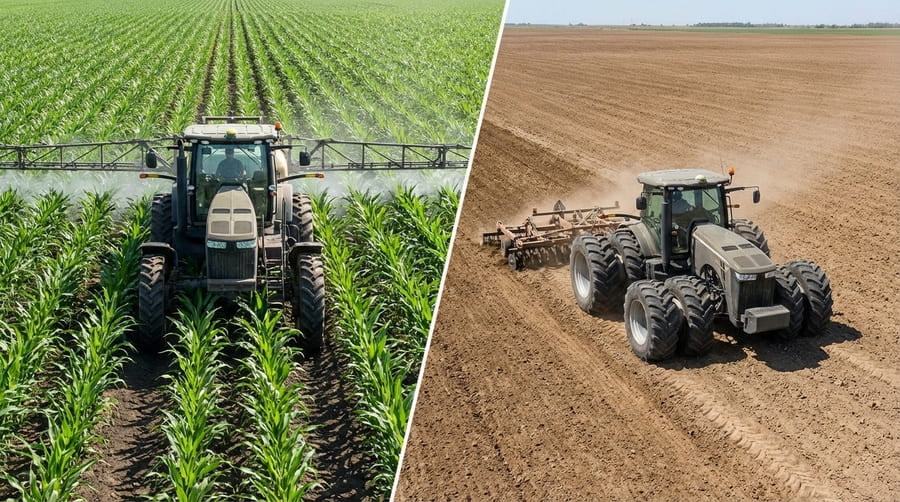
I'll never forget a call from a dealer who was in a tough spot. He sold a set of standard agricultural wheels to a farmer who intended to use them for late-season fertilizing7 on his corn. A week later, the farmer was back, and he was not happy. He had flattened several rows of crops, losing thousands of dollars in potential yield. It wasn't the dealer's fault, really, but he was the one who took the blame. That day, I realized our job isn't just to sell parts; it's to provide solutions. Answering the "narrow vs. dual" question correctly is one of the most valuable services a dealer can offer.
When Should a Farmer Choose Agricultural Narrow Wheels?
A farmer needs to get into a field of growing corn to spray. Using his standard tires will crush rows of valuable crops, wiping out his profit margin with every pass.
Agricultural Narrow wheels are designed specifically for post-emergence8 fieldwork. Their slim profile allows the tractor to travel between crop rows without damaging the plants, making them essential for tasks like spraying2 and side-dress fertilizing7.
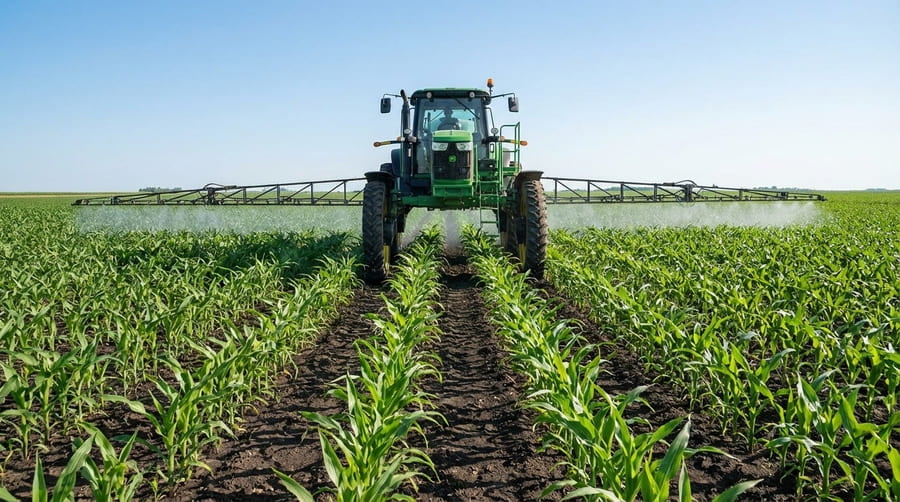
Once the crop has sprouted (post-emergence8), the goal is to protect it. This is where agricultural narrow wheels1, often called "row crop" wheels, become invaluable. Their main purpose is to minimize the tractor's footprint so it fits neatly between the rows of crops like corn, soybeans, or cotton. Any contact from a standard, wider tire can break stalks or crush young plants, directly reducing the harvestable yield. By switching to a narrow configuration, a farmer can perform critical applications throughout the growing season without sacrificing the very crops he is trying to nurture. These wheels are a specialized tool for a specific job and are fundamental to maximizing the output of any row-crop operation. They are not, however, designed for heavy pulling or tillage work.
Ideal Applications for Narrow Wheels
| Task | Why Agricultural Narrow Wheels Are Essential | Stage of Growth |
|---|---|---|
| Spraying | Fits between rows to apply herbicides/pesticides. | Post-emergence |
| Fertilizing | Allows for side-dressing nutrients close to the root zone. | Post-emergence |
| Cultivating | Removes weeds between rows without harming crops. | Early to Mid-Season |
Why Are Agricultural Dual Wheels the Go-To for Tillage and Planting?
A farmer is preparing a field with a powerful tractor, but the agricultural wheels are slipping and sinking into the soft soil. He's wasting fuel, time, and creating an uneven seedbed9.
Agricultural Dual wheels double the tire's contact patch with the ground. This distributes the tractor's weight, which dramatically increases traction5 and reduces soil compaction6, providing the power and stability needed for heavy fieldwork.
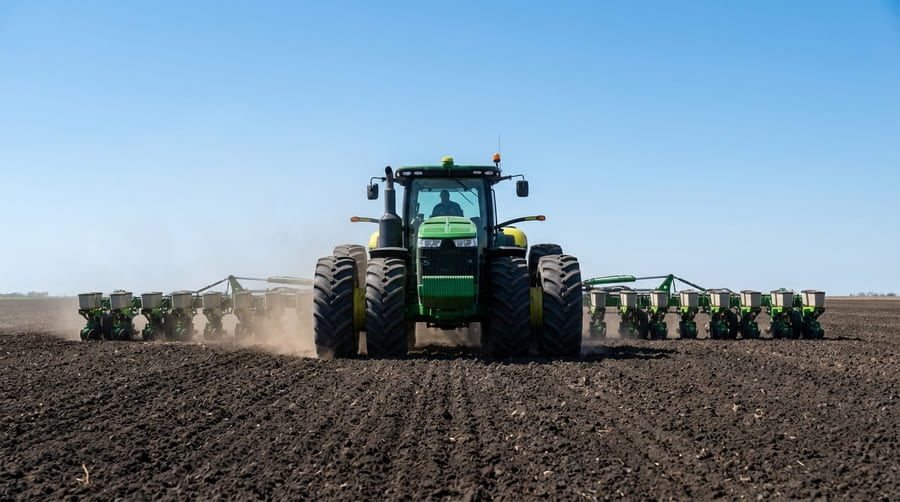
When the main goal is pulling heavy implements like plows, discs, or large planters, traction5 is everything. A single-wheel setup can struggle on soft or wet soil, leading to wheel slip. This not only wastes fuel but also creates deep, compacted ruts. By adding a second wheel to each axle end, you effectively double the surface area touching the ground. This has two huge benefits. First, it provides much more grip, allowing the tractor to pull heavy loads without slipping. Second, it spreads the machine's immense weight over a wider area. This is called "flotation," and it is critical for reducing soil compaction6. Less compaction means healthier root growth and, ultimately, better yields. Duals provide the raw power and stability needed to prepare a perfect seedbed9 efficiently.
How Can You Make Agricultural Wheel Conversions Simple and Reliable?
Your customer wants to add duals, but sourcing all the right clamps, bolts, and spacers is a nightmare. One missing part can derail the entire installation, leaving a tractor down.
We eliminate the guesswork by providing complete, pre-packaged hardware kits10. These kits contain all the necessary dual-wheel clamps, spacers, and bolts, making the conversion process faster, easier, and more reliable for you and your customer.
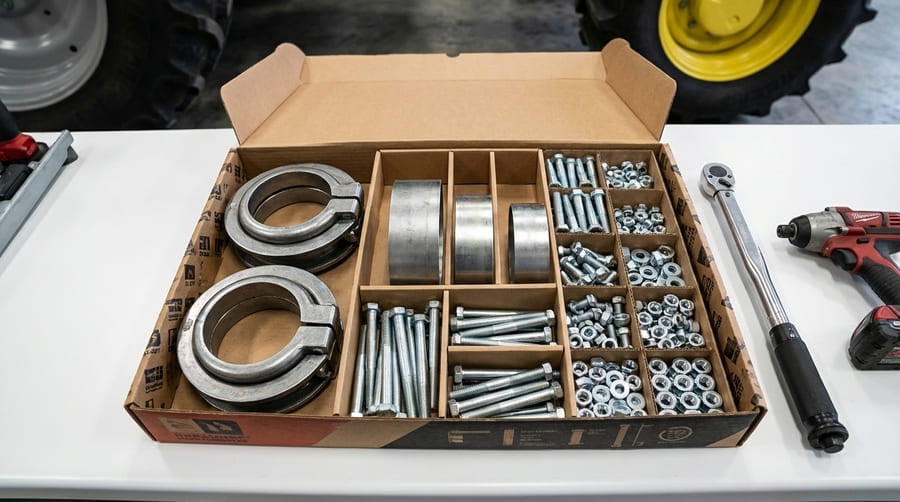
Switching between single, narrow, and dual configurations can be a complex job. There are a lot of parts involved, and getting the wrong size clamp or spacer can bring the entire process to a halt. As a dealer, this complexity creates risk for you. That's why we decided to offer a complete solution11. Instead of selling just the rims, we provide everything needed for the conversion in one box. Our hardware kits10 are engineered to work perfectly with our rims, ensuring a safe and secure fit every time. This saves you the headache of sourcing multiple small parts from different suppliers and gives your customer the confidence that the job will be done right. It transforms a potentially frustrating task into a straightforward, profitable service for your dealership. It's one more way we act as your partner, not just a supplier.
How Do Agricultural Adjustable Rims Offer Farmers More Flexibility?
Row spacing standards can vary by crop or region. A fixed-track rim might work for one customer’s corn rows but be too wide or narrow for another’s soybeans.
Our adjustable rims12 feature a repositionable disc center. By simply unbolting and moving the disc, you or the farmer can change the overall track width, allowing one set of rims to adapt to multiple row-spacing requirements.
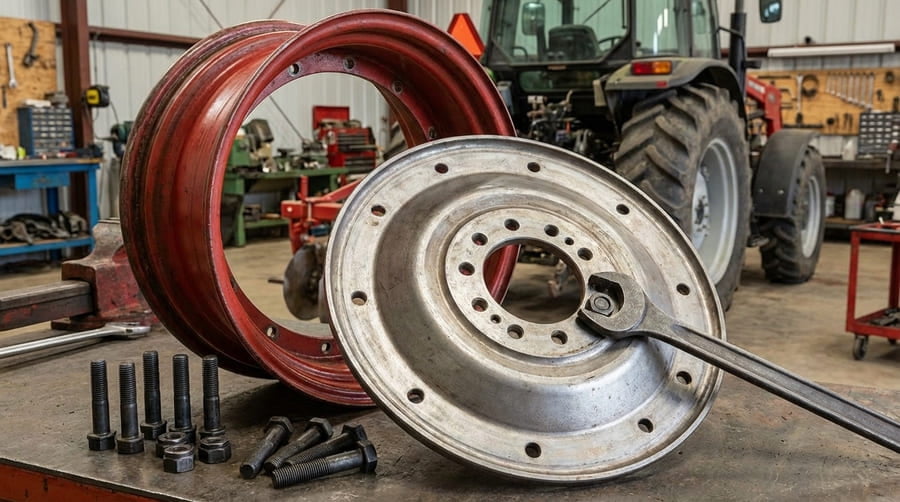
Versatility is a huge value-add for farmers. Not everyone farms the exact same way, and row spacing13 can change from 30 inches to 36 inches or even another custom width. In the past, this might have required a different set of rims for each application. To solve this, we designed our adjustable rims12. The rim barrel and the center disc are two separate components bolted together. This clever design allows the center disc to be mounted in different positions, effectively changing the wheel's offset and the tractor's overall track width. For a dealer, this means you can stock one flexible product that meets the needs of many different customers. For the farmer, it means they have the flexibility to adjust their setup for different crops or field conditions without buying all-new wheels.
Conclusion
Guiding farmers to the right wheel setup builds trust and boosts their yields. Offer narrow wheels for crop protection and duals for power, backed by our complete, easy-to-install kits.
Explore how agricultural narrow wheels can protect crops during critical tasks like spraying and fertilizing. ↩
Learn effective spraying techniques to protect crops and maximize yield. ↩
Discover strategies to prevent crop damage and ensure maximum yield during farming activities. ↩
Learn how agricultural dual wheels enhance traction and reduce soil compaction for better farming efficiency. ↩
Find out why traction is crucial for effective farming and how to achieve it with the right wheels. ↩
Understand the impact of soil compaction on agriculture and how to mitigate its effects. ↩
Explore effective fertilizing techniques to enhance crop growth and yield. ↩
Gain insights into post-emergence practices and their importance in crop management. ↩
Explore methods to create an ideal seedbed for successful crop planting. ↩
Check out essential components for dual wheel conversions to ensure a smooth installation. ↩
Find out how a complete solution can simplify wheel conversions for farmers. ↩
Discover the advantages of adjustable rims for versatile farming applications. ↩
Understand the significance of row spacing and how it affects crop management. ↩