
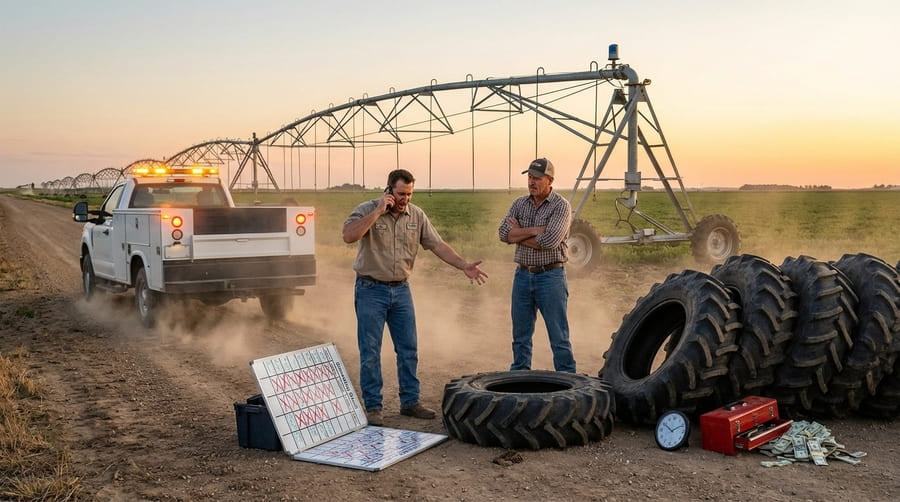
It's the busiest week of the season, and the phone rings. A pivot is down because of a irrigation tire failure1. Suddenly, your perfectly planned schedule is irrelevant, and the real costs begin.
One irrigation tire issue triggers a costly chain reaction: emergency dispatch2 pulls technicians from profitable jobs, scheduled work is delayed causing other customers to get angry, and overtime pay3 skyrockets. The financial impact4 goes far beyond the price of a single tire, disrupting your entire operation.
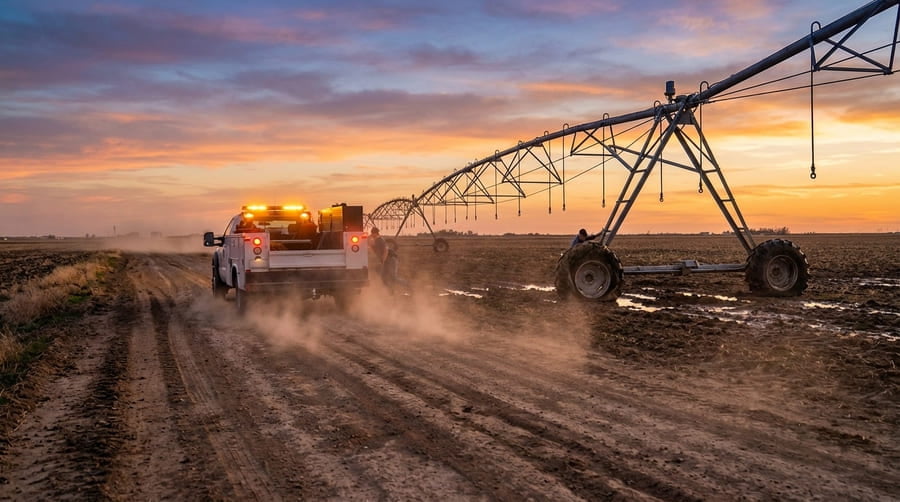
I'll never forget a call I got from a dealer partner in the middle of spring planting. "One irrigation tire is going to bankrupt me," he said, only half-joking. A tire he'd installed a month earlier had failed on a key customer's pivot. He had to pull his best mechanic off a full-day, high-margin tractor tire installation to go fix it. The rework took three hours, including travel. He not only lost the profit from the tractor job that day, but he also had to pay his mechanic overtime to try and catch up, and the tractor customer was furious about the delay. He told me later the "free" warranty replacement actually cost him over $700 in lost time, fuel, and goodwill. That's when I truly understood that the cost of a bad tire is never just the cost of the irrigation tire .
How Does One Urgent Call Derail Your Entire Day's Schedule?
A farmer calls with a pivot down. You have to send someone now. But your team is already booked solid on other paying jobs, and the day's schedule is packed.
An urgent dispatch forces you to reschedule profitable work, creating a domino effect5. It pulls a technician and a service truck away from planned jobs, leading to overtime, lost opportunity costs, and a cascade of unhappy customers whose appointments just got pushed back.
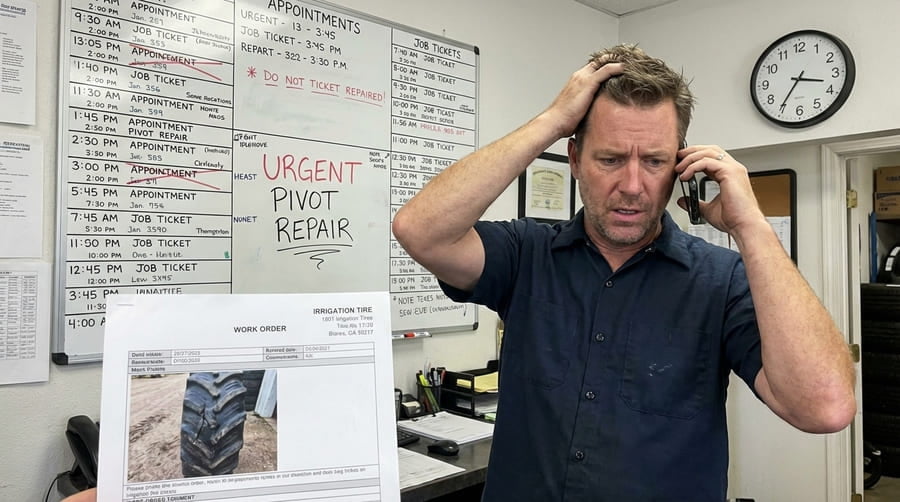
During peak season, your schedule isn't just a plan; it's your cash flow. Every hour is allocated to a revenue-generating activity6. An emergency rework call acts like a bomb dropped on that plan. I call this the "crisis multiplier" effect. A minor task that might be a simple fix in the off-season becomes a logistical nightmare7. You're not just adding one more job; you're subtracting from another. This forces you into a series of bad choices. Do you delay a loyal customer's scheduled maintenance? Or do you pull a technician off a big installation, leaving the job half-finished? Both options damage relationships and hurt your bottom line. The single tire failure doesn't just create one problem; it creates multiple new fires that you and your team have to put out, all while the clock is ticking.
Planned Day vs. Interrupted Day: The Domino Effect
| A Normal, Planned Day | A Day Interrupted by Rework |
|---|---|
| 8 AM: Job 1 (Tractor Tire Install) - $1,200 Revenue | 8 AM: Start Job 1. |
| 1 PM: Job 2 (Planter Tire Check) - $400 Revenue | 10 AM: URGENT CALL - Pivot down. Pull tech from Job 1. |
| 4 PM: Return to shop, prep for tomorrow | 1 PM: Tech finishes rework. $0 Revenue. Job 1 is incomplete. |
| Total Revenue: $1,600 | 4 PM: Call Job 2 customer to cancel. Customer is angry. |
| Result: Profitable, predictable day. | Total Revenue: $0 + Overtime + 2 Unhappy Customers. |
Why Does One Mishap Define Your Entire Reputation?
You've successfully completed dozens of jobs for a customer. But after one bad rework experience, that's all they seem to remember, and the entire relationship feels like it's on thin ice.
Customers remember negative, emotional experiences more vividly than routine positive ones. How you handle a single problem—your response time and professionalism—becomes their new benchmark for your dealership's reliability, potentially erasing years of goodwill in a single afternoon.
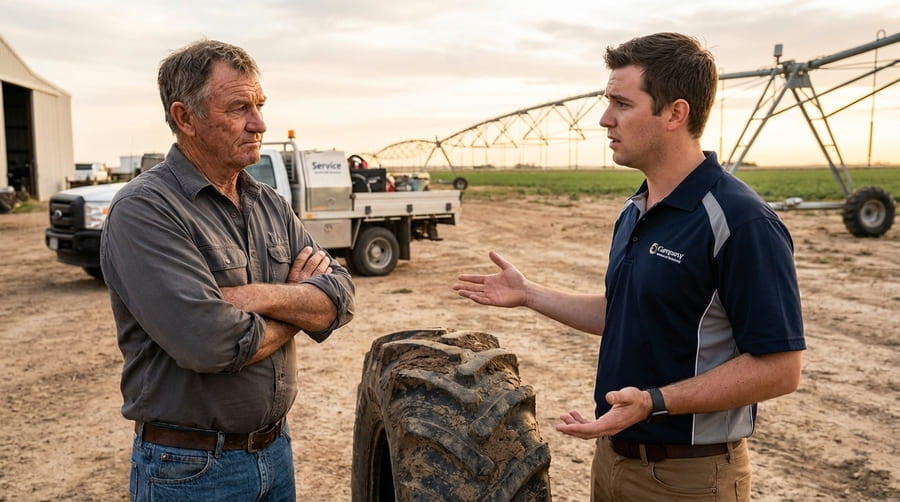
It’s a hard truth of business: you can build a great reputation over five years and damage it in five hours. Customers have a "what have you done for me lately?" mindset, and a crisis is the ultimate test. Before the problem, you were their trusted tire expert. But if the rework is handled poorly—if you're slow to respond, if the fix doesn't hold, or if you seem disorganized—their perception changes instantly. They start to wonder, "Can I really count on them when things get tough?" I saw a dealer lose a massive account this way. They sold the farmer irrigation tires for his entire fleet of 20 tractors. But when a single pivot tire failed and the dealer's response was slow, the farmer moved his entire account, worth over $100,000 a year, to a competitor. The farmer told me later, "If they can't handle one small irrigation tire problem in a crisis, how can I trust them with my combines during harvest?" That one rework incident became the defining story of their relationship.
Does Frequent Rework Make You Afraid of New Products?
You tried a new, lower-cost tire brand to improve margins, but a few failures led to a season of rework headaches. Now, you only want to sell the same old brands you know.
Yes, frequent rework makes dealers risk-averse8. The time, money, and customer trust9 lost from handling failures far outweigh the potential profit from a new product. As rework cases rise, dealers naturally become hesitant to partner with new or unproven suppliers.
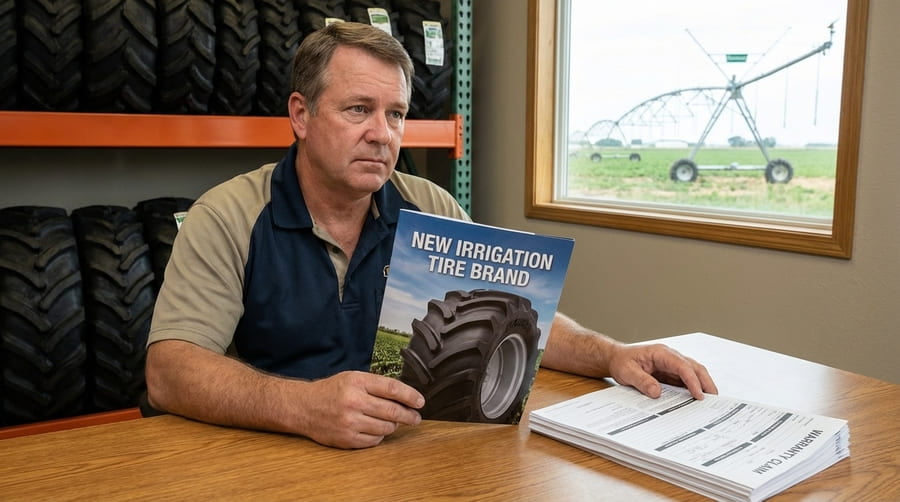
Every time you introduce a new tire brand, you are putting your reputation on the line. You are personally endorsing it to your customers. If the product performs well, you look like a savvy expert who found them a great value. But if it leads to failures and rework, the customer doesn't blame the unknown manufacturer; they blame you. After you've spent a few seasons dealing with the chain reaction of rework—the angry calls, the schedule disruptions, the lost profits—your appetite for risk vanishes. You start thinking in terms of "total cost10," not just "purchase price." The slightly higher margin on a new irrigation tire brand is worthless if just one failure costs you $700 in hidden expenses and damages a client relationship. This is why reliable, consistent quality is so important. As a dealer, you need partners who deliver tires that don't just look good on a price sheet, but perform in the field and protect you from the catastrophic costs of rework.
Conclusion
A single tire failure is never a single problem. It triggers a chain reaction of costs11 that disrupts schedules, angers customers, and destroys your profitability, making supplier reliability12 absolutely essential.
Understanding the causes of irrigation tire failure can help prevent costly disruptions and maintain smooth operations. ↩
Learn how emergency dispatch can impact your business and strategies to minimize its negative effects. ↩
Understand the impact of overtime pay on your business's bottom line and ways to manage it effectively. ↩
Explore the broader financial implications of equipment failures to better prepare for unexpected costs. ↩
Understand how one disruption can lead to a series of scheduling conflicts and operational challenges. ↩
Identify key activities that drive revenue in agriculture to optimize your business operations. ↩
Discover strategies to handle logistical challenges efficiently and minimize disruptions to your operations. ↩
Understand the reasons behind risk aversion in businesses following product failures and how to overcome it. ↩
Explore the impact of rework on customer trust and strategies to rebuild and maintain strong relationships. ↩
Learn about the total cost of ownership to make informed purchasing decisions and manage expenses. ↩
Learn how a single issue can lead to a series of costs, affecting your business's financial health. ↩
Explore the importance of reliable suppliers in agriculture to ensure consistent product quality and service. ↩