
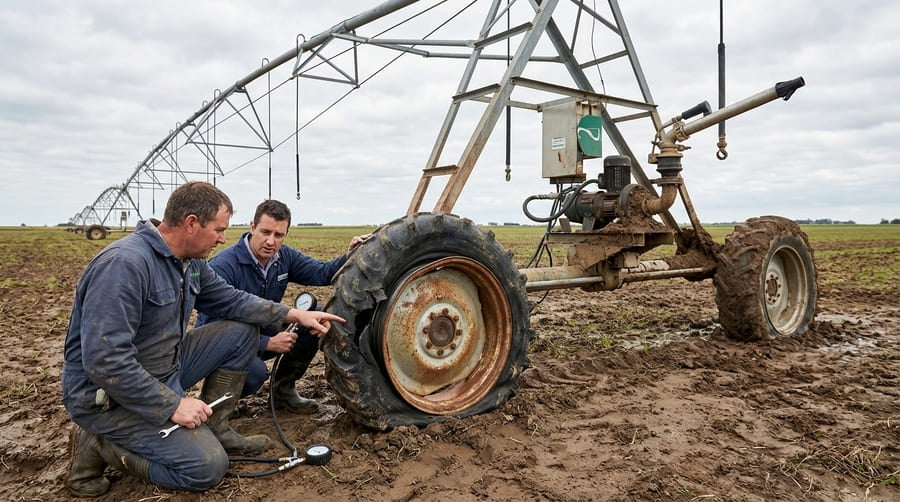
Another irrigation tire has failed mid-season, bringing a critical pivot to a standstill. Now you're facing costly downtime and a frustrating argument over who is at fault.
The most common irrigation tire fitment mistakes1 are reordering based on old specs2 without checking new loads, ignoring rim compatibility3, and assuming a tire that physically fits is suitable for the job. These errors lead directly to premature failures and budget overruns.
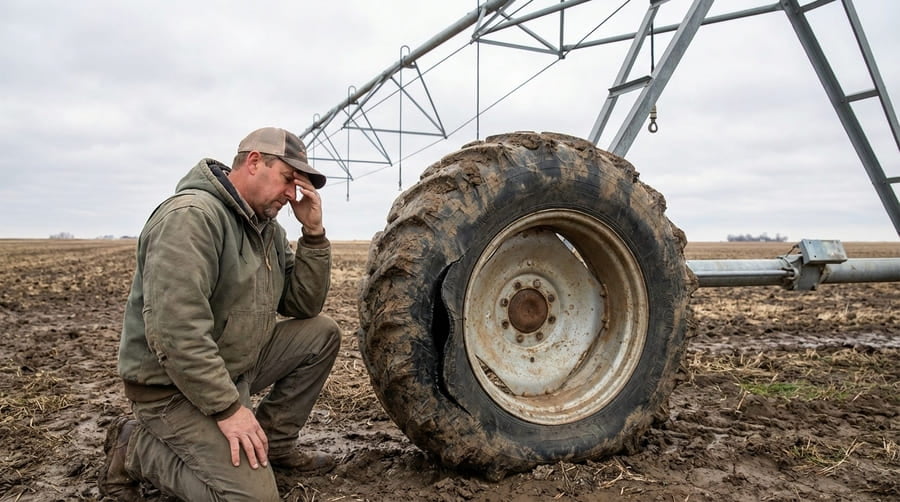
I remember a tense meeting with a client years ago. A whole batch of irrigation tires had failed on one of their largest pivots, and the conversation was quickly turning into a blame game. The farm manager was blaming my company, and his maintenance lead was blaming the new guy who installed them. I asked to see the failed irrigation tires. After a quick inspection, I asked one simple question: "What changed on this pivot since last year?" It turned out they had added a heavy end-gun booster pump4, increasing the load on the outer towers far beyond what the old tire spec could handle. The conversation immediately shifted from blame to a technical solution.
Are You Just Copying Last Year's Irrigation Tire Order?
You're busy, so you reorder the same tires that worked last season. But this time they're failing, leaving you to wonder what went wrong with the new batch.
Simply copying a previous order is a huge risk. Pivots change—equipment gets added, and operational demands increase. This adds weight, making last year's tire spec potentially unsafe and overloaded for this year's actual working conditions.
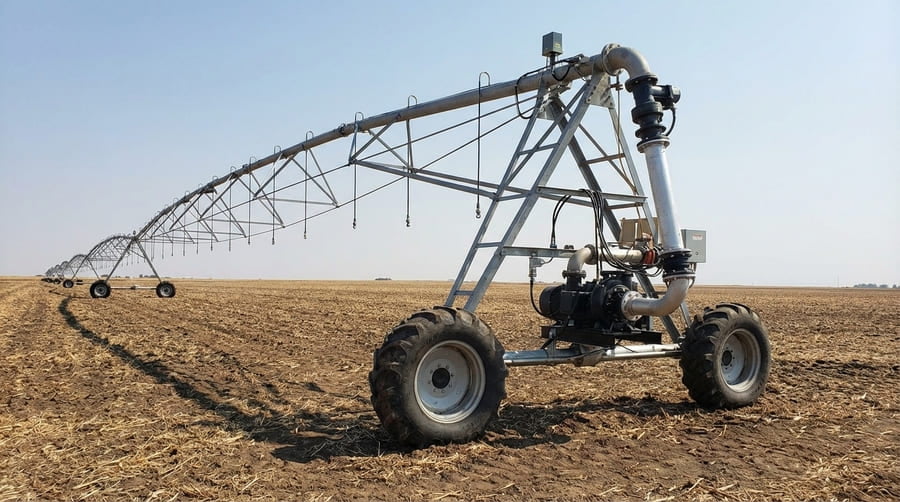
I call this "specification creep5." A pivot rarely stays the same over its lifetime. One year, you might add drop hoses. The next, an end gun. A few years later, maybe a booster pump. Each upgrade adds weight, often hundreds of pounds, concentrated on just a few towers. While the original tire spec might have been perfect for the pivot when it was new, it can become dangerously inadequate over time. Mud accumulation throughout a wet season can also add a significant, temporary load. Reordering without doing a quick seasonal audit of the actual load is like using an old map to navigate a new road. You're assuming nothing has changed, but it almost always has. This simple oversight is one of the leading causes of irrigation tire failure.
How Small Upgrades Impact Total Load
| Pivot Condition | Added Weight (per outer tower) | Resulting Tire Stress | Risk of Failure |
|---|---|---|---|
| Original Factory Spec | 0 lbs | Normal, within design limits | Low |
| Added End Gun | + 150 lbs | Increased static load | Moderate |
| Added Booster Pump | + 250 lbs | High, near or over limit | High |
| Heavy Mud Accumulation | + 300 lbs | Extreme overload | Very High / Imminent |
Is Ignoring the Rim Causing Your Irrigation Tires to Fail?
You've put a brand new, high-quality tire on the pivot. But soon you find it's losing air, or worse, the bead area is completely torn up and destroyed.
Yes, ignoring the rim is a primary cause of tire failure. A damaged, rusted, or incorrectly sized rim will damage the tire's bead, leading to poor sealing, air loss, and eventual structural failure, no matter how good the tire is.
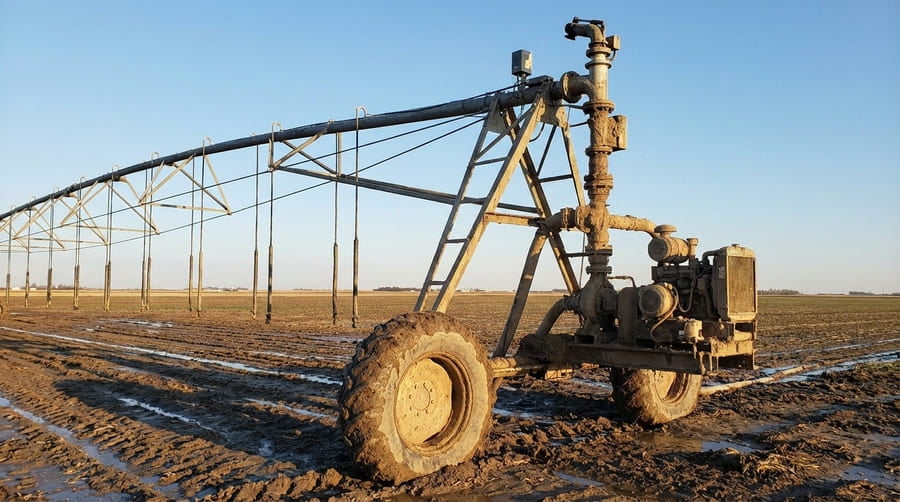
A irrigation tire and rim are a team; they have to work together perfectly. The tire's bead is designed to lock into a very specific rim shape and width. If you mount a irrigation tire on a rim that is too narrow, it pinches the beads together, causing the sidewall to bulge out unnaturally and placing extreme stress on the shoulder area. If the rim is too wide, the bead may not seat properly, allowing it to slip and chafe against the rim flange, especially under side load. Over time, this friction will chew through the bead. Furthermore, old rims often have rust, corrosion, or bent flanges. These imperfections act like sandpaper, grinding away at the tire's most critical point of contact. You can buy the best tire in the world, but if you mount it on a bad rim, you are guaranteeing its early death.
Why Does a Irrigation Tire That "Fits" Still Fail?
The new irrigation tire mounted onto the rim without any issues, so you assume it's good to go. But a few weeks into the season, it suffers a catastrophic blowout under load.
A irrigation tire that "fits" dimensionally is not the same as a tire that "performs" structurally. A tire may fit the rim, but if its load rating6, ply construction7, or rubber compound8 are wrong for the job, it will fail under real-world stress.
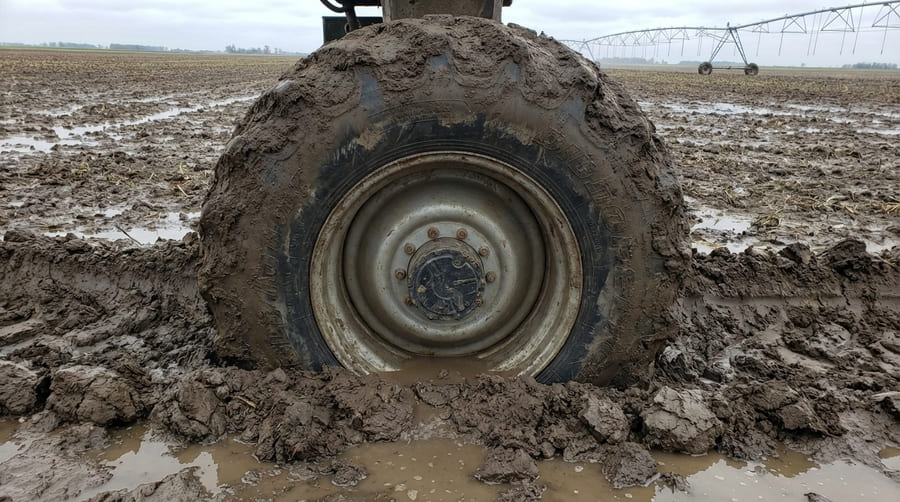
The term "fit" can be dangerously misleading. When we say a irrigation tire "fits," we usually just mean its diameter and width match the wheel rim. For example, a 14.9-24 tire fits a 24-inch rim. But this is only the first step. The real question is, can it survive its environment? A tire with a low ply rating will "fit" perfectly on a heavy pivot's rim, but its weak carcass will collapse under the weight. A tire with a standard rubber compound8 will "fit" just fine, but it will quickly crack and degrade under the intense UV exposure in a hot climate. The tire's ability to perform depends entirely on its internal construction and material science matching the specific challenges of your field—the weight of the pivot, the softness of the soil, and the hours it operates. Physical fitment gets the tire on the machine; correct specification keeps it running.
When a Irrigation Tire Fails, Do You Look for a Cause or Someone to Blame?
A tire fails unexpectedly, halting operations. The immediate reaction is often to find who is responsible—the supplier, the installer, or the farmhand who last checked it.
When a failure occurs, shifting to a blame discussion9 instead of a technical diagnosis10 is a costly mistake. Finding fault doesn't prevent the next failure. Analyzing the failure mode to find the root cause is the only way to improve future selection.
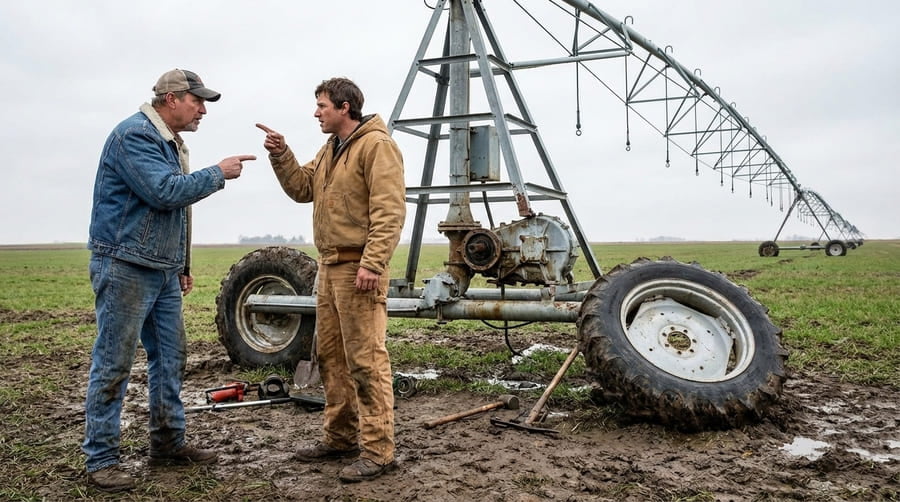
I have seen this happen countless times. A failure creates pressure, and pressure makes people look for an easy answer, which is often to blame someone. But blame is a dead end. It doesn't fix the pivot, and it certainly doesn't stop the same problem from happening again next month or next season. The moment a tire fails, it becomes your most valuable piece of data. You must become a detective. Was it a blowout in the sidewall? A tear in the bead? A puncture in the tread? Each failure mode tells a different story about the stress it was under. A sidewall failure might point to underinflation or overloading. A bead failure points to a rim problem. By focusing on the "why" instead of the "who," you turn a costly problem into a valuable lesson that strengthens your entire operation.
Conclusion
Avoiding seasonal irrigation tire failures starts with avoiding these common fitment mistakes. By checking the real load, verifying rim compatibility3, and diagnosing failures, you can ensure reliable, season-long performance.
Understanding common fitment mistakes can help prevent costly downtime and improve the longevity of your irrigation equipment. ↩
Learn why sticking to outdated specifications can lead to premature tire failures and increased operational costs. ↩
Explore how mismatched rims can lead to tire failures, even if the tire initially seems to fit well. ↩
Learn about the impact of additional equipment like booster pumps on the load and stress experienced by irrigation tires. ↩
Discover how small changes over time can lead to significant increases in load, affecting tire performance. ↩
Understand the importance of matching tire load ratings to actual field conditions to avoid failures. ↩
Explore how the internal structure of a tire influences its ability to withstand field stresses. ↩
Discover how different rubber compounds affect tire performance in various environmental conditions. ↩
Understand why focusing on blame rather than solutions can hinder problem-solving and operational improvement. ↩
Learn how analyzing the cause of a tire failure can prevent future issues and improve system reliability. ↩