
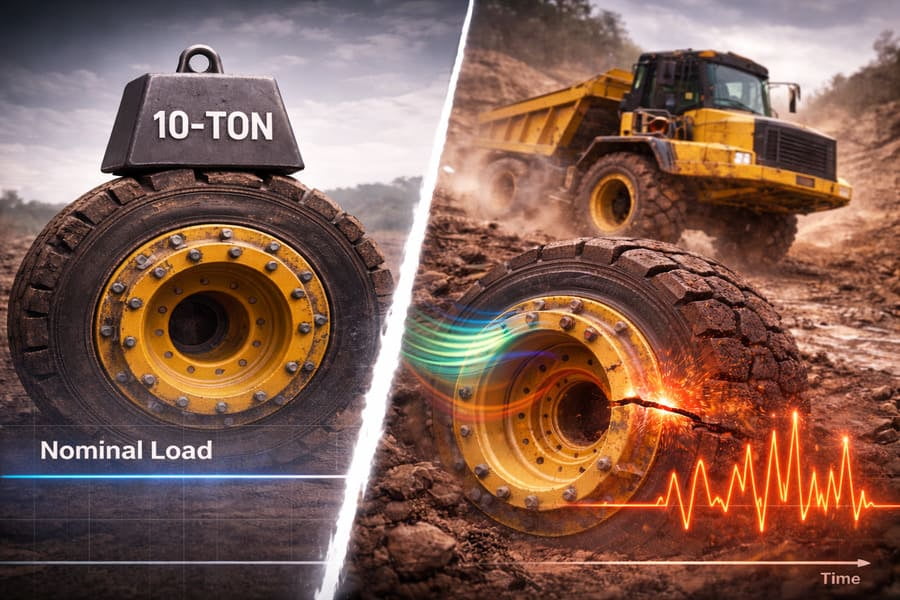
You carefully select an OTR rim1 with a nominal load capacity2 that matches your machine's specs perfectly. Yet, you're still seeing cracks and premature failures in the field, leaving you wondering what you missed.
The risk is underestimated in the massive gap between the nominal load—a static, ideal number from a lab—and the dynamic operating load3. Real-world forces from movement, terrain, and operator actions create fluctuating stresses that cause fatigue damage4 far below the rated peak load.
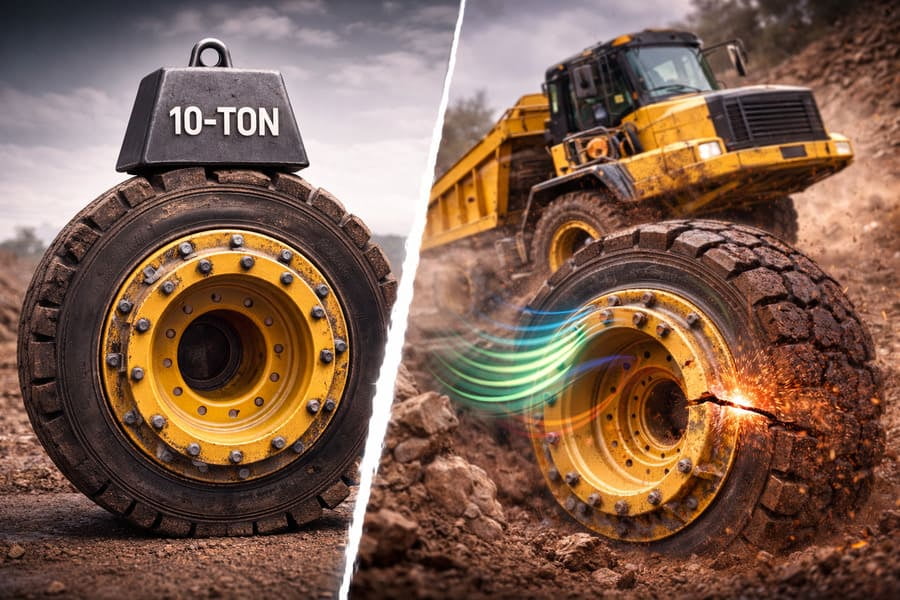
I remember a client running a fleet of articulated dump trucks. He was frustrated because his OTR rim1s, which were rated well above his average load, were developing cracks near the welds5. He told me, "We never overload the trucks. I don't understand." I asked him to describe the haul road. It was a long, winding dirt path with a constant slight incline. His trucks weren't overloaded, but they were almost always turning and pulling uphill at the same time. The combination of vertical load and constant lateral force6 was creating a cyclical stress pattern that the static "nominal load" rating never accounted for. The spec sheet was a photo; his operation was a punishing, feature-length film.
How Is a OTR Rim's Rated Load So Different from Its Real-World Burden?
You spec a rim for a 15-ton nominal load, feeling confident it's strong enough. But in the field, the forces it endures are wildly different, and failures happen anyway.
A OTR rim1's nominal load is a static, perfectly vertical force measured under ideal lab conditions. The real-world operating load is a dynamic, chaotic combination of forces from speed, turns, bumps, and shifting weight that create unpredictable stress spikes.
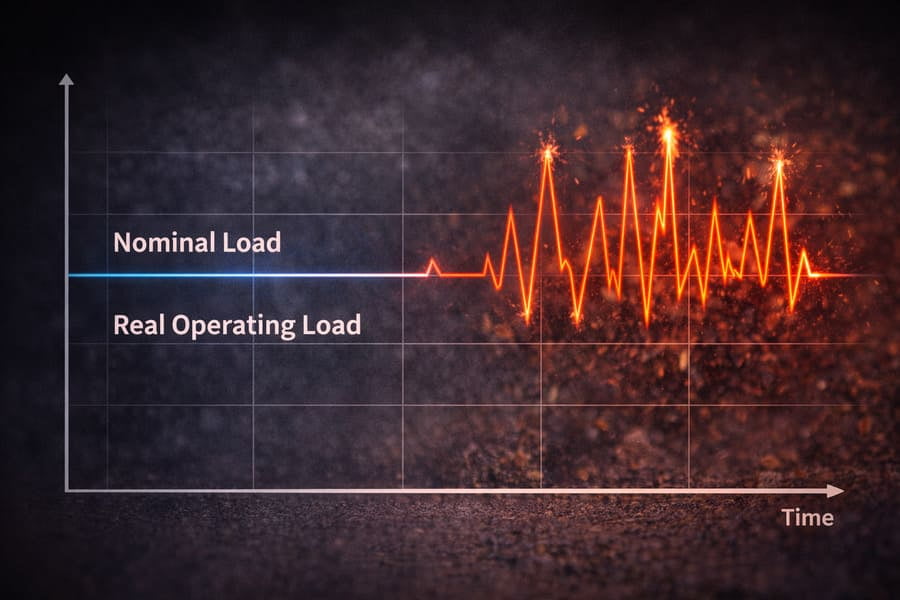
Think of it this way. Holding a 20kg weight while standing still is the nominal load. It's easy to measure and define. Now, try holding that same 20kg weight while running up a flight of stairs and dodging obstacles. The stress on your body is completely different and much higher. That is the operating load. An OTR rim1 on a working machine is constantly "running up stairs." Every turn adds lateral force6, every bump adds shock load, and every acceleration or deceleration adds torque stress. These forces combine, creating complex stresses that the simple, clean nominal load figure on a spec sheet simply cannot represent. The certificate proves it can hold the weight standing still, not that it can survive the marathon.
Static Ideal vs. Dynamic Reality
| Nominal Load (The Lab) | Operating Load (The Field) |
|---|---|
| Condition: Static, unmoving. | Condition: Dynamic, constantly changing. |
| Force: Purely vertical. | Force: Combined vertical, lateral, and torsional. |
| Environment: Controlled, flat surface. | Environment: Uneven terrain, turns, potholes. |
| Measurement: A single, constant number. | Measurement: A fluctuating wave of stress spikes. |
Why Do OTR Rims Fail Even When They Never Exceed the Peak Load Rating?
You track your loads meticulously and ensure your operators never exceed the rim's maximum capacity. Yet, cracks still form, leading to a catastrophic and dangerous failure.
Failure isn't caused by a single peak load event. It's caused by fatigue—the accumulated damage from millions of smaller, repeated stress cycles7. These cycles, all well below the peak rating, slowly weaken the steel over time until it breaks.
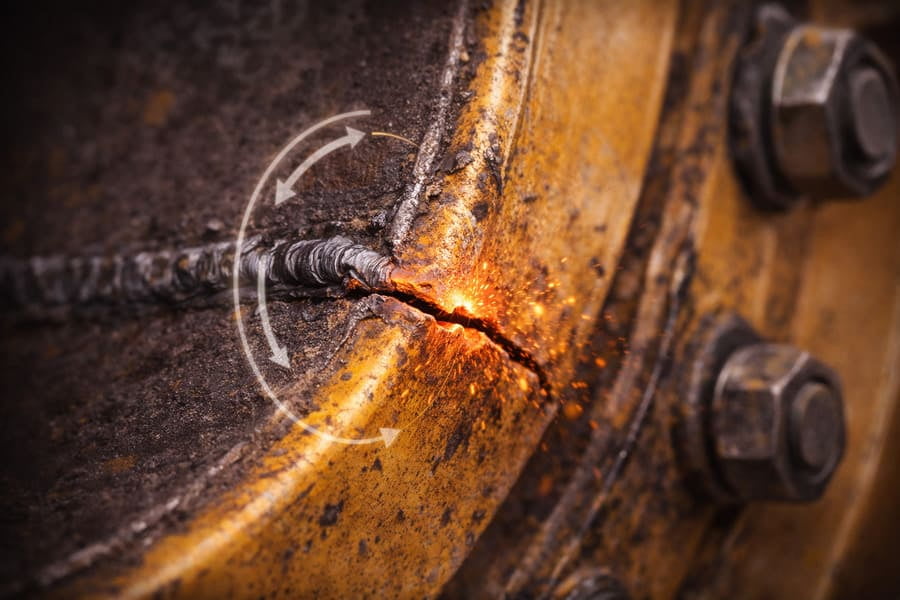
Imagine bending a paperclip. You don't break it by pulling it apart with one massive force. You break it by bending it back and forth, over and over. Each bend is a small stress cycle that does a tiny amount of damage. An OTR rim1 is the same. It's not the one time it carries a slightly heavy load that kills it. It's the millions of times it goes from a low-stress state to a high-stress state as it rotates under load. Every rotation is one "bend" of the paperclip. The variation between the loaded and unloaded part of the rotation creates fatigue. This is why a OTR rim1 on a vehicle that travels long distances will fail faster than one on a machine that is mostly stationary, even with the same load. The damage is in the repetition, not the peak.
The Real Source of OTR Rim Damage
- Stress Range: The difference between the highest and lowest stress during one rotation is what drives fatigue.
- Cycle Count: The total number of rotations the rim makes in its life. More distance equals more cycles.
- Stress Concentrations: Small design features like sharp corners or weld toes where stress naturally gathers and fatigue cracks start.
How Does "Experience" Become a Form of Underestimation?
Your team has used the same type of rim for years without issue. You rely on this past success to make purchasing decisions, but a new worksite or machine suddenly causes failures.
Experience becomes a form of underestimation when "it's always worked before" replaces actual load analysis8. Past success creates a dangerous comfort zone, blinding you to the fact that a small change in application can push the dynamic operating load3 beyond what the OTR rim1 can handle.

This is a risk I see with very experienced clients. They develop a "rule of thumb" for what works. But this rule is only valid for a specific set of conditions. I once had a customer who moved his loaders from a flat stockyard to a new development site with soft soil and small hills. He used the same OTR rim1s that had worked for him for a decade. Within a year, he was seeing rim failures. His experience was valid, but his application had changed. The soft soil increased rolling resistance9 and the hills added grade forces. His dynamic operating load3s were now 20% higher than before, even with the same machine and "load." His experience made him underestimate the new environment. True risk management means re-evaluating when the application changes, not just relying on past success.
Conclusion
The greatest risk in OTR rim1s is hidden in the gap between the simple nominal load on paper and the complex, dynamic operating load3 in the field. Understanding this difference is key to preventing unexpected failures.
Explore this resource to understand how to choose the right OTR rim for your specific needs and avoid costly failures. ↩
Learn about the factors that influence nominal load capacity and how it affects rim performance in real-world conditions. ↩
This link will help you grasp the concept of dynamic operating load and its implications for rim durability. ↩
Discover the science behind fatigue damage and how to mitigate it to extend the life of your OTR rims. ↩
Learn about the importance of weld quality and how it can impact the integrity of OTR rims. ↩
Explore how lateral forces contribute to rim stress and potential failures in various operating conditions. ↩
Understanding stress cycles is crucial for maintaining OTR rims; this resource provides valuable insights. ↩
This resource will guide you through the process of conducting a load analysis to prevent rim failures. ↩
Understanding rolling resistance is vital for optimizing rim performance; this link offers valuable insights. ↩