

Waiting until an irrigation tire is completely shredded to replace it feels efficient. But this gamble risks a mid-season collapse, costing you crops, time, and money.
Manage irrigation tires1 by shifting from "run-to-failure" to a proactive strategy2. This involves identifying risk windows3—periods where failure likelihood accelerates—and replacing tires before they fail structurally. This trades minimal remaining life for guaranteed system stability4 and prevents catastrophic, costly downtime.
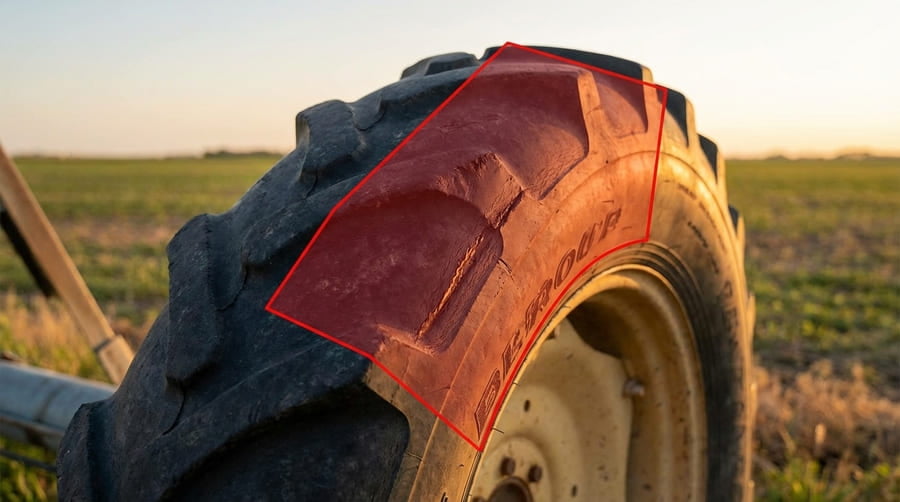
I once got a frantic call from a large farm operator in Idaho during a heatwave. A single irrigation tire on his pivot had finally blown out. It wasn't just the tire. The collapsing tower dug into the wet soil, the torque snapped a U-joint, and the whole span was now misaligned. He had tried to get every last dollar out of that tire, and in the end, it cost him two days of irrigation on a high-value potato crop and thousands in mechanical repairs. The "value" he saved by running that tire to failure was vaporized in an instant. This is the lesson: the real cost isn't in the irrigation tire, but in the failure it causes.
Why is replacing a "good" irrigation tire the smartest financial decision you can make?
You look at a irrigation tire with decent tread left and think, "It's still good." Replacing it feels like throwing money away, especially when you have dozens of them across your operation.
Replacing a irrigation tire that still has visible life is not waste; it's strategic risk mitigation5. By accepting a small, planned cost6 now, you prevent an unpredictable and catastrophic system failure later on.
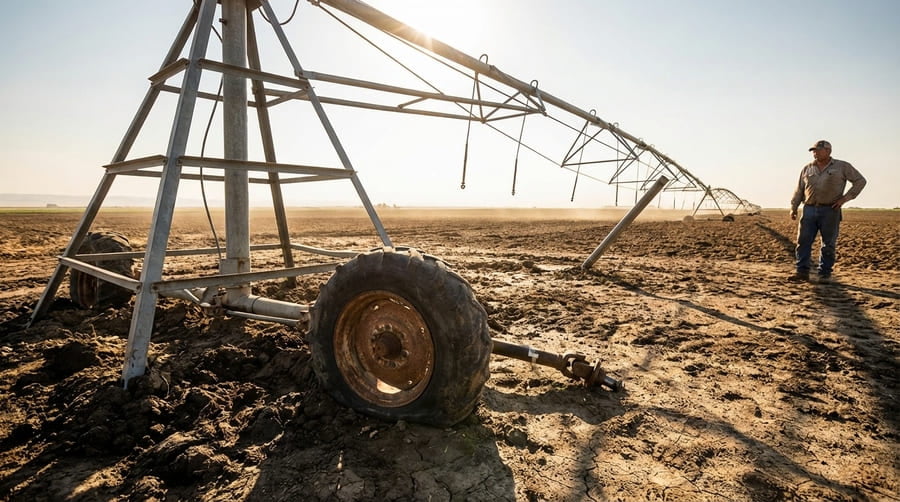
This is a mental shift from managing assets to managing risk. Retiring a irrigation tire before it fails is a deliberate choice to trade a small, known outcome (the cost of a new tire) for an unknown, potentially devastating one (system collapse). The tire itself might only be worth a few hundred dollars, but its failure can trigger a chain reaction. When a tire fails under load, the tower can drop, twisting the pivot structure, damaging the gearbox, and stressing the pipeline. Suddenly, you're not just dealing with a flat tire; you're facing thousands in repairs and critical downtime during the growing season. Proactive replacement is a form of insurance. You are paying a small, fixed premium (a new tire) to protect a much larger asset: your entire irrigation operation and the crop it sustains.
The Math of Risk: Planned vs. Unplanned Costs
| Decision Factor | Proactive Replacement (Risk Mitigation) | Run-to-Failure (Gambling) |
|---|---|---|
| Immediate Cost | Known cost of one new tire + labor. | $0 |
| Potential Future Cost | $0 (Risk is eliminated). | Unknown. Could be thousands in repairs, plus crop loss. |
| Downtime | Minimal, scheduled during off-hours. | Unpredictable, always at the worst possible time. |
| Overall Strategy | Controlled, predictable operational expense. | Uncontrolled, high-stakes risk with severe consequences. |
How does the risk of irrigation tire failure7 change over its lifespan?
You assume a irrigation tire wears down evenly from day one to the day it fails. You think the risk of a blowout today is about the same as it was last month. This linear thinking is dangerously wrong.
The risk of an irrigation tire failure doesn''t increase steadily; it accelerates dramatically as the tire approaches its structural limits. Each additional hour of operation becomes an increasingly risky bet against system stability4.
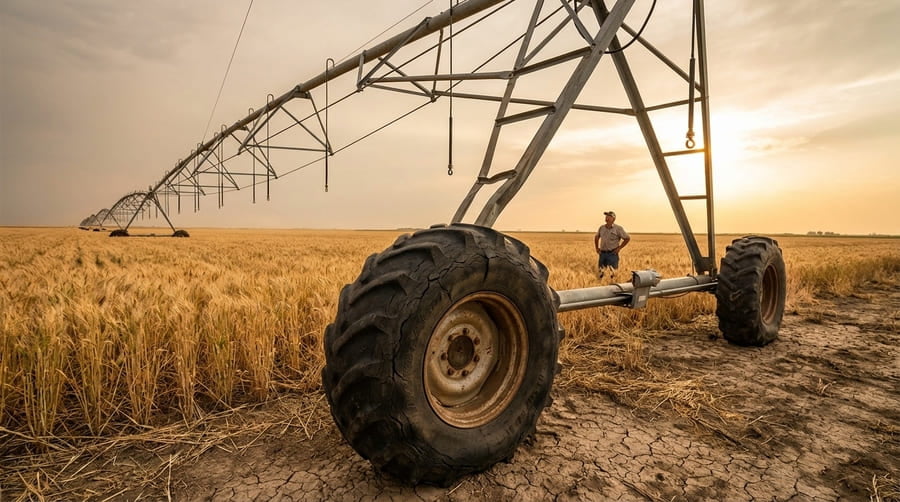
Think of a irrigation tire's life in two phases. For the first 70-80% of its life, it's in a zone of predictable wear8. The rubber is thick, the structure is sound, and it handles operational stress easily. But as the tread wears down, the casing heats up more, and the internal structure has less material to dissipate stress, the tire enters the "risk window." In this phase, risk is no longer linear. It's exponential. A small cut or impact that the tire would have easily handled a few months ago could now trigger a catastrophic blowout. You are no longer just "using" the tire; you are actively gambling that its remaining structural integrity is enough to survive the next revolution, the next bump, the next hot day. The problem is you can't see the exact moment it becomes too weak.
The Two Zones of a Irrigation Tire's Life
The Zone of Predictable Wear
In this initial, long phase, the irrigation tire performs its duties reliably. The tread depth is sufficient to protect the casing, and the internal structure is robust. Wear is gradual, and the risk of a sudden, structural failure is extremely low. Management here is simple: maintain proper inflation and conduct visual inspections.
The Zone of Accelerated Risk (The Risk Window)
This is the final 20-30% of a irrigation tire's life. The protective tread is thin, and the casing is more exposed to damage. The tire's ability to manage heat and flex is reduced. In this window, the probability of failure spikes. The tire is now a liability, and its continued use is a bet against the odds. This is the period where a proactive replacement strategy9 provides the greatest return.
How do you shift from tracking wear to managing risk windows3?
You are used to looking at tread depth as the only metric that matters. But if wear isn't the real trigger, how do you know when to act? This requires a new approach to management.
Mature irrigation tire management10 focuses on identifying "risk windows3," not just measuring wear. It uses operational data, age, and environmental factors to decide when a tire poses an unacceptable risk to the system, regardless of its visible condition.
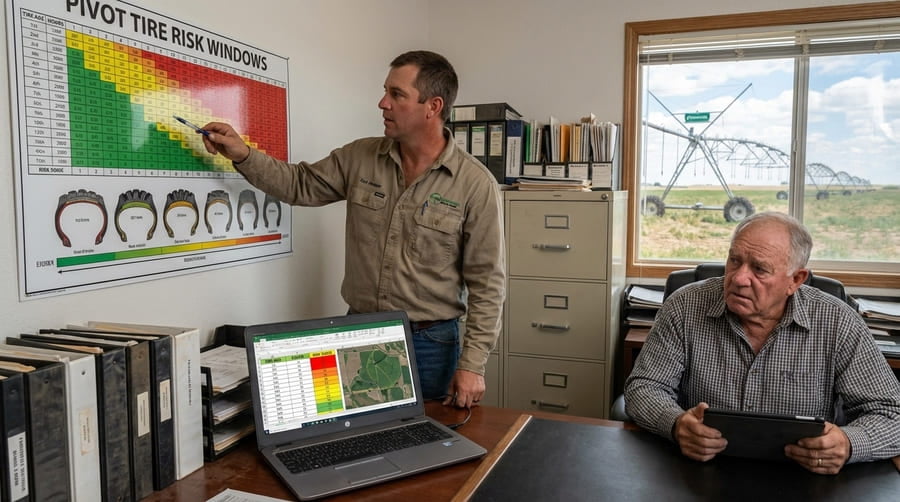
Managing risk windows3 means you stop asking, "How much tread is left?" and start asking, "What is the probability of this irrigation tire failing under peak load?" You create a framework for replacement based on a combination of factors. This includes the tire's age (rubber degrades over time, even with low use), the total operating hours, the typical terrain (rocky vs. smooth), and the position on the pivot (outer towers travel farther and faster). For example, you might set a policy that any tire over a certain age or number of operating hours on an outer tower gets replaced before the peak irrigation season begins, even if it looks "okay." This isn't about perfectly predicting failure. It's about systematically removing the highest-risk components from your operation before they have a chance to fail. It turns tire management10 from a reactive chore into a proactive, data-informed strategy.
Conclusion
Stop managing wear and start managing risk. Proactive replacement based on risk windows3 is not an expense; it is the cheapest insurance you can buy for your entire irrigation operation's stability.
Explore effective strategies for managing irrigation tires to ensure optimal performance and prevent costly failures. ↩
Learn how adopting a proactive strategy can enhance your irrigation management and reduce risks. ↩
Understanding risk windows can help you make informed decisions about tire replacements and avoid failures. ↩
Discover the importance of system stability in irrigation and how proactive measures can safeguard it. ↩
Gain insights into strategic risk mitigation techniques that can protect your agricultural investments. ↩
Learn how planned costs can lead to better financial outcomes in irrigation management. ↩
Explore the various factors that contribute to irrigation tire failure and how to manage them. ↩
Learn about the zone of predictable wear and its significance in tire management strategies. ↩
Find out how to develop an effective replacement strategy that minimizes risks and costs. ↩
Learn about best practices in tire management that can lead to improved operational efficiency. ↩