
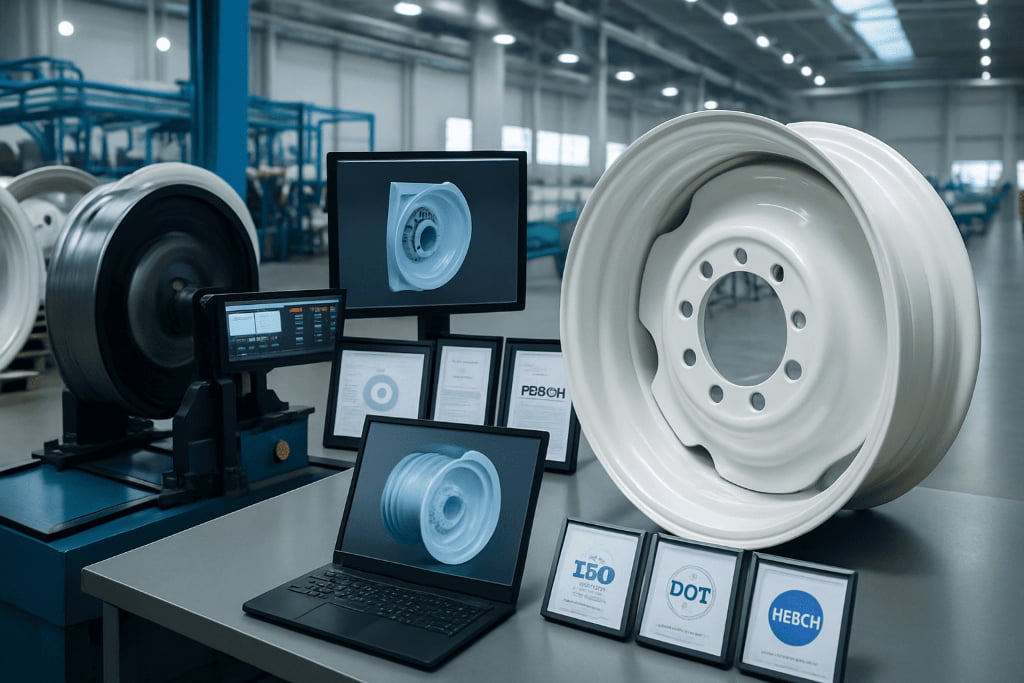
Choosing a supplier from China feels risky. A bad partnership can lead to warranty claims1 and lost trust. Here are the 7 questions that separate the experts from the amateurs.
Ask about their quality control2, especially dynamic balance testing3 and paint durability4. Clarify their accountability for fitment issues5 and inquire about certifications6, customization options7, and true production capacity8 to ensure they are a reliable partner.
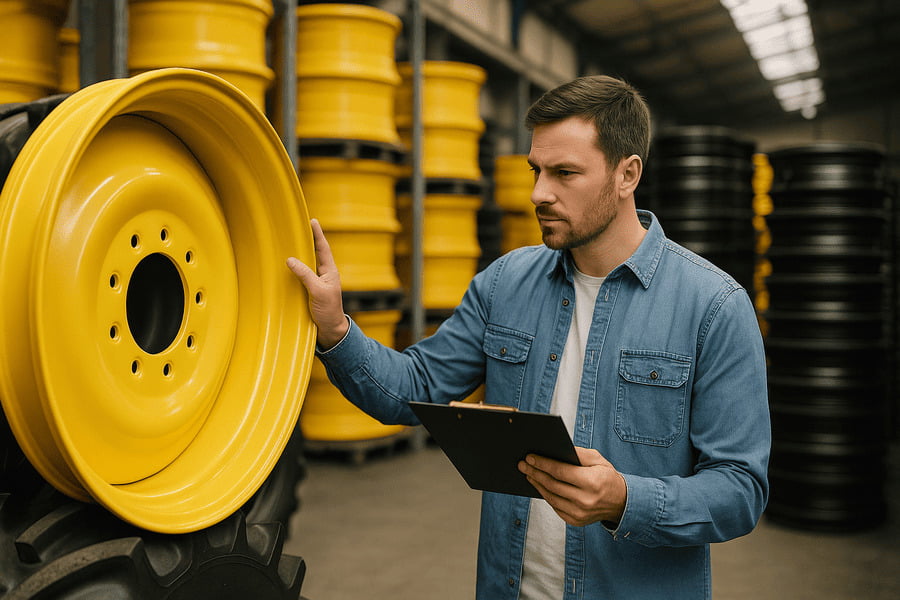
I've been in this business for over a decade, and I've seen dealers get burned. They partner with a new supplier to save a few dollars, only to face a flood of warranty claims1 six months later. The supplier ghosts them, and the dealer is left holding the bag, trying to explain to angry farmers why their new wheels are already rusting. It’s a painful lesson. That experience taught me that price is only a small part of the equation. The right partner protects your brand. The wrong one can destroy it. That's why asking the right questions upfront is not just smart; it's essential for survival.
Can You Prove Your Wheels Are Balanced for Modern Tractors?
Your customer complains about a rough ride at transport speeds. The constant vibration causes premature tire wear, and they're looking to you for a solution, unaware the root cause is the wheel.
A serious supplier must perform dynamic balance testing3 on every wheel. This process spins the wheel assembly at high speed to detect and correct imbalances, proving it will run smoothly and safely.
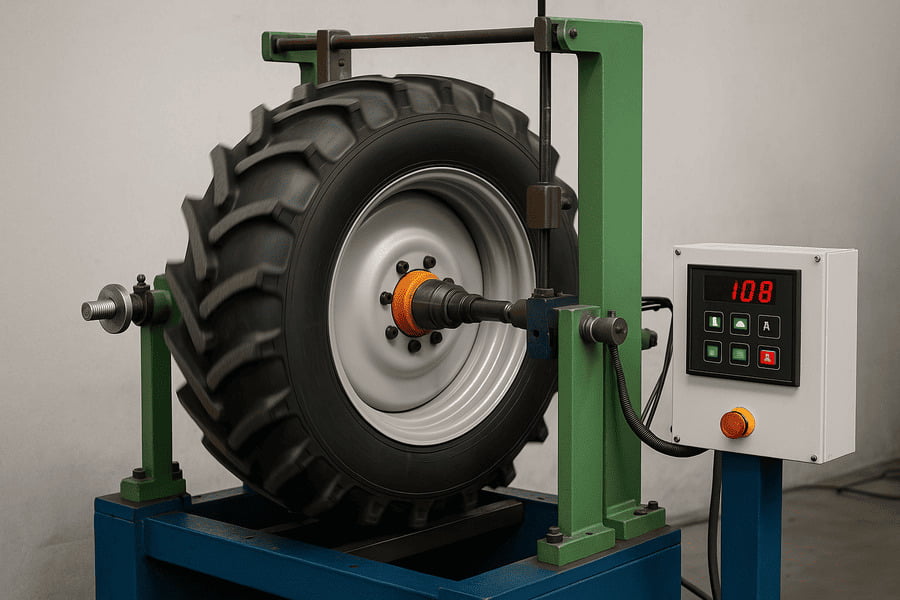
Years ago, tractors were slow, and minor imbalances in a wheel didn't matter much. Today, machines travel on roads at over 30 mph. At those speeds, a small imbalance creates significant vibration. This isn't just about driver comfort; it's a major quality issue. The constant shaking leads to uneven and accelerated tire wear, puts stress on the tractor's axle components, and can even compromise safety. Asking a potential supplier if they perform dynamic balance testing3 is a critical first step. We consider it a non-negotiable part of our process. Every wheel we produce is tested, and the data is recorded. It’s a simple question that tells you if a supplier is building wheels for the modern farmer or for the farmer of the past.
Balanced vs. Unbalanced Wheels: The Real Impact
| Feature | Unbalanced Wheel | Dynamically Balanced Wheel |
|---|---|---|
| Driver Comfort | Vibrations, bumpy ride | Smooth, stable operation |
| Tire Wear | Uneven, rapid wear patterns | Even tread wear, longer life |
| Component Stress | Increased wear on bearings, hubs | Reduced stress on drivetrain |
| Supplier Mindset | Focus on low cost only | Focus on performance and quality |
How Durable Is Your Paint Finish Against Corrosion?
A few months after a sale, your customer sends you a picture of their wheels, already showing signs of rust. This makes your entire product line look cheap and unreliable.
Demand to know the salt spray test9 rating for the paint. A quality finish should withstand at least 500 hours in a salt spray test9, proving its resistance to fertilizers, chemicals, and moisture.
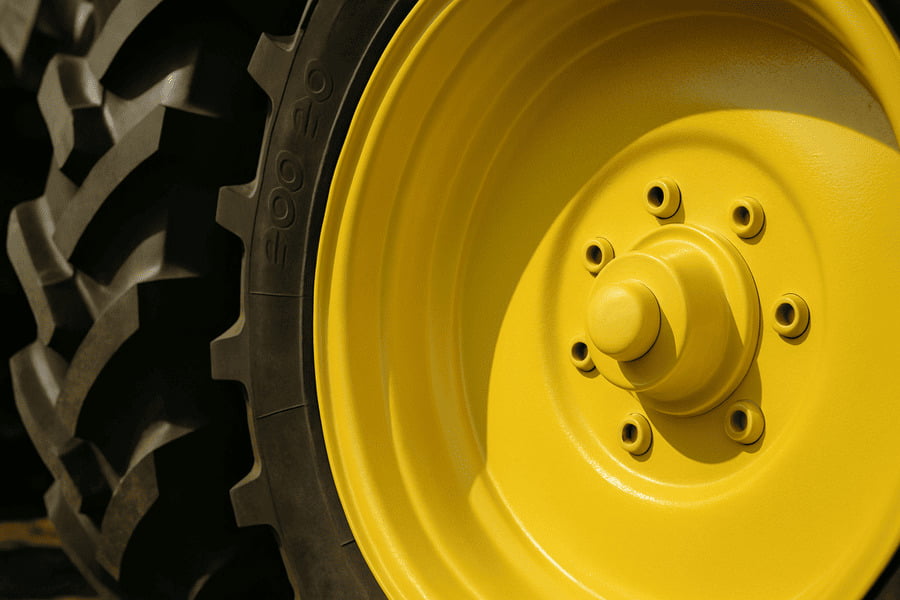
The paint on an agricultural wheel is its first and most important line of defense. Farms are harsh environments filled with corrosive fertilizers, chemicals, and constant exposure to moisture. A cheap paint job might look good in the showroom, but it will quickly fail in the field. This is where the salt spray test9 comes in. It's an accelerated corrosion test that simulates years of harsh exposure in a matter of hours. A low-quality paint might fail in under 100 hours. A truly durable, industrial-grade coating, like the one we use, is engineered to pass the 500-hour mark. Asking for this specific data point forces a supplier to prove their quality with facts, not just promises. It separates those who apply a cosmetic coat of paint from those who apply a true protective shield.
What Happens if There's a Fitment Issue Between the Tire and Rim?
You mount a new tire on a new rim, but it leaks air around the bead. The farmer's tractor is down, and the tire supplier and wheel supplier are pointing fingers at each other.
A true partner takes full responsibility. If a tire and our rim don't seal, we own the problem. We provide a one-stop solution, including free assembly, to guarantee a perfect fit every time.
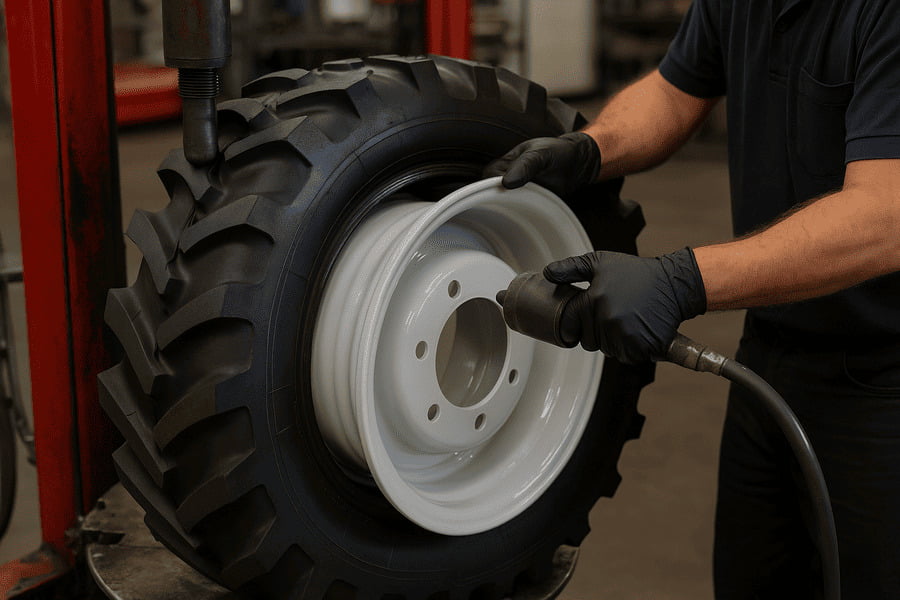
This is one of the most frustrating situations for a dealer. When an assembly leaks, your operation grinds to a halt while you try to figure out who is at fault. Is the tire bead out of spec, or is the rim's bead seat area improperly formed? A supplier who just sells parts will leave you to solve the puzzle. A partner, however, provides a solution. We decided early on to eliminate this problem for our clients. We not only guarantee our rim dimensions with 100% factory inspection, but we also offer to source the tires and provide a free assembly service. This means you receive a complete, tested, and guaranteed wheel assembly. The responsibility is entirely on us. This question reveals a supplier’s business philosophy: are they just a component seller, or are they a solution provider?
Can You Support Custom Designs and Small Order Quantities?
You want to launch your own brand of wheels but can't meet the massive Minimum Order Quantities (MOQs). Or, you need a specific, non-standard wheel for a niche market.
A flexible supplier will support you with small MOQs for new projects and have an engineering team10 ready to help develop custom and private-mold designs. Partnership means growing together.
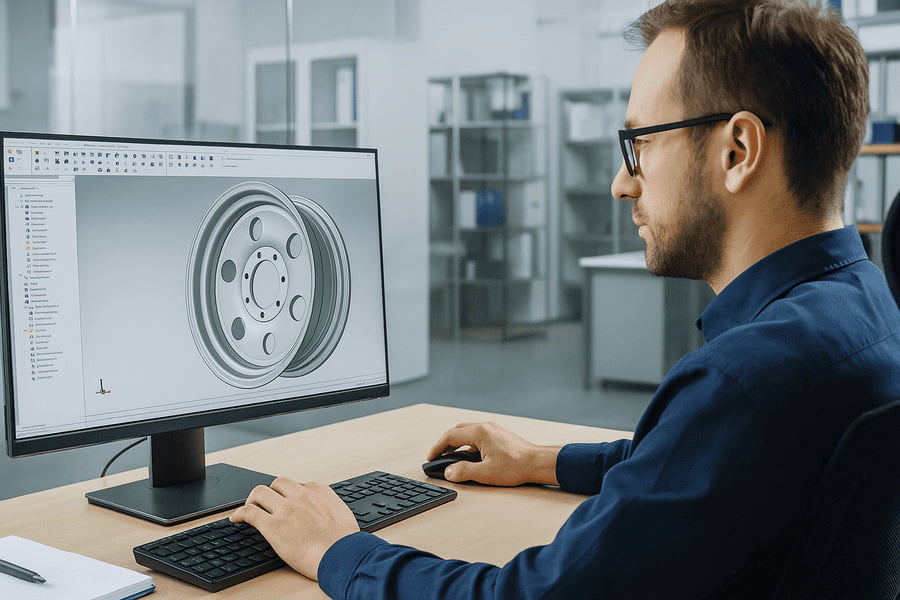
The market is not one-size-fits-all. To stand out, you need the flexibility to meet specific customer demands, test new markets, and build your own brand identity. Many large factories are only interested in huge, standard orders. They lack the agility to handle smaller, more strategic projects. That's why you must ask about their flexibility. We built our production around this need. With 10 professional production lines11, we can handle large parallel orders, but we also welcome smaller MOQs for dealers testing a new market or launching a private label12. Our 30+ person engineering team10 can quickly respond to requests for unique specs, private mold patterns, or custom branding on the sidewall. A supplier's willingness to support your growth, not just fulfill a massive order, is a clear sign of a true long-term partnership.
How Do You Ensure Consistent Quality from Batch to Batch?
The first container of wheels you received was perfect. The second container is a different story, with visible defects and inconsistent quality. Now you can't trust what you're selling.
Ask for their quality control2 process and traceability system13. Every wheel should have a unique serial number linking it to raw material batches, production data, and final inspection reports.
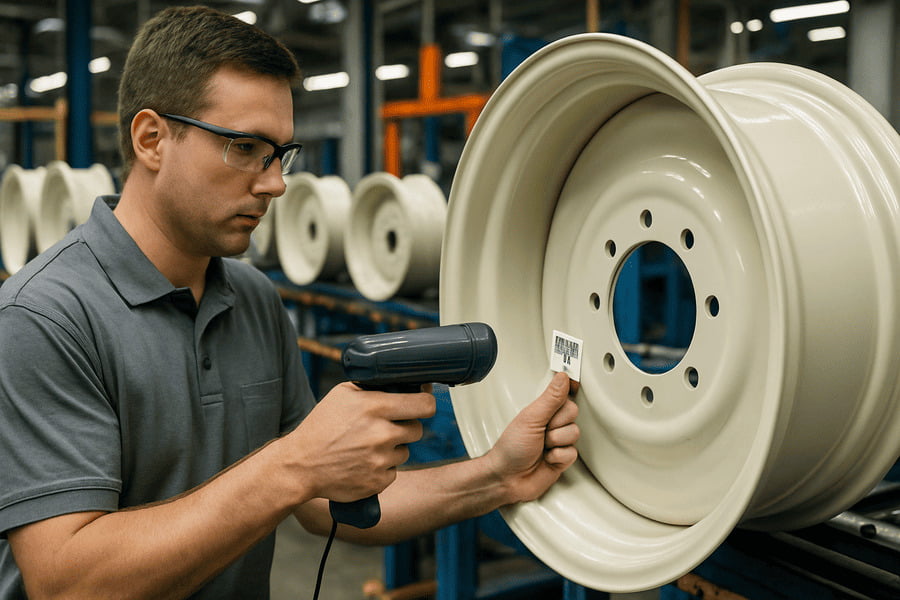
Consistency is the foundation of a good brand. Nothing erodes customer trust faster than unpredictable quality. The key to consistency is a rigorous, documented quality control2 system. It's not enough for a supplier to say they have "good quality." You need to know how they guarantee it. We implemented a system where every single tire has a unique barcode. This code allows us to trace its entire journey, from the specific batch of raw rubber and steel it was made from, through the automated vulcanization process, to the 30+ key inspection points it passed. If there is ever an issue, we can pull up the complete production and testing history for that specific wheel. This level of traceability and data-driven quality control2 is the only way to ensure that the tenth container you receive is identical in quality to the first.
What Are Your Real Production Capacity and Lead Times?
Your supplier promised a 45-day lead time, but it's now day 90 and your order still hasn't shipped. Your customers are waiting, and your sales forecast is in shambles.
A transparent supplier will be honest about their production capacity8 and offer flexible delivery models, from stocking programs to planned production, to ensure stable and reliable lead times14.
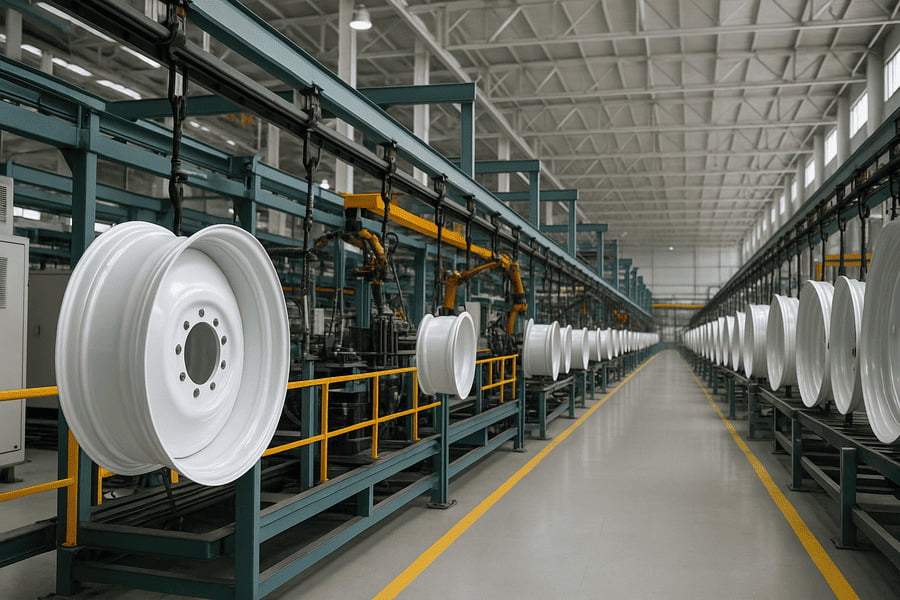
Broken promises on lead times14 can cripple a dealer's business. The problem often stems from suppliers who over-promise and lack the production depth to handle multiple large orders or unexpected issues. You need to dig deeper than the advertised lead time. Ask about the number of production lines11, their ability to run parallel orders for different clients, and how they handle urgent requests. Our 10 automated lines give us the flexibility to manage our production schedule effectively. We can offer several delivery models to our partners, whether they need products from our existing stock, want to schedule regular production runs, or need a long-term framework agreement for a stable supply. This flexibility allows us to provide reliable lead times14 and even accommodate emergency orders when possible. It's about building a supply chain you can depend on.
Are Your Products Fully Certified for My Market?
You import a container of wheels, only to have it stopped by customs because it lacks the required DOT or REACH certification. Now you're facing fines and a huge logistical nightmare.
A global supplier must provide a full portfolio of international certifications6. This includes ISO for quality management and market-specific compliance like DOT, REACH, and INMETRO to guarantee hassle-free import.
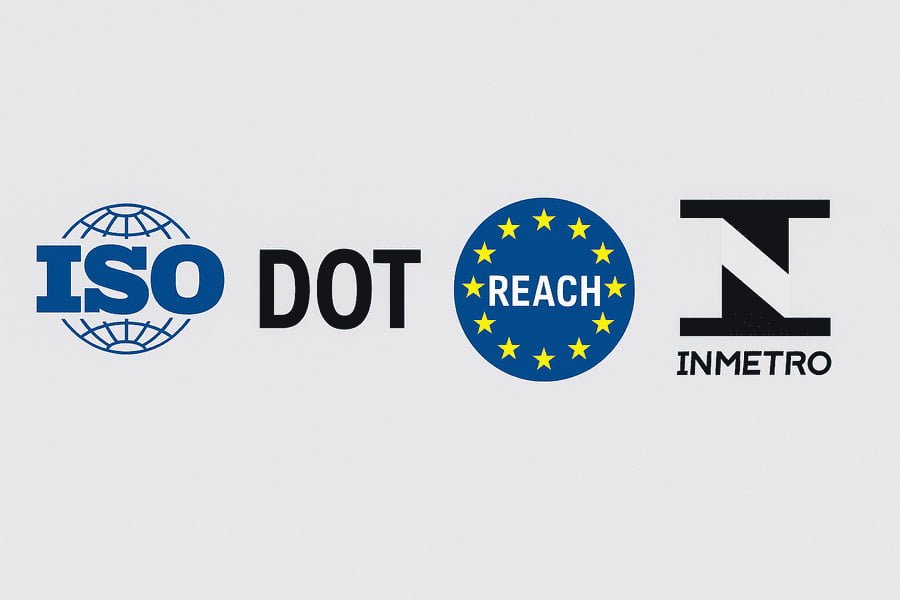
In today's global market, compliance is not optional. Every region has its own set of standards and regulations that must be met. For a dealer, importing non-compliant products is a massive risk that can lead to seized shipments, fines, and being banned from the market. Before you even discuss price, you must verify a supplier's certifications6. A professional supplier will have their documents ready and will understand the specific requirements for your country. We have made it a priority to secure a comprehensive list of global certifications6, including ISO 9001 for our quality system, DOT for North America, REACH for Europe, and INMETRO for Brazil, among others. This proactive approach ensures our partners can import our products with confidence, knowing they will clear customs and are legally compliant for sale in their market.
Conclusion
Asking these tough questions separates true partners from simple traders. It's how you build a reliable supply chain, protect your brand, and serve your customers with confidence and quality.
Learn effective strategies for managing warranty claims and protecting your business. ↩
Understanding quality control can help you ensure your supplier meets high standards. ↩
Learn how dynamic balance testing can prevent costly issues in wheel performance. ↩
Explore the methods used to test paint durability and ensure long-lasting products. ↩
Discover how to avoid fitment issues that can disrupt your operations. ↩
Find out which certifications are crucial for ensuring product quality and compliance. ↩
Learn about the importance of customization in meeting specific market needs. ↩
Understanding production capacity can help you avoid delays and ensure timely delivery. ↩
Explore how salt spray tests ensure the durability of coatings in harsh environments. ↩
Explore how an engineering team can enhance product quality and innovation. ↩
Learn how efficient production lines can improve your supply chain. ↩
Explore the benefits of private labeling for building your own brand. ↩
Discover how traceability systems enhance quality control and accountability. ↩
Learn how to effectively negotiate lead times to meet your business needs. ↩