
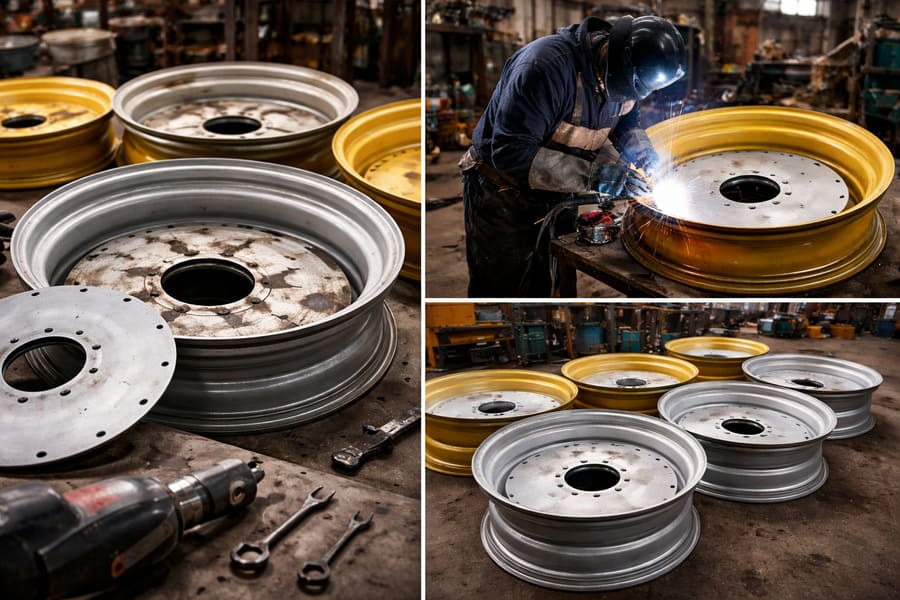
Your workshop is filled with agricultural rims1 that need repair. The outer rings are perfectly fine, but the center disc2s are cracked around the bolt holes3, forcing you into expensive, full-rim replacements.
By supplying the center disc2 as a separate part, workshops can cut out the old, cracked disc and weld in a new one. This saves enormous costs on materials and shipping by reusing the perfectly good, heavy outer rim4 ring, effectively cutting the repair price in half.
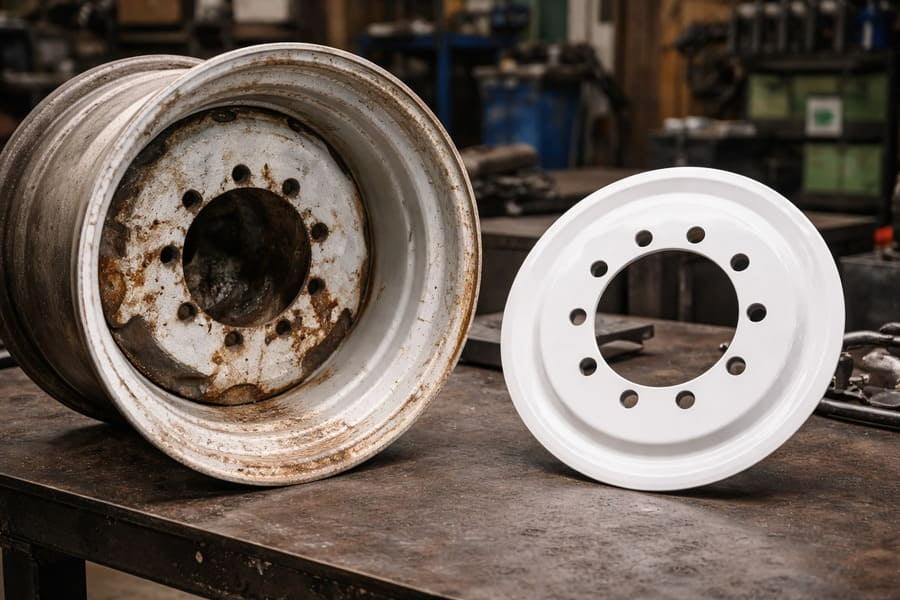
I was talking with a service manager for a large equipment co-op a few months ago. He pointed to a stack of scrapped rims and said, "It's such a waste. Look at these outer rings—they're good as new. But because a few bolt holes3 cracked on the center plate, I have to buy a whole new wheel assembly from overseas. The shipping cost for that much steel is killing my budget." His frustration was obvious. He didn't need a whole new wheel; he just needed a new center. That conversation is exactly why we decided to make this a core part of our offering. It's a simple idea that solves a huge and expensive problem.
Why Do Center Discs Crack While the Rim Ring Stays Intact?
You've seen this failure pattern countless times. The heavy-duty outer agricultural rims1 that holds the tire is fine, but the center plate is full of cracks radiating from the bolt holes3. It seems backward, doesn't it?
The center disc2 fails first because it endures immense, concentrated stress. All the torque, clamping force, and shock loads5 from the tractor's axle are focused on the small areas around the bolt holes3, leading to metal fatigue6 and cracking.
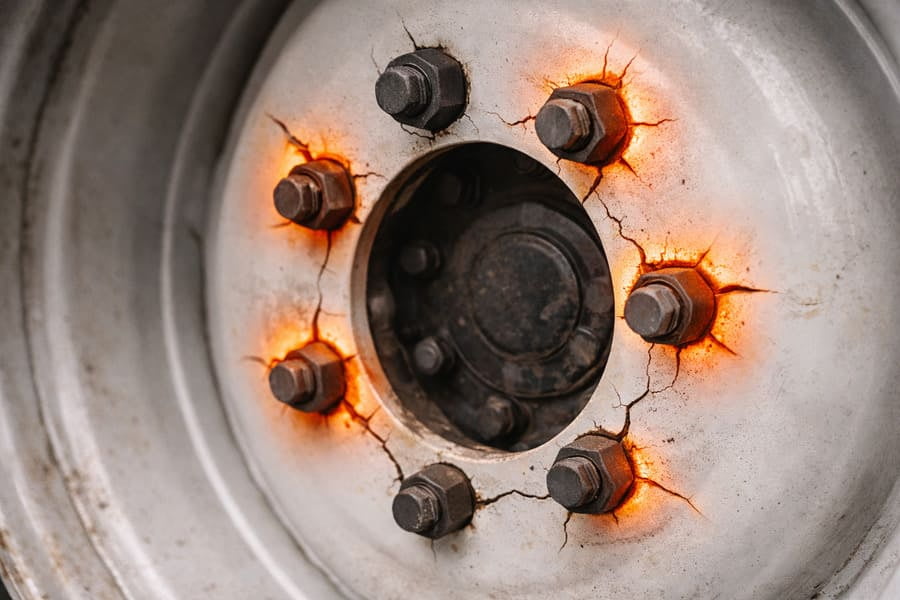
The forces acting on a wheel are not distributed evenly. The outer rim ring's main job is to hold the tire and contain air pressure, spreading the load over a large surface. The center disc2, however, is where all the machine's power and weight are transferred. The bolts clamp down with massive force. The axle transfers torque every time the wheel accelerates or brakes. Every bump in the field sends a shockwave directly into the bolt pattern. This concentration of different forces creates cyclical stress that, over thousands of hours, causes metal fatigue6. The steel flexes microscopically until a crack forms, usually starting at a bolt hole, the highest stress point. The outer ring simply doesn't experience this same kind of focused punishment.
The Battle of Stresses: Center Disc vs. Rim Ring
| Component | Primary Stresses Handled | Failure Mode |
|---|---|---|
| Center Disc | Clamping force, rotational torque, shock loads5 from the axle. | Metal fatigue and cracking around bolt holes3. |
| Rim Ring | Air pressure containment, tire bead seating force, general load distribution. | Bending from impact (e.g., hitting a rock), corrosion. |
What Makes Separate Disc Replacement So Economically Smart?
Okay, so replacing only the disc makes technical sense, but how does it actually save so much money? You're still paying for a new part and the labor to weld it.
The savings come from eliminating the two biggest expenses: the cost of the heavy outer steel ring and the high international shipping cost for a complete, heavy wheel assembly. You only buy the small disc and use local labor7.
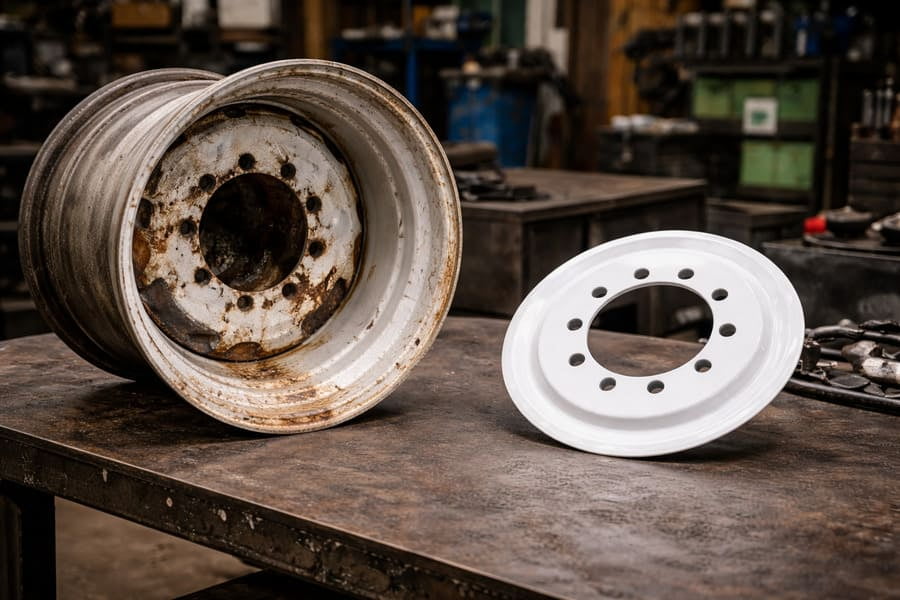
Let's break down the economics. A complete agricultural rim is big, heavy, and expensive to ship from an overseas manufacturer. The bulk of its weight and material cost is in the outer ring. When you buy a complete rim, you're paying for steel you might not even need, plus the cost to ship it across the world. By purchasing only the center disc2, you completely sidestep these costs. The disc itself is a fraction of the weight and material, making it far cheaper to produce and ship. The other main cost, welding8, is done locally by your workshop. You are essentially replacing a high-cost imported product with a lower-cost component and your own shop's labor, turning a major expense into a profitable service.
To support this, we now supply center disc2s separately. We offer a huge range of options to fit nearly any machine, with various PCDs (bolt patterns) and offsets. We can provide high-volume stamped discs for common sizes or custom laser-cut discs for unique or older equipment.
How Can You Ensure a Safe and Reliable Repair When Welding?
Swapping the center disc2 is a fantastic idea, but it sounds risky. If the welding8 isn't perfect, couldn't the wheel be unbalanced or unsafe? You're absolutely right to be cautious.
The key to a safe repair is maintaining perfect concentricity9. The center bore of the new disc must be perfectly aligned with the center of the outer rim ring during welding8 to prevent wobble10 and ensure safe operation.
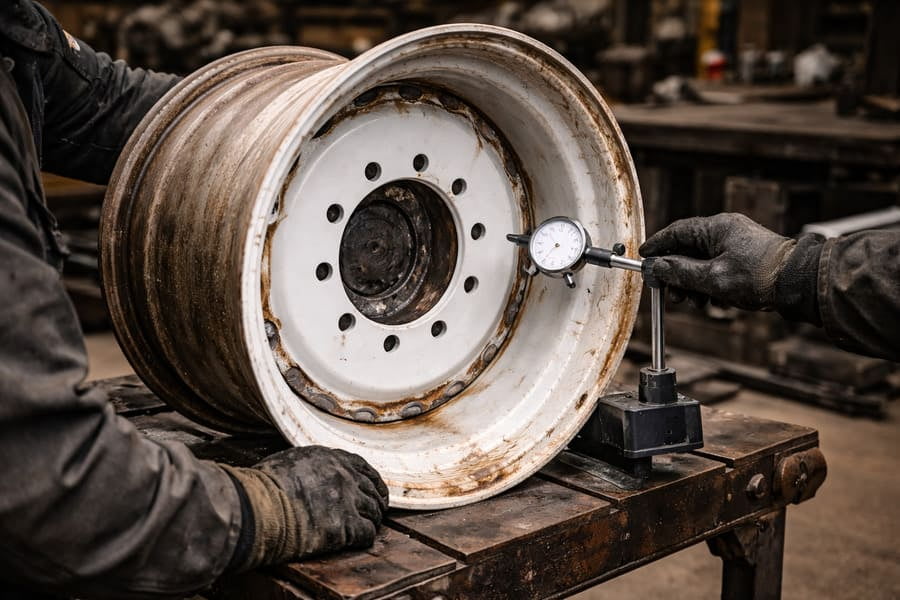
A successful and safe repair depends entirely on the quality of the welding8 job, and the most critical factor is alignment. The center disc2 cannot be even slightly off-center. An off-center disc2 will cause the wheel to wobble10, leading to dangerous vibrations at speed, uneven tire wear, and excessive stress on the wheel bearings and axle. Before welding8, a technician must use a jig or precise measurements to ensure the new disc and the outer ring share the exact same centerline. Once aligned, the disc should be tack-welded in several spots. The technician must then re-check the alignment before running the final, continuous bead. A skilled welder knows how to manage heat to prevent the rim from warping during this process. Taking these careful steps ensures the repaired wheel is just as balanced, true, and safe as a brand-new one.
Conclusion
Offering separate center disc2s transforms agricultural rim repair11. It reduces waste, cuts costs for your customers, and creates a valuable, profitable service for your workshop, all while maintaining safety.
Explore the various applications of agricultural rims to see their significance in farming. ↩
Understanding the center disc's role can help you appreciate its importance in rim repairs. ↩
Investigate the reasons behind bolt hole failures to improve rim durability. ↩
Understanding the outer rim's role can help you appreciate the design of agricultural wheels. ↩
Learn about shock loads to better understand the stresses on center discs. ↩
Learn about metal fatigue to understand why center discs fail and how to prevent it. ↩
Discover the benefits of using local labor for repairs and its effect on expenses. ↩
Discover essential welding techniques to ensure safe and effective repairs. ↩
Understanding concentricity is crucial for ensuring safe and balanced repairs. ↩
Learn about the causes of wobble to ensure your repairs are safe and effective. ↩
Explore various rim repair methods to enhance your workshop's service offerings. ↩