
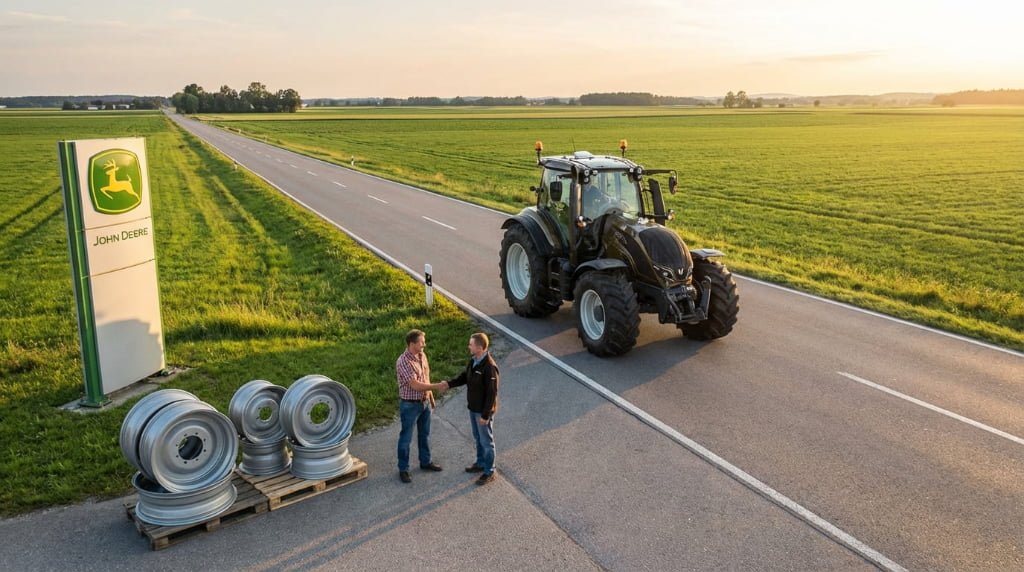
Your customers are investing in faster, more powerful tractors, but now they're complaining about teeth-rattling vibrations1 on the road. You worry that the rims you sold them can't handle the speed.
Standard rims, designed for low-speed field use, create dangerous vibrations1 (run-out2) at road speeds. A new generation of precision-built rims3 with tighter tolerances is essential for ensuring driver safety, comfort, and preventing catastrophic equipment failure.
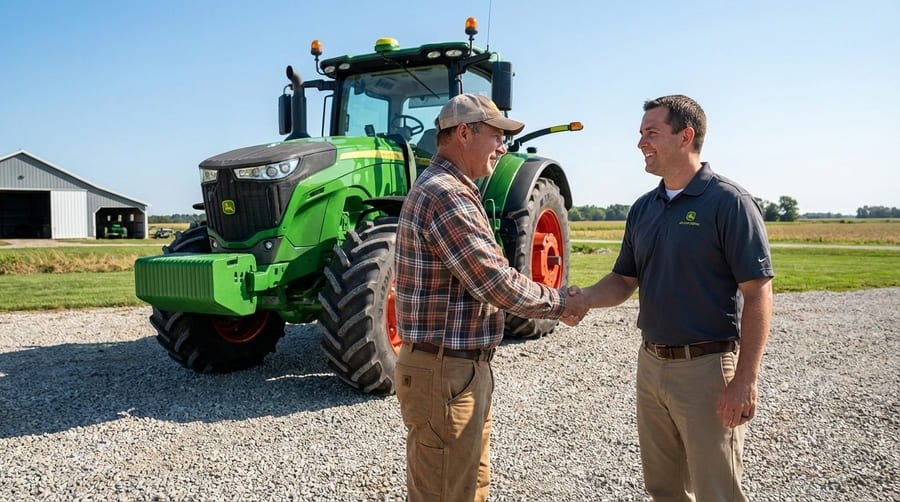
I once got a call from a dealer who was in a tough spot. He had sold a set of standard, heavy-duty rims for a brand-new, high-speed tractor. The farmer was furious. The tractor, which cost him a fortune, shook so violently on the road that it was almost undrivable. The farmer blamed the tractor, but the dealer suspected the wheels. He was right. Those vibrations1 weren't just uncomfortable; they were a safety hazard putting immense stress on the machine's welds and components. That experience taught me that as tractors evolve, our components must evolve too. Selling a rim is no longer just about fit; it's about performance at speed.
What Are Run-Out and Dynamic Balance, and Why Do They Matter Now More Than Ever?
Your customer feels a constant shake at 30 mph. You dismiss it as normal for a heavy machine, but it's actually a clear warning sign of a dangerous imbalance.
Run-out is the rim's "wobble" from not being perfectly round, while dynamic balance4 is about even weight distribution. At high speeds, flaws in either create intense vibrations1 that lead to component fatigue, poor handling, and potential accidents.
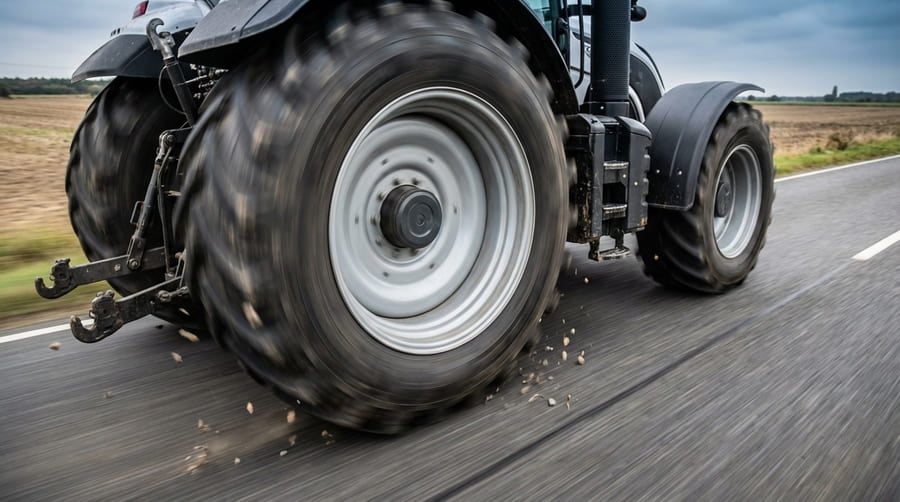
For decades, these terms didn't matter as much in agriculture. Tractors moved slowly on soft soil, which absorbed most imperfections. But today's tractors often travel at 30-40 mph on hard pavement. At these speeds, tiny flaws have huge consequences. Think of run-out2 as a wheel that is slightly egg-shaped instead of perfectly circular. Every rotation creates a "hop" or a "wobble." Now, imagine a heavy spot on one side of that wheel—that's an issue of dynamic balance4. As it spins faster, that heavy spot tries to pull the wheel off-center, creating a powerful shimmy. On pavement, these combined forces aren't absorbed. They are sent directly into the axle, the chassis, and the steering column, leading to driver fatigue and, over time, causing stress cracks in welds and other critical parts.
Impact of Vibrations: Low Speed vs. High Speed
| Factor | Low-Speed (In-Field) | High-Speed (On-Road) |
|---|---|---|
| Vibration Effect | Absorbed by soft soil; negligible impact | Amplified on hard surfaces; severe shaking |
| Driver Comfort | Unnoticeable | High fatigue, poor control |
| Equipment Stress | Minimal | High risk of weld fatigue and cracks |
| Safety Risk | Low | High risk of loss of control |
How Are Rims Engineered Differently for High-Speed Applications?
You assume all heavy-duty rims are the same. But fitting a standard rim on a high-speed tractor is a hidden liability that can come back to haunt you.
High-speed rims are manufactured to drastically stricter tolerance standards for run-out2 and balance. They also undergo enhanced weld-strength testing5 to guarantee they can withstand the unique, sustained stresses created by high-speed road travel without failing.
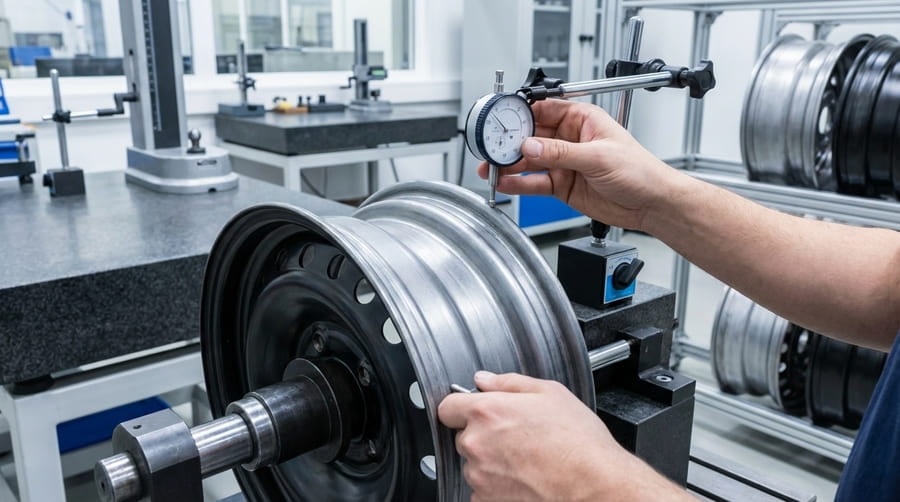
You can't just take a traditional rim design and call it "high-speed." It has to be engineered differently from the start. For our high-speed rims, the manufacturing process is far more rigorous. Standard industry tolerance for run-out2 might be acceptable for a field, but it's totally inadequate for the road. We enforce a much tighter tolerance, ensuring each rim is as close to perfectly circular and flat as possible. This is the single biggest factor in reducing vibration. Secondly, we focus on the welds. Constant high-frequency vibration from road travel puts a unique stress on the weld points between the center disc and the barrel. We use enhanced testing protocols to certify that every weld is strong enough to resist this fatigue over the long term. It’s this commitment to precision and strength that defines a true high-speed rim.
Why Does Selling the Right Rim Protect Your Dealership?
You want to give your customer the best value. But selling a cheaper, low-speed rim for a fast tractor isn't saving them money—it's exposing them, and you, to risk.
For dealers, “safety” is the ultimate promise to a farmer. Choosing rims engineered for high speeds prevents accidents and failures, directly improving your customer’s experience and protecting your dealership from costly warranty claims and serious liability issues.
When a farmer buys from you, they are buying your expertise and your trust. If a wheel-related failure happens on the road, the first person they will blame is the one who sold them the component. Selling a rim that isn't rated for the machine's capability is a direct path to a damaged reputation. The few dollars saved on a standard rim are insignificant compared to the potential cost of a warranty claim, an accident, or a lost customer. By proactively educating your customers and recommending precision-built, high-speed rims, you are doing more than just upselling. You are demonstrating a commitment to their safety. This builds a reputation not as a parts seller, but as a trusted partner who understands modern farming6 and protects their customers' investments and well-being. That is how you build loyalty that lasts for decades.
Conclusion
Don't let outdated rims compromise modern tractors. Equip your customers with precision-built, high-speed rims to ensure their safety, protect your reputation, and drive your business forward with confidence.
Find out how vibrations can impact tractor handling and driver comfort. ↩
Understanding run-out can help you appreciate the engineering behind safe rim design. ↩
Learn about the manufacturing process of precision-built rims and their importance for safety. ↩
Discover how dynamic balance affects vehicle performance and safety. ↩
Learn about the critical testing processes that ensure rim durability and safety. ↩
Stay updated on the latest trends in farming equipment to better serve your customers. ↩