
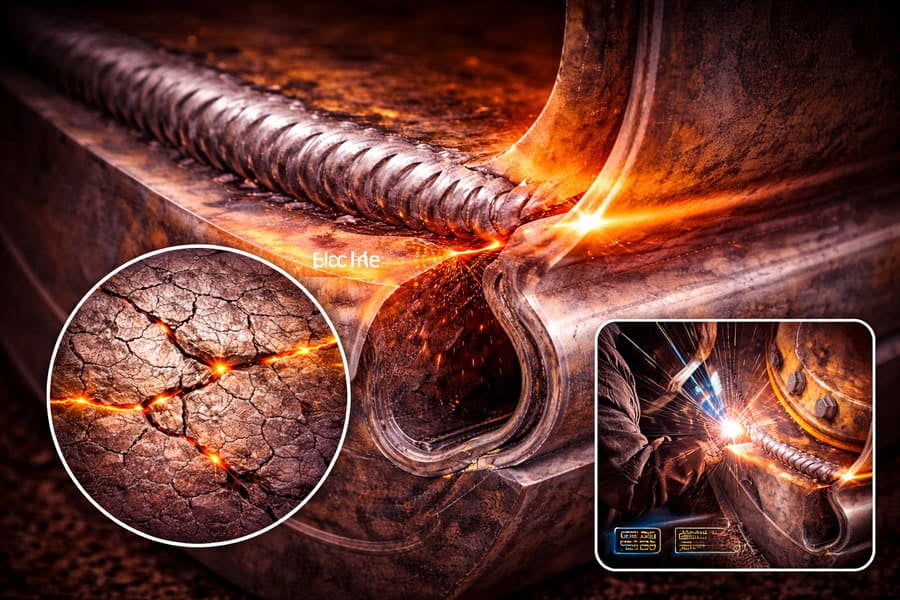
You find a crack near a weld on a heavy-duty rim. Your immediate thought is "bad welding." You start questioning the manufacturer's quality, but you're looking in the wrong place.
The failure isn't the weld metal1, which is often stronger than the surrounding steel. The real culprit is the "Heat-Affected Zone2" (HAZ)—a narrow band of parent metal next to the weld that was weakened by the intense heat of the welding process.
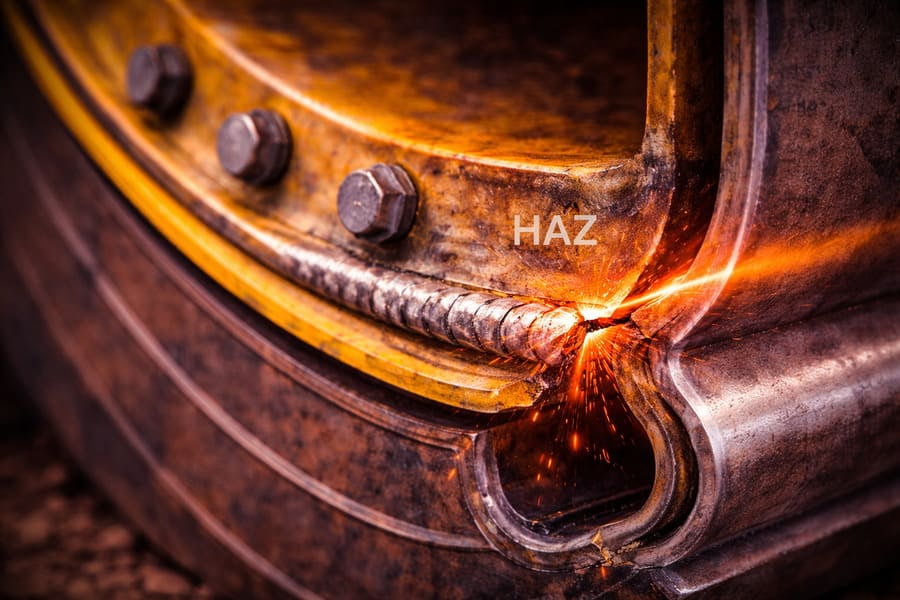
For over a decade, I've looked at photos of failed rims sent by clients. Almost every time, they point to the weld seam. But when we do a proper failure analysis3, the story is always the same. The crack didn't begin in the strong, fused weld material. It started just to the side of it, in that almost invisible zone that was cooked and transformed during welding. It’s the most common point of misunderstanding in our industry. Everyone blames the most obvious part, but the real villain is the hidden consequence of the process itself.
Isn't the Weld Supposed to Be the Weakest Link?
You see a welded joint and assume it must be the weakest part of the structure. It’s a logical assumption, as it's where two pieces of steel are joined together.
No, modern welding uses filler materials and techniques that create a weld bead that is often stronger and tougher than the parent steel. The weakest point is the adjacent metal that was structurally altered—but not melted—by the intense heat.
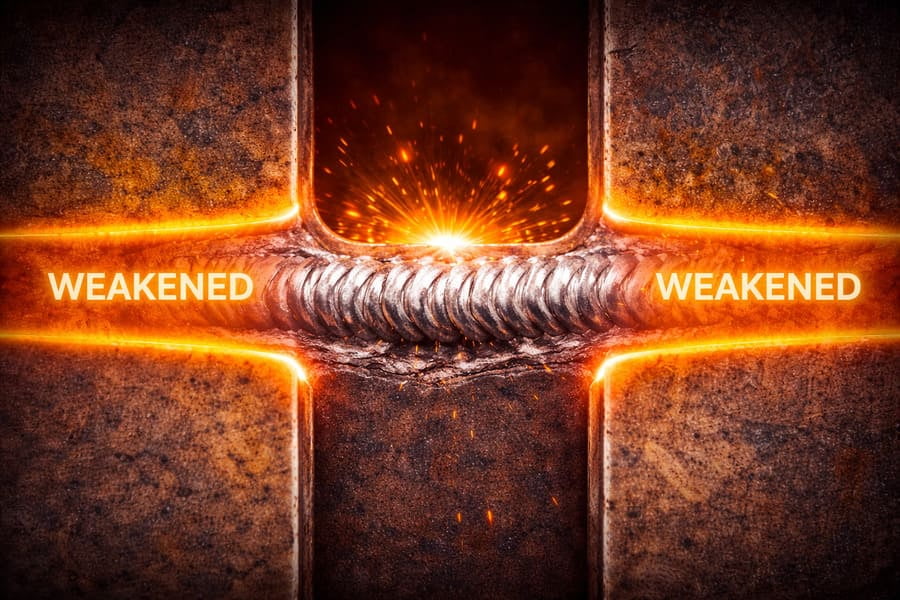
This is a point I have to explain often. Think of it like baking a loaf of bread. The crust gets hard and crispy from direct heat, while the inside stays soft. The area right under the crust isn't soft like the middle or hard like the crust; it's a unique transition zone. Welding does something similar to steel. The weld itself is like the "crust"—carefully formulated to be strong. The parent metal far away is the "soft middle." But the metal right next to the weld got intensely hot without melting. This heat changes its internal grain structure, often making it more brittle and less resistant to repeated stress. So, the weld holds, but the metal next to it becomes the new weak point.
What is this 'Heat-Affected Zone2' Everyone Talks About?
You hear experts mention the "HAZ" or "Heat-Affected Zone2," but what does that mean in practical terms for your OTR rims4? It sounds like complicated engineering jargon.
The HAZ is a band of the original rim steel next to the weld. The welding process heated this zone enough to change its microscopic crystal structure, altering its mechanical properties5 like strength and flexibility, without actually melting it.
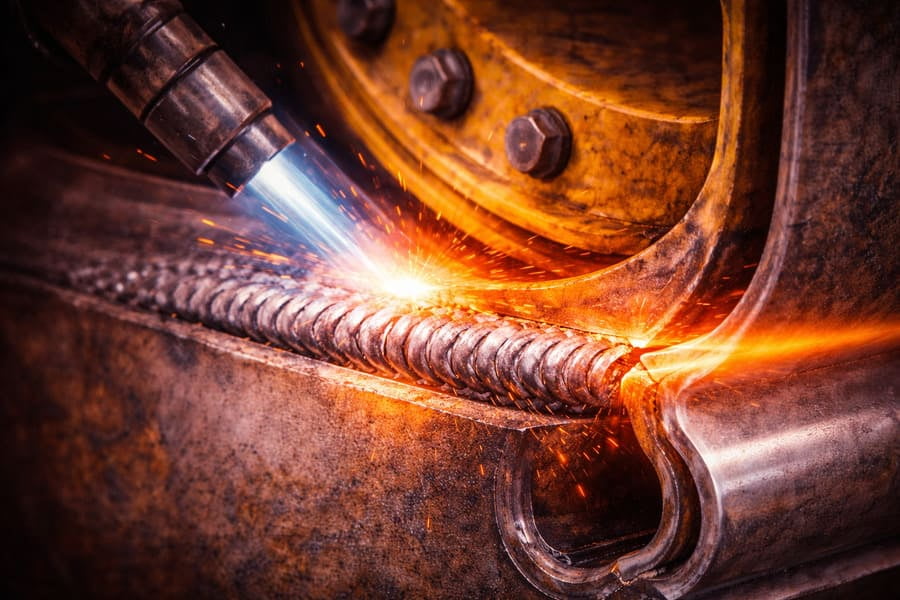
Imagine you put a cold steak on a searing hot grill. The grill marks are where the meat is charred and cooked through. But the meat for a few millimeters on either side of those grill marks is also cooked, just differently. It's no longer raw, but it's not charred either. The HAZ in a rim is exactly like that. It's the part of the steel that was "cooked" by the heat of the weld.
How Welding Changes the Steel
| Zone | State During Welding | Resulting Microstructure | Key Property |
|---|---|---|---|
| Weld Metal | Molten and fused | Cast structure, very strong | High tensile strength |
| Heat-Affected Zone2 (HAZ) | Solid, but very hot | Altered, often larger grains | Reduced fatigue life6 |
| Parent Metal | Unaffected by heat | Original rolled structure | Balanced properties |
This table shows why the HAZ is the problem. While the weld itself is strong, the HAZ's structure is compromised. It loses its ability to handle repeated flexing and vibration, which is the exact kind of stress a rim sees every single day.
Why Does Fatigue Always Attack the HAZ First?
Your OTR rim doesn't break from one single massive impact. It fails from the accumulation of millions of small bumps, turns, and vibrations over time. Why does this fatigue process target the HAZ?
The altered grain structure in the HAZ makes it less ductile and more brittle. It can't flex and absorb cyclic stress7 as effectively as the parent metal. Tiny micro-cracks8 form in this zone and grow with each stress cycle until they lead to complete failure.
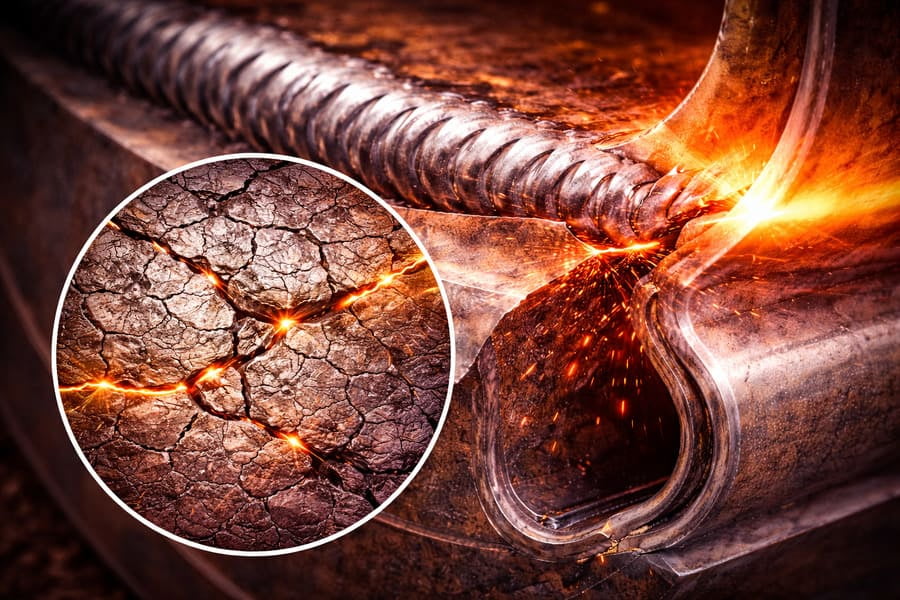
Think of a paperclip. You can bend it once easily. But if you bend it back and forth in the same spot repeatedly, it gets weak and snaps. That's metal fatigue. Now, imagine one part of that paperclip was made slightly more brittle. That's the spot that will always break first. The HAZ is that brittle spot on a rim. Every time the vehicle hits a bump or turns, the rim flexes. While the rest of the steel can handle this flexing, the HAZ is less forgiving. It develops microscopic cracks that slowly link up. The weld itself is fine, the rest of the rim is fine, but this narrow band is where the fatigue damage concentrates, making it the starting point for almost all weld-related cracks9.
How Can You Mitigate Risks in the Heat-Affected Zone2?
Knowing the HAZ is the weak point is useful, but how does this knowledge help you reduce OTR rim failures and lower your operational costs?
You must partner with a manufacturer who understands and controls the HAZ. This involves using advanced welding procedures10, proper pre-heating11, and post-weld heat treatment12 to minimize the size and negative effects of the HAZ.
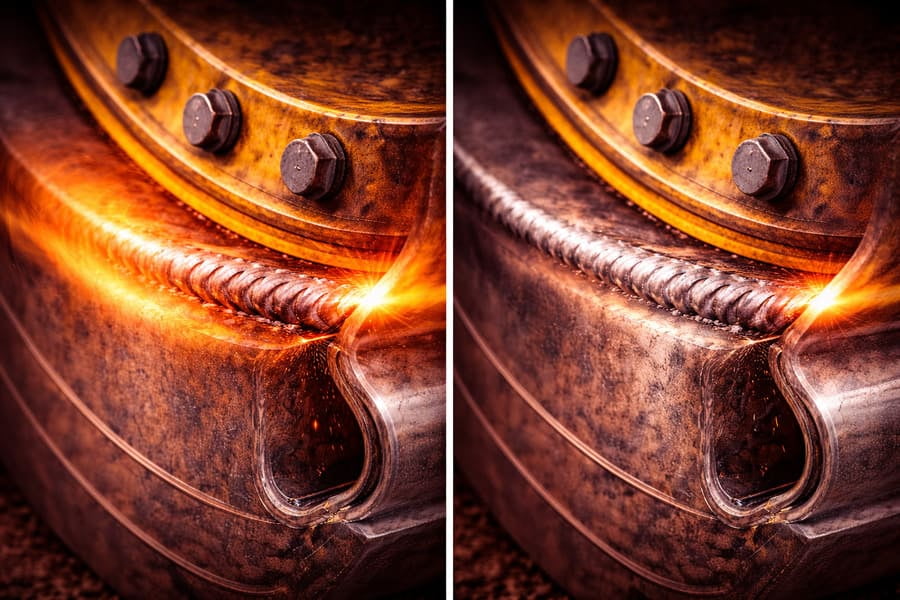
You can't eliminate the HAZ, but you can manage it. This is where the expertise of the manufacturer becomes critical. At Gescomaxy, we don't just focus on making a strong weld; we focus on protecting the area around it. This involves precise control over welding parameters like heat input and travel speed to keep the HAZ as small as possible. For critical applications, we use post-weld heat treatment12. This is like a controlled "cool down" for the steel, which refines the grain structure in the HAZ, relieving internal stresses and restoring its toughness. When you're sourcing OTR rims4, you need to ask your supplier not just about their welding quality13, but about their process for controlling the Heat-Affected Zone2. That question alone tells them you know what really matters.
Conclusion
Stop blaming the weld. The true weak point is the Heat-Affected Zone2 next to it. Partnering with a supplier who actively manages the HAZ is the key to preventing weld-related rim failures.
Explore the strength of weld metal to appreciate its role in structural integrity. ↩
Understanding the HAZ is crucial for preventing weld-related failures in heavy-duty rims. ↩
Learn about failure analysis to better understand how to prevent issues in welded structures. ↩
Learn about OTR rims to understand their importance in heavy-duty applications. ↩
Discover how welding affects the mechanical properties of steel, crucial for rim durability. ↩
Understanding fatigue life helps in assessing the longevity of welded components. ↩
Explore cyclic stress to understand how it impacts the performance of welded structures. ↩
Understanding micro-cracks is essential for preventing failures in welded structures. ↩
Understanding the causes of weld-related cracks can help in effective prevention. ↩
Explore advanced welding procedures to understand how they can minimize HAZ effects. ↩
Learn about pre-heating techniques to enhance weld quality and reduce HAZ issues. ↩
Discover how post-weld heat treatment can improve the properties of welded joints. ↩
Explore the factors that contribute to high welding quality for better performance. ↩