
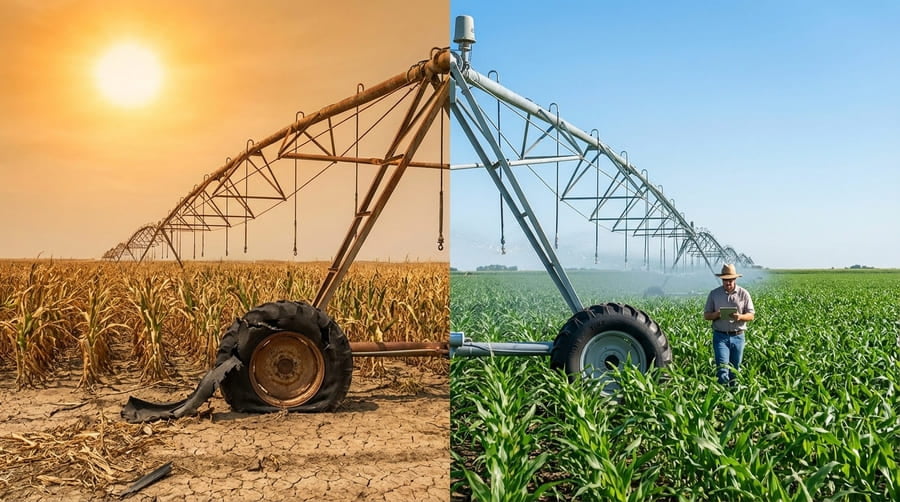
You buy a cheaper set of irrigation tires1, feeling smart about saving on upfront costs. But this "saving" is a time bomb, waiting to explode when your system is under the most stress, turning a small economy into a huge loss.
Cheaper irrigation tires1 are made with lower-grade compounds2 and weaker construction. These materials degrade fastest under peak stress3—high heat and continuous use. This means they are statistically most likely to fail precisely when your crop needs water the most, making the failure catastrophically expensive.
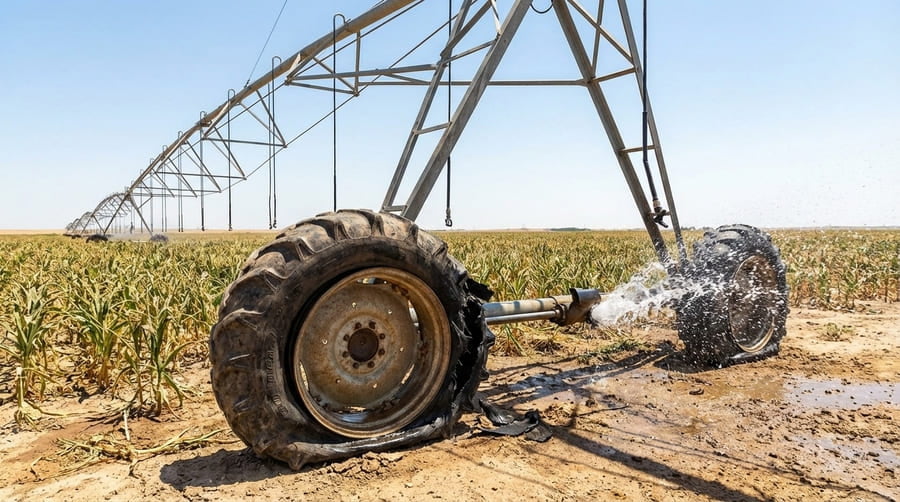
I'll never forget a call I got from a farm manager in Nebraska. He was proud because he'd found a supplier who beat our price on a full set of pivot tires by about 15%. He said, "A tire is a tire, right?" I told him I hoped he was right. He called me back in the middle of August, and he was not happy. One of his "bargain" tires didn't just go flat; the casing had completely failed under the heat and constant load. The pivot stopped, and by the time they got it fixed, a section of his cornfield was already showing severe stress. He saved about two thousand dollars on the purchase, but he told me his initial yield loss estimate was over ten times that amount. His cheap tires failed at the most expensive possible moment.
Is the Price Tag the Only Cost You're Calculating?
You look at the invoice for a cheap tire and see a clear, fixed number. But this ignores the massive, hidden cost of failure, creating a dangerous blind spot in your budget.
The real cost of a irrigation tire isn't just its purchase price. It's the price plus the amplified financial risk of downtime4. A cheap tire has a low price but carries a very high, hidden risk cost that you end up paying for later.
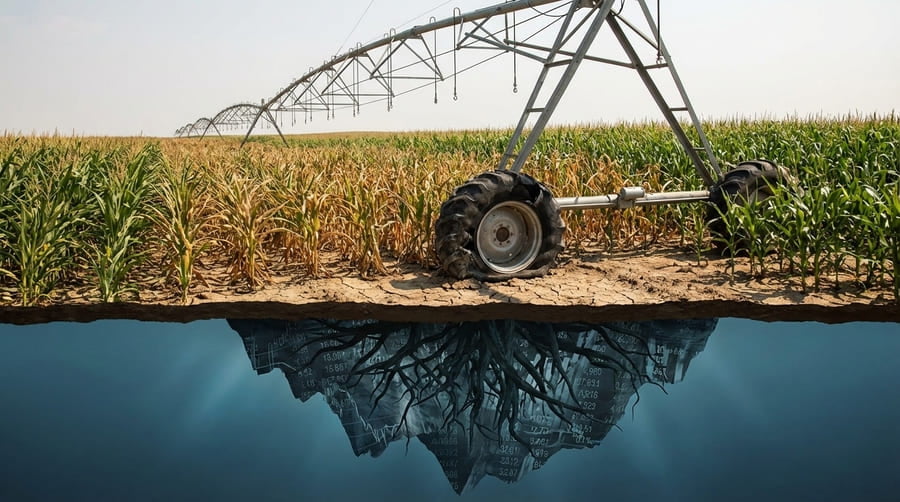
Thinking about a irrigation tire's cost only in terms of its purchase price is a fundamental mistake. A irrigation tire's price is a static, known number. Let's say it's $250. That number never changes. However, the cost of that tire failing is extremely dynamic. A failure in March, during setup, might cost you a few hours of labor. But that same failure in July, during a critical pollination window, can cost you thousands of dollars per hour in lost yield potential. You are using a static number (the tire’s price) to make a decision about a dynamic risk5 (your seasonal cash flow). This is a severe mismatch. A higher-quality tire might cost $350, but its dramatically lower risk of in-season failure makes it the far cheaper option when you calculate the total, risk-adjusted cost of ownership6.
The True Cost Equation
Your calculation must include risk, not just the sticker price.
| Cost Factor | "Cheap" Tire ($250) | Quality Tire ($350) |
|---|---|---|
| Purchase Price | $250 | $350 |
| Mid-Season Failure Risk | High | Low |
| Potential Downtime Cost | $10,000+ | Minimal |
| Risk-Adjusted Total | $10,250+ | ~$350 |
Why Do Budget Irrigation Tires Seem Programmed to Fail in Peak Season?
It feels like bad luck when a cheap tire fails during a heatwave. It’s not luck; it's a predictable outcome of its design, making it a terrible choice for irrigation.
These irrigation tires1 don't just fail sooner; they fail at the most expensive time. The greatest stresses—heat, UV exposure, and constant load—occur during peak season. Budget tires lack the durability to handle these peak conditions, making failure during that time almost inevitable.
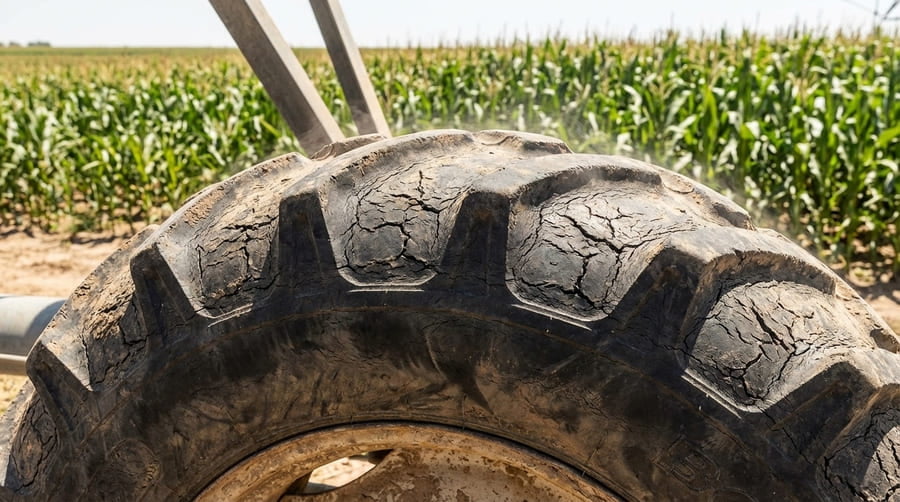
A quality irrigation tire7 is built with better materials. This means it has superior rubber compounds with additives that resist UV degradation and heat breakdown. Its internal cord body is designed to handle flexing under load for hundreds of thousands of cycles. A cheaper tire cuts corners in exactly these areas. It uses less expensive rubber that gets brittle with sun exposure and softens excessively in the heat. Its internal structure is not as robust. For most of the year, this might not matter. But during peak irrigation season, all the stress factors hit at once. The ground is hard, the sun is intense, the machine runs 24/7, and the tires get hot. This is the exact combination of factors that overwhelms the cheaper materials, causing the tire to fail. It’s not a coincidence; it’s cause and effect.
Is Proactive Replacement a Cost or an Investment?
Replacing a irrigation tire that still holds air feels wasteful. But this small, planned expense is actually a strategic investment that prevents an uncontrolled financial disaster.
The most cost-effective decision is to accept a small, certain loss early to avoid a massive, uncertain disaster later. Replacing a questionable tire before the season is a controlled cost8, while a mid-season failure is an uncontrolled catastrophe.
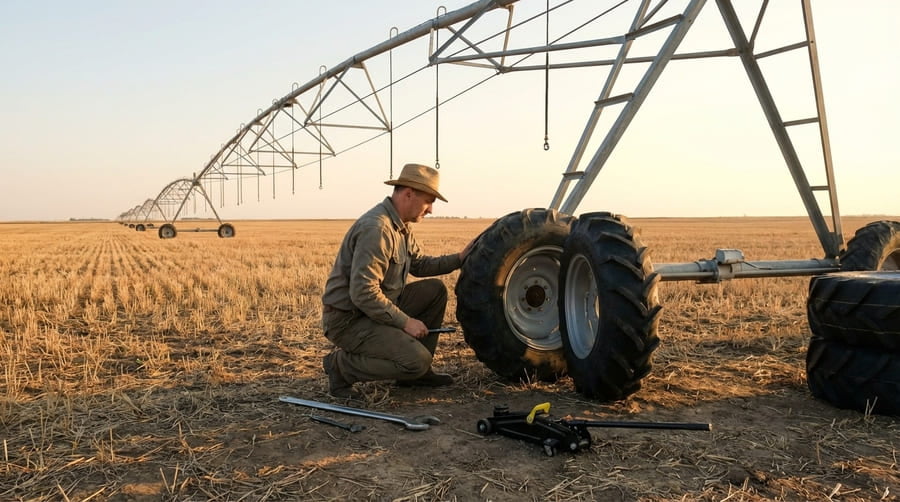
Think of it like insurance. You pay a small, predictable premium to protect yourself from a devastating, unpredictable event. Replacing a worn or low-quality tire before the high-risk irrigation window opens is your insurance premium. Yes, you are "losing" the last bit of life in that old irrigation tire. That is a small, known, and manageable cost. Let’s call it $50 of lost value. In exchange, you are completely eliminating the risk of a mid-season failure, which could cost you $15,000 in lost yield and emergency repairs9. A smart manager would make that trade every single time. By choosing to spend a little money on your own terms and on your own schedule, you prevent the risk of being forced to spend a lot of money on the problem's terms, at the worst possible time. It's the difference between managing your operation and letting your equipment manage you.
Conclusion
The cheapest irrigation tire is rarely the one with the lowest price tag. It's the one that lets you sleep at night during a July heatwave, knowing your water is still running.
Explore this link to find high-quality irrigation tires that ensure durability and reliability during peak seasons. ↩
Learn about the risks associated with lower-grade compounds in tires and how they affect performance. ↩
Discover insights on tire performance under peak stress to make informed purchasing decisions. ↩
Understand the financial implications of downtime in agriculture and how to mitigate risks effectively. ↩
Explore the concept of dynamic risk in agricultural equipment to better manage your investments. ↩
Find resources on calculating risk-adjusted costs to make smarter purchasing decisions for your equipment. ↩
Explore the features that define a quality irrigation tire to ensure your crops are well-supported. ↩
Learn about controlled costs in agricultural management and how they can help you budget effectively. ↩
Find tips on preparing for emergency repairs to minimize downtime and financial losses. ↩