

A customer says a irrigation tire "feels wrong," but it's holding air. You're caught between ignoring a potential risk and making a costly, unnecessary replacement. This ambiguity is where profit gets lost.
It means a symptom has appeared before a catastrophic failure. These complaints are crucial signals that require a systematic investigation1 into the specific symptom2, the machinery, and operating conditions before a judgment can be made. Ignoring it is a gamble; diagnosing it is good business.
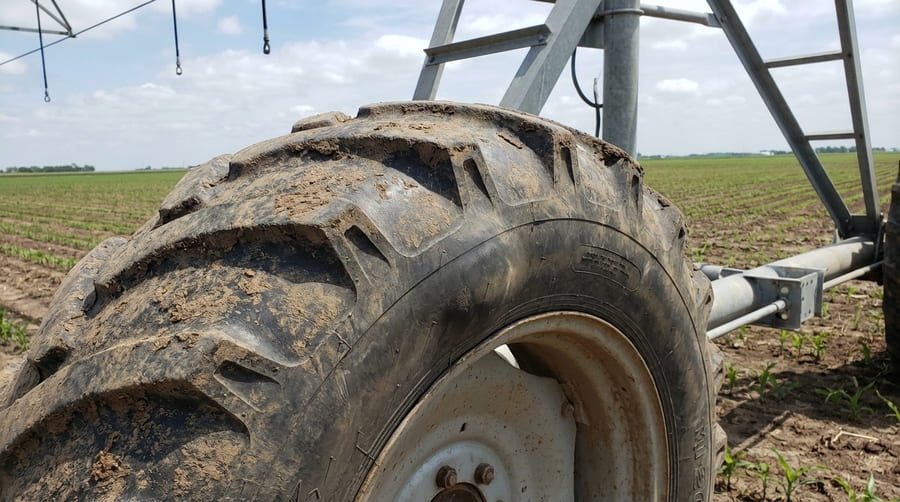
I remember a dealer calling me, completely frustrated. His best customer was complaining about a "wobbly" tire on a pivot and was demanding a brand new one. The dealer was ready to just give in to keep the peace. I told him to wait and asked him to go through a simple diagnostic checklist3 with me over the phone. It turned out the tire was fine; the wheel bearings were loose, causing the wobble. By taking thirty minutes to investigate instead of immediately replacing, he not only saved the cost of the tire but also became a hero to his customer for finding the real problem. That's the power of having a process. It turns a vague complaint4 into an opportunity to prove your expertise.
How Do You Turn Vague Feelings into Specific Facts?
A customer reports a tire "feels soft" or has a "slight vibration." These are feelings, not facts, and acting on them without clarity is just guessing.
You turn feelings into facts by defining the symptom before making a judgment. A "bulge" points to a different cause than "uneven wear." Accurately classifying the specific issue prevents incorrect conclusions and avoids throwing away a perfectly good tire.
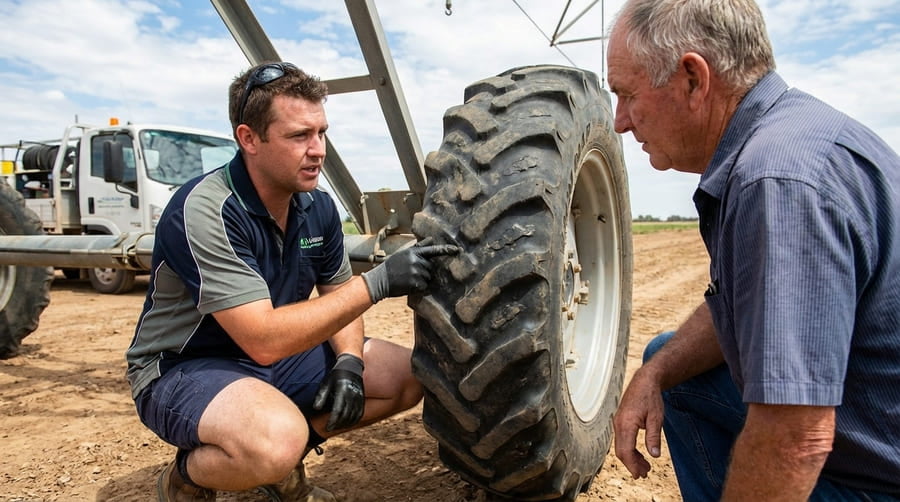
When a complaint is vague, the first step is always to get specific. Don't let the conversation stay at "it feels wrong." Guide the customer or your technician to use precise language. A "soft" tire might be an inflation issue. A "vibration" could be a balance problem or a mechanical issue with the pivot. A "bulge" points to a potential internal structural issue. "Uneven wear" often signals an alignment or pressure problem. Each of these symptoms is a clue that points you in a different diagnostic direction. By training your team to start with the question, "What exactly are we seeing?" you move from emotional reactions to a technical investigation5. This simple shift in process immediately reduces conflict and sets the stage for a professional, fact-based solution.
Symptom-to-Cause Quick Guide
| Vague Complaint | Specific Symptom | Potential Cause(s) |
|---|---|---|
| "It feels wobbly." | Vibration / Wobble | Imbalance, loose bearing, bent rim |
| "It looks weak." | Sidewall Bulge | Internal impact break, ply separation (Serious) |
| "It's not wearing right." | Uneven Wear | Incorrect inflation, alignment issue, bent axle |
| "It feels soft." | Low Pressure | Slow leak (valve, bead, puncture), incorrect filling |
Is It Really the Irrigation Tire's Fault?
Theirrigation tire has a problem, so the immediate assumption is that the tire is defective. But replacing it without checking the surrounding components can mean the same problem will just happen again.
Before blaming the irrigation tire, you must systematically rule out other causes like rim deformation, loose bearings, wheel alignment, and incorrect inflation. This structured elimination process6 protects your credibility and avoids costly disputes by finding the true root cause of the problem.
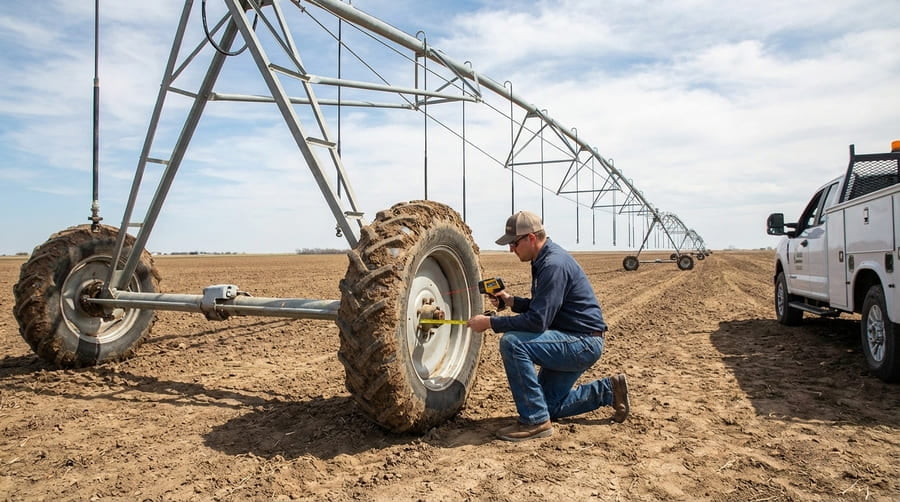
The irrigation tire is where the symptom shows up, but it’s often not the source of the problem. I’ve seen dealers waste thousands of dollars replacing tires only to have the new ones fail for the exact same reason. A bent rim will cause uneven bead pressure and lead to a slow leak or even a bead failure. A loose pivot bearing will create a wobble that puts strange stresses on the tire, causing premature and uneven wear. Incorrect inflation is the number one cause of most non-catastrophic irrigation tire issues. By creating a simple "blame the machine first7" checklist, you change the dynamic. Instead of arguing with the customer about the tire's quality, you become their partner in troubleshooting their equipment. This approach not only saves you from paying for unnecessary replacements but also reinforces your position as a technical expert, not just a parts seller.
Why Is Taking Photos More Important Than a Quick Fix?
The customer is in a hurry and just wants the problem solved now. Taking the time to document the issue with photos and notes feels like a delay, but skipping it is a huge risk.
Documentation is risk control8. Photos, notes on defect location, load conditions, and usage history form the technical evidence for your decision. Without it, your troubleshooting becomes subjective guesswork, increasing your exposure to liability and future disputes.
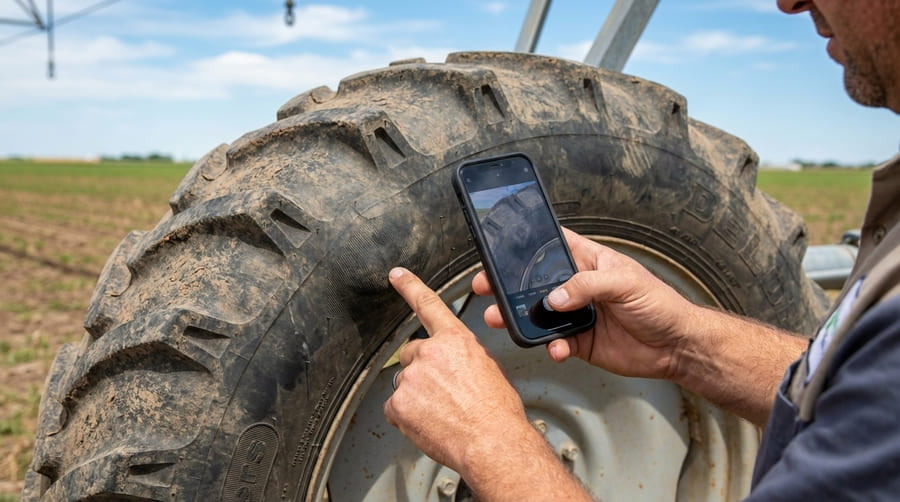
When a dispute arises, the person with the best documentation wins. It's that simple. A folder with clear photos, a description of the failure, the tire's serial number, and notes on the machine's condition is your best defense. It's the only thing that can turn a "he said, she said" argument into a technical review. I advise all my partners to create a simple digital form9 for every single complaint. It should prompt them to take a photo of the whole tire, a close-up of the problem area, a shot of the serial number, and to note the inflation pressure and any visible issues with the rim or axle. This five-minute process provides the backbone for any warranty claim with a supplier and demonstrates professionalism to the customer. It shows you are taking their complaint seriously and are following a structured, fair process. Without that evidence, you have no leverage with your supplier and no authority with your customer.
How Can Unclear Advice Wreck a Customer Relationship?
You've inspected the tire and it seems okay for now, so you tell the customer to "keep an eye on it." This vague advice feels safe, but it actually creates massive risk.
Every complaint must end with a clear, specific instruction10: "Continue to operate normally," "Limit your speed and load," or "Replace immediately." Ambiguous advice creates safety risks and destroys trust. Clear direction builds your authority and the customer's confidence in your brand.

Telling a customer to "watch it" is one of the worst things you can do. You are transferring all of the responsibility and risk to them. If the tire fails catastrophically an hour later, they will blame you for not giving them a clear warning. If they replace it unnecessarily, they will feel you gave them bad advice that cost them money. There is no winning with ambiguous instructions. After your diagnosis, you must give a firm, confident recommendation11 based on the facts you've gathered. For example: "The pressure was low. We've reinflated it to the correct PSI and the leak was from the valve stem, which we replaced. You are cleared for normal operation." Or, "We see a small bulge here. To be safe, you should replace this tire before the pivot runs again." This directness accomplishes two things: it minimizes the customer's risk and it establishes you as the expert whose judgment can be trusted.
Conclusion
A vague irrigation tire complaint is a test of your process. By defining symptoms, eliminating variables12, documenting evidence13, and giving clear instructions, you turn risky situations into opportunities to build trust14.
Understanding systematic investigation helps prevent costly mistakes and ensures machinery operates safely and efficiently. ↩
Defining specific symptoms leads to accurate diagnosis, preventing incorrect conclusions and unnecessary replacements. ↩
A diagnostic checklist can identify the real problem, saving money and enhancing customer satisfaction by avoiding unnecessary replacements. ↩
Turning vague complaints into opportunities builds trust and showcases expertise, improving customer relationships. ↩
Technical investigation turns vague complaints into actionable insights, reducing conflict and fostering professional solutions. ↩
A structured elimination process ensures accurate diagnosis, protecting credibility and avoiding costly disputes. ↩
Blaming the machine first helps identify the true root cause, saving money and reinforcing technical expertise. ↩
Documentation provides technical evidence, reducing liability and future disputes, and demonstrating professionalism. ↩
A digital form ensures thorough documentation, aiding in warranty claims and enhancing customer trust. ↩
Clear instructions minimize safety risks and build customer trust, establishing authority and confidence in your brand. ↩
A firm recommendation minimizes risk and establishes you as a trusted expert, enhancing customer confidence. ↩
Eliminating variables ensures accurate diagnosis, preventing unnecessary replacements and enhancing credibility. ↩
Documenting evidence supports technical reviews, aids in warranty claims, and demonstrates professionalism. ↩
By following a structured process, you can transform risks into trust-building opportunities, enhancing customer relationships. ↩