
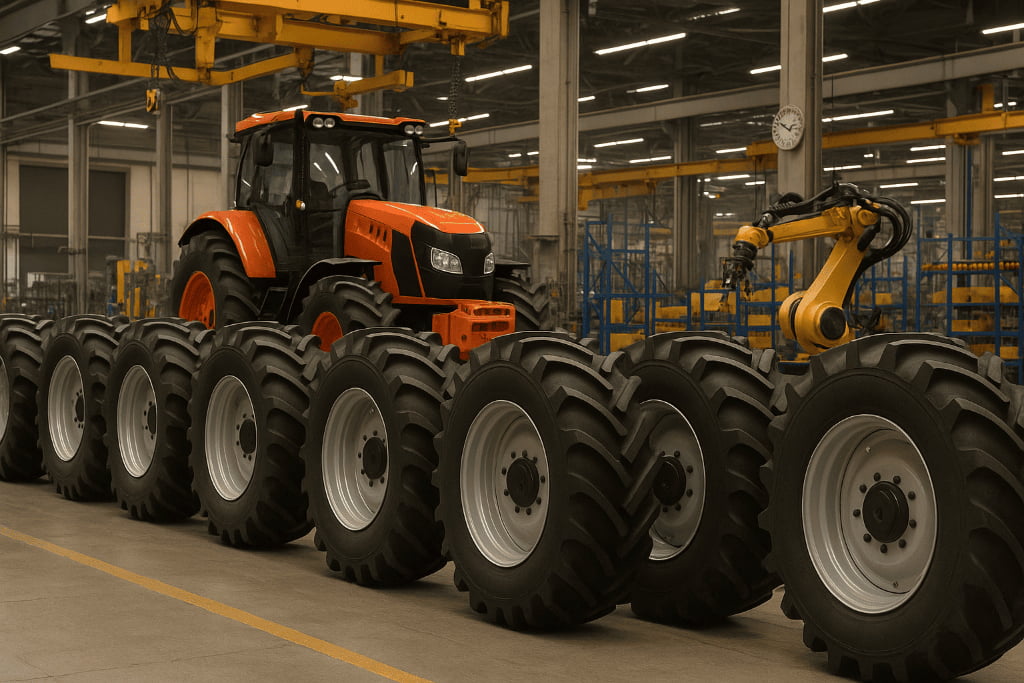
You're a procurement manager1, and your performance is judged on cost savings. You believe negotiating the lowest possible unit price for a tire is your primary goal, the key to a successful sourcing decision.
OEM tractor manufacturers prioritize supply chain stability2, integrated tire-and-wheel solutions3, and absolute batch consistency4 over the lowest unit price. These factors have a much larger impact on the total cost of production and the manufacturer's brand reputation.
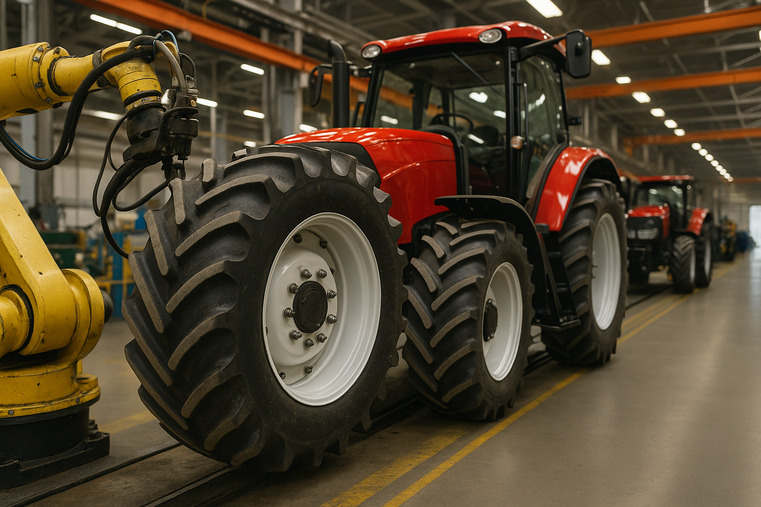
I'll never forget a meeting I had with a major European OEM's head of procurement. We spent about five minutes discussing the price of our agricultural tires. Then he spent the next forty-five minutes grilling me on our production line's average lead time, our quality control process5 for ensuring consistency across a 10,000-unit order, and our capability to match and assemble wheels. He said, "I can find a cheaper tire. I can't easily find a partner who won't shut down my assembly line." That's when I truly understood what keeps an OEM's supply chain manager up at night.
Why is a stable delivery schedule more critical than the unit price?
You've secured a fantastic deal, saving 5% on a container of tires compared to other quotes. But the shipment is stuck in transit, and your production schedule is built around its arrival. Suddenly, that 5% saving seems insignificant.
Modern tractor manufacturing relies on Just-In-Time (JIT) production6. A late tire delivery can halt a multi-million dollar assembly line, costing thousands of dollars per hour in downtime. The cost of a single day of delay can erase years of per-unit savings.
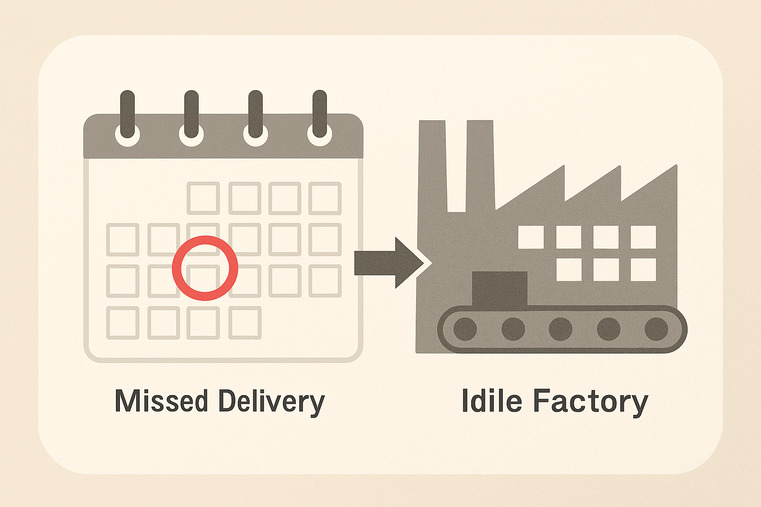
The core principle of a modern factory is flow. They don't keep vast warehouses of parts; they rely on a steady, predictable stream of components arriving exactly when they are needed. Your tire is a critical part of that stream. When that tire doesn't show up, it's not a minor inconvenience. A line of tractor chassis sits waiting, workers are idle, and the entire production forecast is thrown into chaos. As a supplier with over a decade of experience navigating global logistics from China, I can tell you that reliability is our most valuable product. A supplier who delivers on time, every time, isn't a cost center; they are a critical partner in profitability.
The True Cost of an Unreliable Supplier
The price on the invoice is only the beginning of the story. The real cost—the total cost of ownership7—includes all the risks and expenses that come with a supplier relationship.
| Metric | "Low-Price" Supplier | Reliable Partner |
|---|---|---|
| Unit Price | Lowest Bid | Competitive Price |
| Hidden Costs | Production downtime costs | Minimal to none |
| Expedited freight charges for missed deadlines | Predictable logistics costs | |
| Buffer inventory holding costs | Reduced need for buffer stock | |
| Damaged reputation with dealers/end-users | Stronger brand reliability | |
| True Cost | Extremely High & Unpredictable | Predictable & Controlled |
OEMs understand this math better than anyone. They will always choose the path of predictability over the illusion of low-cost chaos.
Isn't pairing tires and wheels the OEM's job?
You're sourcing tires from one supplier in Asia and wheels from another in Europe. You think you've optimized costs for each component. Now, your assembly team is reporting fitment issues, and two separate suppliers are blaming each other.
A supplier who can deliver a complete, pre-assembled tire and wheel unit is a massive value-add for an OEM. It simplifies procurement, eliminates compatibility risks, reduces on-site labor, and creates a single point of accountability for the entire wheel assembly.
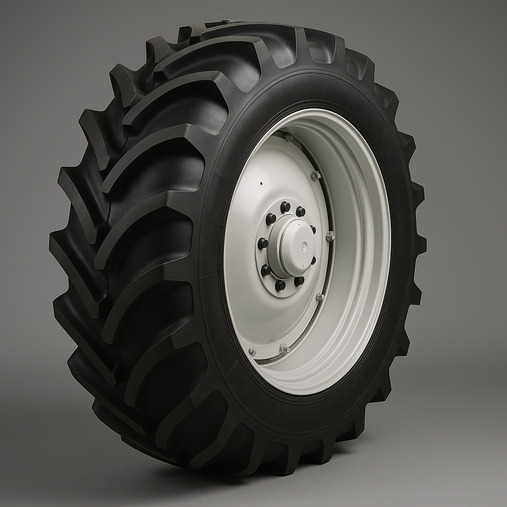
The complexity of managing two separate supply chains for components that must work perfectly together is a huge, often underestimated, drain on resources. The OEM has to manage two sets of drawings, two logistics schedules, and two quality control process5es. When a problem arises—a bolt pattern is off by a millimeter, or a rim profile doesn't seat the tire bead correctly—the finger-pointing begins. As a supplier who offers custom solutions8, we've built our business around removing this headache for our clients. We can take an OEM's hub drawing, engineer the perfect wheel, source or manufacture it, and mount our high-quality tire to it for free. We deliver one ready-to-mount part, not two problems.
The Value of a Single-Source Solution
Moving from a component supplier to a solution partner changes the entire dynamic.
- Simplified Procurement: One purchase order, one point of contact, one delivery schedule. This reduces the administrative burden on the procurement team significantly.
- Eliminated Incompatibility Risk: We take full responsibility for ensuring the tire and wheel are perfectly matched to the OEM's technical specifications. The risk of a mismatch becomes zero for the OEM.
- Reduced Assembly Cost: The tire and wheel arrive as a balanced, inflated, and ready-to-mount unit. This saves valuable time and labor on the assembly line, allowing workers to focus on more complex tasks.
This integrated service is one of the most powerful ways a supplier can move from being a commodity provider to an indispensable partner.
Why does 'good enough' quality kill an OEM's reputation?
You've received and approved a "golden sample" from a potential supplier. It meets every single one of your performance criteria. But you worry: will the 1,000th tire they send be identical to that first perfect one?
OEMs require absolute batch consistency4 because their automated assembly processes9 and global brand reputation depend on it. Any variation in dimension, weight, or balance can disrupt production, while inconsistencies in compound or construction can lead to premature field failures and warranty claims10.
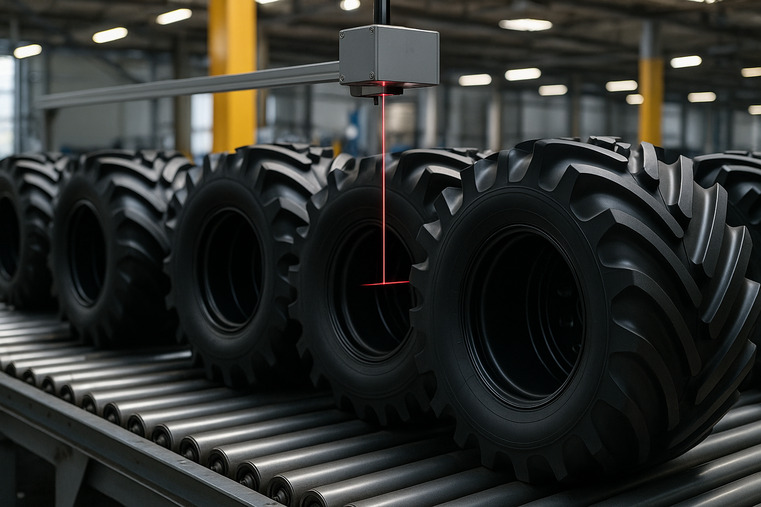
When a supplier says their quality is "good," an OEM procurement manager1 hears "inconsistent." For them, quality means one thing: 1000 = 1000. The first tire and the last tire in a batch must be perfect clones. A tire that is 2mm wider might get stuck in the automated mounting machinery. A slight imbalance can cause vibrations the end-user will feel. A small change in the rubber compound can lead to a dozen tractors in one region experiencing rapid tread wear, creating a PR nightmare. This is why our 10 professional production lines and strict ISO 9001 quality controlare so critical. We don't just inspect the final product; we test raw materials, monitor the production process, and perform multiple performance tests on every batch.
The "1000 = 1000" Principle
This isn't just a catchy phrase; it's a fundamental requirement for mass production.
- For the Assembly Line: Automation demands uniformity. Robots can't adjust for "minor" variations. Every component must fit perfectly, every time, to maintain the pace and quality of assembly.
- For the Brand: A farmer who has a bad experience with the tires on their new tractor doesn't blame the tire maker they've never heard of; they blame the famous tractor brand. Inconsistent component quality directly damages the OEM's brand equity11.
- For the Bottom Line: Warranty claims, product recalls, and reputational damage are infinitely more expensive than paying a fair price for a component with guaranteed consistency.
A supplier who can genuinely promise and deliver on the "1000 = 1000" principle is offering one of the most valuable forms of insurance an OEM can buy.
Conclusion
OEMs care less about the price on an invoice and more about the total cost of partnership. They seek suppliers who deliver stability, provide integrated solutions, and guarantee absolute consistency.
Learn about the critical role of procurement managers in supply chain management. ↩
Understanding supply chain stability can help you appreciate its critical role in manufacturing and procurement. ↩
Explore how integrated solutions can streamline operations and enhance efficiency in manufacturing. ↩
Learn about the importance of batch consistency in maintaining quality and reliability in production. ↩
Understanding quality control processes can help ensure product consistency and reliability. ↩
Discover how JIT production can optimize manufacturing processes and reduce costs. ↩
Understanding total cost of ownership can help you make better sourcing decisions. ↩
Find out how custom solutions can address specific needs and enhance product quality. ↩
Learn about the role of automation in enhancing production efficiency. ↩
Understanding warranty claims can help you appreciate the importance of quality in production. ↩
Explore the connection between product quality and brand equity in the marketplace. ↩