
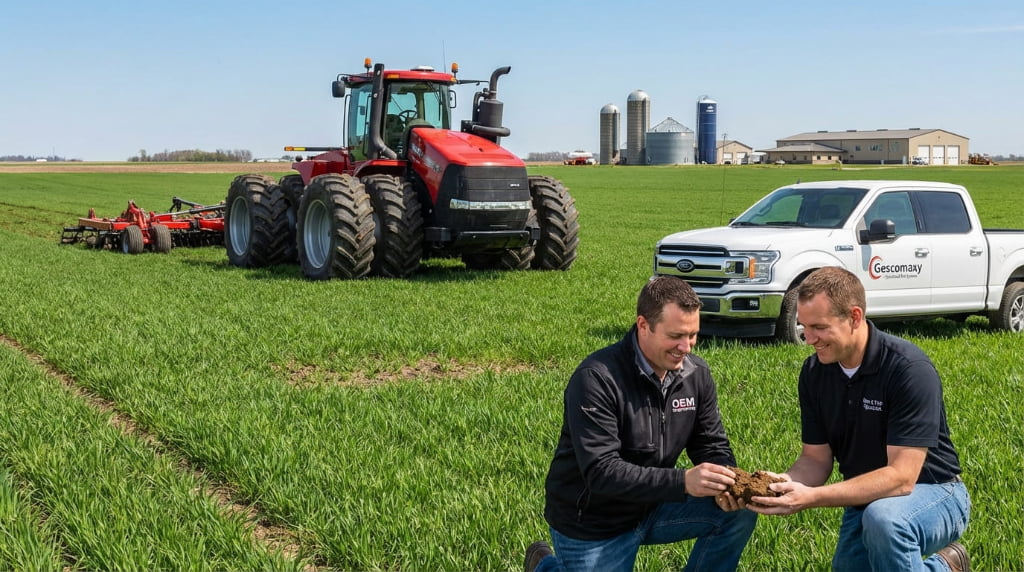
Your tractors are more powerful than ever, but farmers are complaining they're too heavy, damaging soil structure and hurting their crop yields1. This negative feedback harms your brand and threatens sales.
OEMs can engineer low-compaction systems2 by partnering with a specialized rim dealer. This collaboration allows for the precise specification of wider rims3, dual-wheel setups4, and flotation tire compatibility5, effectively distributing the tractor's weight to protect the soil.

I remember a conversation with a product manager from a European OEM a few years ago. They were struggling to gain traction in the Brazilian market. Their tractors were powerful and reliable, but farmers practicing no-till agriculture found they caused too much soil compaction6. "We build great machines," he told me, "but we're losing sales because of what's happening at ground level." We worked with his engineering team to develop a complete wheel package using wider rims3 designed for modern flotation tires. It wasn't just about supplying a part; it was about providing an agronomic solution7. That package became a standard option for their export models and completely changed their story in that market.
Why is Soil Compaction a Major Problem for Your Tractor Designs?
Your customers face shrinking profit margins. They see heavy machinery as a direct threat to their soil's health and, therefore, their livelihood, making them hesitate to purchase your latest models.
Soil compaction creates a dense layer that blocks water and root growth, which can severely reduce crop yields1. Modern wheel design is the first line of defense, as it dictates how a tractor's weight is distributed onto the ground.

Think of healthy soil as a sponge, full of pores for air and water. Heavy equipment pressure squeezes that sponge, turning it into a hard, impermeable layer known as a hardpan. This is a huge problem for farmers. Water can't soak in, leading to runoff and erosion. More importantly, plant roots can't push through this dense layer to find nutrients and moisture, which directly limits growth and slashes the potential harvest. As tractors have grown heavier to support more powerful engines and larger implements, their impact on the soil has become a critical issue. The design of the wheel system—specifically the rim and tire combination—is the single most important factor in managing this impact. It determines the size and shape of the footprint, and therefore the pressure exerted per square inch.
What Rim Specifications Best Reduce Ground Pressure?
You need to offer a low-compaction option, but your standard rim catalog is limited. Simply fitting a wider tire on a standard rim doesn't work and can even be dangerous.
To reduce ground pressure8, specify wider rims3 that properly support Increased Flexion (IF) and Very High Flexion (VF) tires9. Also, engineer for dual-wheel configurations and select rim profiles designed specifically for flotation applications.
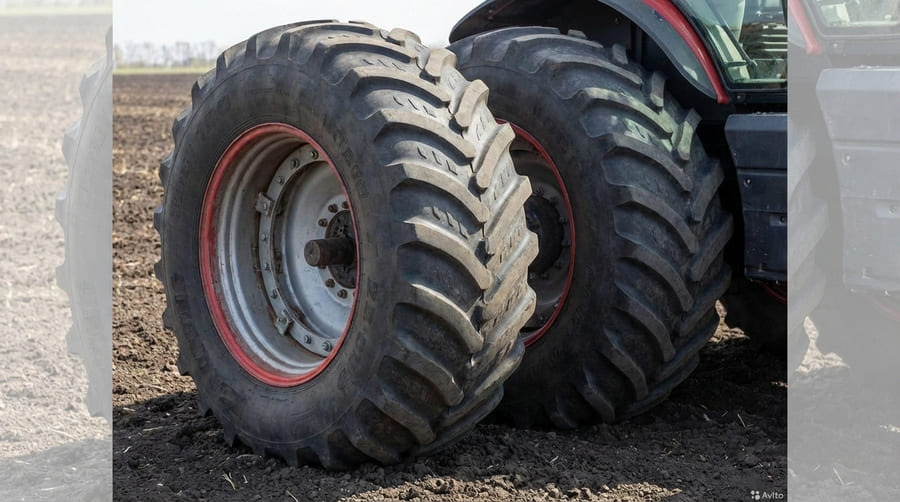
The secret to reducing ground pressure8 is to create the largest possible contact patch. This isn't achieved by just using a bigger tire; the rim must be designed to support it correctly. A specialized dealer can guide you through the key specifications:
- Wider Rims: Modern IF/VF tires are designed to run at very low inflation pressures. To do this safely, they need a wider rim to support the bead and allow the sidewall to flex as intended. Using a rim that is too narrow forces the tire into a suboptimal shape, reducing performance and causing premature wear.
- Dual-Wheel Compatibility: Adding more tires is a proven way to distribute weight. However, this requires rims with the correct offset and bolt patterns, along with durable spacers, to ensure proper clearance and alignment.
- Flotation Designs: For the heaviest equipment like combines and grain carts, specific flotation rims are essential. These are engineered with a profile that maximizes the air volume of the tire and provides a stable base for massive loads at low pressure.
How Do You Engineer Rims to Handle Heavy Loads Without Failing?
You've designed a wide, dual-wheel system to reduce compaction. But this setup creates huge leverage and stress, and you're worried about the wheels cracking under the immense load of the tractor.
You ensure durability by collaborating with your dealer to engineer the rim itself. This involves selecting high-strength steel10, increasing the thickness of the center disc, and adding reinforcing rings11 to handle the increased operational stress.

When you move a wheel further from its mounting hub using a deep offset or a dual-wheel setup, you create a longer lever. This multiplies the force acting on the rim's center disc and its welds. A standard rim will quickly fail under these conditions. A knowledgeable dealer will work with your engineers to counteract these forces. At Gescomaxy, we address this by specifying rims made from High-Strength, Low-Alloy (HSLA) steel, which offers superior durability over standard carbon steel. We then analyze the load requirements to determine the optimal thickness for the center disc and can incorporate reinforcing rings11 around the bolt circle or outer edge for added rigidity. Our manufacturing process, with its 30+ quality checkpoints, ensures that every weld is perfect, providing the structural integrity needed for these demanding, high-stress applications.
Standard vs. Heavy-Duty Low-Compaction Rim Features
| Feature | Standard Rim | Heavy-Duty Low-Compaction Rim |
|---|---|---|
| Material | Standard Carbon Steel | High-Strength, Low-Alloy (HSLA) Steel |
| Center Disc | Standard Thickness | Increased Thickness for Load |
| Construction | Basic Weld | Reinforced Welds, Optional Reinforcing Rings |
| Application | General Use | High-Load, Wide-Offset, Dual-Wheel Setups |
How Can Your Dealer Keep You Ahead of Sustainable Farming Trends?
Sustainable agriculture is no longer a niche market; it's a global demand. Your OEM needs to be seen as a leader in this space, but your team can't be experts on every new farming technology.
A specialized dealer acts as your knowledge hub for ground-level trends. They provide critical insights into the latest tire technologies12, rim materials, and wheel systems13 that farmers are demanding for more sustainable and efficient practices.

Your core business is designing and building tractors. Our core business is the wheel systems13 they run on. We are constantly in communication with tire manufacturers, agronomists, and farmers around the world. This gives us a real-time view of emerging trends and technologies. For example, we saw the shift toward IF/VF tires years before it became mainstream and began working with our factories to produce compatible rims. We are your eyes and ears on the ground, providing you with the intelligence to make informed design decisions. When a new farming practice like controlled traffic farming (CTF)14 gains popularity, we can advise you on the specific track widths and rim configurations needed. This partnership means you aren't just reacting to the market; you're anticipating it. It allows you to integrate cutting-edge, sustainable solutions into your tractors, solidifying your brand as a forward-thinking leader.
Conclusion
By partnering with a dealer to guide rim design, OEMs can effectively engineer low-compaction wheel systems13. This collaboration enhances tractor marketability and supports the future of sustainable agriculture15.
---Explore strategies to enhance crop yields, including equipment design and soil management. ↩
Explore how low-compaction systems can enhance soil health and improve crop yields. ↩
Learn about the benefits of wider rims in reducing soil compaction and improving tractor performance. ↩
Discover how dual-wheel setups can effectively distribute weight and minimize soil damage. ↩
Understand the significance of flotation tire compatibility in protecting soil structure. ↩
Find out how soil compaction affects crop yields and farming practices. ↩
Learn how agronomic solutions can address challenges in farming and enhance productivity. ↩
Understand the impact of ground pressure on soil structure and agricultural productivity. ↩
Discover the advantages of VF tires in reducing ground pressure and improving performance. ↩
Explore the benefits of high-strength steel in enhancing the durability of tractor rims. ↩
Learn how reinforcing rings improve the structural integrity of tractor rims under heavy loads. ↩
Explore innovative tire technologies that improve efficiency and sustainability in farming. ↩
Understand the critical role of wheel systems in optimizing tractor performance and soil protection. ↩
Discover how CTF can enhance soil health and optimize farming operations. ↩
Stay updated on sustainable agriculture practices and how they influence equipment design. ↩