
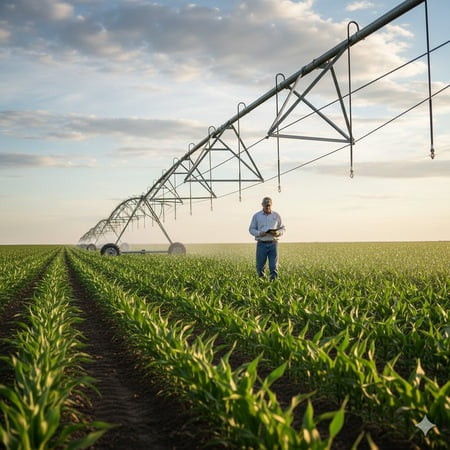
You invested in top-quality irrigation tires, expecting years of service. But they're failing prematurely, causing costly downtime and frustration. The real problem might not be the tire itself.
Yes, a irrigation tire's true lifespan is determined almost entirely by its daily use. Factors like proper inflation1, load management2, and consistent maintenance3 have a far greater impact on its longevity than the manufacturer's specifications alone. Your usage patterns4 define its life, not a number on a spec sheet.
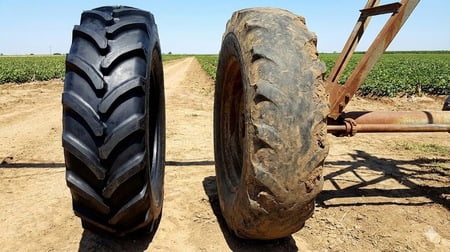
I remember talking with a purchasing manager, let's call him David. He was furious because a set of our tires didn't last as long as he expected. I asked him about his team's maintenance routine5. He admitted they only checked tire pressure6 "when something looked low." He bought a premium product but paired it with a reactive, minimal-effort usage strategy. His experience wasn't a reflection of the tire's quality; it was a perfect reflection of how it was treated. The tire simply mirrored the care—or lack thereof—it received in the field.
Why Do Your Irrigation Tires Ignore Your Perfect Plans?
You designed the perfect irrigation schedule on paper. You accounted for water needs and crop cycles. But out in the field, your tires are wearing unevenly and failing early.
Your irrigation tires have no idea what your plans are; they only respond to the reality of their work. A tire's condition is a direct report of the actual loads and stresses it experiences, not the theoretical conditions you designed for.
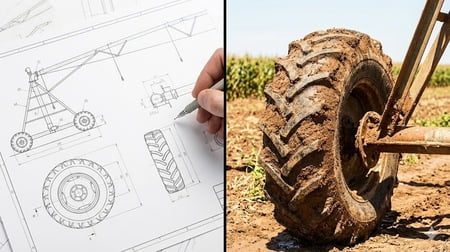
It’s a hard truth for many managers to accept. You can spend weeks creating a flawless operational plan, but that plan means nothing to the tire itself. The tire doesn't know it's supposed to carry a specific weight calculated in an office. It only knows the actual weight it's carrying, which might be much higher if a sprinkler package is changed or if mud accumulates on the tower. It doesn't know the ground is supposed to be smooth; it only feels the sharp rocks and compacted ruts it rolls over every day. Think of it like a logbook. Every rotation, every bump, and every moment of being underinflated is recorded in the rubber. The wear pattern you see is the final, honest report of its real working life.
The Irrigation Tire's Reality vs. Your Plan
| Parameter | The Plan (On Paper) | The Reality (In the Field) |
|---|---|---|
| Tire Load | Calculated based on dry system weight. | Actual weight, including water, mud, and uneven structural stress. |
| Inflation | Assumed to be at the recommended PSI. | Fluctuates with temperature and is often neglected for weeks. |
| Terrain | Assumed to be a flat, even field. | Includes hidden rocks, deep ruts, and soft, muddy spots. |
| Result | Predictable, long lifespan. | Unpredictable wear, premature failure, and system downtime. |
Why Does Skipping Maintenance Feel Easy Now but Cost a Fortune Later?
The day is busy and the pivot is running fine. Skipping that quick walk-around to check the tires seems like a smart way to save time. But is it really saving you anything?
When maintenance feels like a burden, risk is already building. Irregular inspections mean you lose the chance to catch small issues, like low tire pressure6 or a minor cut, when they are cheap and easy to fix. This neglect allows them to grow into major failures.
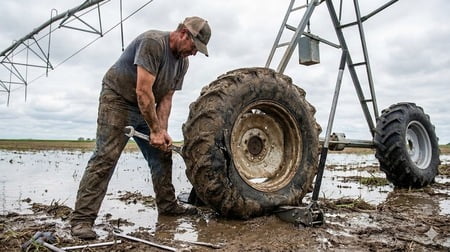
The true value of maintenance is what you don't see. Its success is measured by the absence of failure. A well-maintained system runs quietly and reliably, so it’s easy to think the maintenance itself isn't doing much. This is a dangerous mindset. The moment checking tire pressure6 or clearing debris feels like an annoying chore instead of a critical task, the clock starts ticking on a future breakdown. I've seen it countless times. A tire runs 5 PSI low for a month. The extra flexing slowly weakens the sidewall. Then, during a critical watering cycle in the summer heat, it fails. The "cost" wasn't just a new tire; it was a frantic emergency repair7, crop stress from a day without water, and the overtime pay for the crew. That 5-minute pressure check you skipped a month ago just cost you a thousand dollars.
Why Does Good Maintenance Feel Unproductive?
You walk your pivot line, check every tire, and find nothing wrong. It can feel like you just wasted an hour. Why does doing the right thing often feel like you've accomplished nothing?
Good maintenance feels unproductive because its purpose is prevention, not reaction. Its success is the silent, continued operation of your system. You're not fixing a visible problem; you're stopping an invisible one from ever happening, which is far more valuable.
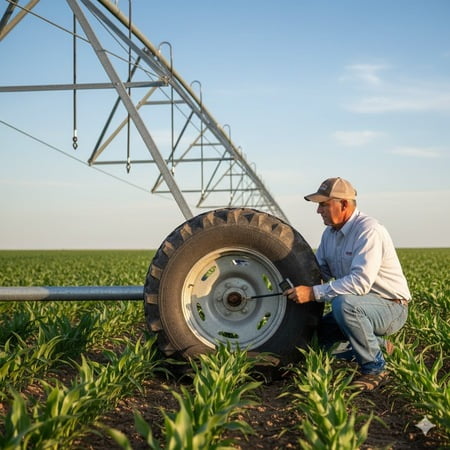
Our brains are wired to get satisfaction from solving visible problems. Fixing a flat tire feels productive; you took a broken thing and made it work. On the other hand, spending an hour inspecting 50 tires and finding them all perfectly inflated gives you no immediate sense of accomplishment. But that is the entire point. That hour of "unproductive" work is what prevents the dramatic, stressful, and expensive failure down the line. As a supplier, we can provide the most durable tires in the world, but their potential is only unlocked through this kind of boring, repetitive, and absolutely essential maintenance. The most successful managers I work with aren't the ones who are best at emergency repair7s. They are the ones who have created a system of preventative maintenance8 so effective that they rarely have emergencies at all.
Conclusion
The lifespan of your irrigation tire is a choice you make every day. It's defined not by the brand you buy, but by the maintenance you perform and the real-world conditions9 you create.
Understanding the importance of proper inflation can help extend the lifespan of your irrigation tires and prevent premature failures. ↩
Learn how effective load management can reduce stress on your irrigation tires, leading to longer service life and reduced downtime. ↩
Discover how regular maintenance can prevent costly tire failures and ensure smooth operation of your irrigation system. ↩
Explore how different usage patterns can affect the wear and tear on your irrigation tires, influencing their overall lifespan. ↩
Find out what essential checks and tasks should be part of your regular maintenance routine to keep your irrigation tires in top condition. ↩
Learn the recommended frequency for checking tire pressure to avoid underinflation and potential tire damage. ↩
Understand the financial and operational impacts of emergency repairs due to neglected maintenance on irrigation tires. ↩
Discover the long-term benefits of preventative maintenance in avoiding costly repairs and ensuring system reliability. ↩
Explore how actual field conditions, as opposed to theoretical plans, determine the wear and longevity of irrigation tires. ↩