
Is your warehouse filled with agriculturalfixed welded rims tying up cash? These slow-moving parts take up space and hurt your bottom line. There is a much more efficient way.
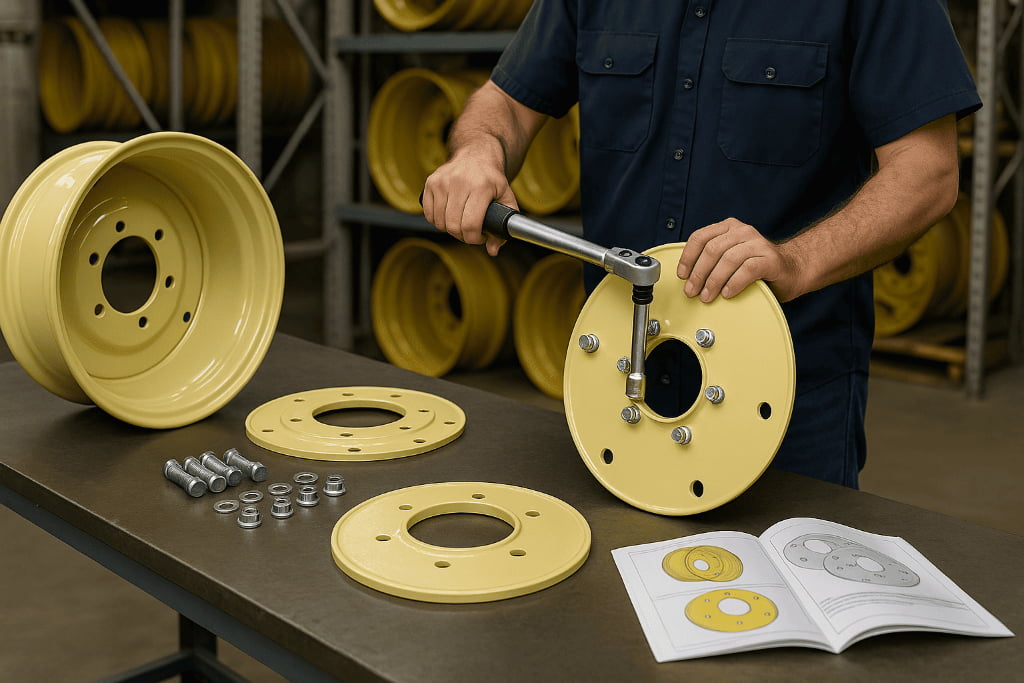
By stocking modular components1—one versatile agricultural rim ring and a few different center discs—you can create dozens of fitment combinations2. This dramatically reduces inventory, frees up capital, and allows you to serve more customers with fewer SKUs, replacing ten fixed rims with just four components.
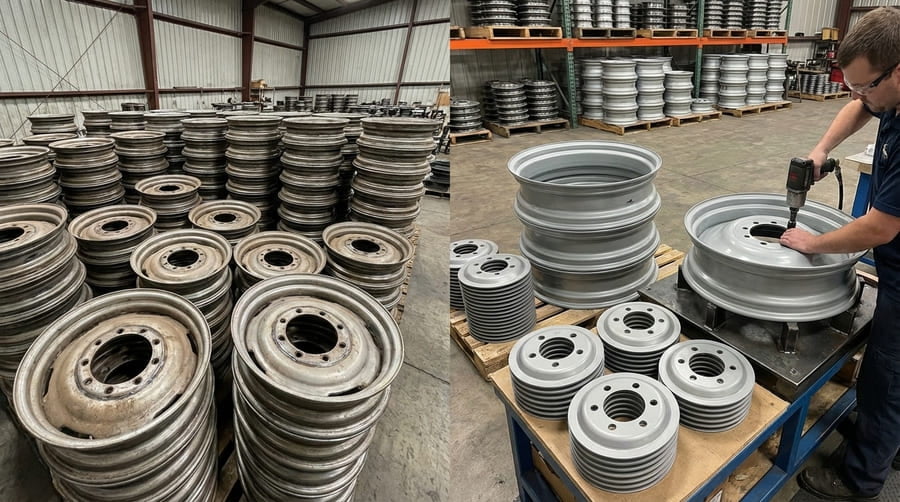
I'll never forget walking through a dealer’s warehouse a few years back. The racks were bowing under the weight of dust-covered, fixed welded rims. He told me, "I have thousands of dollars tied up here, yet I still had to turn away a customer yesterday because his tractor needed a slightly different offset." That's the fixed rim inventory trap3, and it’s a silent killer of profitability4 for dealers. It forces you to bet on which specific fitment will sell, and a wrong bet means dead stock. We knew there had to be a smarter way to manage inventory without sacrificing the ability to serve customers.
Why Are Agricultural Fixed Welded Rims Draining Your Profitability?
You ordered a specific rim for a tractor, but the sale fell through. Now it sits on a shelf, a constant reminder of locked-up capital and wasted space.
Fixed welded rims force you to stock a unique SKU for every track width and tractor model. This leads to bloated inventory, slow turnover, and high carrying costs, as each rim only serves a very narrow market segment.
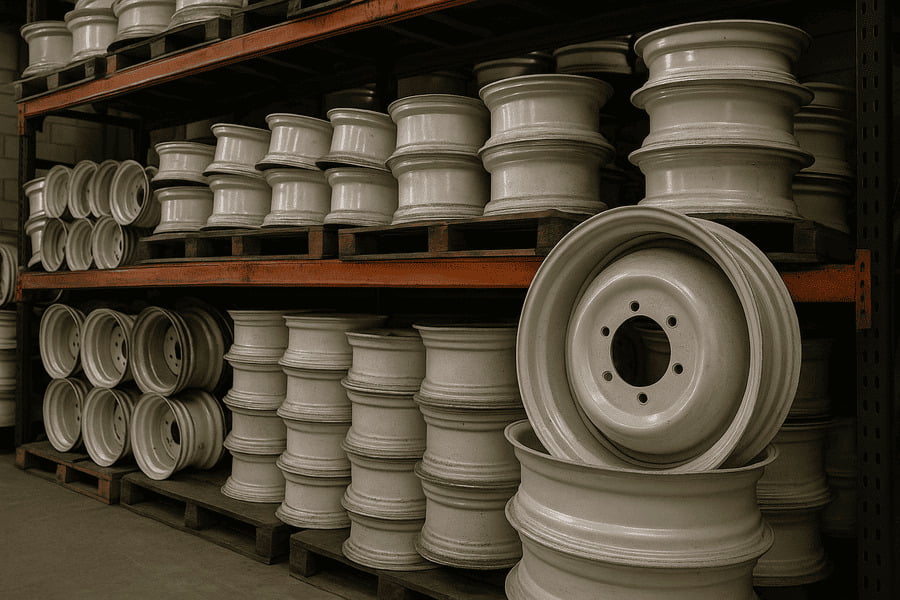
The traditional approach to agricultural rims is simple but incredibly inefficient. Each fixed welded rim is a single unit with a predetermined, unchangeable track width and bolt pattern. If a farmer needs a 78-inch track width for their John Deere, you need that exact rim. If the next farmer needs an 80-inch width for their Case IH, you need a completely different rim. This forces you to multiply your Stock Keeping Units (SKUs)5 endlessly. The result is a warehouse full of products that might not sell for months, or even years. This is what we call the "inventory trap3"—your cash is converted into static metal on a shelf instead of working for your business. It's a high-risk, low-flexibility model that makes it nearly impossible to be agile.
The True Cost of Fixed Rim Inventory
| Problem Area | Impact on Your Dealership |
|---|---|
| Capital | Cash is tied up in slow-moving or dead stock. |
| Warehouse Space | Valuable floor space is occupied by redundant SKUs. |
| Sales | Inability to serve customers with unique needs, leading to lost sales. |
| Risk | High risk of obsolescence as tractor models change. |
How Does a Modular Rim System Solve This Problem?
You have a customer on the phone with an urgent need, but you don't have their specific rim. You risk losing the sale while you try to special order it.
A modular system separates the rim into two components: the outer rim ring and the center disc. By stocking these components separately, you can mix and match to create the exact fitment on demand.
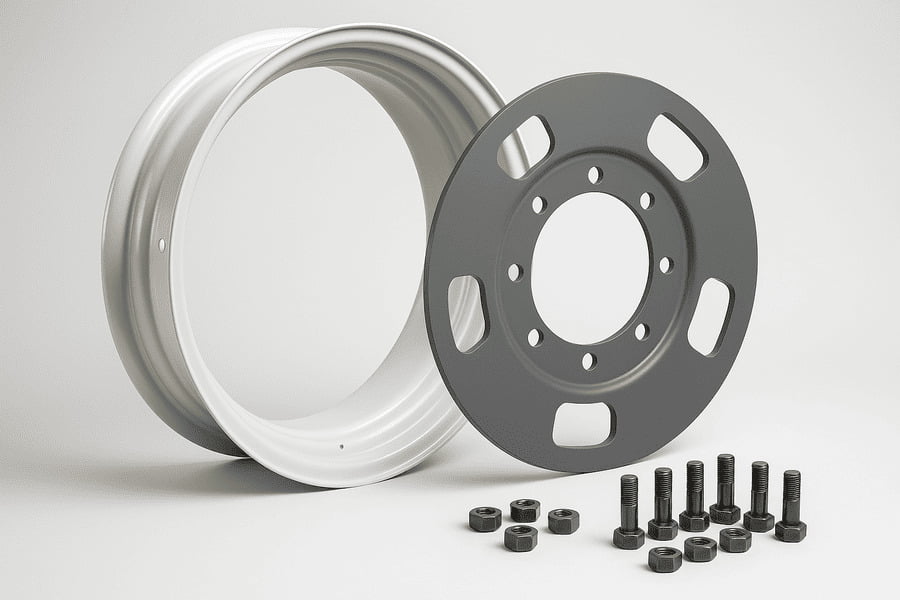
The solution is to stop stocking finished assemblies and start stocking flexible components. Our modular rim system6 breaks the wheel down into its two core parts. The rim ring is the outer hoop that the tire mounts to. The center disc is the plate that bolts to the tractor's axle. We manufacture these as separate pieces. This simple change is revolutionary for inventory management. Instead of stocking ten different welded rims, you stock one or two common rim ring sizes and a handful of different center discs. When a customer needs7 a specific wheel, you simply select the correct ring and disc from your inventory and bolt them together. This "assemble-on-demand" model transforms your inventory from a liability into a versatile asset, ready to meet nearly any customer's need instantly.
How Can One Rim and Three Discs Create Ten Combinations?
You need to serve a wide variety of tractors but have limited capital and warehouse space8. Stocking every possible option seems impossible for your business.
Our center discs are engineered with multiple mounting positions and reversible designs9. This allows a single disc to create several different track widths10, multiplying the versatility of your inventory.
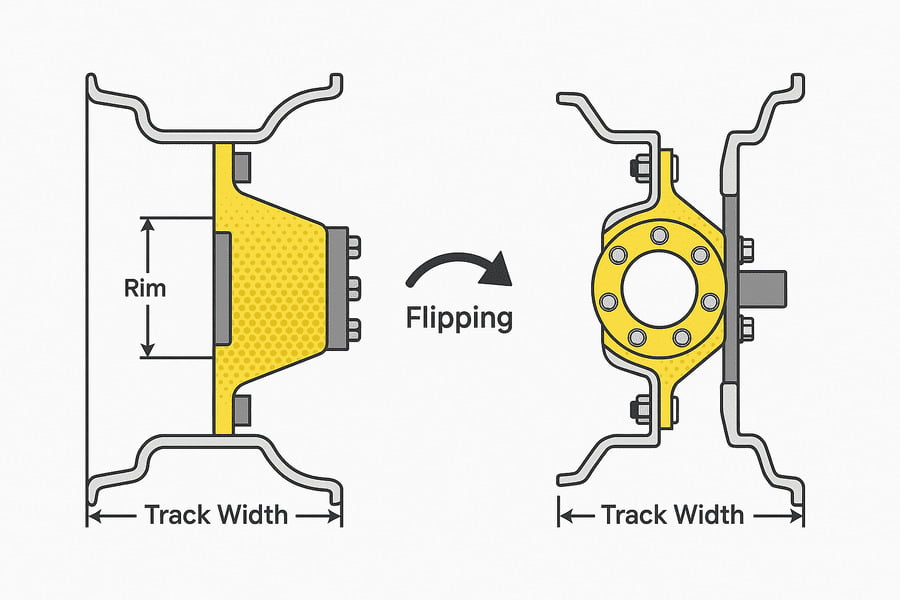
This is where the real magic happens. It’s not just about having separate parts; it's about how cleverly those parts are designed. Many of our center discs are reversible. By flipping the disc before bolting it to the rim ring, you can change the wheel's offset, creating two different track widths10 from a single disc. Some discs are also designed with multiple bolt patterns or mounting locations. Through these engineering features, the math becomes exponential. One rim ring plus one versatile disc might create two or three final configurations. Add a second and third style of disc, and you can easily cover over ten different tractor fitments. This is how you replace an entire rack of fixed rims with just a small, manageable stack of components.
Example Combination:
- 1 Rim Ring (e.g., 38-inch diameter)
- Disc A (Reversible): Creates 76" and 80" track widths10.
- Disc B (Reversible): Creates 78" and 82" track widths10.
- Disc C (Multi-pattern, Reversible): Creates 4 more unique fitments.
- Total Components: 4
- Total Configurations: 8-10+
Is Assembling Modular Rims Safe and Easy for My Team?
You like the modular concept but worry about assembly errors. An improperly assembled wheel is a serious safety liability you can't afford to risk.
Absolutely. We provide a complete kit with high-strength, grade 10.9 bolts and precise torque specifications. Our step-by-step assembly guides11 ensure every configuration is safe, reliable, and easy for your technicians to install correctly.
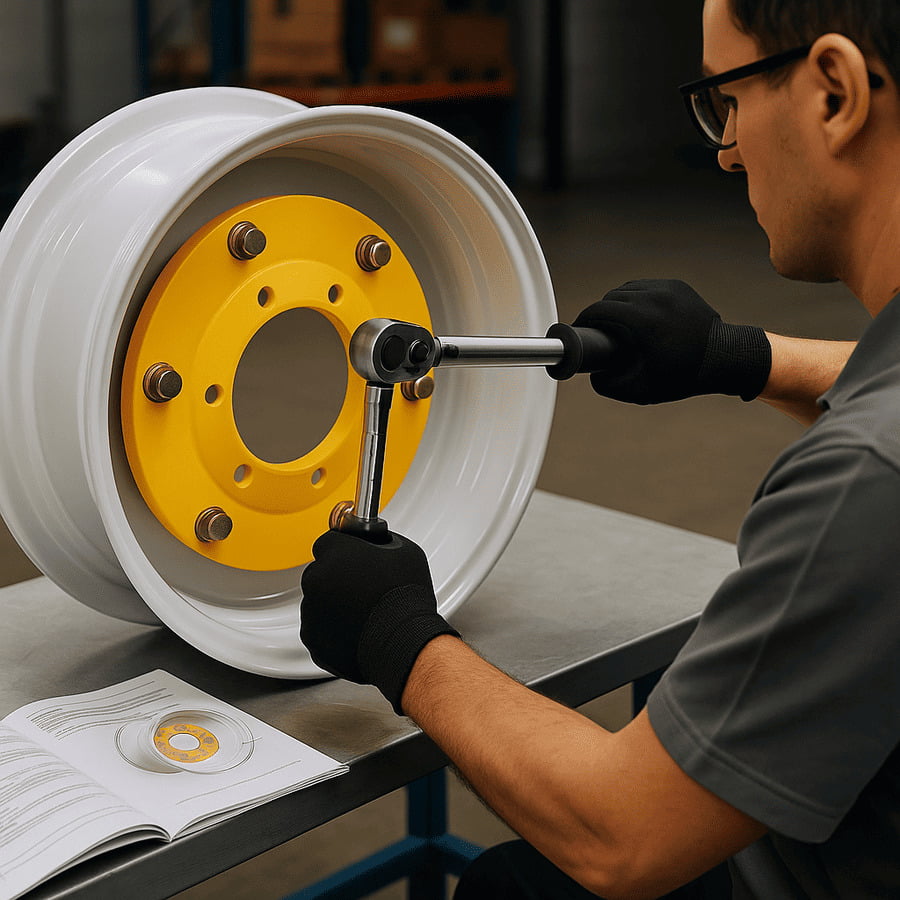
This was our primary concern when developing the system. A flexible solution is useless if it's not safe. That's why we engineered the assembly process to be as foolproof as possible. We don't just sell you the metal parts; we provide a complete solution in a box. Each component set comes with a hardware kit containing the correct number of high-tensile, grade 10.9 bolts, washers, and nuts—the same strength used in heavy industrial applications. More importantly, we provide clear, illustrated assembly guides11 with precise torque values. By simply following the steps and using a standard torque wrench, your service team can build a wheel assembly that is just as strong and reliable as a factory-welded unit. This removes the guesswork and ensures you can deliver a safe, professional product to your customers every time.
Conclusion
Escape the fixed rim inventory trap3. A modular system of rims and discs cuts down stock, frees up cash, and lets you serve more customers, turning your warehouse into a profit center.
Explore how modular components can revolutionize your inventory strategy and reduce costs. ↩
Learn about fitment combinations to enhance your product offerings and customer satisfaction. ↩
Discover the inventory trap concept and how to avoid it for better profitability. ↩
Understanding profitability factors can help you make informed business decisions. ↩
Understanding SKUs is crucial for effective inventory management and reducing costs. ↩
Find out how a modular rim system can streamline your operations and improve flexibility. ↩
Discover strategies to enhance customer satisfaction and loyalty in your business. ↩
Learn effective strategies to maximize your warehouse space and improve efficiency. ↩
Explore the benefits of reversible designs for maximizing inventory versatility. ↩
Understanding track widths can help you better serve your customers' needs. ↩
Explore the essential elements of assembly guides to ensure safe and effective assembly. ↩