
You invest in high-quality OTR tires, but they still suffer from chronic air loss and premature failure. It’s a frustrating cycle that costs time and money, and the cause is often misdiagnosed.
The bead seat band1 is the single most critical component for air retention2 and tire longevity. As the only sealing interface, its geometric precision3, especially its roundness, directly controls whether the tire holds air and stays locked in place.
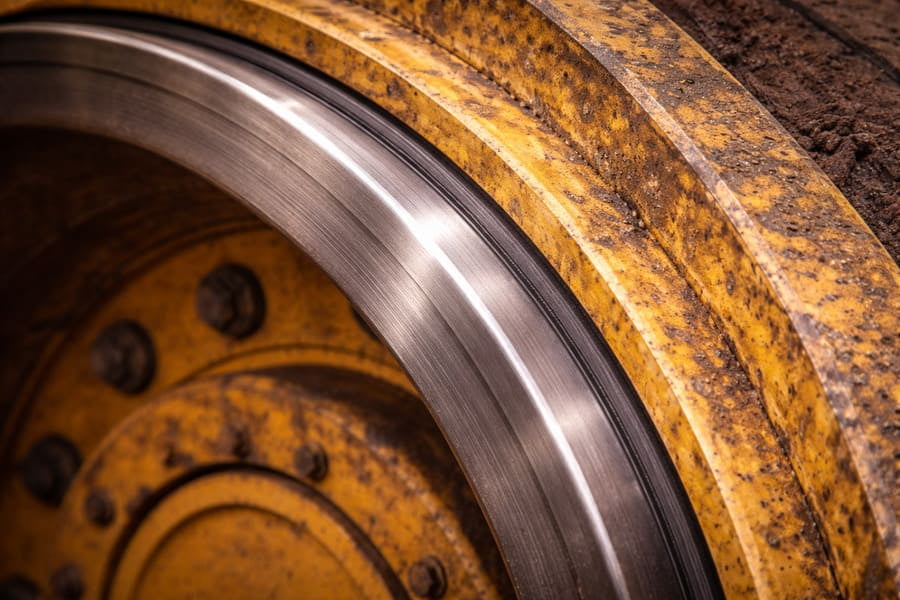
I remember visiting a quarry manager who was at his wit's end. His haul trucks were constantly down with low tire pressure, and he was convinced he'd received a bad batch of tires. We dismounted one of the "leaking" tires and put it in a dunk tank—no bubbles. The tire was fine. The problem was the bead seat band1. We measured its roundness and found significant deviations. The band wasn't perfectly circular, so it couldn't create a perfect seal. It was a classic case of blaming a high-quality tire for a low-precision wheel component failure.
Isn't a Slow Leak Usually a Tire Problem?
When a tire slowly loses air, the most common reaction is to blame the tire itself. You check for punctures or defects, but often find nothing. So why does the air keep escaping?
Most chronic slow leaks4 are structural, not tire-related. The bead seat band1 is the only surface that forms the air seal against the tire bead. If this component's geometry is flawed, no tire can hold pressure.
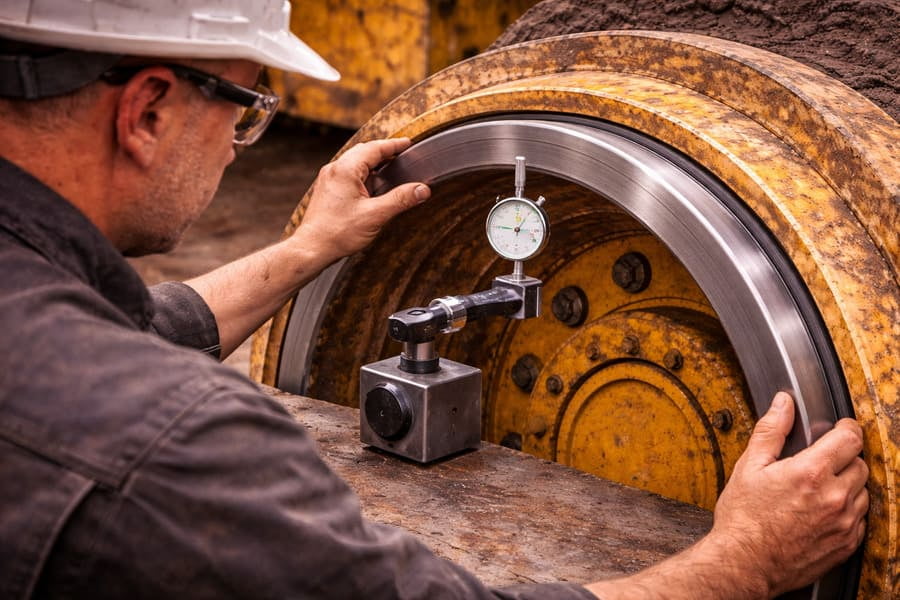
In a multi-piece OTR wheel5 assembly, the tire itself is just a flexible container. The air-tight seal is formed when the tire's bead is pressed firmly against the steel surface of the bead seat band1. Unlike a passenger car where the rim is a single, solid piece, this crucial sealing job falls entirely on this one component. If the bead seat band1 is not perfectly manufactured, it doesn't matter how high-quality the tire is. The system has a fundamental weakness. This is why replacing the tire often doesn't solve the problem; the new tire is simply being mounted onto the same faulty sealing surface that caused the original leak.
How Does Poor Roundness Cause a Slow Leak?
The component looks solid and round to the naked eye. How can a tiny imperfection that you can't even see cause a massive, heavy-duty tire to lose pressure day after day?
Imperfect roundness on a bead seat band1 creates microscopic gaps6 between it and the tire bead. Under the immense pressure of an inflated OTR tire, these tiny channels are all that's needed for air to escape.
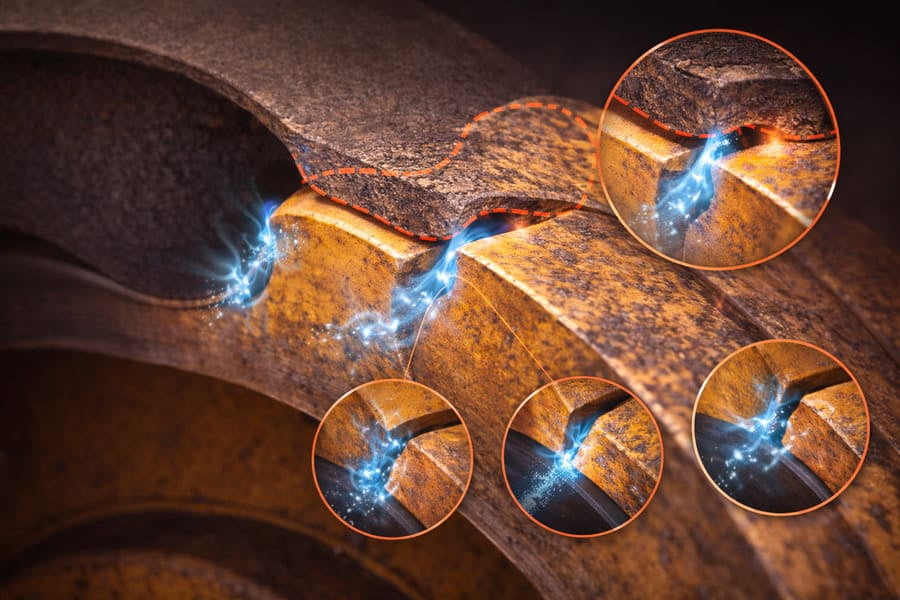
Think of trying to put a perfectly round lid on a slightly oval jar. It might look closed, but the seal is incomplete. The same principle applies here, but under much higher stakes. A bead seat band1 that is "out-of-round" fails to provide uniform contact with the tire bead. Even a deviation of a fraction of a millimeter creates low-pressure zones. With internal tire pressures often exceeding 100 PSI, air will relentlessly seek out these paths of least resistance. The tire flexes under load during operation, which constantly opens and closes these tiny gaps, essentially pumping air out with every rotation. This results in the frustrating, chronic slow leak that has no obvious cause.
Why Does a Slipping Bead Damage the Tire and Wheel?
A slow leak is a nuisance, but what happens when the problem gets worse? The movement causing the leak can lead to much more expensive damage, affecting both the tire and the wheel itself.
When the bead seat doesn't provide enough grip, the tire slips against the wheel during operation. This abrasive movement grinds down the tire's bead and wears away the steel on the bead seat band1.
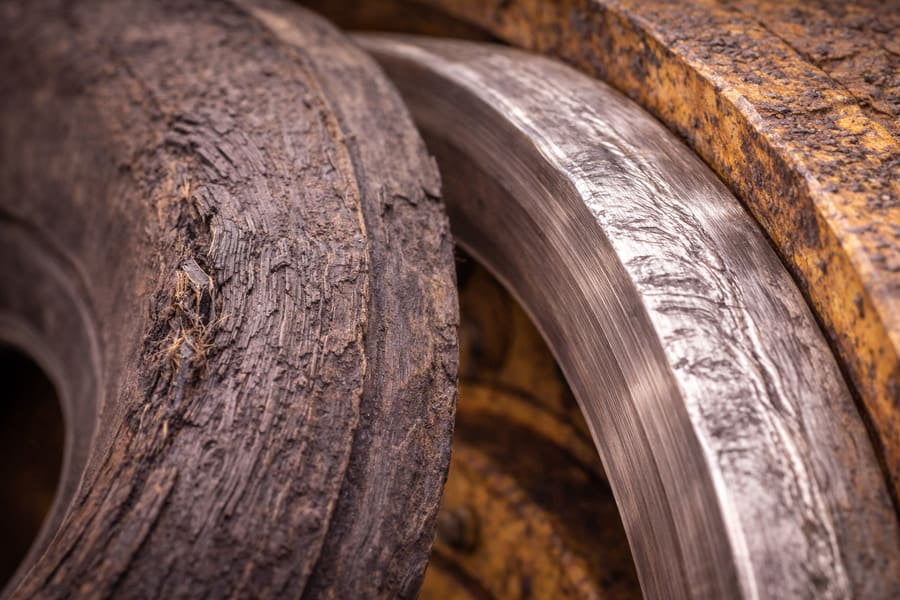
The connection between the tire and the wheel needs to be completely locked. The tire transfers massive amounts of torque from the machine to the ground. If the bead seat band1 is out-of-round or has a poor surface finish, it can't grip the tire bead securely. As the machine accelerates and brakes, the tire rotates slightly on the wheel—this is bead slip7. This movement creates intense friction. It acts like sandpaper, grinding away the rubber on the tire bead, damaging its structural integrity. At the same time, this abrasive action also wears down the surface of the bead seat band1, making its geometry even worse. This vicious cycle not only destroys the tire but also ruins a critical wheel component, leading to costly replacements for both.
| Issue | Cause | Consequence for Tire | Consequence for Wheel |
|---|---|---|---|
| Poor Roundness | Manufacturing defect | Uneven pressure, potential for leaks | Creates high-stress points |
| Chronic Leak | Microscopic air gaps | Underinflation, excess heat, wear | No direct damage |
| Bead Slip | Poor grip from bad geometry | Abrasive wear on bead, structural failure | Grinding wear on bead seat surface |
| Catastrophic Failure | Worn bead gives way | Bead rupture, sudden deflation | Potential for cracking, total loss |
Conclusion
The bead seat band1 is the foundation of tire performance. Prioritizing its geometric precision3 is the most effective way to prevent air loss, eliminate slippage, and protect your investment in both tires and wheels.
Understanding the bead seat band's role can help you maintain tire integrity and prevent costly failures. ↩
Explore how proper air retention can extend the life of your tires and improve performance. ↩
Discover how precision in tire components can enhance safety and performance. ↩
Learn about the underlying issues of slow leaks to avoid unnecessary tire replacements. ↩
Find out how multi-piece designs can improve tire performance and maintenance. ↩
Understanding these gaps can help you diagnose and fix air loss issues effectively. ↩
Learn about bead slip to prevent tire and wheel damage, saving you money. ↩