
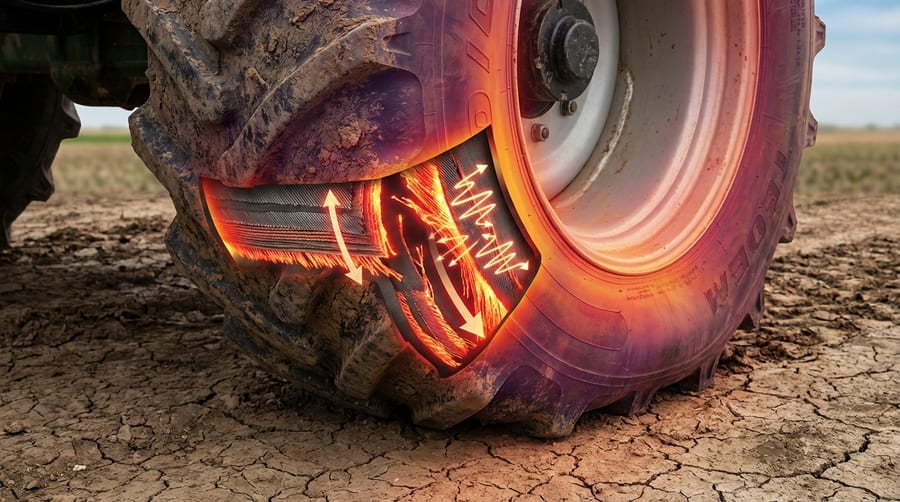
You see a irrigation tire with flexing sidewall1s and think it's just protecting the soil. But inside, a silent process of destruction is happening, setting you up for a warranty claim.
The hidden cost of sidewall deformation2 is premature structural failure. It’s caused by internal stresses like ply shear3 and heat buildup4 from constant flexing. This leads to unexpected blowouts, operational downtime5, and warranty claims that damage your brand's reputation.
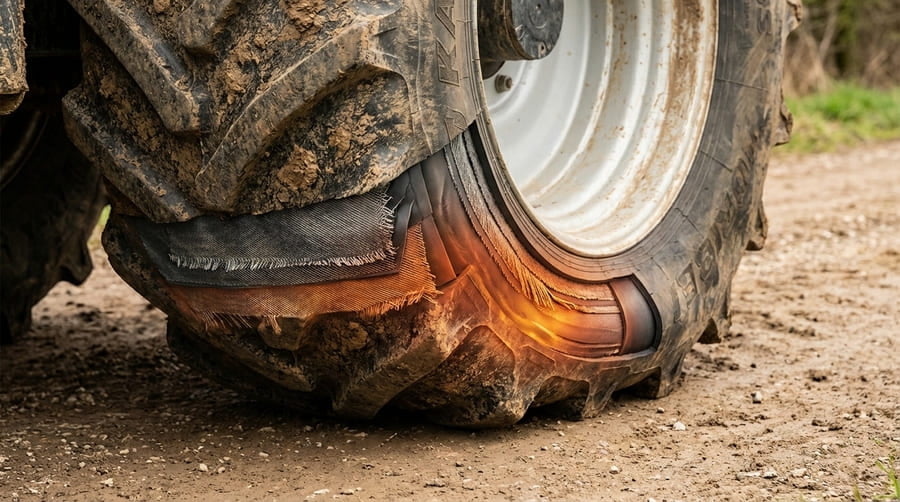
I've learned that in the tire business, the most expensive problems are the ones you can't see. For years, procurement managers have been told that a wider footprint from lower pressure is always a good thing. But nobody talks about what that "flex" is actually doing to the tire's internal structure. It's a trade-off that, if ignored, leads directly to the kind of mid-season failures that destroy customer confidence. Let’s look at what is really happening beneath the surface.
How Does a Flexing Sidewall Destroy a Irrigation Tire from the Inside Out?
A irrigation tire's sidewall is designed to flex. But how much is too much, and what invisible damage is it actually causing with every single rotation?
Increased flexing causes the internal carcass plies6 to rub against each other, creating shear stress. This friction gradually separates the layers and weakens the tire's core structure from the inside, leading to material fatigue7 and eventual failure, even with minimal tread wear.
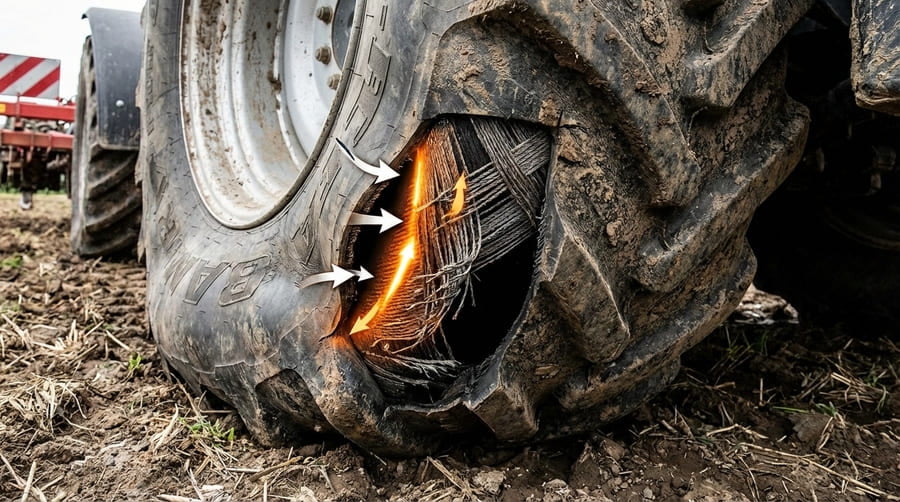
Imagine rubbing two pieces of sandpaper together. They wear down much faster than if they were just sitting still. A similar process happens inside a irrigation tire's sidewall when it flexes too much.
The Friction Within
A irrigation tire's strength comes from multiple layers of rubber and reinforcing cords (plies) bonded together. When the sidewall flexes excessively, these layers are forced to move against each other. This creates "ply shear3"—a constant, grinding friction that generates stress at a microscopic level. It's a force the tire was not designed to withstand continuously.
From Micro-Tears to Major Failure
This shearing action doesn't cause an instant blowout. Instead, it starts small, creating tiny tears and separations between the plies. Over thousands of rotations, these micro-failures connect and grow, progressively weakening the entire structure. The tire is literally tearing itself apart from the inside, all while looking perfectly normal on the outside.
Why is a Slow, Constant Flex More Dangerous Than a Sudden Jolt?
Everyone worries about a big impact, like hitting a rock in the field. But the real, silent killer for irrigation tires is something far less dramatic and much more common.
A sudden impact is a one-time event. In contrast, the slow, continuous flexing of an underinflated tire creates thousands of repetitive stress cycles8. This is far more damaging, as it gradually fatigues the internal materials until they reach a breaking point.
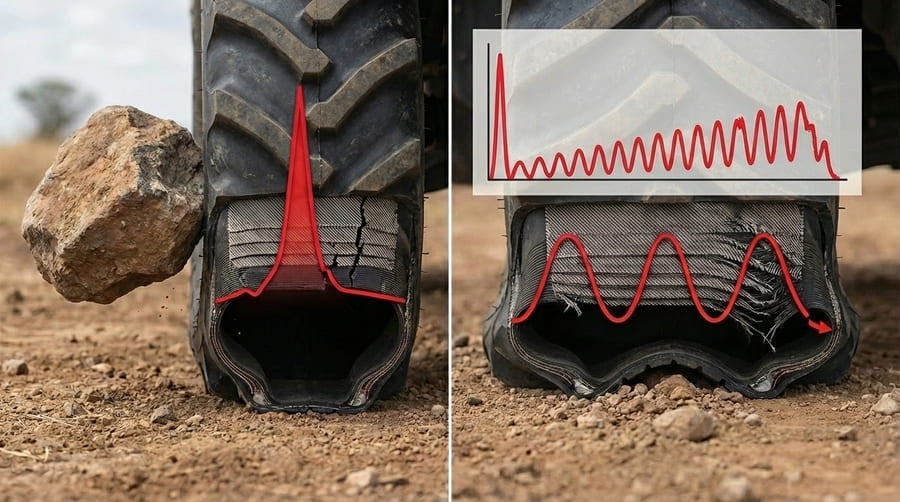
Think about a metal wire. You can hit it once with a hammer, and it will likely just bend. But if you bend that wire back and forth in the same spot, over and over again, it will eventually snap with very little effort. This is the principle of metal fatigue, and it applies directly to the components inside your tires. The constant, low-speed deformation of an irrigation pivot tire is a perfect recipe for this kind of fatigue. Each rotation is another "bend" in the wire. The damage is cumulative and silent, building up with every hour of operation. A single, sharp impact is often survivable, but the relentless cycle of flexing is a guaranteed path to failure. This is why a tire can run for two seasons without incident and then suddenly fail under normal operating conditions.
How Does Sidewall Flexing Cook a Irrigation Tire from the Inside?
You check a irrigation tire after a long run and it feels warm to the touch. This heat is more than a byproduct; it is a key symptom of internal damage9.
The repeated flexing of the sidewall generates significant internal heat through friction. This heat accumulation accelerates the aging of the rubber compounds, making them brittle and weak. It's like slow-cooking the tire from the inside out, drastically reducing its structural integrity.
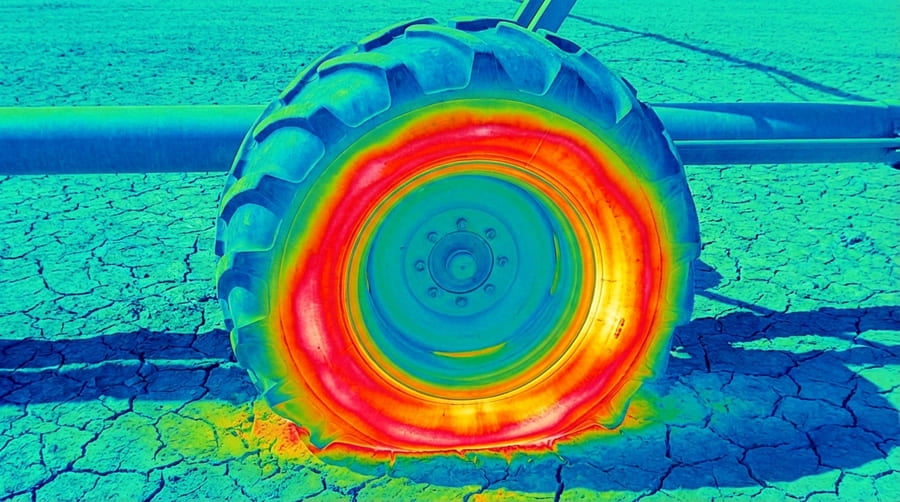
Heat is the ultimate enemy of a irrigation tire's lifespan. It breaks down the chemical bonds that give rubber its strength and flexibility. Here’s why heat from flexing is so destructive:
| Consequence of Heat | What It Means for the Tire | Your Risk |
|---|---|---|
| Accelerated Aging | The rubber loses its elasticity and becomes hard and brittle, prone to cracking. | Higher chance of sudden sidewall blowouts. |
| Compound Degradation | The bond between the rubber and the internal reinforcing cords weakens. | Increased risk of tread or ply separation10. |
| Reduced Strength | The overall material becomes weaker and less able to withstand normal operational stresses. | Lower load capacity and a much shorter effective service life. |
This heat-driven aging process is why two identical tires can have completely different lifespans. The one running at the correct pressure remains cool and healthy, while the underinflated one is slowly being destroyed by its own internal temperature.
Conclusion
Sidewall deformation is not a sign of performance; it's a warning of hidden costs. Understanding these internal risks is the first step toward building a more reliable supply chain.
Learn why a flexing sidewall can lead to tire failure and how to mitigate the risks. ↩
Understanding sidewall deformation helps prevent premature tire failure and maintain operational efficiency. ↩
Learn how ply shear contributes to tire damage, leading to costly repairs and downtime. ↩
Learn about the impact of heat buildup on tire longevity and performance. ↩
Understand the link between tire failure and operational downtime to improve productivity. ↩
Discover the role of internal carcass plies in maintaining tire integrity and preventing failures. ↩
Explore how material fatigue weakens tires over time, causing unexpected blowouts. ↩
Find out how repetitive stress cycles can silently degrade tire performance and lifespan. ↩
Explore the causes and consequences of internal damage in tires to avoid costly repairs. ↩
Understand the causes of tread or ply separation to prevent tire damage and ensure safety. ↩