
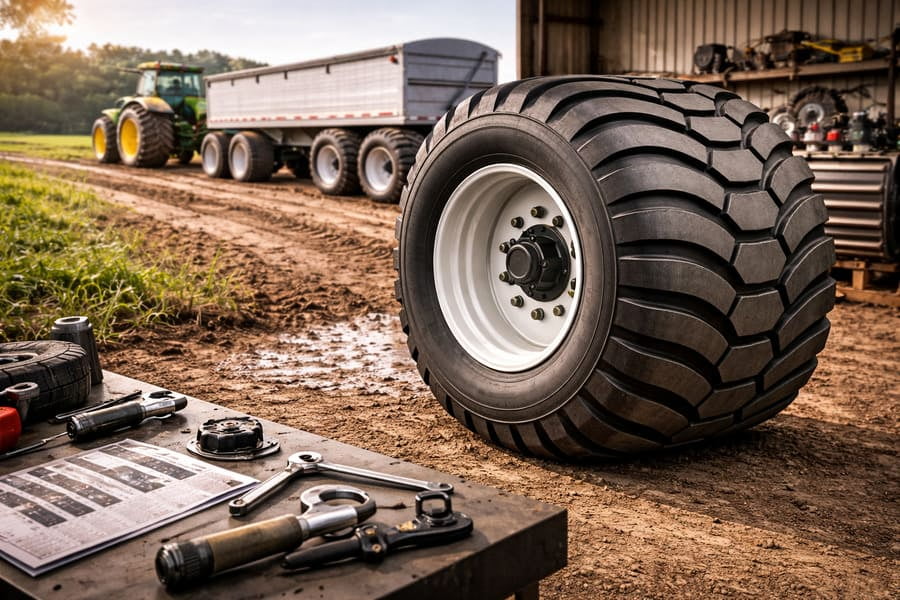
You need to reduce soil compaction1 and improve mobility on soft ground, but the world of flotation tire2s is confusing. Pick the wrong one, and you've wasted money on a tire that doesn't perform.
Choosing the right flotation tire2 means matching the tire's construction, size, and load index3 to your specific vehicle, typical load, and ground conditions. It's not about just finding the widest tire; it's about selecting an engineered system designed for low-pressure operation4.
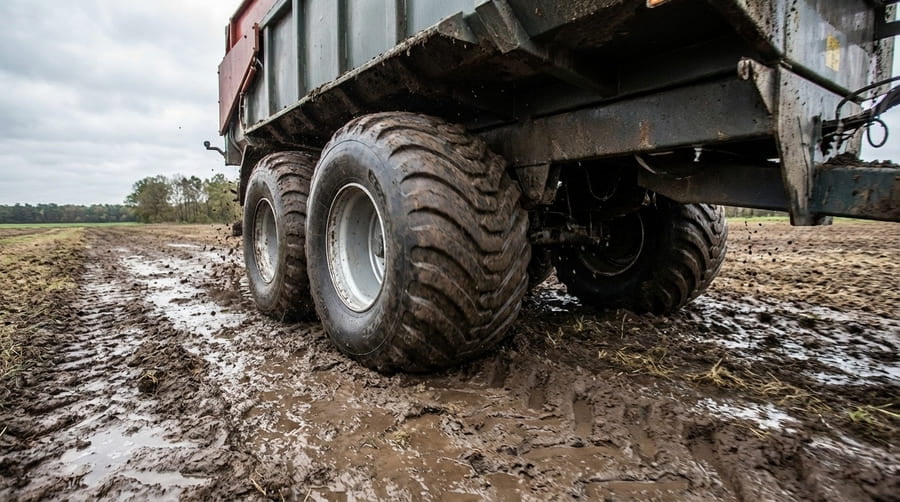
I remember a conversation with a procurement manager for a large agricultural cooperative. He was frustrated. "We bought these wide tires for our slurry tankers," he told me, "but the fleet manager says they're wearing out unevenly and the tankers still get stuck in wet conditions." He had assumed that wider meant better flotation. But after we looked at the specs, we realized he'd bought a wide tire with a stiff, road-biased carcass. It wasn't designed to flex and create the large footprint needed for true flotation. This experience taught me that we need to educate our clients not just on what to buy, but why they are buying it.
What Makes a Tire "Float" if it's Not Just About Width?
Many people believe that just putting a wider tire on their trailer will solve compaction issues. But they often find the performance is still poor, and the tires don't last, which is a costly mistake.
True flotation comes from a tire's carcass construction5, which is specifically engineered to be flexible and operate at very low air pressures. This flexibility allows the tire to create a long, wide footprint that evenly distributes the vehicle's weight.
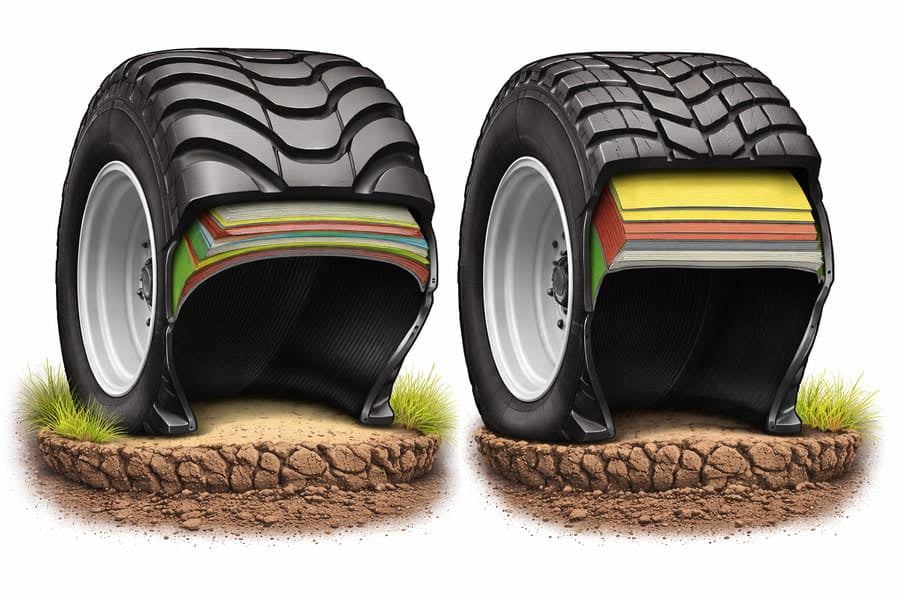
Think of it this way: a standard truck tire is designed to be rigid to handle high speeds and heavy loads on hard pavement. Its stiff sidewalls require high air pressure. A flotation tire2 is the opposite. It’s built with a pliable carcass and reinforced bead area, allowing it to bulge out at low pressure without sustaining damage. This creates a much larger contact patch on the ground. By spreading the load over a greater surface area, the pressure exerted on the soil (measured in PSI or kPa) drops dramatically. This is the "flotation" effect—the machine rides on top of the soil instead of digging into it. It’s an engineering solution, not just a matter of adding a few more inches of width.
Key Differences in Tire Construction
| Feature | Standard Truck Tire | Agricultural Flotation Tire |
|---|---|---|
| Carcass Flexibility | Rigid / Stiff | Highly Flexible / Pliable |
| Operating Pressure | High (e.g., 90-120 PSI) | Low (e.g., 25-50 PSI) |
| Footprint Shape | Narrow and Round | Wide and Long |
| Ideal Terrain | Paved Roads / Hard Surfaces | Soft Soil / Mud / Sand |
How Do You Read Flotation Tire Sizes and What Do They Mean?
You're looking at tire options and see sizes like 550/45-22.5. Compared to standard metric or imperial sizes, this can be confusing. Ordering the wrong size based on a misunderstanding is an expensive, logistical nightmare.
The flotation sizing system is actually very direct. For a size like 550/45-22.5, the first number (550) is the tire's overall width in millimeters. The second (45) is the aspect ratio6, and the third (22.5) is the rim diameter in inches.
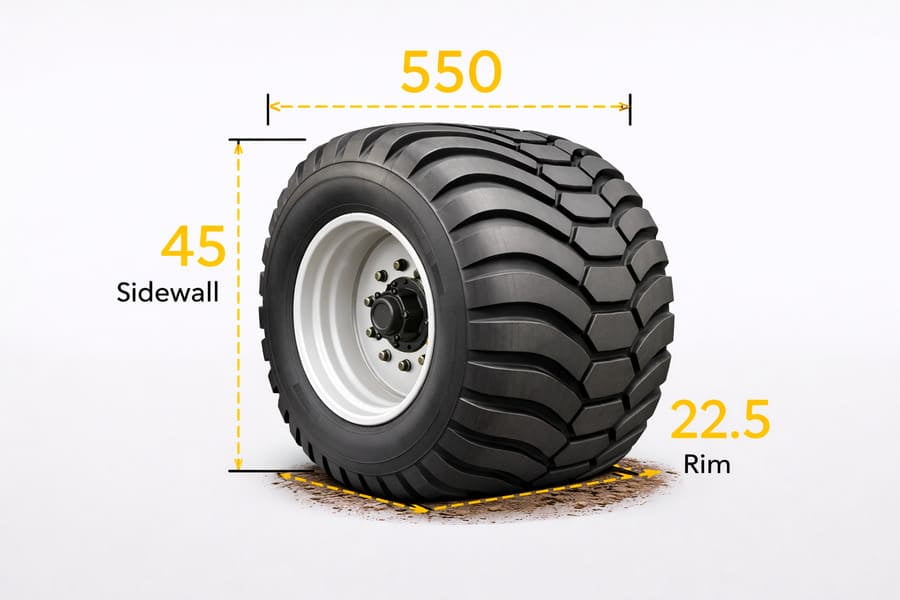
Let's break it down so you can feel confident reading any flotation tire2 spec sheet. Using 550/45-22.5 as our example:
- 550: This is the nominal section width of the tire in millimeters. In this case, the tire is approximately 550 mm (or 21.7 inches) wide. This is the most important number for checking clearance with your vehicle's frame.
- 45: This is the aspect ratio6. It means the height of the sidewall is 45% of the tire's width. So, the sidewall height is 45% of 550 mm, which is 247.5 mm. A lower aspect ratio6 generally means a shorter, stiffer sidewall, while a higher number means a taller, more flexible sidewall7.
- 22.5: This is the diameter of the wheel rim in inches that the tire is designed to be mounted on.
This system gives you a very practical, real-world view of the tire's dimensions, making it easier to plan for fitment on your equipment.
When is a Flotation Tire Actually the Wrong Choice?
Because flotation tire2s are so effective at reducing compaction, it's easy to see them as a universal upgrade for all off-road equipment. However, putting them in the wrong application can lead to rapid wear and poor performance.
Flotation tires are specialized tools. Their soft compounds and flexible construction, ideal for fields, make them wear much faster and handle less precisely during extensive high-speed, on-road use compared to standard truck tires.
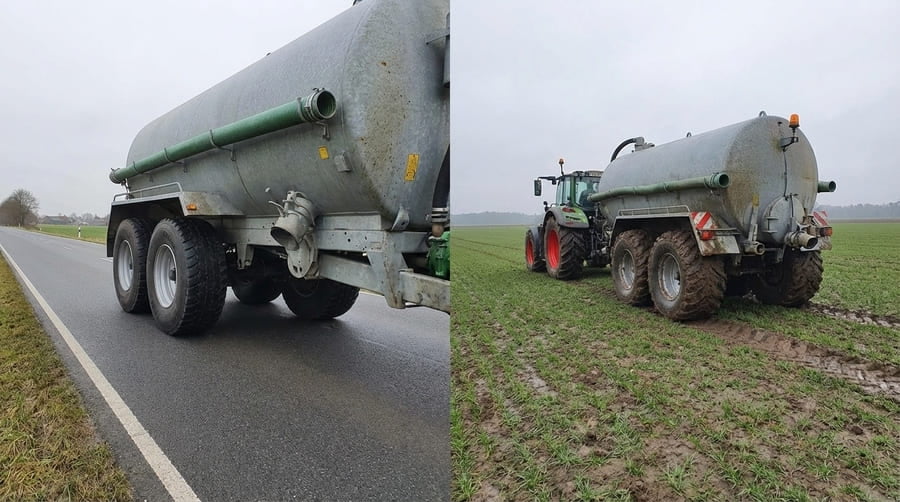
You must consider the duty cycle of your vehicle. How much time does it spend in the field versus on the road? If you have a transport trailer8 that spends 80% of its time on paved highways traveling between farms, flotation tire2s might be a poor investment. The soft rubber compounds will wear down quickly on abrasive asphalt9, and the flexible sidewall7s can lead to less stable handling at high speeds. Conversely, a slurry tanker or grain cart that spends 80% of its time on soft, wet soil will see a massive benefit. Before choosing, ask yourself these questions:
- What percentage of my time is spent on soft surfaces? (Higher % favors flotation)
- Is soil compaction1 a primary concern for my operation? (Yes favors flotation)
- What are my maximum on-road speeds and distances? (Higher speeds/distances favor standard tires)
- Is the vehicle operating in one field, or traveling between multiple sites? (Travel favors a hybrid or standard tire)
Choosing the right tire is about matching the tool to the job.
Conclusion
Selecting the right flotation tire2e pattern](https://arxiv.org/pdf/2010.06299)%%%FOOTNOTE_REF_10%%% is about understanding the engineering behind it—flexible construction, low-pressure capability, and a sizing system designed for purpose. It’s a specific solution for a specific problem: protecting your soil and keeping your vehicles moving.
Learn how soil compaction impacts crop yields and the importance of managing it effectively. ↩
Explore the advantages of flotation tires for reducing soil compaction and improving mobility on soft ground. ↩
Discover how load index influences tire selection and vehicle performance. ↩
Explore the benefits of low-pressure operation for reducing soil pressure and improving traction. ↩
Understand how tire carcass construction affects performance and durability in various conditions. ↩
Understand the significance of aspect ratio in tire performance and fitment. ↩
Find out how flexible sidewalls enhance tire performance on soft ground. ↩
Find out the best tire options for transport trailers based on their usage. ↩
Learn about tire wear and performance on abrasive surfaces like asphalt. ↩
Explore how different tire patterns can enhance traction and performance in various conditions. ↩