
Everyone's talking about sustainability1, but the conversation is dominated by huge, expensive changes like electric tractors. This makes true environmental progress feel overwhelming and out of reach for many.
True sustainability1 in agriculture is about reducing resource consumption2 and waste. The durability of components3 like rims matters immensely because a long service life directly cuts down on the manufacturing energy4, raw materials, and shipping emissions required for frequent replacements.
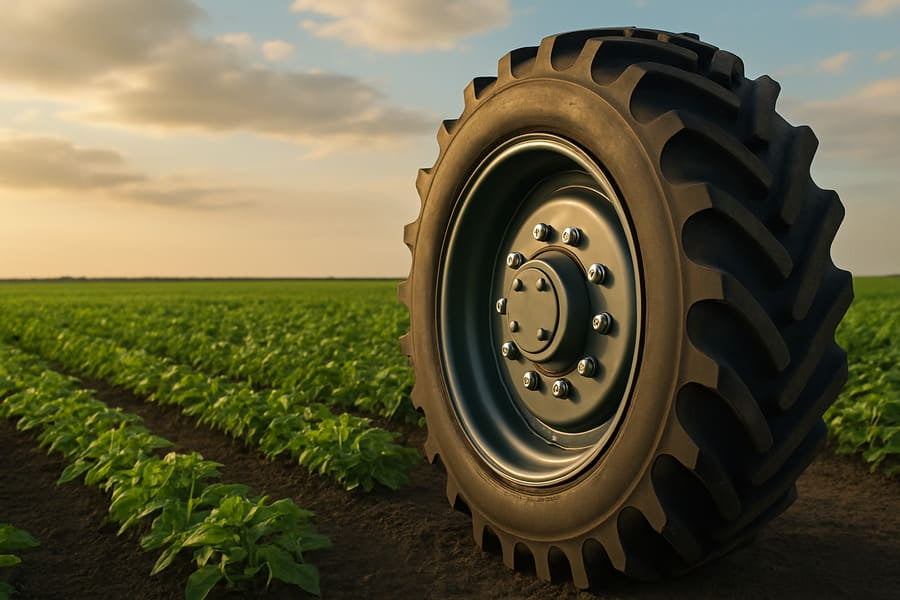
A few months ago, a purchasing manager from a large equipment dealer in Europe asked me what "green initiatives" we were taking. He was expecting to hear about solar panels on our factory roof or a new line of carbon-neutral tires. He was a little surprised when I didn't start there. Instead, I pointed to one of our heavy-duty reinforced rims5 on display and told him, "This is our most important environmental project." The confused look on his face told me I needed to explain. For us, the most powerful form of sustainability1 isn't just about how a product is made; it's about how long it lasts.
How Can a Simple Steel Rim Have a Bigger Green Impact Than a High-Tech Upgrade?
You're under pressure to meet sustainability1 targets, but the "next big thing" is always expensive and complex. It feels like you can't make a real difference without a massive capital investment.
A rim engineered for a ten-year lifespan prevents four separate replacement cycles compared to a low-quality two-year rim. This completely eliminates the manufacturing and transportation carbon footprint6 of four entire products, offering a massive and immediate reduction in environmental impact.
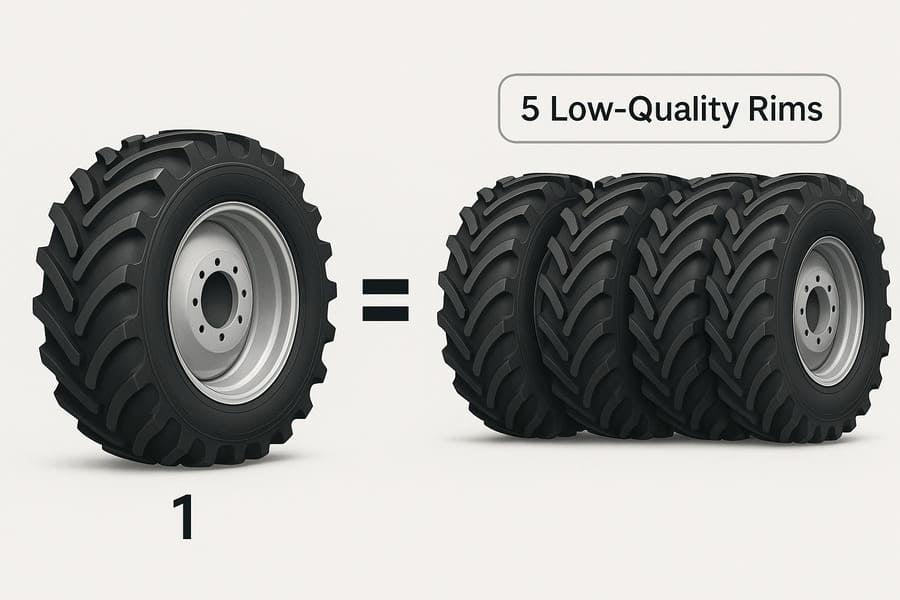
Let's break down the simple math, because it's powerful. When a low-quality rim cracks or deforms after just two years of hard service, it has to be replaced. This doesn't just create downtime for the farmer; it triggers a whole new resource-intensive cycle. You have to mine more iron ore, use tremendous energy to smelt it into steel, manufacture a new rim, use chemicals to coat it, and then ship it across the world. When you choose a rim engineered for a ten-year life, you are actively preventing that entire cycle from repeating four extra times. The environmental savings aren't small—they're multiplicative. This is the often-invisible side of sustainability1 that gets lost in the headlines about electric vehicles. Durability isn't a feature; it's a core environmental strategy.
The Carbon Footprint of Replacement
| Aspect | Low-Quality Rim (2-Year Life) | Gescomaxy Rim (10-Year Life) |
|---|---|---|
| Replacements in 10 Years | 4 (plus the original) | 0 (the original) |
| Manufacturing Cycles | 5 | 1 |
| International Shipments | 5 | 1 |
| Resource Consumption | 5x Steel, Energy, Coatings | 1x Steel, Energy, Coatings |
| Total Carbon Footprint | Massively multiplied | Minimized to a single instance |
Isn't Steel an 'Old' Material in a High-Tech World?
With all the talk about advanced composites and lightweight alloys, steel can sometimes feel like a legacy material. You might wonder if it's still the best choice for a forward-thinking, sustainable supply chain.
In heavy-duty applications, steel's greatest environmental advantage is its end-of-life. Unlike many composite materials, steel is 100% and infinitely recyclable without any loss in quality, making it a perfect material for a true circular economy7.
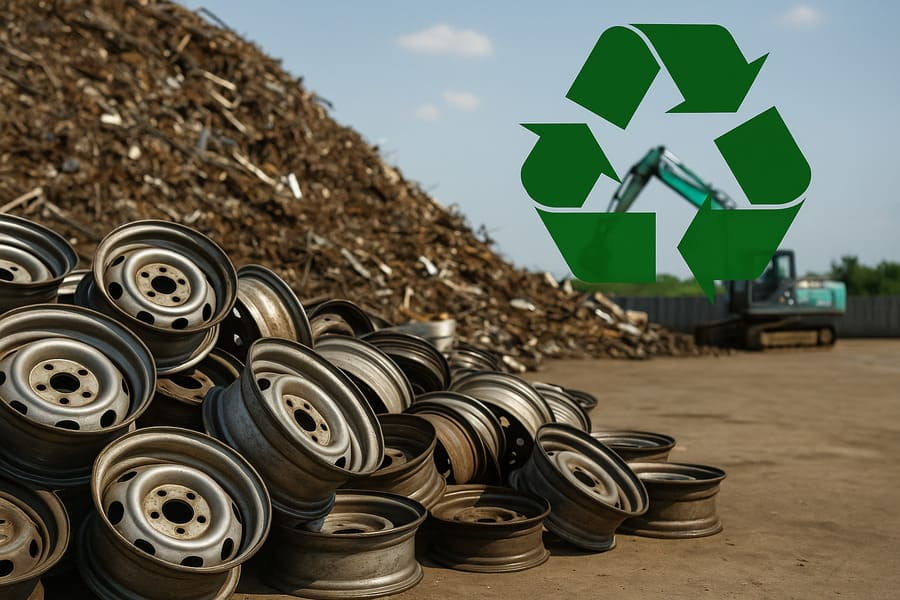
While composites have their place, they often pose a major end-of-life problem—many are difficult to recycle and end up in landfills. Steel is different. The very same material used in one of our rims today can be melted down and reborn as another high-strength steel product decades from now. This "closed-loop" potential is the cornerstone of a genuine circular economy7. As a manufacturer, we see this as a profound responsibility. We are not just creating a product; we are managing a resource. By choosing steel and designing our rims for maximum lifespan, we ensure that the material we use has the longest possible useful life before being returned to the production cycle, ready to become something new. This makes it a surprisingly modern and responsible choice for any business serious about reducing its long-term environmental impact.
Does the Manufacturing Process Itself Affect Sustainability?
Even with a durable, recyclable product, the way it's made matters. You need to ensure your supply chain partners meet the growing environmental and regulatory standards of your own customers, especially in sensitive markets.
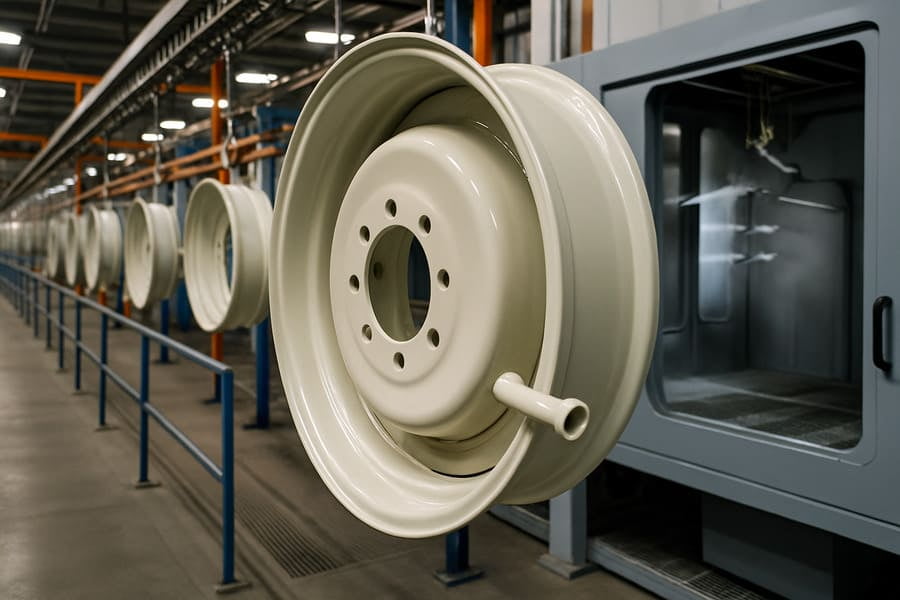
Absolutely. We use environmentally responsible coating processes8, including water-based paints and advanced powder coating systems9. This dramatically reduces VOC (Volatile Organic Compound) emissions, ensuring compliance with strict European and North American environmental regulations10.
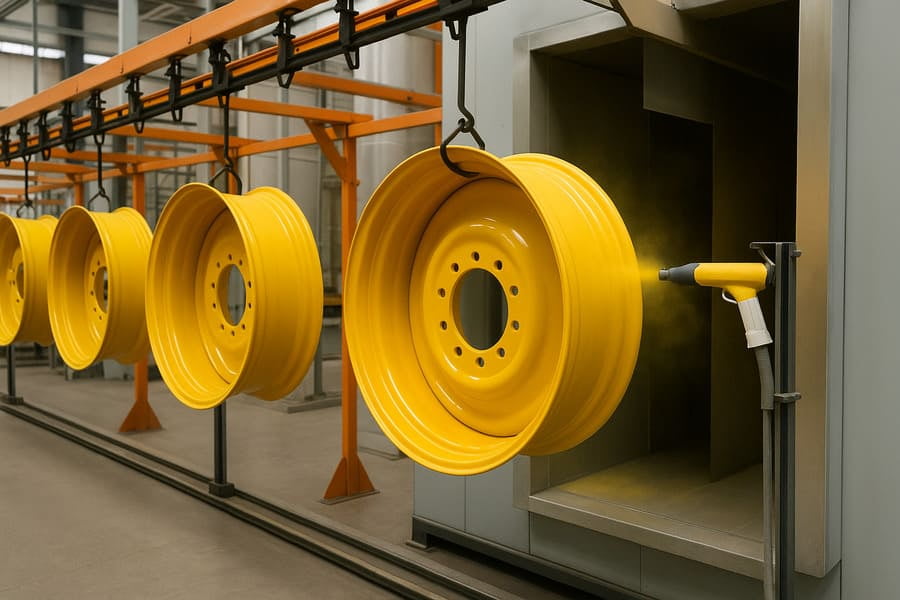
For our clients, particularly those in Europe and North America, compliance is non-negotiable. They can't afford to have a supplier whose manufacturing processes create a regulatory risk. That's why we've invested heavily in our coating technology. Traditional solvent-based paints release a high volume of VOCs into the atmosphere, which are harmful pollutants. Our factory has shifted to modern alternatives. Our advanced powder coating systems9 are a closed-loop process that produces almost zero VOCs, and any overspray is collected and reused, minimizing waste. For liquid coatings, we utilize water-based paints that significantly cut down on harmful emissions. This isn't just about being "green"; it's a critical business decision that protects our clients. It ensures the products they buy from us are not only durable and recyclable but also produced in a way that meets the world's highest environmental standards.
Conclusion
True sustainability1 is not just about futuristic technology. It's about smart, practical decisions—like choosing durable, recyclable, and responsibly manufactured components that reduce waste and stand the test of time.
Explore effective strategies and practices that can enhance sustainability in agriculture, making a real impact. ↩
Learn innovative methods to minimize resource consumption in agriculture, promoting efficiency and sustainability. ↩
Understand the significance of durable components in reducing waste and enhancing sustainability in farming. ↩
Learn strategies to reduce manufacturing energy consumption, promoting sustainability in agriculture. ↩
Discover how heavy-duty reinforced rims can improve agricultural efficiency and sustainability. ↩
Gain insights into the impact of carbon footprint on agriculture and ways to mitigate it. ↩
Discover the principles of a circular economy and its relevance to sustainable agricultural practices. ↩
Learn about eco-friendly coating processes that reduce emissions and enhance sustainability. ↩
Explore the benefits of advanced powder coating systems in reducing waste and emissions. ↩
Stay informed about environmental regulations that impact agricultural practices and compliance. ↩