
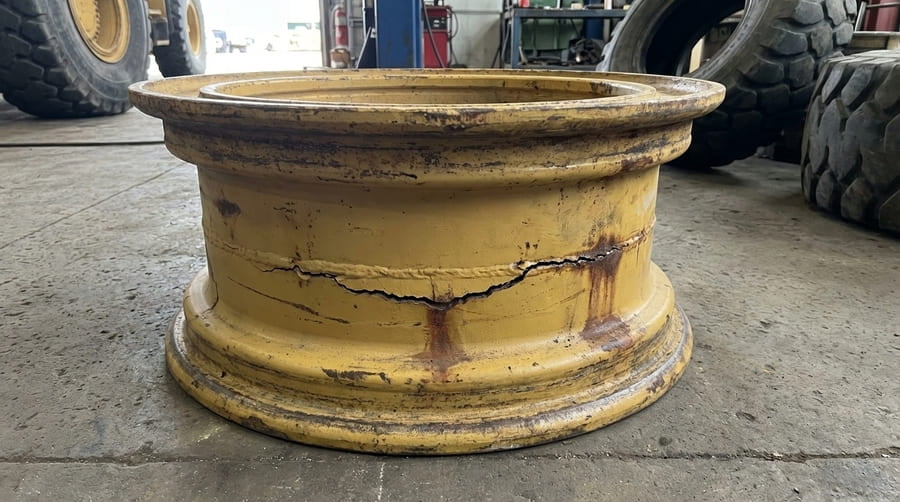
Your instinct is to demand a thicker wheel disc1 for more strength after a failure. But this simple fix could be the very reason your OTR wheels are cracking more, not less.
An overly thick disc creates a massive stiffness imbalance2 with the OTR rim. This redirects immense stress away from the strong disc and concentrates it onto weaker points, like the welds and the rim edge, causing them to crack prematurely.
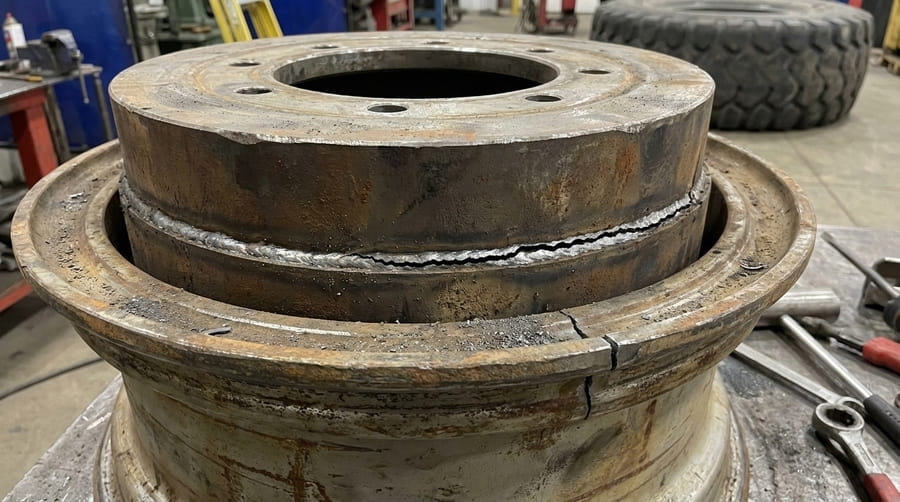
I once worked with a large mining operation that was adamant about their OTR wheel specs. "Just add 5mm to the disc," the fleet manager told me after a series of failures. "More steel means more strength." It's a logical assumption, one many people make. They were shocked when the new, "stronger" wheels started failing even faster than the old ones, with cracks appearing right at the welds. It taught us all a critical lesson: when it comes to wheel design, more is not always better. Let's break down why.
How Can a "Stronger" Disc Create a Weak Point?
You specified a thicker disc, believing it's a simple upgrade. But now you see cracks forming in places that were never a problem before, like the weld toes3 or the rim itself.
A disc that is too thick and rigid doesn't flex with the rest of the wheel. This creates an abrupt stiffness jump between the disc and the rim base, turning that transition area into a focal point for fatigue stress4.
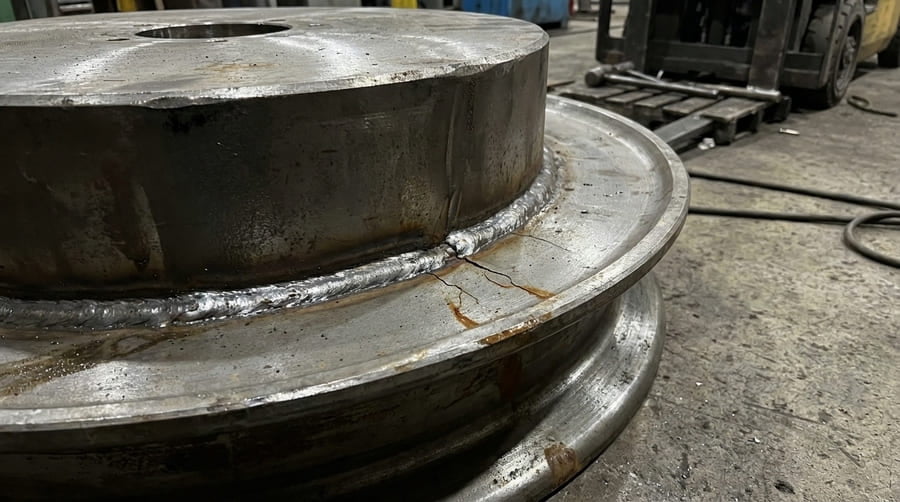
Think of it like joining a thick, rigid steel bar to a thin, flexible one and then trying to bend them together. The flexible bar will bend sharply right at the joint, concentrating all the stress in that one spot. The same thing happens with an OTR wheel. A OTR wheel assembly is designed to have a certain amount of controlled flex to absorb operational stress. If you make the disc extremely thick and rigid, it refuses to flex. This forces the more flexible parts of the wheel, like the rim base and the heat-affected zones5 around the welds, to absorb all of that energy. This abrupt change in stiffness creates a hinge effect, and that "hinge" becomes the new weak point. It is precisely this stiffness jump that initiates cracks where you least expect them.
Where Does the Stress Go When a Disc Is Too Stiff?
If the thicker disc isn't breaking, you might think the problem is solved. But the forces have to go somewhere, and you're seeing failures in new, more complex locations.
The stress doesn't just disappear. An overly stiff disc acts like a bully, pushing the bending forces away from itself and concentrating them into the welds and the adjacent material of the OTR rim, which were never designed to handle such focused loads.
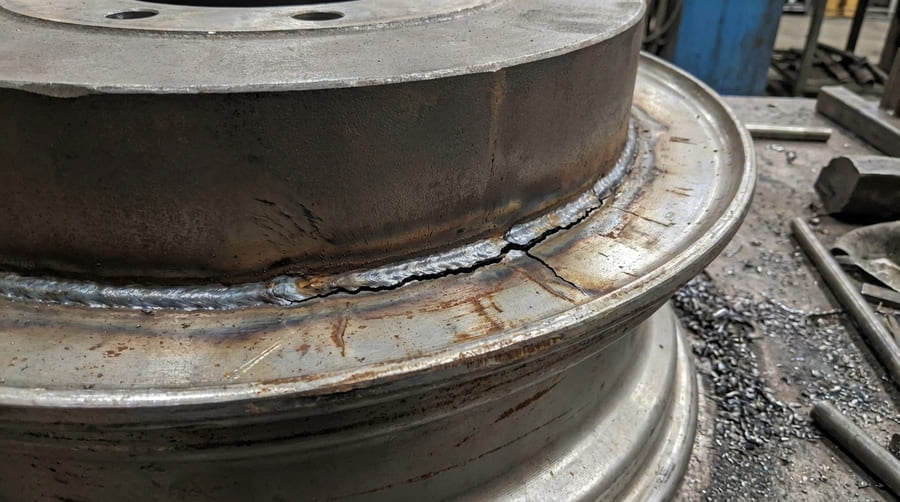
A well-designed wheel distributes stress smoothly across its entire structure. The disc, welds, and rim all work together as a system. But when you make the disc disproportionately thick, you break that system. The disc becomes so rigid that it no longer participates in absorbing the load. Instead, it acts as a rigid lever, transferring all the bending and flexing forces directly to its connection points: the welds. The weld zone is already a sensitive area due to the heat from the welding process. By adding a super-stiff disc, you are essentially telling the operational forces to attack this exact area. As a result, fatigue cracks begin to form at the toe of the weld or even in the rim base material right next to it, while the "stronger" disc looks perfect. The failure hasn't been prevented; it has simply been moved to a more critical location.
Is Structural Balance More Important Than Raw Thickness?
You're focused on material specs, demanding more thickness and higher-grade steel. But failures persist, making you question if you're looking at the right parameters for a reliable wheel.
Yes, absolutely. A balanced design where all components share the load proportionally is far more important for fatigue life than the raw thickness of any single part. The goal is structural harmony, not just brute strength in one area.
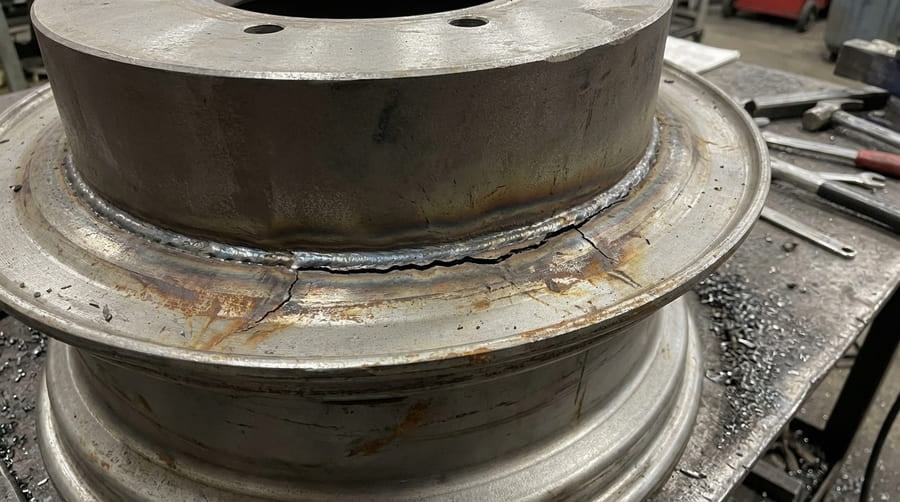
For over a decade, I've seen customers fixate on disc thickness. But the best-performing wheels are not always the thickest; they are the most intelligently designed. Think of a symphony orchestra. If the trumpet section plays at maximum volume all the time, it doesn't make the music better. It drowns everything else out and ruins the performance. A OTR wheel is the same. The disc, rim, and welds must work in harmony. A good design manages the stiffness of each part so they flex together and share the load. This prevents any single area from becoming a stress hotspot. As a supplier, our job at Gescomaxy isn't just to provide thick steel. It's to provide a OTR wheel with a balanced design, where every element is optimized to work together. This balanced approach is the real secret to long-term fatigue resistance.
How Do You Achieve the Correct Thickness and Geometry?
If simply adding thickness is the wrong answer, how can you ensure the OTR wheels you procure are both strong and correctly balanced to prevent these failures?
Thickness must be optimized in conjunction with the overall geometry. This means partnering with a supplier who understands wheel engineering and can provide a product with smooth transitions and a design validated by stress analysis6.
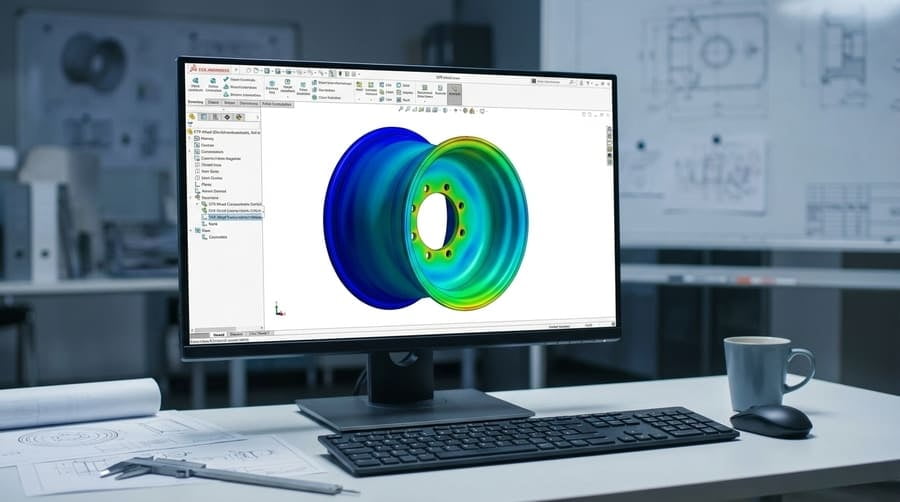
The solution is not to guess; it's to engineer. The right thickness depends on the OTR wheel's shape, especially the profile of the disc and how it joins the rim. A well-designed wheel disc will often have a variable thickness7 or a specially curved profile. These features are not accidental. They are engineered to create a gradual transition in stiffness, allowing the disc to smoothly transfer loads to the OTR rim without creating stress points. This is why our process relies on detailed technical drawings and quality control based on ISO 9001 standards8. We ensure the disc profile and thickness match the proven design. For a procurement manager9, the key is to look beyond a simple thickness number. You should ask your supplier about their design philosophy10. Do they just add material, or do they engineer a balanced solution? The right partner will help you find a wheel where thickness and geometry work together for maximum reliability.
Conclusion
More thickness is not always more strength. In OTR wheels, structural balance11 is the key to preventing failures, and this requires smart engineering, not just adding more steel.
Understanding the impact of disc thickness can help you avoid premature failures in OTR wheels. ↩
Explore how stiffness imbalance can lead to unexpected failures in wheel design. ↩
Understanding weld toes can help you identify potential failure points in wheel assemblies. ↩
Discover the factors contributing to fatigue stress to enhance wheel performance. ↩
Understanding heat-affected zones can help you prevent critical failures in wheels. ↩
Discover how stress analysis can optimize wheel design for better performance. ↩
Learn how variable thickness can enhance load distribution in wheel assemblies. ↩
Understanding ISO 9001 standards can ensure quality and reliability in wheel production. ↩
Gain insights into effective procurement strategies for reliable OTR wheels. ↩
Understanding design philosophy can lead to better partnerships and product quality. ↩
Explore the significance of structural balance for improving wheel reliability. ↩