
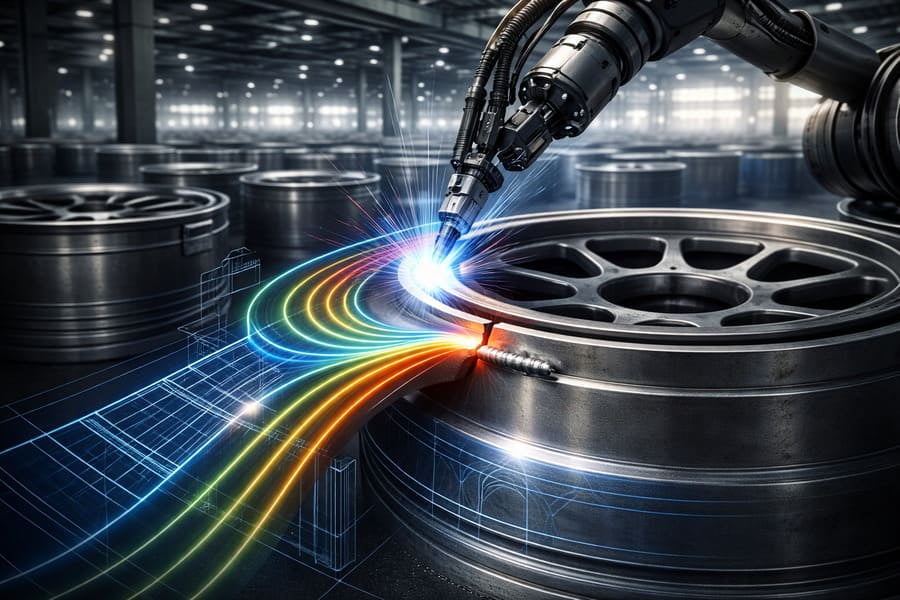
You see a factory video showcasing advanced robotic welding arms, creating perfect, seamless OTR wheel1s. You invest, believing this high-tech process guarantees superior durability. But the wheels still fail.
Robot welding does not inherently make an OTR wheel1 more durable because it only ensures the consistency of the weld, not the correctness of the structural design2. If the wheel's design has a flawed load path3, the robot will simply replicate that flaw perfectly on every unit.
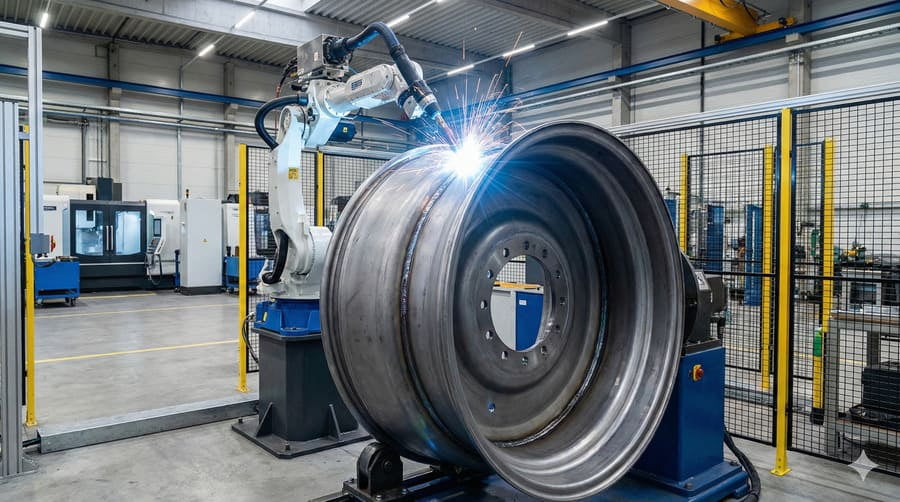
When clients visit our facility, they are always impressed by our 10 professional production lines, especially the robotic welding stations. They see the precision and assume that's the secret to our quality. I have to explain that the robot is just a highly skilled tool, like a master craftsman's hammer. But even the best hammer can't fix a flawed blueprint. The durability of an OTR wheel1 is decided long before the welding torch is ever lit. It's born from the engineering design4, not the manufacturing method. Let's explore why this distinction is critical.
Doesn't a Perfect Weld Guarantee a Strong Wheel?
You look at a robot-made weld—it's flawless, uniform, and clean. It inspires confidence. So you're confused when a wheel with such perfect seams still develops cracks under pressure.
A perfect-looking weld only guarantees consistency, not structural soundness. A robot simply executes instructions. If the design places the weld in a low-stress area or fails to fuse the most critical load-bearing parts, the robot will execute that flawed instruction perfectly every time.
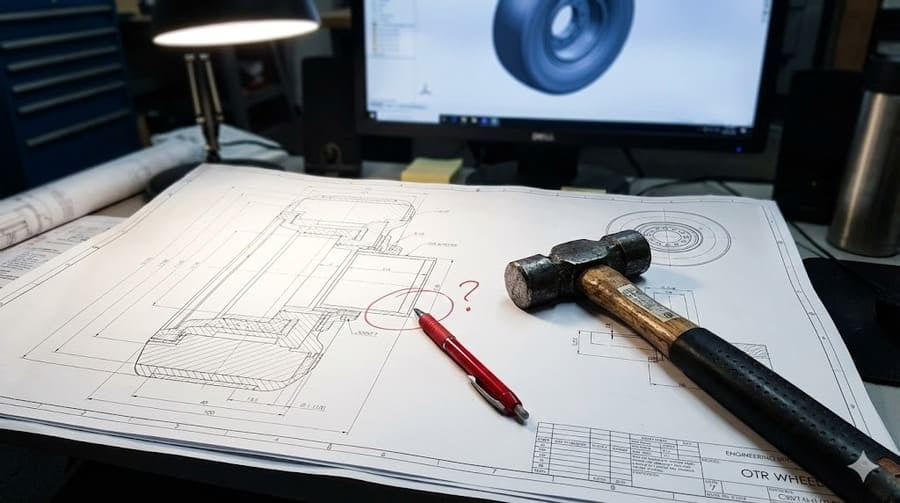
I think of it like this: a world-class chef can follow a recipe with absolute precision. But if the recipe itself calls for salt instead of sugar, the chef will produce a perfectly-made, consistently terrible cake. A welding robot5 is that chef. Its job is to control variables like speed, temperature, and wire feed with superhuman consistency. This eliminates random human errors like a shaky hand or a moment of inattention. But it has no judgment. It cannot look at a blueprint and say, "This weld should be here instead, to better support the cornering forces." It just welds. Durability comes from the "recipe"—the engineering design4—not just the skill of the "chef."
Consistency vs. Correctness
Understanding this difference is key to understanding wheel reliability. A robot guarantees one, but not the other.
| Aspect | Manual Welding | Robotic Welding |
|---|---|---|
| Potential Flaw | Random error (e.g., inconsistent penetration, porosity). | Systematic error (perfectly executing a bad design). |
| Failure Mode | Often unpredictable, one-off failures. | Highly predictable, uniform batch failures. |
| What It Tests | The skill and attention of the individual welder. | The quality and foresight of the engineering team. |
| Result | A batch might have a few random duds. | An entire batch can be uniformly defective. |
Isn't Metal Fatigue Caused by Bad Welds?
You see a crack forming right at the edge of a weld seam on a failed wheel. The conclusion seems obvious: it must have been a bad weld that gave way.
Fatigue cracks often appear near welds, but they are typically caused by a flawed structural design2, not the weld itself. The weld and its heat-affected zone6 (HAZ) are simply the most rigid points where stress from a poor load path3 eventually concentrates and manifests as a crack.
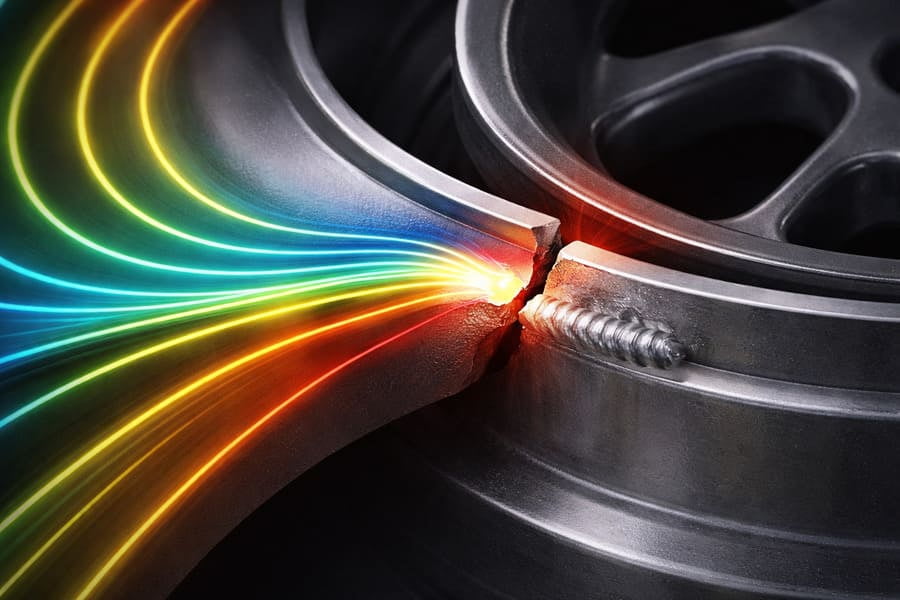
Imagine a river flowing around a large, sharp rock. The erosion and turbulence will be most intense right at the edges of that rock. In an OTR wheel1, stress is the river, and the weld seam is that rigid rock. A well-designed wheel guides the "river" of stress smoothly through its structure. A poorly-designed wheel creates sharp turns and bottlenecks, forcing all that stress to crash against the weld areas. So while the crack appears at the weld, the weld wasn't the cause. It was just the first place to break under the pressure created by a bad design. A robot, with its perfect consistency, ensures that this "rock" is placed in the exact same problematic spot on every single wheel.
The Weld as a Symptom, Not the Disease
The location of the failure is a clue that points back to the design.
- Load Path is King: The primary goal of a wheel's design is to create an uninterrupted, smooth path for operational forces to travel from the tire to the hub.
- Welds as Bridges: Welds should act as bridges along this path, seamlessly transferring the load. They should not be dams that block or redirect the flow of stress.
- Robotic Precision: A robot's precision is only valuable when the weld is designed to be a perfect bridge on a well-designed path. Otherwise, it just builds a perfect dam.
If Robots are So Precise, Why Don't They Eliminate Failures?
The promise of automation7 is perfection and the elimination of defects. So it's logical to assume that switching to robotic welding should lead to zero failures in the field.
Automation amplifies the quality of the initial design. A robot doesn't fix design errors; it makes them systematic. While a manual welder might introduce random, one-off flaws, a robot welding8 a flawed design ensures every single wheel produced has the exact same hidden vulnerability.
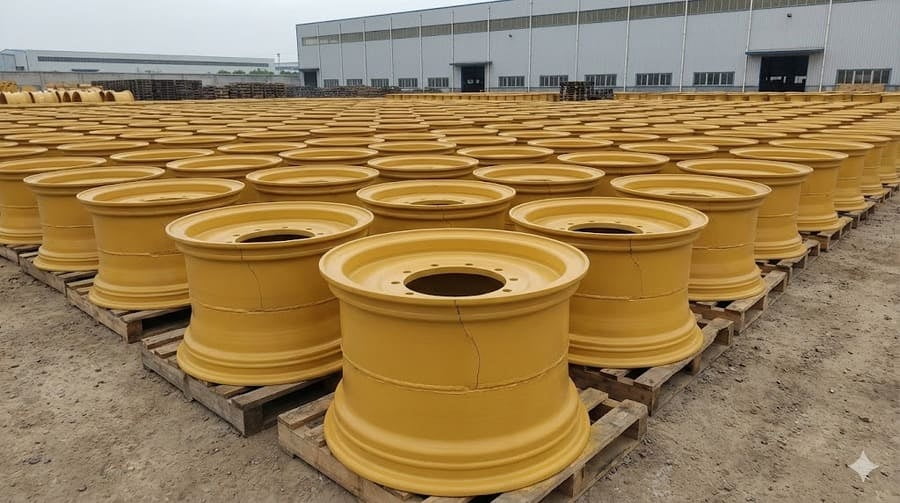
This is the scariest part of relying on technology without sound engineering. With manual welding, if a batch of 100 wheels has a 2% failure rate due to human error, you have two bad wheels. With robotic welding, if the design itself is flawed, you can have a 100% failure rate waiting to happen. The failures might not occur immediately, but because the flaw is identical in every wheel, they will tend to fail at the same point in their service life, under the same conditions. This creates a massive financial and safety risk. It proves that the most critical quality control9 step happens at the design validation stage, not on the production line. A robot can't make a bad design safe.
The Double-Edged Sword of Automation
Automation can be a powerful tool for quality or a powerful tool for creating uniform defects.
| Feature | The Promise of Automation | The Reality with a Flawed Design |
|---|---|---|
| Consistency | Every wheel is perfect. | Every wheel is perfectly flawed. |
| Quality Control | Eliminates human error. | Masks underlying engineering errors. |
| Risk Profile | Reduces random, one-off failures. | Creates systematic, fleet-wide failures. |
| Outcome | High reliability and trust. | Catastrophic and expensive product recalls. |
Conclusion
Robotic welding ensures consistency, but only sound engineering can ensure durability. The reliability of an OTR wheel1 is determined by its structural design2, not just the precision of its assembly.
Learn about the essential design elements that ensure the longevity and reliability of OTR wheels. ↩
Discover how proper structural design is crucial for product performance and longevity. ↩
Understanding load paths can help you appreciate their role in ensuring structural integrity. ↩
Explore the fundamental principles that lead to successful engineering outcomes. ↩
Gain insights into the technology behind welding robots and their operational limits. ↩
Learn about the significance of the heat-affected zone in welding and its impact on material properties. ↩
Explore the benefits and challenges of automation in modern manufacturing environments. ↩
Explore the nuances of robot welding to understand its impact on manufacturing quality and efficiency. ↩
Discover effective quality control practices that can enhance product reliability. ↩