
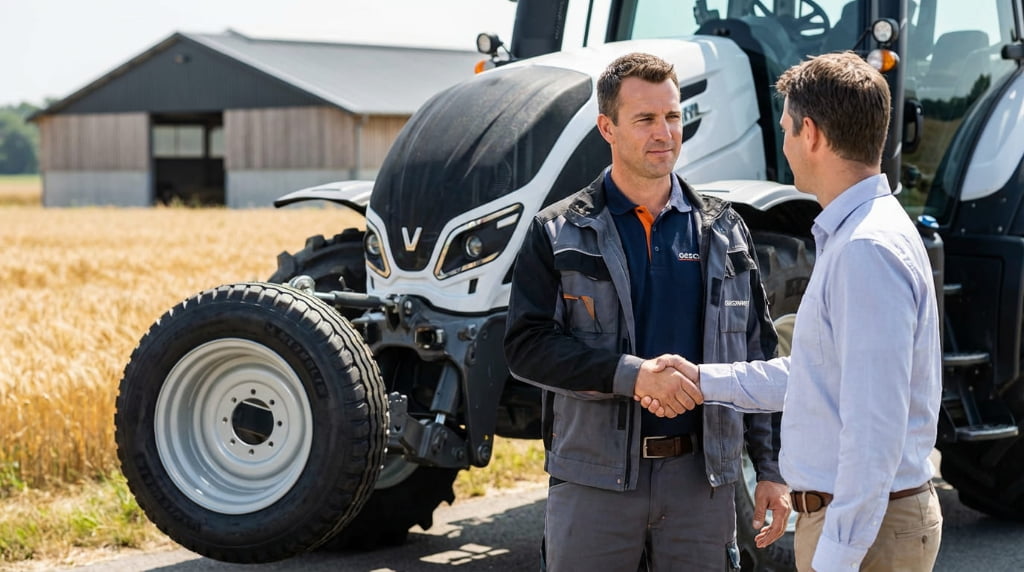
You're stuck managing separate suppliers for tires and rims. When a wheel fails, the finger-pointing begins. Your tire supplier blames the rim, the rim supplier blames the tire, and you're caught in the middle.
The shift to full wheel system solutions1 is driven by the need to simplify supply chains2 and eliminate blame-shifting. A single supplier provides a single point of responsibility3 for quality, resolving issues like air leaks4 or vibrations5 without forcing the customer to mediate disputes.
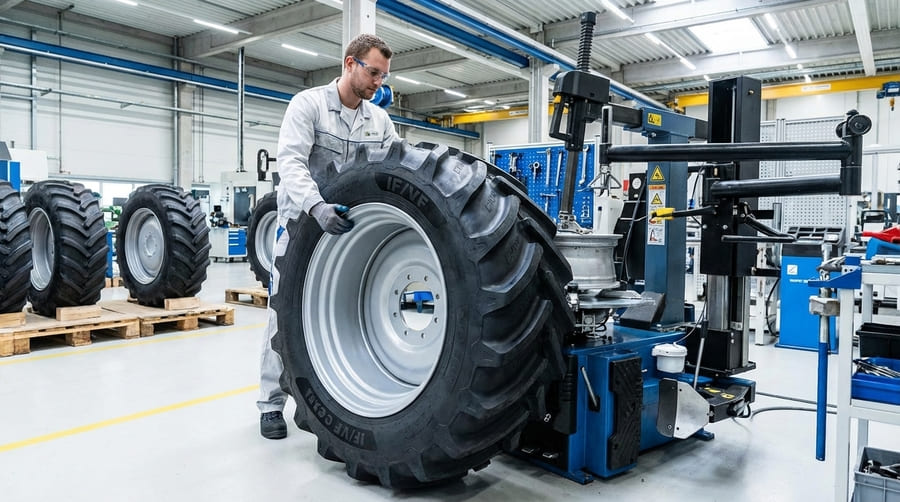
I remember a call from a frantic purchasing manager at a large OEM. "We have 50 tractors that can't ship because the wheels are vibrating," he said. "My tire and rim suppliers are just blaming each other, and I'm losing money every hour." This isn't a rare story; it's the core problem driving a major shift in how agricultural equipment is made. The old way of buying components separately is dying. Let's break down why a single, integrated solution6 is becoming the new standard.
Why Does Separating Tire and Rim Suppliers Create So Much Risk?
Your supply chain looks efficient on paper. But with separate tire and rim vendors, you're building a system with a hidden point of failure: the gap in responsibility between them.
Separating suppliers creates risk because there is no single owner of the final assembly's quality. When issues like improper fitment, air leaks4, or imbalance occur, each supplier can blame the other's component, leaving you to solve a technical problem you didn't create.

For years, procurement managers7 were taught to source components from specialized, low-cost suppliers to optimize piece price. But they are now calculating the total cost8 of that strategy. The "blame game" is a huge part of this. A tire's bead and a rim's flange are designed to work together as a perfect system. If there's a slight dimensional mismatch—even if both parts are technically within their own manufacturing tolerances—you can get a slow leak. Who is at fault? Both suppliers will present data showing their product is "in spec." This leaves your engineering team to spend days or weeks diagnosing a problem that shouldn't exist. This hidden cost9 of internal resource drain, production delays10, and warranty claims far outweighs any initial savings on the component price.
The Blame Game: A Costly Dispute
| Issue | Tire Supplier's Claim | Rim Supplier's Claim | Your Problem |
|---|---|---|---|
| Slow Air Leak | "The rim flange is bent or porous." | "The tire bead is defective." | Unshippable Equipment |
| Vibration | "The rim is not perfectly round." | "The tire has a balance issue." | Warranty Claims |
| Fitment Issue | "The rim diameter is out of spec." | "The tire bead is too tight." | Production Delays |
How Does a Single Supplier Simplify Your Supply Chain?
Your team is spending too much time juggling vendors, coordinating shipments, and managing invoices for multiple wheel components. This complexity adds no value and only increases the chance of errors.
A single supplier for the complete wheel assembly streamlines your entire process. It cuts down on administrative work, reduces logistics costs, and simplifies inventory management, allowing your procurement team to focus on more strategic tasks.
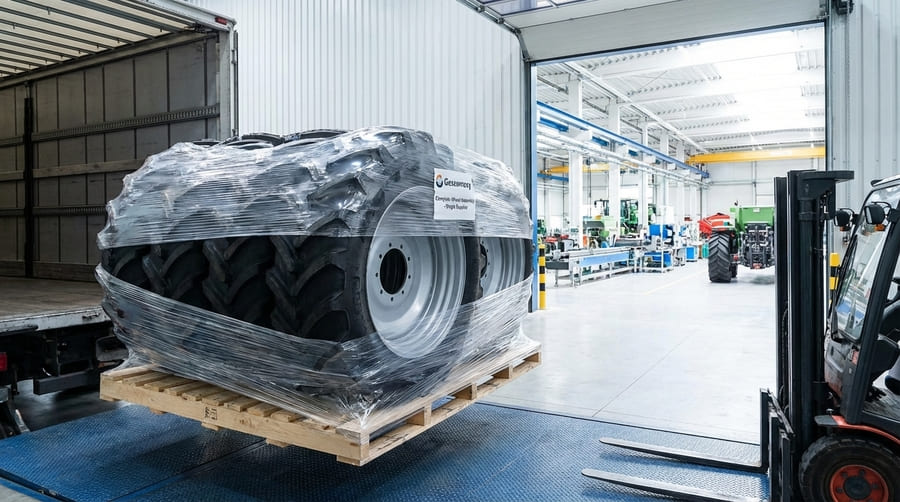
Think about the workflow for buying parts separately. Your team has to issue two purchase orders, track two shipments, and process two invoices. Your receiving department has to handle and store two different types of inventory. Then, your production team has to allocate labor and floor space to mount them. Now, compare that to the single-supplier model. One purchase order, one shipment to track, one invoice to pay, and one ready-to-install part that goes directly to your assembly line. I worked with a client who switched to our complete wheel assemblies. They calculated that they freed up over 20 hours of administrative and logistics work per month and reclaimed nearly 500 square feet of warehouse space. This isn't just a small improvement; it's a fundamental simplification of their operation that allows them to be more agile and efficient.
Why is a Single Point of Responsibility So Valuable?
A quality issue11 has stopped your production line. Instead of making one call to get a solution, you have to organize a conference call with multiple suppliers who are more interested in defending their product than fixing your problem.
A single point of responsibility3 means one phone call to solve any problem. The assembly supplier owns the performance of the entire wheel system, eliminating disputes and providing you with a clear, accountable partner12 who is motivated to resolve issues quickly.
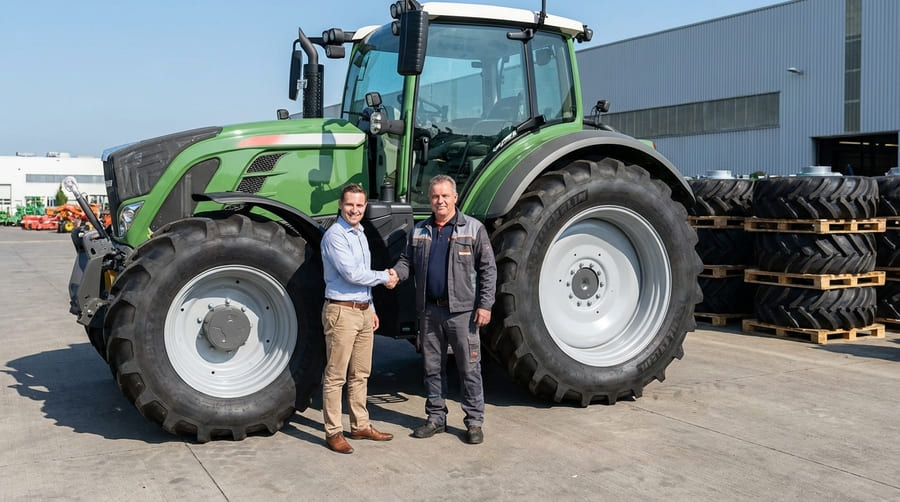
This is the most important benefit and the primary driver of the 2025 trend. When you buy a complete wheel assembly from a partner like Gescomaxy, you are buying a performance guarantee. If a wheel leaks, vibrates, or has a cosmetic flaw, it's our problem to solve. We take full ownership. We can't blame the tire because we selected and mounted it. We can't blame the rim because we manufactured or sourced it. Our responsibility is to deliver a finished product that works perfectly on your machine. This accountability changes the entire dynamic. Instead of being a referee between two suppliers, you have a single partner who is invested in your success. This saves you time, reduces stress, and ultimately protects your brand's reputation, because you can be confident that the components on your equipment are backed by a single, responsible supplier.
Conclusion
The shift to full wheel systems isn't just a trend; it's a smarter way of doing business. It reduces risk, simplifies logistics, and gives you a single, accountable partner12.
Explore how full wheel system solutions can streamline your supply chain and enhance efficiency. ↩
Learn strategies to simplify supply chains and reduce operational complexities. ↩
Understand the value of having a single point of responsibility for quality and accountability. ↩
Discover the common causes of air leaks and effective prevention methods. ↩
Find solutions for diagnosing and resolving vibrations in wheel systems. ↩
Understand the advantages of integrated solutions for improving supply chain performance. ↩
Learn about the challenges procurement managers encounter and how to overcome them. ↩
Gain insights into calculating the total cost of ownership for better procurement decisions. ↩
Explore the hidden costs that can impact your supply chain efficiency. ↩
Discover effective strategies to reduce production delays and enhance efficiency. ↩
Learn best practices for identifying and resolving quality issues in manufacturing. ↩
Explore the importance of having accountable partners in business for better collaboration. ↩