
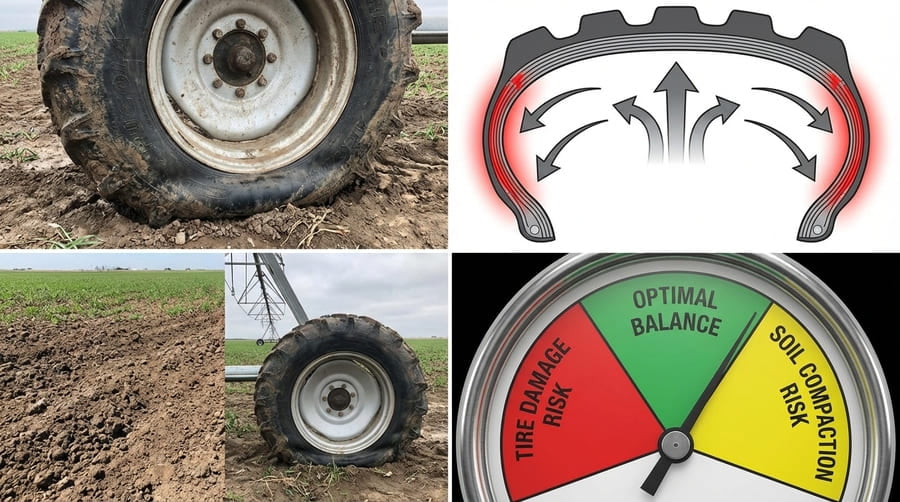
You advise lowering tire pressure to protect your customer's valuable soil. But are you unknowingly setting them up for a costly, mid-season tire failure and damaging your own reputation?
Lowering pressure protects the soil1 by increasing the irrigation tire's footprint, but it can cause hidden damage2. Excessive flexing of the sidewall3 leads to internal heat buildup4 and structural fatigue, risking a sudden blowout long before the tire appears worn out.
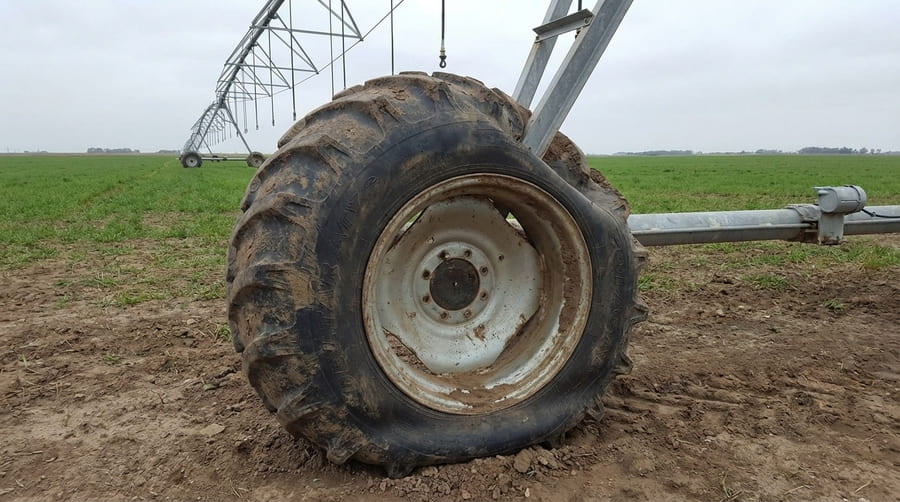
We all know the benefits of reducing soil compaction5. It's a key selling point. But I've seen firsthand how this well-intentioned advice can backfire spectacularly if not properly understood. The damage isn't obvious, but the consequences are. As a tire exporter for over a decade, I’ve learned that the most dangerous problems are the ones you can't see. Let's break down what's really happening inside that tire when the pressure drops.
How Does Lower Pressure Quietly Weaken a Irrigation Tire from the Inside?
Your customer's pivot tire looks fine on the outside. But inside, lower pressure is causing it to flex excessively, slowly breaking it down with every single rotation.
Lower pressure increases sidewall deformation. This constant flexing generates excess heat and puts stress on the internal plies and cords. Over time, this leads to material fatigue6, creating microscopic cracks7 that weaken the irrigation tire’s structure and prepare it for a sudden failure.
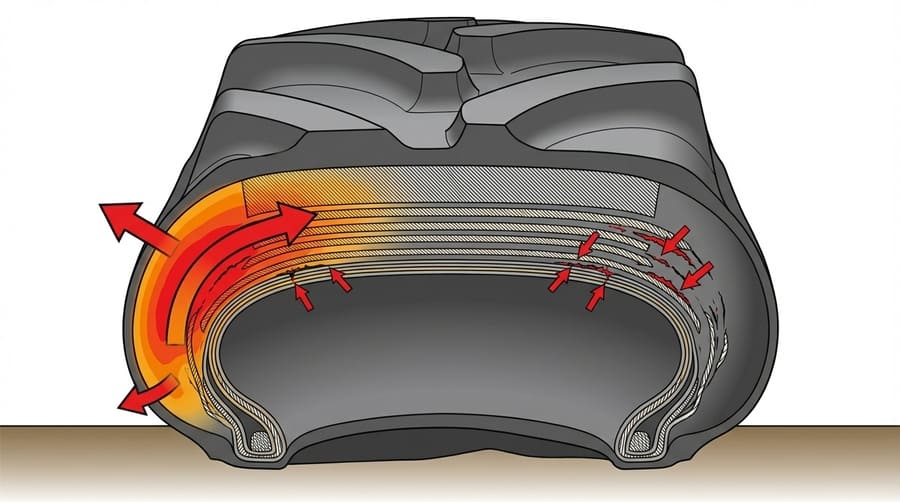
Think about bending a paperclip back and forth. For the first few bends, it seems fine. But with each repetition, the metal weakens internally until it suddenly snaps. This is exactly what happens to a tire's sidewall under low pressure.
The Breakdown Process
- Increased Flex8: A properly inflated tire supports the load with air pressure. When underinflated, the tire’s physical structure—the sidewalls—must carry more of the weight. This causes them to bulge and flex more than they were designed to.
- Heat Buildup9: This constant flexing generates significant heat within the rubber and the internal cord layers. Heat is the enemy of rubber; it accelerates the aging process and causes the material to lose its strength and elasticity.
- Internal Fatigue10: Over thousands of rotations, the combination of stress and heat creates microscopic tears in the tire’s structure. This is a cumulative process that happens silently, with no external signs of damage until it's too late.
Why Does a Irrigation Tire Fail When the Damage Isn’t Even Visible?
You’ve seen it before: a tire that looks perfectly fine suddenly blows out. Your customer is frustrated, and you're left explaining a failure that has no obvious cause.
Internal structural fatigue is completely invisible from the outside. While the benefit of soil protection is immediate and visible, the damage from low pressure is gradual and hidden, making it easy to ignore until a catastrophic failure occurs during peak season.
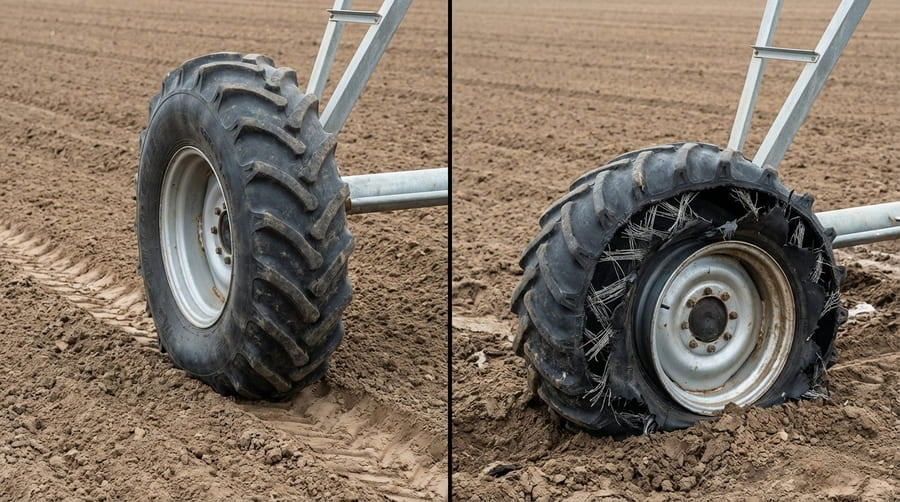
The problem is a classic case of short-term gain versus long-term risk11. A farmer lowers the pressure and immediately sees a wider footprint and less soil compaction5. It feels like a success. But inside the irrigation tire, a silent countdown has begun. This invisible damage is what makes underinflation so risky for procurement managers and the brands they represent. A warranty claim for a worn-out tread is one thing; a claim for a sudden blowout on a two-year-old tire is far more damaging to your reputation. It suggests a product defect, even when the cause is operational. As a supplier, our job is to help our partners understand and communicate this hidden risk. By tracking failure data, we've confirmed that a large percentage of premature "catastrophic failures" are linked directly to prolonged operation at pressures below the manufacturer's recommended minimum.
What Is the Right Balance Between Protecting Soil and Protecting Irrigation Tires?
Your customers want the lowest possible pressure for their soil, but you know the risks of tire failure. Pushing for higher pressure seems to ignore their needs, creating a difficult trade-off.
The optimal solution is not the absolute lowest pressure. It is finding a controlled compromise—a "sweet spot" pressure that significantly reduces soil compaction5 without pushing the tire's sidewall past its structural endurance limits. This balance ensures long-term reliability.
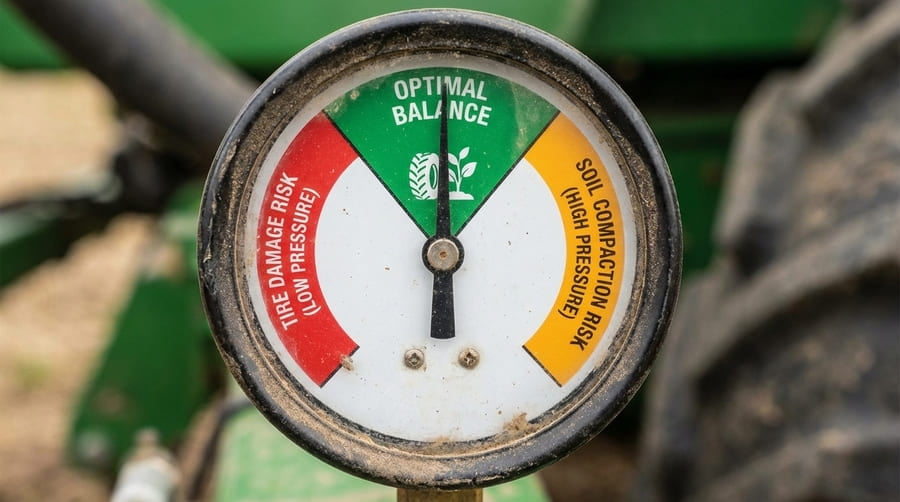
For years, I've worked with dealers and their customers to shift the conversation from "what's the lowest pressure?" to "what's the optimal pressure?" The answer depends on a few key factors that a good supplier should help you define.
| Factor | Consideration | Impact on Pressure |
|---|---|---|
| Total Weight12 | The weight of the pivot span, water, and tire/wheel assembly. | Heavier spans require higher minimum pressures to support the load safely. |
| Tire Size | The volume of air the tire can hold. | Larger volume tires can often run at lower pressures than smaller ones. |
| Tire Design | The specific construction of the sidewall and tread. | Some tires are designed with more robust sidewalls to better handle flexing. |
| Field Speed13 | The operational speed of the pivot system. | Higher speeds generate more heat and may require slightly higher pressure. |
By considering these variables, you can provide a specific, data-backed recommendation instead of a generic "lower is better" rule. This turns you from a simple seller into a trusted advisor who protects both your customer’s field and their investment in equipment.
Conclusion
The right tire pressure is a calculated balance, not a race to the bottom. It protects the soil, prevents hidden damage2, and ensures a quiet, reliable irrigation season for everyone.
Explore how reducing tire pressure can benefit soil health by increasing the tire's footprint, reducing compaction, and promoting better irrigation. ↩
Understand the invisible risks of tire damage due to low pressure, which can lead to sudden blowouts and affect your equipment's reliability. ↩
Learn about the risks associated with excessive sidewall flexing, including heat buildup and structural fatigue, which can lead to tire failure. ↩
Explore how heat buildup inside a tire can weaken its structure, leading to premature failure and costly replacements. ↩
Discover the relationship between tire pressure and soil compaction, and how finding the right balance can protect both soil and tires. ↩
Learn about material fatigue in tires caused by stress and heat, leading to microscopic cracks and potential blowouts. ↩
Understand the formation of microscopic cracks in tires due to low pressure and excessive flexing, which can lead to sudden tire failure. ↩
Find out how increased flex from low pressure affects tire durability, causing structural stress and potential failure. ↩
Learn why heat buildup is detrimental to tire health, accelerating aging and reducing strength and elasticity. ↩
Explore the process of internal fatigue in tires, where stress and heat cause silent damage leading to unexpected blowouts. ↩
Understand the trade-offs between immediate benefits of soil protection and long-term risks of tire damage from low pressure. ↩
Learn how the total weight of equipment influences tire pressure needs, ensuring safe load support and preventing damage. ↩
Explore how the operational speed of irrigation systems affects tire pressure needs, preventing heat buildup and ensuring reliability. ↩