
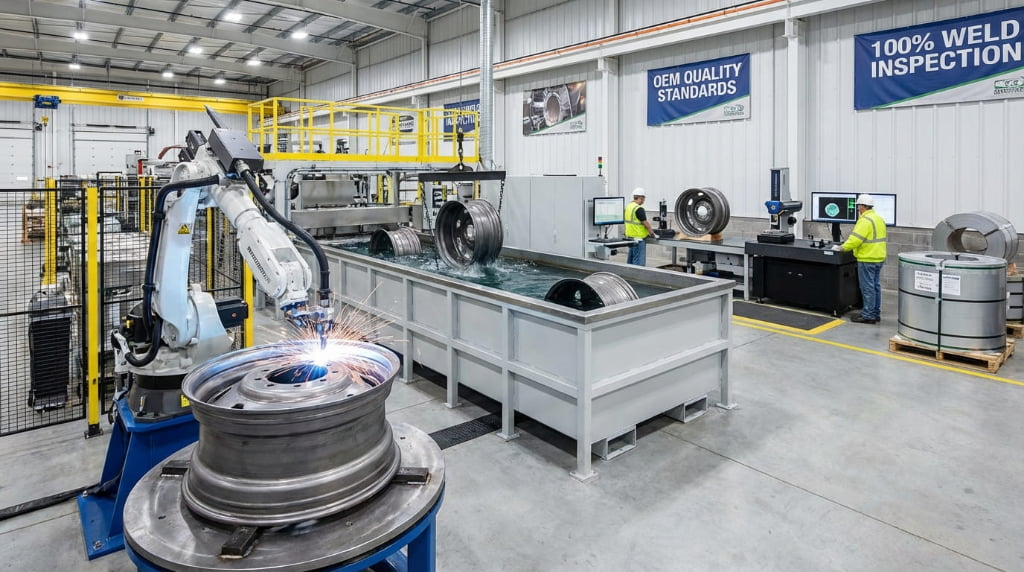
You've faced the frustration of a rim rusting out or cracking under load long before its time. This premature failure costs you money, creates downtime, and damages your reputation.
We build long-lasting rims by enforcing three key QC standards: using certified high-strength steel1, applying advanced E-coating2 and weld-flaw detection3, and holding every order, regardless of size, to the same strict OEM-level production4 and inspection protocols.
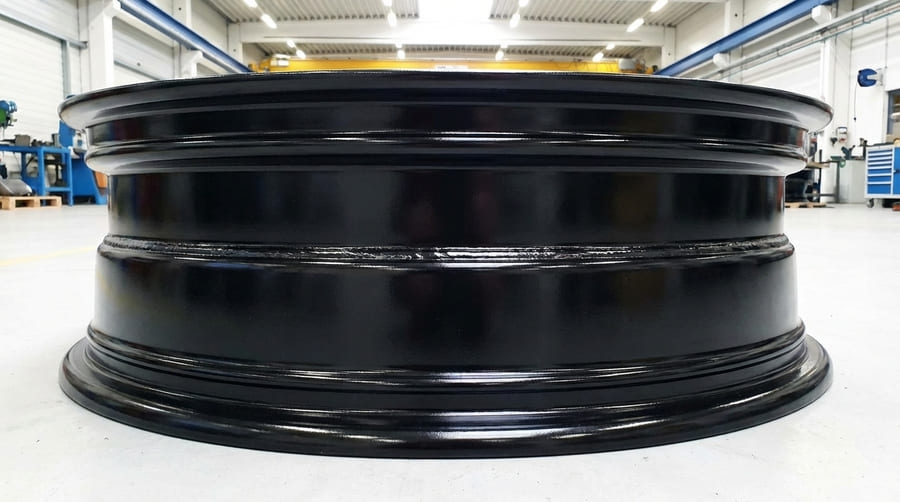
In my 13 years in this industry, I've seen countless buyers get burned by rims that looked good on the outside but were hiding critical flaws. A shiny coat of paint can easily cover up substandard steel or a weak weld. That’s why we shifted our entire focus to the manufacturing process itself. It's not about how the rim looks on day one; it’s about how it performs on day one thousand. We build trust by building rims that last, and that starts with standards that many others skip. Let's dive into the three pillars of our quality promise.
What Makes a Rim Structurally Sound from the Very Beginning?
A rim can look solid, but a hidden flaw in the steel or weld can lead to a catastrophic failure in the middle of a critical work day. That's a risk you can't afford.
A rim’s structural integrity5 starts with using certified high-strength steel1 and verifying every weld with flaw-detection testing6. This ensures the foundation is strong enough to handle extreme loads and torque without fatiguing or failing, preventing disaster before it can happen.
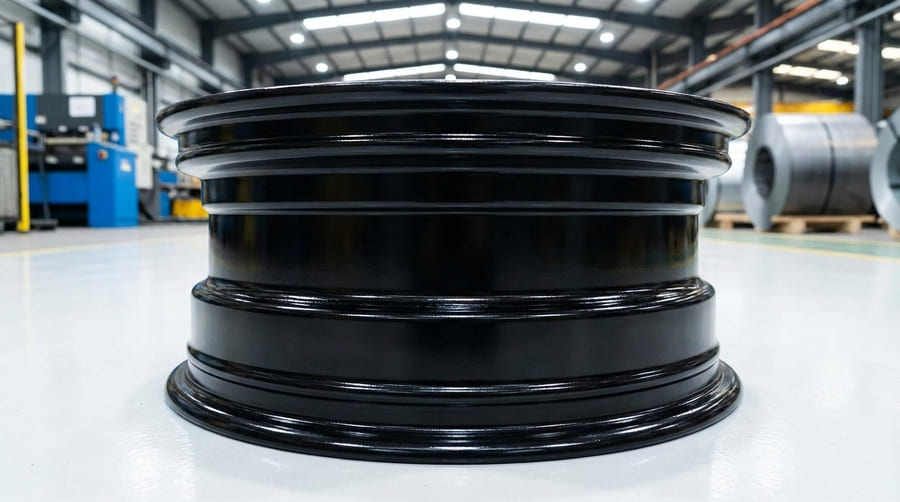
The first step in our process is the most critical: material selection. We don't just use "steel"; we use high-grade, high-strength steel with certified properties that guarantee its ability to resist bending and fatigue. But even the best material is useless if it's not joined properly. The welds are the skeleton of the rim. This is why we use automated welding processes7 for consistency and then subject our welds to flaw-detection testing6, like ultrasonic or magnetic particle inspection. This process allows us to "see" inside the weld, exposing any hidden voids or imperfections that could become a crack under pressure. Most budget manufacturers skip this step because it adds time and cost, but for us, it's non-negotiable. It's the only way to be certain the rim's core is as strong as its design.
Material and Welding: Our OEM Standard
| Quality Check | Typical Low-Cost Rim | Our OEM Standard (For All Orders) |
|---|---|---|
| Steel Source | Uncertified, commodity-grade steel | Certified high-strength steel |
| Weld Process | Manual welding, visual check only | Automated welding for consistency |
| Weld Inspection | None, or spot-check at best | 100% flaw-detection testing6 on critical welds |
Why Is E-Coating Superior for Preventing Rim Corrosion?
You've seen it before: a new rim starts showing rust streaks after just one season in the field. This isn't just a cosmetic issue; it's the beginning of structural decay.
E-coating2 (electrophoretic deposition) provides total corrosion protection8 by using an electric current to apply a uniform coating to every surface, even inside tight corners and crevices where spray paint can't reach. This creates a complete barrier against moisture and chemicals.
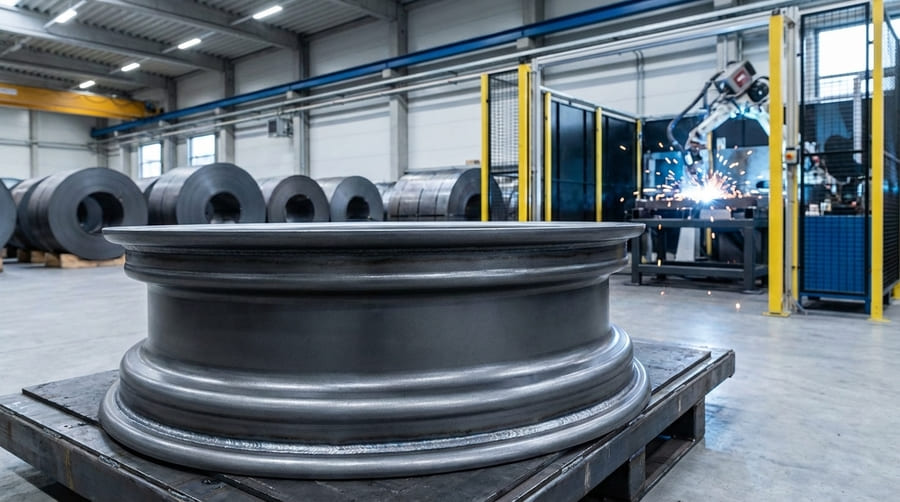
Think of spray painting like throwing a bucket of paint at a wall—it covers the easy-to-reach surfaces but misses the nooks and crannies. E-coating2 is completely different. We submerge the entire rim in a liquid polymer solution and apply an electrical charge. This process draws the coating particles to every single metal surface, inside and out, creating a perfectly even and bonded layer. It's the same advanced process used by top automotive manufacturers to protect a car's chassis from road salt and rust. This complete coverage is especially important for agricultural rims9, which are constantly exposed to fertilizers, moisture, and mud. While a simple spray paint job might look good initially, it leaves hidden areas vulnerable to rust, which can silently eat away at the rim's strength.
Do Aftermarket and Small-Batch Orders Receive the Same Quality Control?
You might be an aftermarket repair dealer or need a small batch of custom rims, and you worry that your order won't get the same attention to quality as a massive OEM contract.
Yes. We apply the exact same OEM-level quality standards to every single order, whether it's for 10,000 units or a small, 50-piece batch. Our QC system is built into our production line, not based on the customer's size. Your reputation is as important as any OEM's.
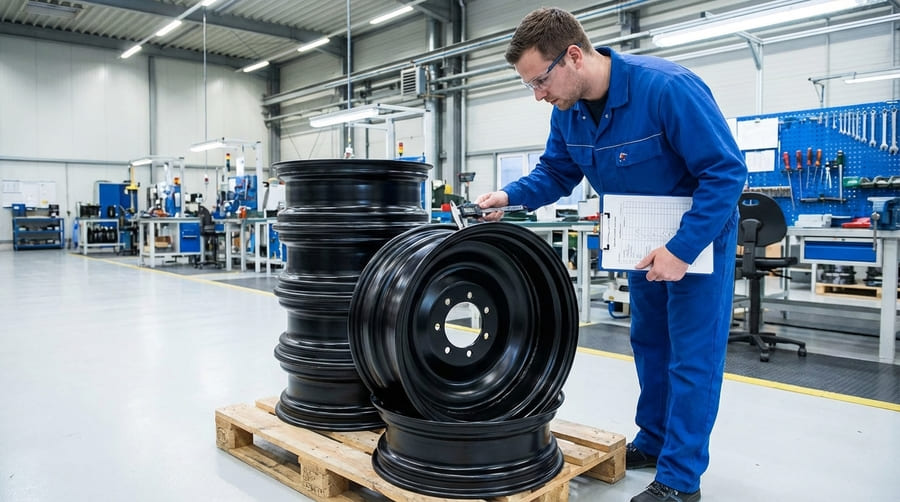
This is a core principle for us. We believe that a workshop replacing a single rim for a local farmer deserves the same level of safety and reliability as a global equipment manufacturer. Our quality control system10 is not a feature we turn on or off depending on the order size. Every rim that comes off our 10 production lines goes through the same checkpoints. This includes material certification, weld inspection, coating thickness tests, and a final 100% inspection for dimensional accuracy11 and finish. Why? Because a single rim failure can be just as costly and dangerous for a small operator as it is for a large one. By applying our strictest standards universally, we ensure that every client, from major brands to local dealers, can build their business on the foundation of our reliable quality.
Conclusion
Our commitment is simple: build every rim to last. This is achieved through superior materials, advanced processes, and applying uncompromising OEM quality standards to every single order we produce.
Understanding certified high-strength steel can help you appreciate its role in rim durability and safety. ↩
Explore how E-coating offers superior protection against rust, ensuring your rims last longer. ↩
Learn about weld-flaw detection techniques to understand how they enhance rim safety and reliability. ↩
Learn about OEM-level production standards to understand their importance in quality assurance. ↩
Understanding structural integrity can help you make informed decisions about rim purchases. ↩
Understanding flaw-detection testing can help you appreciate its role in preventing product failures. ↩
Discover the benefits of automated welding in ensuring consistent and high-quality rim production. ↩
Explore various corrosion protection methods to ensure the longevity of your metal products. ↩
Understanding the challenges of agricultural rims can help you choose the right products for your needs. ↩
Discover the essential elements of a quality control system to ensure product reliability. ↩
Explore the significance of dimensional accuracy in ensuring the proper fit and function of rims. ↩