
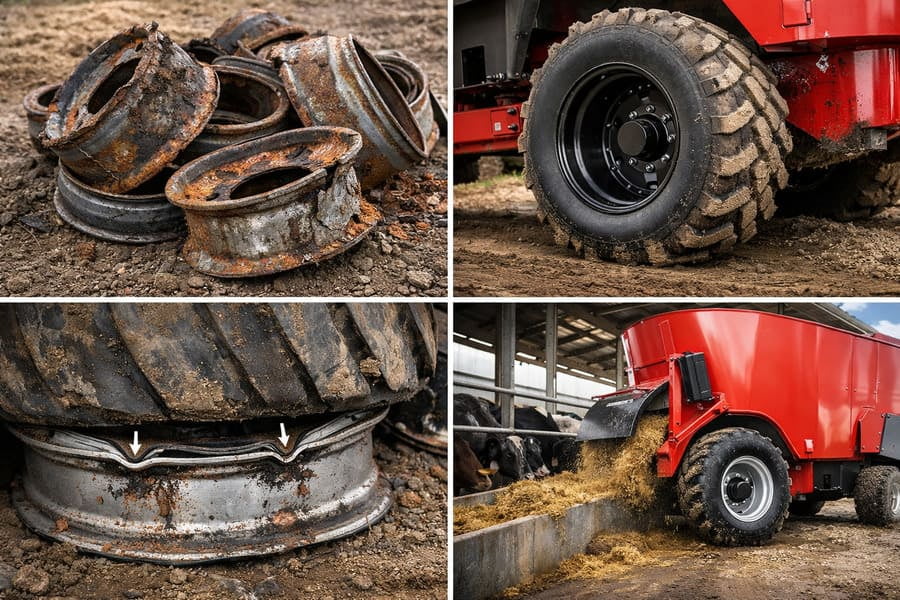
Your Total Mixed Ration (TMR) mixers1 run constantly, but their rims are failing prematurely. Corrosion and cracking lead to costly downtime, turning essential equipment into a constant maintenance headache.
Specialized agricultural rims2 extend TMR mixer life by using a two-part solution. A dual-layer, acid-resistant coating3 prevents chemical corrosion4 from feed, while reinforced flanges5 provide the structural strength needed to withstand constant heavy loads without cracking, directly addressing the primary failure points.
I'll never forget a visit to a large dairy operation. They showed me a graveyard of failed rims from their TMR mixers. These weren't just a little rusty; they were structurally compromised, with flanges bent and metal flaking away. The manager explained that a brand-new set of standard rims would look terrible in a year and become unsafe in two. The combination of immense weight and the constant exposure to the acidic environment of silage was literally eating his investment. It was a clear case where a standard, off-the-shelf product was simply not up to the job, and a specialized solution was the only way to stop the cycle of replacement.
Why Do Standard Rims Corrode So Quickly in TMR Mixer Environments?
You see rust on all farm equipment, but the decay on TMR mixer rims is different. It's faster and more destructive, almost as if the metal is dissolving right before your eyes.
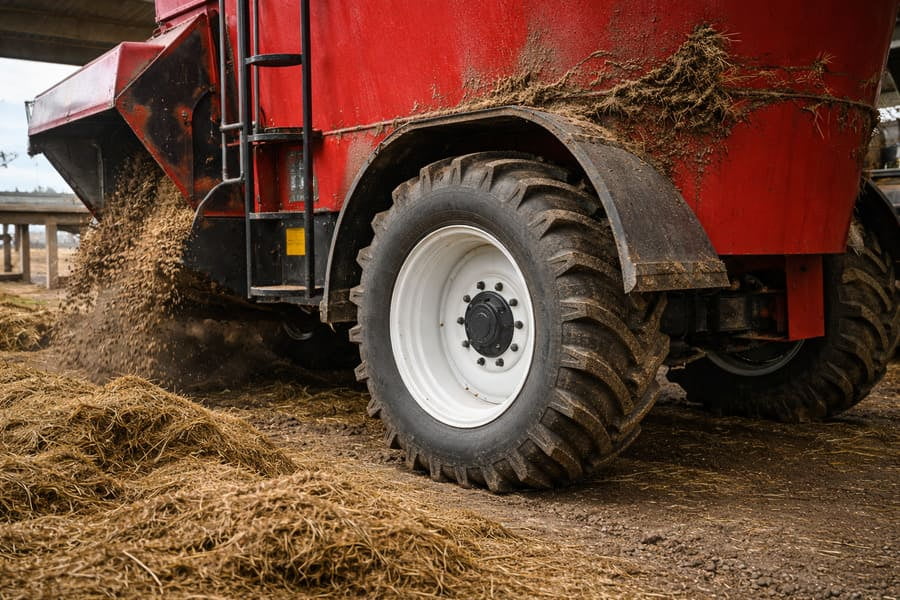
The silage and other fermented feeds in a TMR create a highly acidic environment. This acid strips away standard paint, exposing the bare steel to a constant bath of corrosive moisture and chemicals.
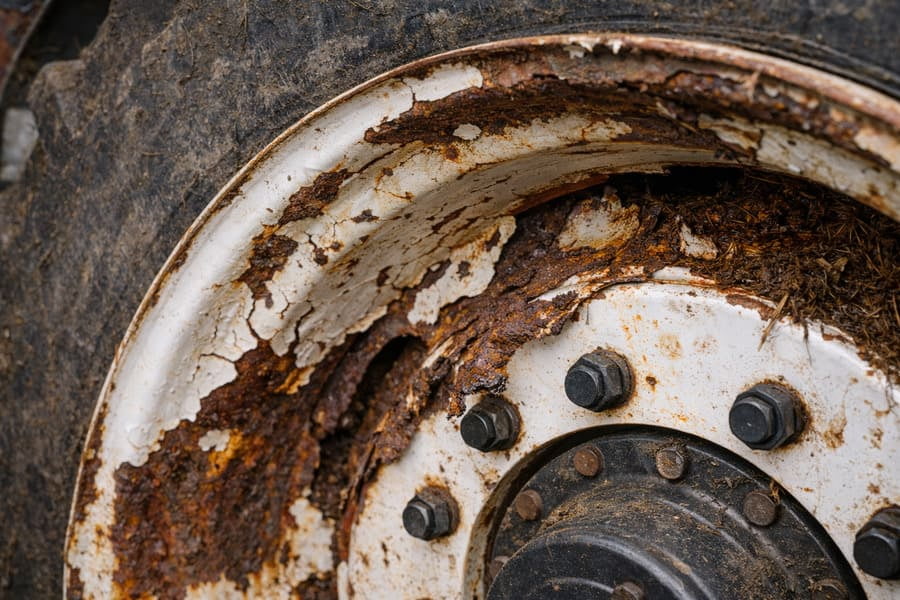
The problem is a chemical attack. The fermentation process in silage produces aggressive acids, like acetic and lactic acid. Standard paint is simply a thin barrier, and once it gets scratched or permeated, these acids go to work on the steel underneath. It's not a slow, gentle rusting process; it's an active corrosion that rapidly eats away at the metal, thinning it and compromising its strength. This is why you see flaking and pitting, not just surface rust. To fight this, you need more than just a layer of paint. You need a defense system designed specifically to withstand chemical attacks. This is where a dual-layer coating6 becomes essential.
The Dual-Layer Defense System
We recommend a two-stage coating process for maximum protection. Each layer serves a unique and critical function.
| Coating Layer | Function & Benefit |
|---|---|
| 1. Zinc-Rich Primer | This layer provides "sacrificial" cathodic protection. The zinc is more reactive than steel, so it corrodes first, chemically protecting the agricultural steel rim even if the top coat is scratched. |
| 2. Powder-Coat Top Layer | This provides a thick, hard, and non-porous physical barrier. It seals the primer and the steel from any contact with external acids, moisture, and physical abrasion. |
This combined system ensures the rim is protected both chemically and physically, dramatically slowing down the corrosion process.
How Do Heavy Loads and Small Agricultural Tires Cause Rim Flanges to Fail?
It’s not just corrosion. You also see the rims physically bending, deforming, and cracking, especially around the flange where the tire sits. Why does this structural failure happen so often?
TMR mixers use small-diameter, wide tires7 (like 400/60-15.5) that concentrate the machine's massive weight onto a very small area of the rim flange, causing extreme stress that leads to deformation and cracking.
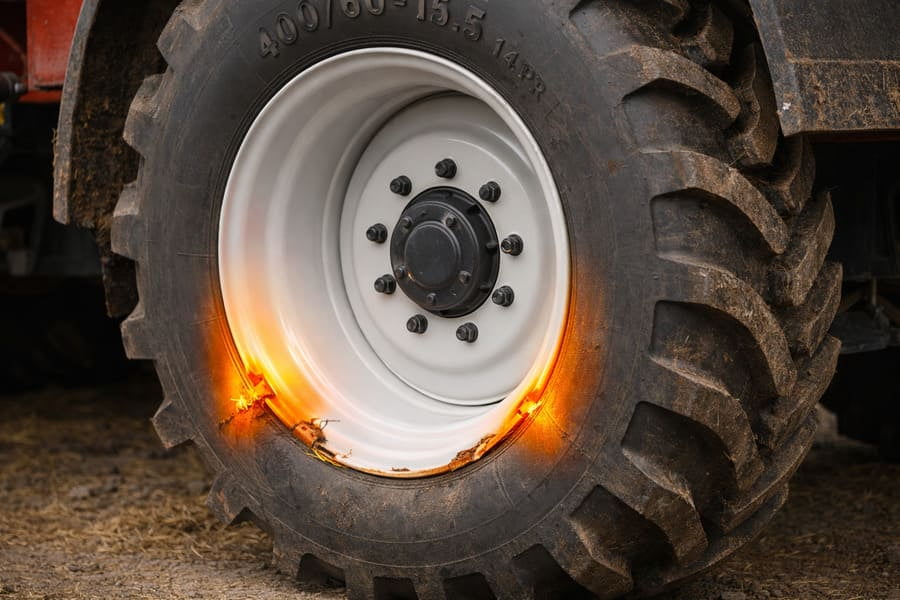
Think about the physics involved. A fully loaded TMR mixer can weigh many tons. This immense weight is supported by relatively small wheels to keep the machine's loading height low. A common tire size, like a tire 400/60-15.5, has a very wide profile. All that weight presses the wide agricultural tire bead directly against the rim flange. On a standard rim, the flange is not designed for that kind of constant, concentrated pressure. Every bump and turn puts a huge impact load on that single point. Over time, the steel fatigues. It starts by bending, then deforms, and eventually, a crack forms. Once corrosion weakens the metal, this process happens even faster, leading to a complete and dangerous failure.
Reinforcing the Point of Impact
To solve this, the rim itself needs to be stronger in the most critical area.
| Rim Type | Flange Design | Performance Under TMR Load |
|---|---|---|
| Standard Rim | Standard thickness and simple curl profile. | Prone to bending, deformation, and fatigue cracking8 under concentrated load. |
| Reinforced Rim | Increased steel thickness and/or an engineered profile at the flange. | Specifically designed to distribute stress, resist deformation, and prevent cracking from impacts. |
Our reinforced agricultural rims2 for TMR applications feature a significantly thicker and more robust flange designed to handle these specific stresses, preventing the bending and cracking that plague standard wheels.
Conclusion
By choosing agricultural rims2 with both an acid-resistant coating3 and reinforced flanges5, you address the root causes of TMR wheel failure. This specialized solution ensures longer service life, greater safety, and lower operational costs.
Explore how TMR mixers can enhance feed efficiency and animal health on farms. ↩
Find the top agricultural rims designed for TMR mixers to ensure longevity and performance. ↩
Learn about the technology behind acid-resistant coatings and their applications in agriculture. ↩
Understand the factors leading to chemical corrosion and how to prevent it in farming tools. ↩
Discover how reinforced flanges improve the durability and performance of agricultural machinery. ↩
Find out how dual-layer coatings provide superior protection against harsh environments. ↩
Explore the benefits of using small-diameter, wide tires for better load distribution and stability. ↩
Discover the causes of fatigue cracking and strategies to enhance metal structure longevity. ↩