
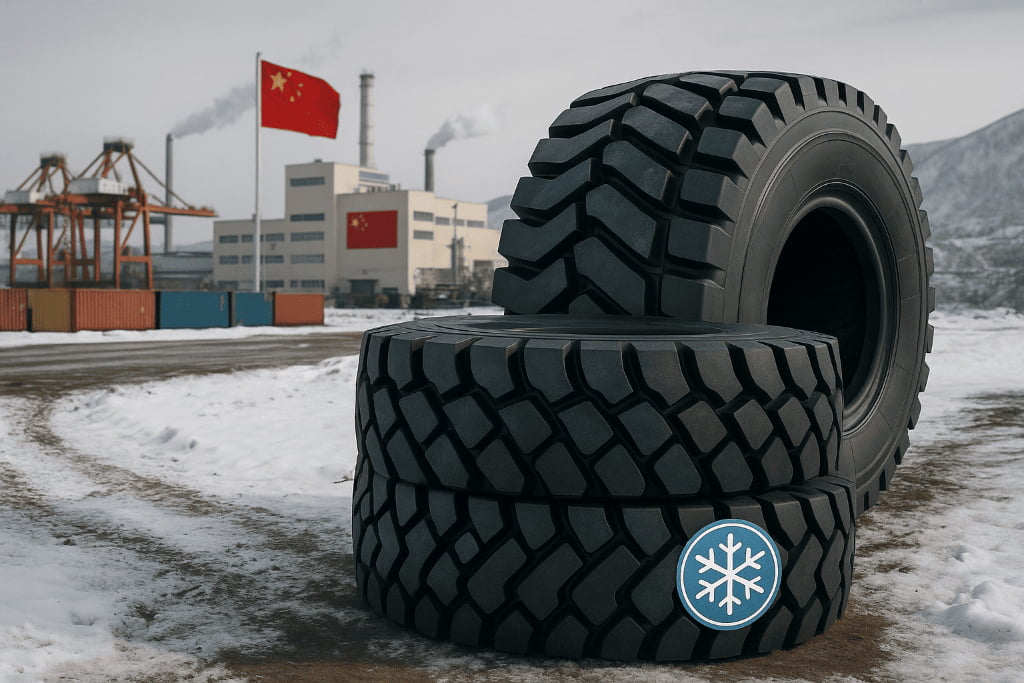
You see the massive potential in the Russian OTR tire market1. But you assume it's another battlefield where the lowest price wins, forcing you to sacrifice your margins and quality.
You win in Russia by shifting focus from price to performance. Russian OTR buyers prioritize durability2, cold-weather reliability3, and operational uptime4 far more than the initial cost, as equipment failure is incredibly expensive.
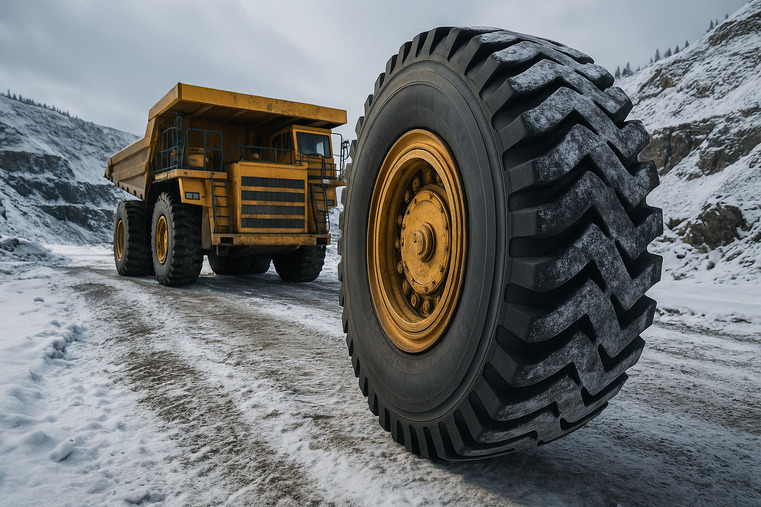
I remember a conversation with a quarry manager from Siberia a few years ago. He was looking for new OTR tire suppliers. I started talking about our competitive pricing, and he stopped me. "I don't care if your tire is 20% cheaper," he said. "I care if it cracks when it's minus 40 degrees. One of my trucks going down for a day costs me more than a full set of your tires." That conversation changed my perspective on the Russian market completely. It’s not about being the cheapest; it's about being the most reliable. The logic is simple but powerful, and it’s the key for any Chinese supplier looking to build a sustainable business there.
Do Russian OTR Buyers Really Care More About Performance Than Price?
You believe every buyer's first question is "How much?". But in Russia's tough OTR sector, a cheap tire that fails costs millions in lost production, making initial savings irrelevant.
Yes. For heavy equipment in mining and construction, the cost of downtime5 is the primary concern. A durable tire that performs in extreme cold and carries its load without failure provides far more value than a cheap alternative.
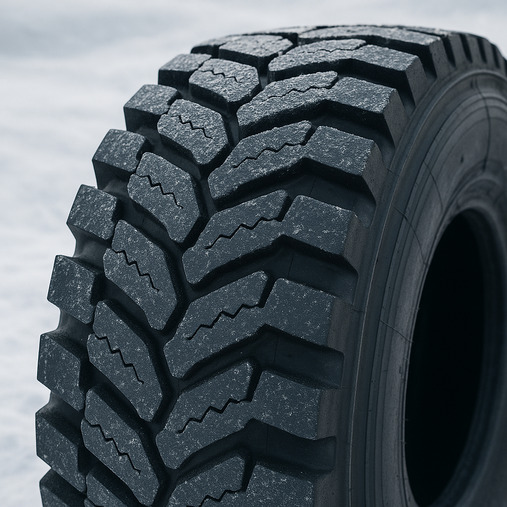
In the passenger car (PCR) or even truck and bus (TBR) market, price is a huge factor. But the world of Off-the-Road (OTR) tires is different, especially in Russia. Imagine a giant haul truck in a remote Siberian mine. If a tire fails, the truck stops. The entire operation connected to that truck might stop. The cost isn't just a new tire; it's lost production, idle workers, and logistical chaos, which can run into tens of thousands of dollars per hour. Russian buyers are very practical; they do the math. They need tires with special cold-resistant compounds6 that don't become brittle and fail in deep-freeze conditions. They need tread patterns7 that provide maximum grip on ice and mud. They are not buying a product; they are buying operational uptime4. Selling them a standard, low-cost tire is not a solution, it's a future problem.
Performance vs. Price: The Real Cost Calculation
| Feature | Price-Focused Tire | Performance-Focused Tire |
|---|---|---|
| Initial Cost | $4,000 | $6,000 (+50%) |
| Service Life | 2,500 hours | 5,000 hours (+100%) |
| Cost per Hour | $1.60/hr | $1.20/hr |
| Risk of Failure | High in extreme cold | Low (cold-rated compound) |
| Total Value | Low (frequent replacement, high downtime risk) | High (lower total cost of ownership, operational reliability) |
How Can You Protect Your Business from Sanctions Risks?
You’re ready to supply high-value tires to Russia. But you're worried that sudden sanctions could block your payments or trap your shipment, turning a profitable deal into a total loss.
Protect your business proactively through smart contracts8 with specific sanction clauses, using alternative payment systems like CIPS, and securing insurance that explicitly covers politically-driven disruptions. Don't wait for a problem to arise.
Selling to Russia today requires more than just a good product; it requires a bulletproof business strategy. Sanctions are a real and unpredictable risk. You can't ignore them. Over the past few years, I've worked with my clients to build a three-layer defense system. First, we write smarter contracts. We include force majeure clauses that specifically name sanctions as a trigger event, and we often agree to use Hong Kong law as the governing jurisdiction. Second, we avoid the risk of payment blockages. We move away from USD and SWIFT, instead using the Chinese Yuan (RMB) and the CIPS payment system9, or routing payments through banks in friendly countries. This removes a major point of vulnerability. Finally, we get the right insurance. Standard policies often exclude losses from political events. We work with providers like China's Sinosure to ensure our policies explicitly cover sanction-related risks10, so if a shipment is seized or a payment is frozen, we are protected.
Your Sanctions Risk-Management Checklist
- Smart Contracts:
- Does your
force majeureclause mention sanctions? - Is the governing law of the contract in a neutral jurisdiction?
- Does your
- Secure Payment Channels:
- Are you using RMB instead of USD?
- Do you have access to CIPS or banks in "friendly" countries?
- The Right Insurance:
- Have you reviewed your policy's fine print on political risk?
- Does your coverage explicitly protect against sanction-related losses?
Conclusion
To win in the Russian OTR market, sell reliability, not price. Focus on durable, cold-weather tires and protect your deals with proactive management of sanctions risks through smart contracts8 and payments.
Explore insights on market trends to understand the dynamics of the Russian OTR tire industry. ↩
Learn why durability is a key factor for OTR tires, especially in harsh conditions. ↩
Discover how cold-weather reliability impacts tire performance and operational efficiency. ↩
Understand the significance of operational uptime in minimizing costs and maximizing productivity. ↩
Find out how downtime can affect business finances and the importance of reliable equipment. ↩
Explore the technology behind cold-resistant compounds and their benefits for tire performance. ↩
Learn about the importance of tread patterns in enhancing tire grip and safety. ↩
Discover how smart contracts can protect your business from risks in international trade. ↩
Understand the CIPS payment system and its advantages for international transactions. ↩
Explore strategies for managing sanction-related risks in international business dealings. ↩