
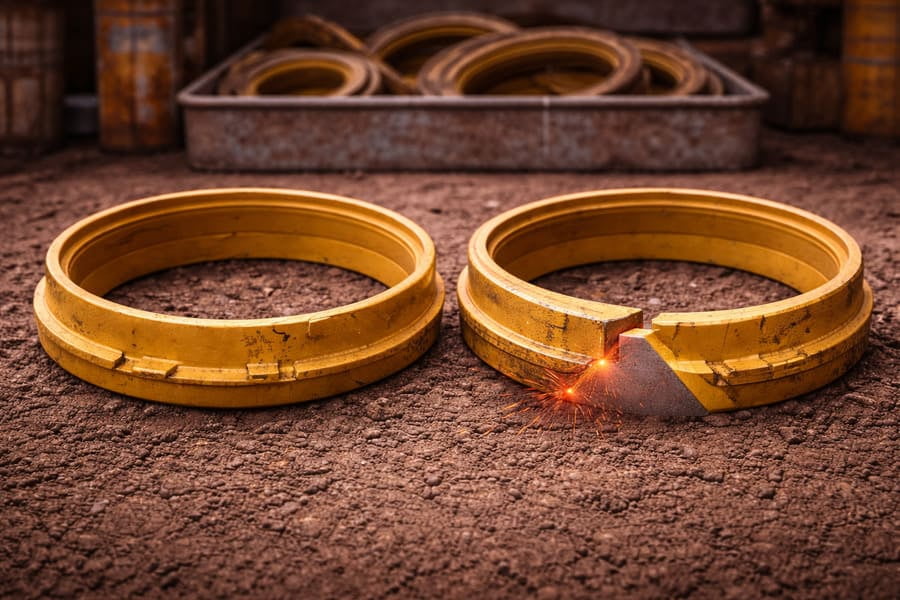
Your workshop has a bin of used lock rings that all look the same. To get a machine running, a technician grabs one that fits. This common shortcut is a ticking time bomb.
Swapping visually similar lock rings is deadly because their internal geometry is different. A ring designed for a 5-degree gutter will create point-loading and extreme stress in a 15-degree gutter, creating a high risk of explosive ejection under tire pressure.
I'll never forget a conversation with a maintenance supervisor at a large mining operation. He pointed to a big metal crate filled with dozens of lock rings of all conditions. "If it fits, it ships," he said, proud of his team's resourcefulness. I had to explain that this was one of the most dangerous practices I could imagine in a tire shop. He saw interchangeable parts; I saw a collection of potential triggers for catastrophic failure. That day, we dumped the entire bin. It was a costly lesson in parts, but a priceless one in safety. The illusion of similarity is the lock ring's most dangerous trait.
Why Can't You Judge a OTR wheel Lock Ring by Its Appearance?
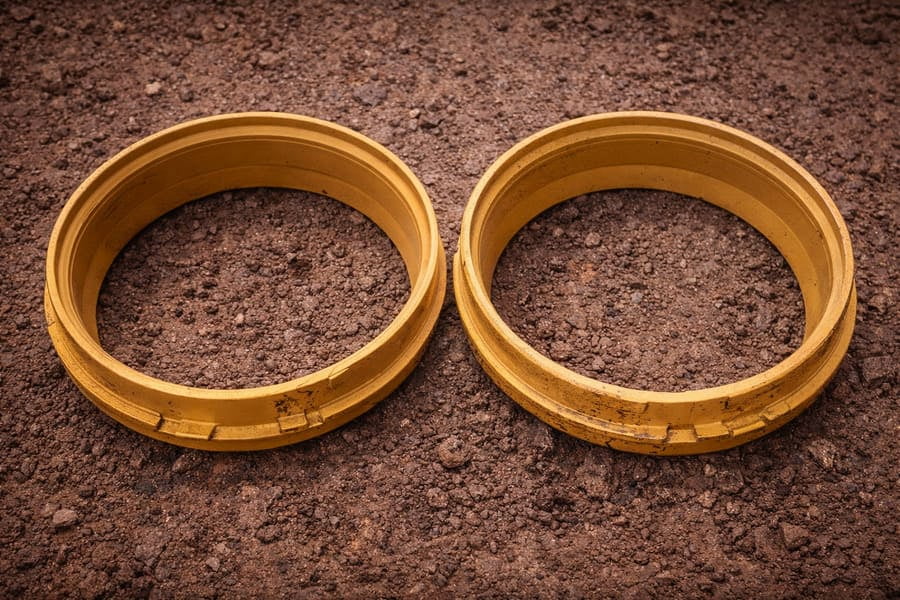
You see two heavy steel lock rings that look identical. It’s natural to assume they are interchangeable, especially when you need to get a vehicle back in service quickly. Why is this assumption so wrong?
Lock rings that look the same are often engineered for entirely different groove angles and contact surfaces. Their invisible geometry dictates how they transfer force, meaning a visual match says nothing about their structural safety under load.
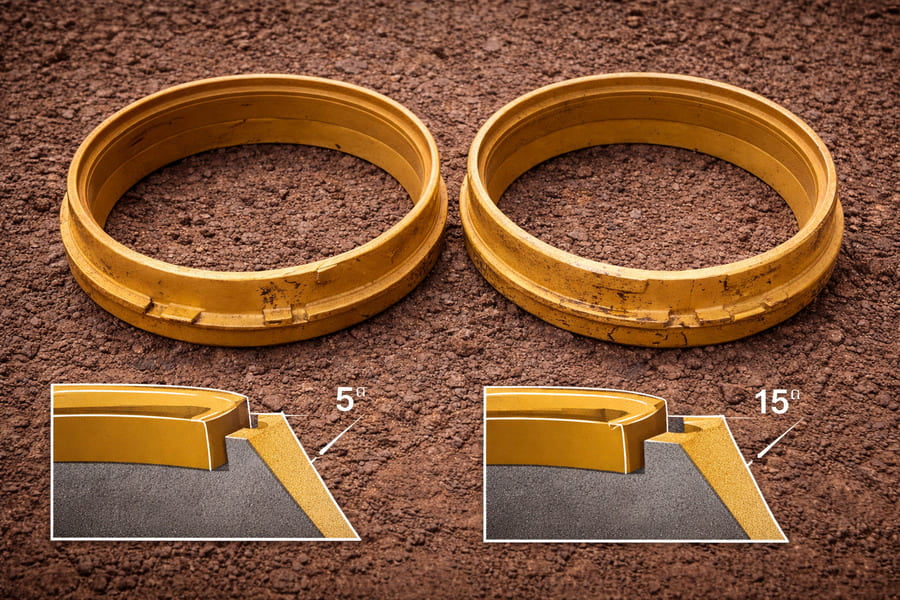
Think of it like two keys that look almost identical, but only one will open a specific lock. A lock ring and its corresponding rim gutter are an engineered pair. The shape of the ring's contact surface and the angle of the gutter are precisely matched to safely manage the immense forces from an inflated tire. One system might use a 5-degree angle, designed to transfer force flat against the gutter wall. Another might use a 15-degree angle, designed to create a tight wedging action. These differences are often impossible to see with the naked eye. When you use the wrong ring, you are fundamentally breaking this engineered system. The forces no longer travel along the intended safe path.
| Feature | Lock Ring A | Lock Ring B |
|---|---|---|
| Appearance | Nearly Identical | Nearly Identical |
| Designed Gutter Angle | 5 degrees | 15 degrees |
| Intended Load Path | Pushes flat against gutter wall | Wedges tightly into corner |
| Result if Mismatched | Point contact, high stress | Unstable fit, ejection risk |
What Happens When a Mismatched Lock Ring Is Used?
So you've installed a lock ring that looks right and seems to fit. The tire is inflated and everything holds. What is the hidden danger that has just been created inside that wheel assembly?
A mismatched OTR wheel lock ring concentrates the entire force of the tire onto a few small points instead of distributing it evenly. This creates massive localized stress and turns the secure locking mechanism into a ramp, priming the ring for explosive ejection.
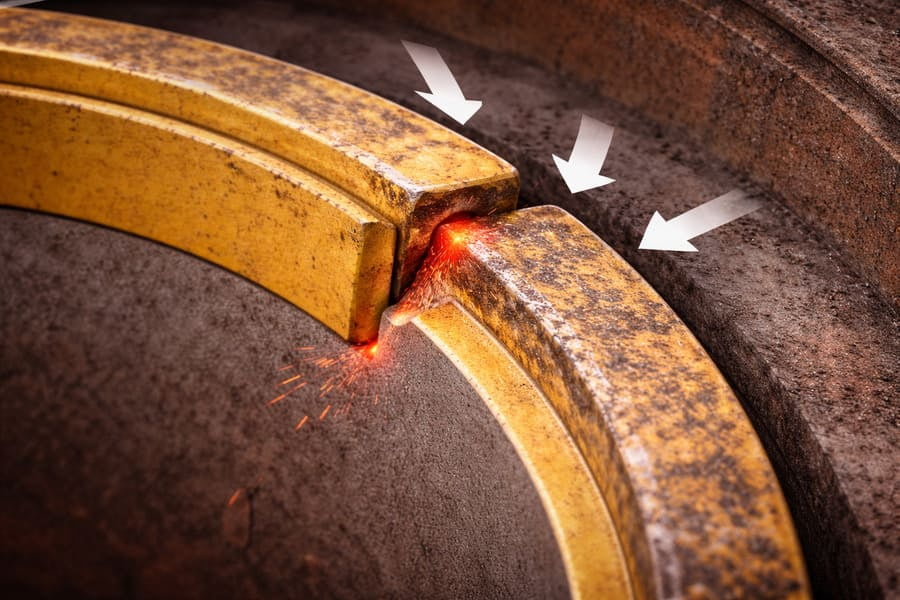
When the correct lock ring is used, the force from the tire presses it perfectly and uniformly into its matched gutter. The entire surface of the ring and gutter work together to contain the pressure. However, when a mismatched ring is used, it only makes contact on a few high spots. For example, a 5-degree ring in a 15-degree gutter will only touch along a single, thin edge. All the force that should be spread across a wide surface is now concentrated on that one line of steel. This creates stress levels that the metal was never designed to handle. More dangerously, the mismatched angles create an "ejection path." Instead of locking tighter under pressure, the force pushes the ring up and out of the slanted gutter, like squeezing a wedge out of a gap.
Does the Fact a Lock Ring "Fits" Mean It's Safe?
A technician hammers a lock ring into place. It seats in the groove and doesn't fall out. From a practical standpoint, it "fits." Isn't that good enough to prove it's the right part for the job?
Absolutely not. "It fits" is a statement of installation, not engineering safety. The ability to physically place a ring in a groove says nothing about whether its geometry is correct to safely contain millions of pounds of force under pressure.
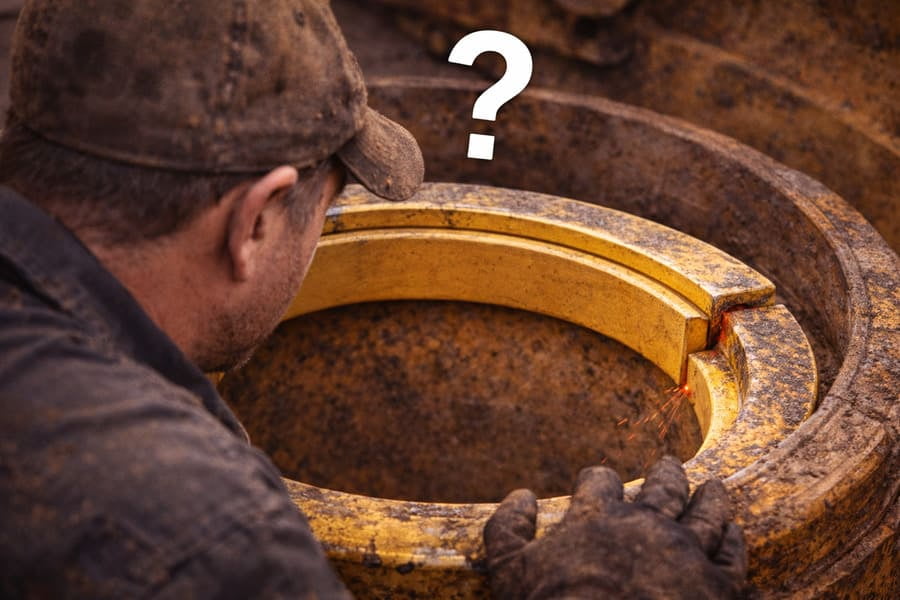
This is the most critical misunderstanding in multi-piece wheel service. The term "fit" has two very different meanings. There's the loose, physical fit a technician can achieve with a hammer, and then there's the precise, engineered fit required for safety. A slightly smaller ring might be loose in the groove. A slightly larger or incorrectly angled ring might be forced into place, feeling tight, but it's actually bending or creating dangerous stress points. The only true measure of a correct fit is component matching. You must verify that the part numbers of the lock ring, rim base, and other components are all part of a manufacturer's approved, tested, and matched set. In the world of high-pressure assemblies, what you can't see is what can hurt you. The fact that it can be assembled means nothing about its ability to stay assembled under load.Your workshop has a bin of used lock rings1 that all look the same. To get a machine running, a technician grabs one that fits. This common shortcut is a ticking time bomb.
Swapping visually similar lock rings1 is deadly because their internal geometry is different. A ring designed for a 5-degree gutter will create point-loading and extreme stress in a 15-degree gutter, creating a high risk of explosive ejection2 under tire pressure.
I'll never forget a conversation with a maintenance supervisor at a large mining operation. He pointed to a big metal crate filled with dozens of lock rings1 of all conditions. "If it fits, it ships," he said, proud of his team's resourcefulness. I had to explain that this was one of the most dangerous practices I could imagine in a tire shop. He saw interchangeable parts3; I saw a collection of potential triggers for catastrophic failure4. That day, we dumped the entire bin. It was a costly lesson in parts, but a priceless one in safety. The illusion of similarity is the lock ring's most dangerous trait.
Why Can't You Judge a OTR wheel Lock Ring by Its Appearance?
You see two heavy steel lock rings1 that look identical. It’s natural to assume they are interchangeable, especially when you need to get a vehicle back in service quickly. Why is this assumption so wrong?
Lock rings that look the same are often engineered for entirely different groove angles and contact surfaces. Their invisible geometry dictates how they transfer force, meaning a visual match says nothing about their structural safety5 under load.
Think of it like two keys that look almost identical, but only one will open a specific lock. A lock ring and its corresponding rim gutter are an engineered pair6. The shape of the ring's contact surface and the angle of the gutter are precisely matched to safely manage the immense forces from an inflated tire. One system might use a 5-degree angle, designed to transfer force flat against the gutter wall. Another might use a 15-degree angle, designed to create a tight wedging action. These differences are often impossible to see with the naked eye. When you use the wrong ring, you are fundamentally breaking this engineered system. The forces no longer travel along the intended safe path.
| Feature | Lock Ring A | Lock Ring B |
|---|---|---|
| Appearance | Nearly Identical | Nearly Identical |
| Designed Gutter Angle | 5 degrees | 15 degrees |
| Intended Load Path | Pushes flat against gutter wall | Wedges tightly into corner |
| Result if Mismatched | Point contact, high stress | Unstable fit, ejection risk |
What Happens When a Mismatched Lock Ring Is Used?
So you've installed a lock ring that looks right and seems to fit. The tire is inflated and everything holds. What is the hidden danger that has just been created inside that wheel assembly?
A mismatched OTR wheel lock ring concentrates the entire force of the tire onto a few small points instead of distributing it evenly. This creates massive localized stress7 and turns the secure locking mechanism into a ramp, priming the ring for explosive ejection2.
When the correct lock ring is used, the force from the tire presses it perfectly and uniformly into its matched gutter. The entire surface of the ring and gutter work together to contain the pressure. However, when a mismatched ring is used, it only makes contact on a few high spots. For example, a 5-degree ring in a 15-degree gutter will only touch along a single, thin edge. All the force that should be spread across a wide surface is now concentrated on that one line of steel. This creates stress levels that the metal was never designed to handle. More dangerously, the mismatched angles8 create an "ejection path." Instead of locking tighter under pressure, the force pushes the ring up and out of the slanted gutter, like squeezing a wedge out of a gap.
Does the Fact a Lock Ring "Fits" Mean It's Safe?
A technician hammers a lock ring into place. It seats in the groove and doesn't fall out. From a practical standpoint, it "fits." Isn't that good enough to prove it's the right part for the job?
Absolutely not. "It fits" is a statement of installation, not engineering safety. The ability to physically place a ring in a groove says nothing about whether its geometry is correct to safely contain millions of pounds of force under pressure.
This is the most critical misunderstanding in multi-piece wheel service. The term "fit" has two very different meanings. There's the loose, physical fit a technician can achieve with a hammer, and then there's the precise, engineered fit required for safety. A slightly smaller ring might be loose in the groove. A slightly larger or incorrectly angled ring might be forced into place, feeling tight, but it's actually bending or creating dangerous stress points. The only true measure of a correct fit is component matching9. You must verify that the part numbers of the lock ring, rim base, and other components are all part of a manufacturer's approved, tested, and matched set. In the world of high-pressure assemblies10, what you can't see is what can hurt you. The fact that it can be assembled means nothing about its ability to stay assembled under load.
Conclusion
A lock ring's safety comes from its precise geometric match, not its appearance. Never assume interchangeability. Always verify part numbers to ensure the components are an engineered set to prevent catastrophic, explosive failure.
Conclusion
A lock ring's safety comes from its precise geometric match, not its appearance. Never assume interchangeability. Always verify part numbers to ensure the components are an engineered set to prevent catastrophic, explosive failure.
Understanding the risks associated with lock rings can save lives and prevent costly accidents in tire shops. ↩
Discover the factors leading to explosive ejection to enhance safety in tire maintenance. ↩
Exploring the risks of interchangeable parts can help you make safer choices in maintenance and repairs. ↩
Understanding the causes of catastrophic failure can help you prevent accidents and ensure safety. ↩
Understanding structural safety can help you choose the right components for high-pressure applications. ↩
Understanding engineered pairs can improve your knowledge of safe mechanical assemblies. ↩
Learn about localized stress to prevent failures in mechanical systems and ensure safety. ↩
Explore the dangers of mismatched angles to enhance your safety practices in maintenance. ↩
Understanding component matching is crucial for maintaining safety and reliability in mechanical assemblies. ↩
Discover the unique challenges of high-pressure assemblies to improve your safety protocols. ↩