
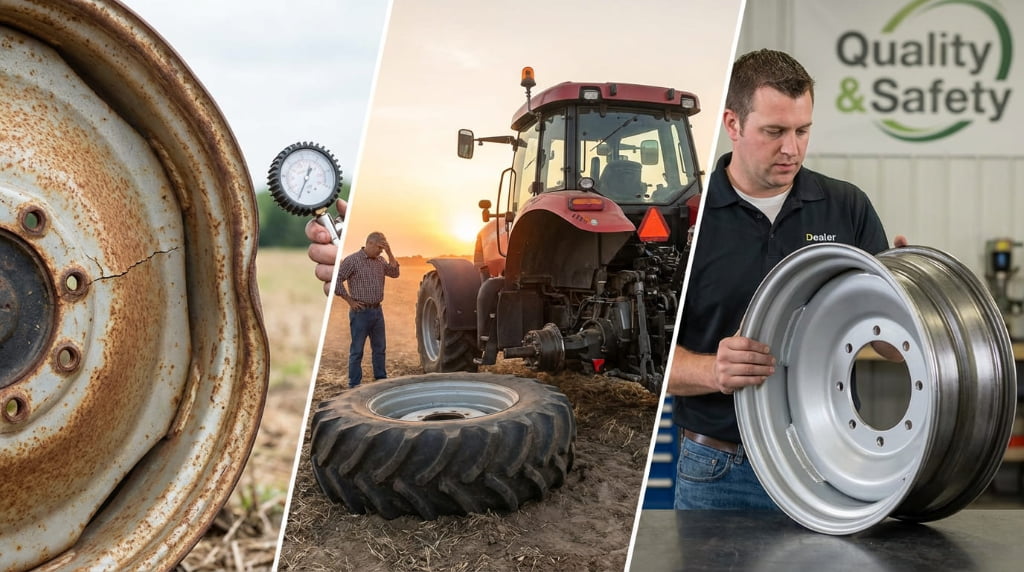
Your customer is in the middle of a harvest when a wheel fails. The accident causes thousands in damage, and they blame the rim you sold them. Now, your reputation is on the line.
Ignoring these warning signs leads to catastrophic equipment failure1, causing dangerous accidents and costly downtime for farmers. For dealers, this results in warranty claims, damaged credibility, and customers who will never buy from you again.
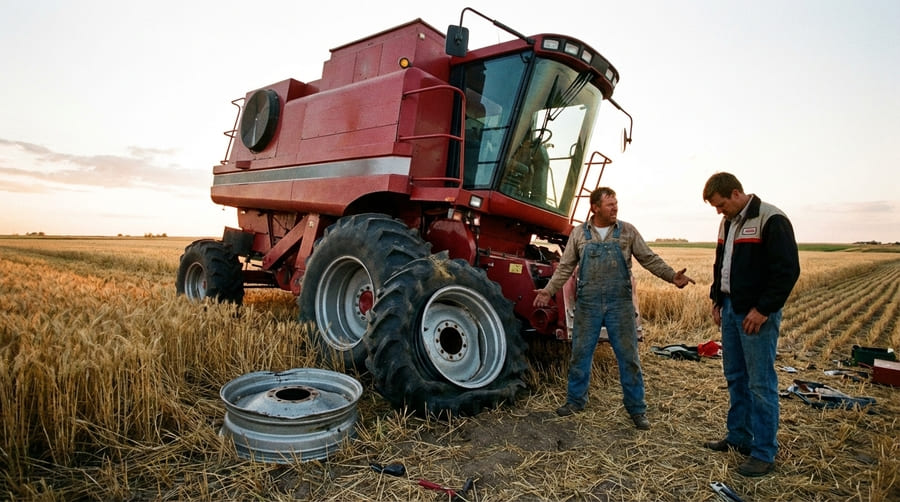
I once met a dealer in Iowa who told me a story that has stuck with me for years. He sold a set of standard rims to a farmer who was trying to save a little money. A few months later, one of them failed catastrophically while the farmer was hauling a full grain cart. The cart tipped, the axle broke, and the entire harvest schedule was thrown into chaos. The farmer wasn't just angry about the money; he felt the dealer had sold him something unsafe. That one incident cost the dealer a 20-year customer relationship. It taught me that selling a rim isn't just a transaction; it's a promise of safety and reliability.
What Do Those Tiny Cracks on the Spoke Plate Really Mean?
You see a hairline crack near the bolt circle. It seems minor, so you tell the farmer it's probably fine. But under load, that "minor" crack can lead to a major disaster.
Those tiny cracks are critical signs of metal fatigue2, usually from consistent overloading3. The rim's central structure is compromised, and it's only a matter of time before the center plate tears away from the wheel, causing a complete detachment.
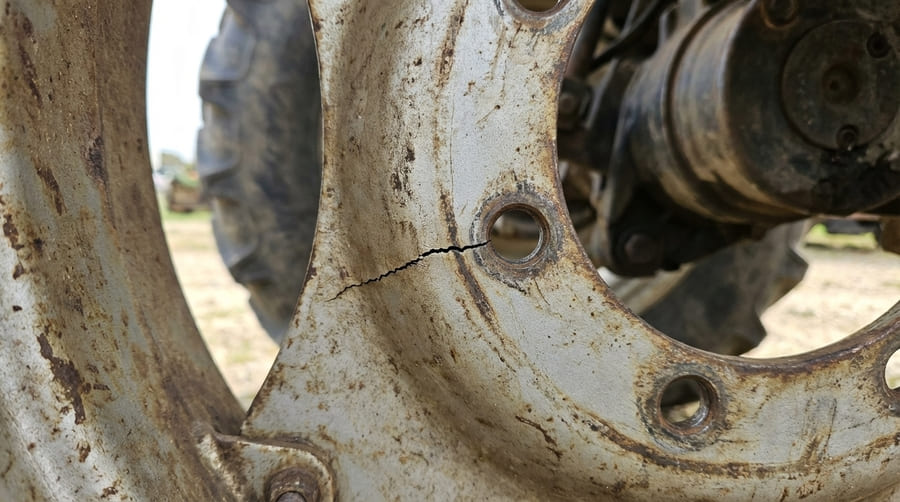
The spoke plate, or center disc, is the heart of the rim. It transfers all the torque from the axle to the wheel. When a machine is consistently operated beyond its rated load capacity, immense stress is focused on this center plate. Standard rims with thinner steel can't handle this abuse forever. The metal begins to flex and weaken, and eventually, microscopic cracks form. These cracks grow with every single rotation of the wheel. For a farmer, this can lead to a wheel literally breaking off the tractor in the field. For you, the dealer, selling a rim that can't handle real-world stress is a direct path to a bad reputation. Our reinforced rims4 use significantly thicker steel in the spoke plate specifically to resist this type of fatigue failure, offering a service life that is 1.5 times longer than standard rims.
Why Are Stretched Bolt Holes More Dangerous Than They Look?
The bolt holes are slightly oval, not perfectly round. The lug nuts still tighten, so it seems okay. But this subtle deformity is a ticking time bomb for wheel security5.
Stretched bolt holes prevent the rim from sitting flush and centered on the hub. This creates vibrations that loosen lug nuts and puts immense shearing stress on the wheel studs, which can snap off and cause the wheel to fly off during operation.
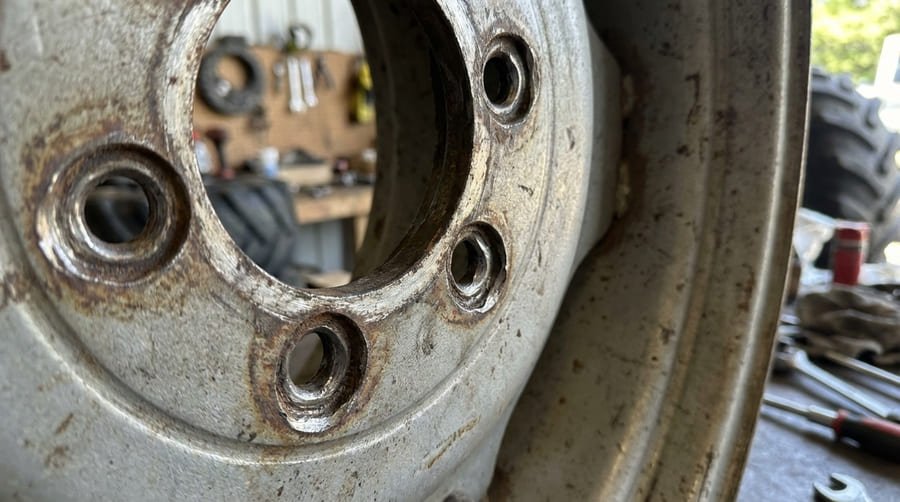
Proper clamping force is essential for keeping a heavy agricultural wheel attached. This force is only achieved when the lug nuts are torqued correctly and the bolt holes are perfectly round. Stretched, or oval-shaped, holes are often caused by running with loose lug nuts or using low-quality rims made from softer steel that deforms easily. When the holes are stretched, the wheel can no longer be perfectly centered. This imbalance creates a powerful wobble at high speeds. This vibration not only puts uneven stress on the tire and axle but also actively works to loosen the lug nuts over time. The ultimate result is often sheared wheel studs and a runaway wheel. Our rims are manufactured from high-grade steel6 with precision-drilled bolt holes that maintain their shape, ensuring a secure fit and preventing this dangerous and costly failure.
Common Rim Failures and Their Consequences
| Failure Type | Common Cause | Risk to Farmer | Consequence for Dealer |
|---|---|---|---|
| Spoke Plate Cracks | Overloading, metal fatigue2 | Sudden wheel detachment, accident | Warranty claims, reputation for unsafe parts7 |
| Stretched Bolt Holes | Incorrect torque, loose nuts | Wheel wobble, sheared studs, wheel loss | Customer complaints, lost trust, liability |
| Bent Rim Edges | Impact with obstacles | Chronic air loss, tire bead failure8 | Frequent service calls, perception of low quality |
How Can a Small Bend in the Rim Edge Wreck a $10,000 Tire?
A farmer hits a rock and puts a small dent in the rim flange. It seems like a cosmetic issue, but it's silently destroying the tire from the inside out.
A bent rim edge breaks the critical airtight seal between the tire bead and the rim. This causes a slow, persistent leak that leads to underinflation, which generates excess heat, destroys the tire's internal structure, and can cause a sudden blowout9.
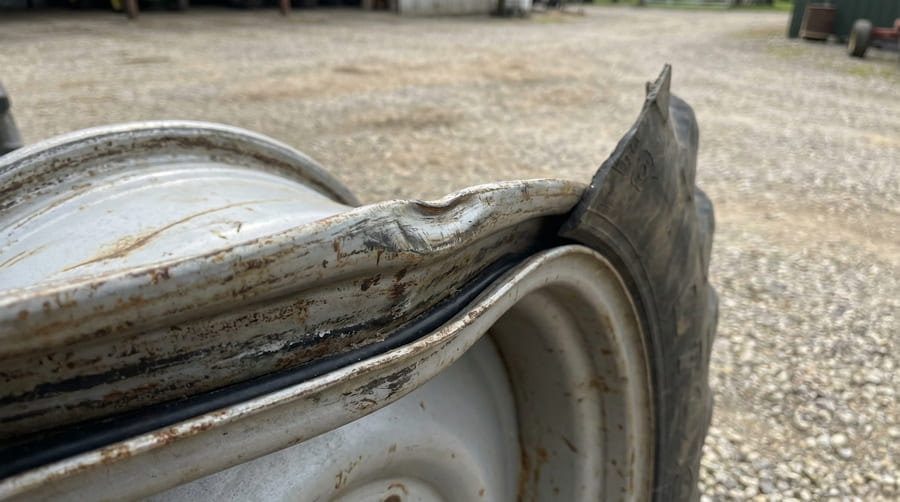
The rim flange and the tire bead work together to form a perfect seal, holding thousands of pounds of air pressure. Even a small dent from hitting a rock or a stump can compromise this seal. The result is a slow leak that might not be immediately obvious. The farmer continues to operate on a chronically underinflated tire. Underinflation causes the tire's sidewalls to flex excessively, building up destructive heat. This heat breaks down the rubber and ply materials from the inside. Eventually, the tire fails—not because of a puncture, but because its structure was destroyed by the consequences of a bent rim. By selling our reinforced rims4, which feature thicker, impact-resistant flanges, you provide a solution that protects your customer’s significant investment in their tires, preventing these costly chain-reaction failures.
Conclusion
Don't let rim failure cause accidents and lose you sales. Proactively identify these issues and offer reinforced rims4 to protect your customers, build trust, and secure your reputation as a quality dealer.
Understanding the causes can help prevent costly accidents and improve safety in farming operations. ↩
Learn about metal fatigue to ensure the longevity and safety of your farming machinery. ↩
Understanding the risks of overloading can help farmers avoid dangerous situations and equipment damage. ↩
Learn how reinforced rims can enhance safety and performance in agricultural applications. ↩
Explore best practices for maintaining wheel security to prevent accidents and equipment failure. ↩
Learn why high-grade steel is essential for durability and safety in agricultural applications. ↩
Explore strategies to build and maintain a reputation for quality and safety in your business. ↩
Understanding tire bead failure can help you prevent costly tire replacements and ensure safety. ↩
Understanding the causes of blowouts can help you maintain tire safety and performance. ↩