

You get a test report for a new tire, and the results are incredible—it outlasts everything. You order a full container, but in the field, only a few tires live up to that initial promise. The rest perform just like your old ones, or worse.
Predictable performance1 is more valuable because it allows operators to manage their entire fleet efficiently. A single "perfect" tire is an anomaly, but a fleet of tires with consistent tread life, heat tolerance2, and cut resistance3 enables precise budgeting, scheduled maintenance, and lower operational risk.
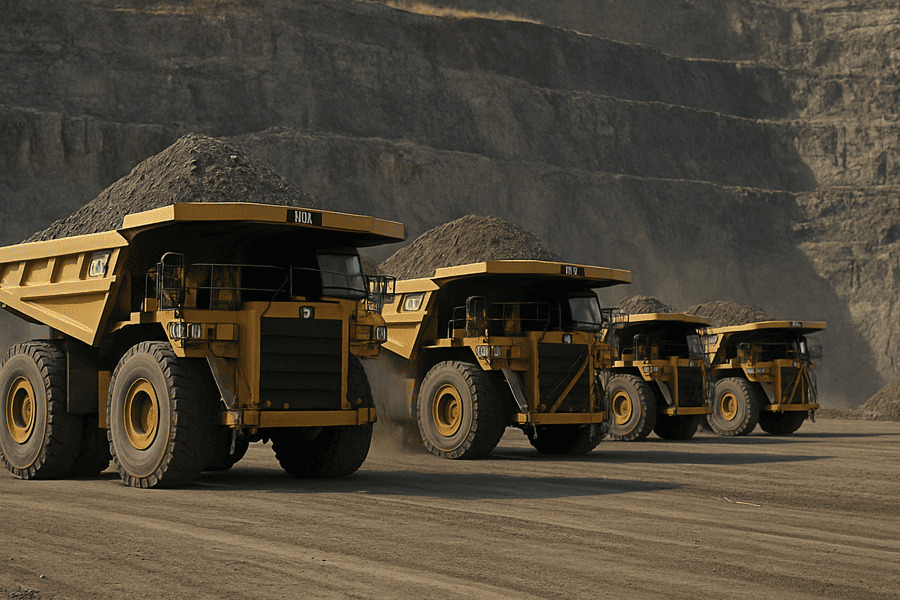
I once had a client, a mine manager in South Africa, who told me something I'll never forget. He said, "I don't need a miracle tire that runs for 5,000 hours. I need to know that every tire you sell me will run for at least 2,500 hours. The one miracle tire doesn't help me plan. The 100 predictable ones save my operation." He wasn't buying a product; he was buying certainty. That conversation shaped how I've approached the tire business ever since.
What's the Real Cost of an 'Unpredictable' Tire?
You might think the cost of a failed tire is just its replacement price. But in heavy operations, a single unpredictable failure can trigger a cascade of expenses that dwarf the cost of the tire itself.
The real cost of an unpredictable tire is operational chaos4. It includes multi-thousand-dollar-per-hour downtime, the expense of holding excess spare inventory to cover uncertainty, and the significant safety risks5 associated with unexpected equipment failures in the field.
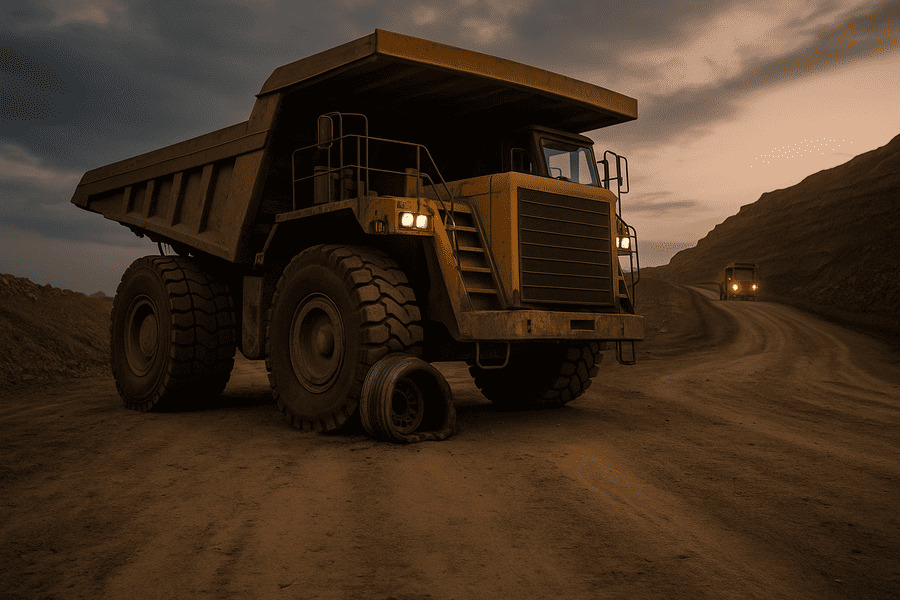
An unpredictable tire is a liability waiting to happen. Imagine a haul truck in a mine. If its tire fails unexpectedly, the truck stops. The shovels it serves are now idle. The trucks behind it are blocked. The entire production chain grinds to a halt. The cost isn't the $5,000 for a new tire; it's the $10,000+ per hour in lost production. To protect against this, managers have to buy extra tires to keep as spares, tying up capital in inventory that just sits there. This is why a tire that performs "okay" but does so consistently is infinitely more valuable than a tire that is occasionally great but sometimes fails without warning.
The Hidden Costs of Inconsistency
Unpredictability hits your budget in ways that aren't always obvious.
| Cost Factor | How Unpredictability Magnifies It |
|---|---|
| Downtime | Unplanned failures cause immediate and expensive work stoppages. |
| Inventory | You must overstock spare tires to buffer against random failures. |
| Maintenance | It's impossible to schedule tire replacements efficiently, leading to reactive, costly repairs. |
| Safety | A sudden blowout on a multi-ton vehicle is a serious safety hazard for the operator and site. |
How Does Consistent Performance Create Operational Efficiency?
You're constantly juggling maintenance schedules, trying to guess which tire might fail next. It feels like you're always reacting to problems instead of preventing them. This is a classic sign of inconsistent supply.
Consistent performance transforms tire management from a reactive fire-fight into a predictable, strategic operation. It allows for precise maintenance scheduling based on running hours, optimized inventory levels, and reliable budgeting for Total Cost of Ownership (TCO)6.
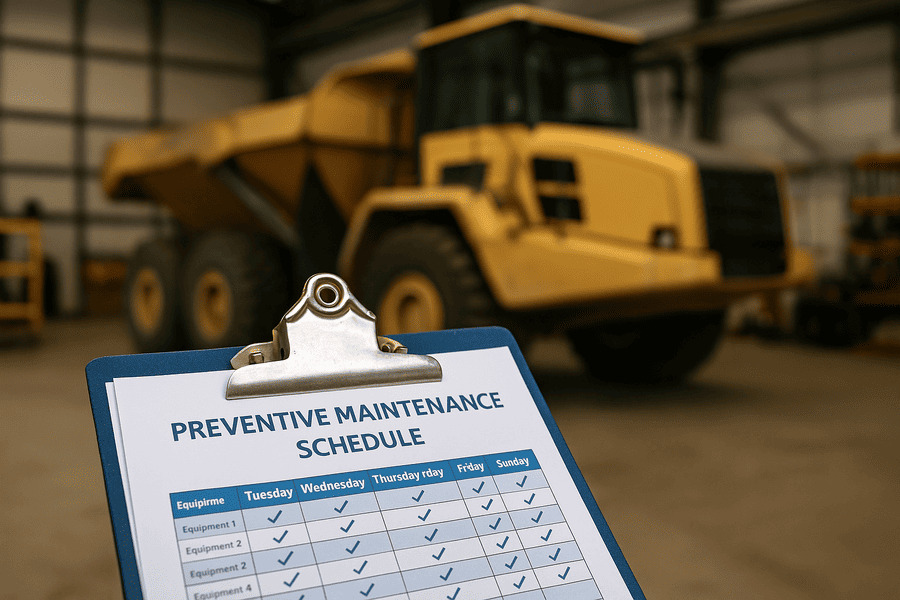
When every tire delivers the same cut resistance3, the same heat tolerance2, and the same tread life, you gain control. You can confidently create a predictive maintenance7 schedule. For example, if you know your tires reliably last 3,000 hours, you can schedule every replacement for the 2,900-hour mark during planned service. This means no more emergency calls, no more idle equipment, and no more holding excessive stock. You can run a lean inventory because you know exactly when you'll need the next tire. This operational smoothness is the ultimate goal for any fleet manager, and it's impossible to achieve with a supplier who delivers inconsistent products, no matter how good a single tire might be.
The Benefits of Predictability
Consistency delivers tangible value across your entire operation.
- Optimized Maintenance: Shift from reactive repairs to proactive, scheduled replacements, maximizing equipment uptime.
- Lean Inventory Management: Reduce the need for expensive safety stock, freeing up capital for other uses.
- Accurate TCO Budgeting: Forecast your tire costs across the fleet with high accuracy, eliminating budget surprises8.
- Enhanced Operational Safety: Planned tire changes in a controlled workshop environment are always safer than emergency replacements9 in the field.
How Can You Identify a Supplier Who Delivers Predictability?
You've been burned by suppliers who promise the world on a spec sheet but deliver inconsistent batches. How do you find a partner who understands that predictability is the real measure of quality?
Look for a supplier who talks about consistency, not just peak performance. A predictable supplier can provide batch-to-batch performance data10, demonstrates robust system controls in their factory, and focuses their value proposition on lowering your total cost of ownership.

When vetting a supplier, my advice is to change the questions you ask. Don't just ask, "What is the maximum life of your tire?" Instead, ask, "What is the standard deviation in performance across your production batches11?" or "Can you show me the performance data10 from three different production runs over the last six months?" A supplier who truly values predictability will have this data ready. They will be proud to show you how consistent their manufacturing process is. They will talk less about hitting a record-high lifespan and more about ensuring every tire meets a guaranteed, reliable performance standard12. This is the mindset of a true partner, not just a vendor.
Your Predictability Audit Checklist
Ask these questions to see if a supplier is focused on what really matters.
| Question to Ask | A Strong Answer (Predictability-Focused) | Why It Matters |
|---|---|---|
| "What's your tire's average lifespan?" | "Our average is X hours, with a standard deviation of only Y%. 99% of our tires will perform within this tight range." | This shows they measure and control consistency, not just averages. |
| "Can I see your batch data?" | "Yes, here are the test results for the last three batches. You can see the key metrics are nearly identical." | Proves their process control and transparency. |
| "How do you help lower my TCO?" | "By delivering predictable wear and durability, we enable you to plan maintenance and reduce downtime, which is your biggest cost." | Shows they understand your business, not just their product. |
Conclusion
In heavy operations, surprises are expensive. Stop chasing the "perfect" tire and start demanding predictable performance. It's the key to lower costs, safer operations, and a more efficient fleet.
Understanding predictable performance can help you manage your fleet more efficiently and reduce operational risks. ↩
Exploring heat tolerance can provide insights into tire durability and operational efficiency. ↩
Understanding cut resistance can help you choose tires that enhance safety and performance in heavy operations. ↩
Exploring the consequences of operational chaos can highlight the importance of reliable tire performance. ↩
Exploring safety risks can emphasize the importance of reliable tire performance for operator safety. ↩
Learning about TCO can help you budget more accurately and make informed decisions for your fleet. ↩
Learning about predictive maintenance can help you optimize your maintenance schedules and reduce downtime. ↩
Exploring this topic can help you understand how predictability leads to better financial planning. ↩
Learning about the drawbacks can highlight the value of planning and predictability in tire management. ↩
Understanding the significance of performance data can guide you in making informed purchasing decisions. ↩
Understanding the impact of production batches can help you assess tire quality and supplier reliability. ↩
Exploring performance standards can help you identify suppliers who prioritize consistency and reliability. ↩