
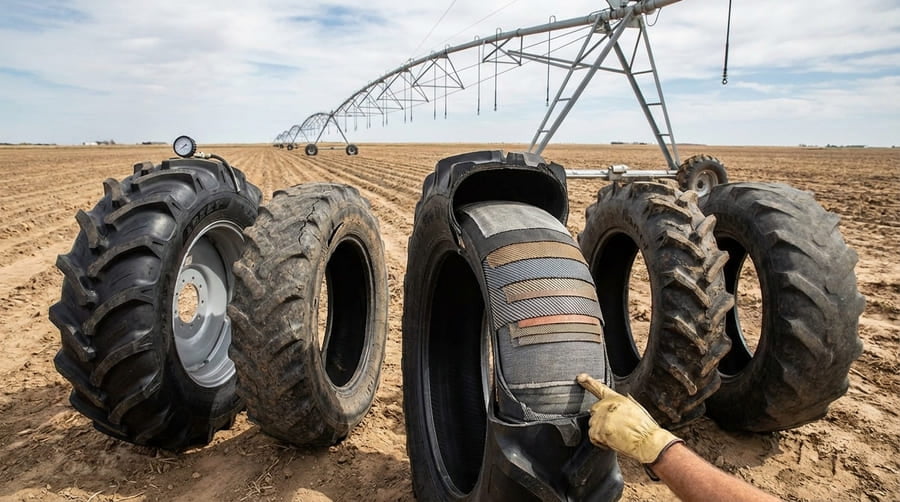
You buy two irrigation tires, both the exact same size. One lasts for years, but the other fails before the season is even over. You're left confused and frustrated.
Irrigation tires of the same size perform differently due to unseen variations in their internal construction1, rubber compound quality2, and manufacturing consistency3. These factors define a tire's durability and suitability for specific field conditions far more than its physical dimensions.
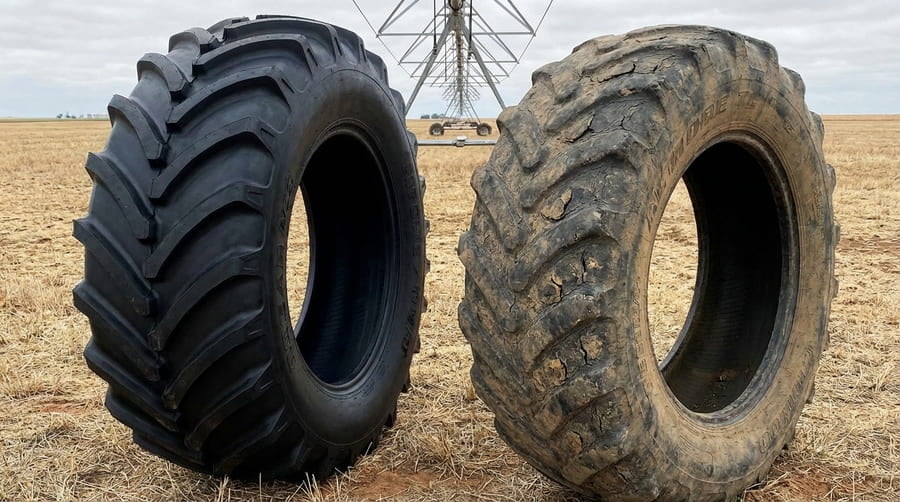
Early in my career, I visited a farm that had this exact problem. The manager showed me two failed tires, both labeled 11.2-24. One was completely shredded, the other had a massive sidewall blowout. He had bought them from different suppliers at different times, assuming the size was all that mattered. He couldn't understand why one was so much weaker than the other. That day, I learned a crucial lesson: what's on the label is only a tiny part of the story. The real value—and the real risk—is hidden inside.
Is a Deeper Tread Always a Sign of a Better Irrigation Tire?
You see a irrigation tire with an aggressive, deep tread and assume it's tougher. But then it fails from a structural issue, while a less aggressive-looking tire keeps performing perfectly.
No. A irrigation tire's true strength comes from its internal construction1, not its tread pattern. The carcass structure4, ply design5, and reinforcement layers6 are what handle the load and stress. A deep tread on a weak body is useless.
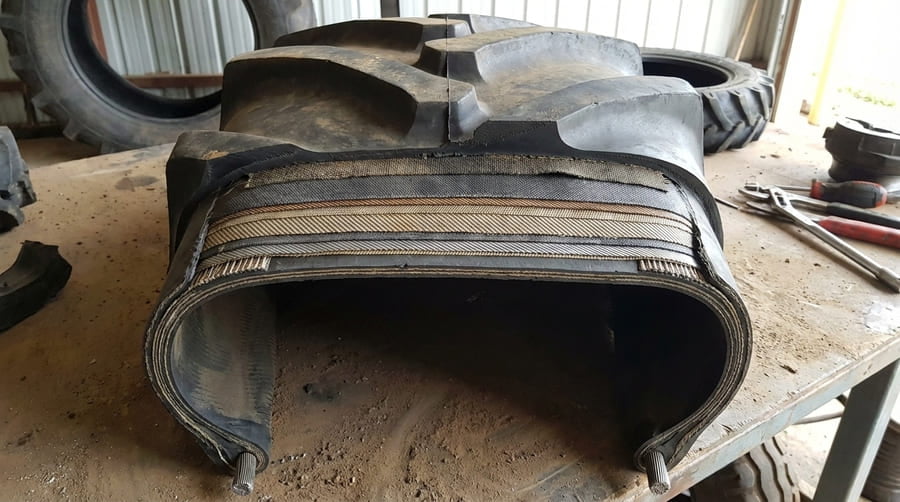
Think of it like a building. The tread pattern is the exterior paint and facade, while the internal carcass is the steel frame and foundation. You can have a beautiful exterior, but if the foundation is weak, the building will collapse under stress. In tires, this "foundation" is the carcass, made of layers of fabric or steel cords called plies. The number of plies and the angle at which they are laid determine the tire's stiffness, load capacity, and how it flexes. A well-designed tire for heavy pivot use will have a robust carcass and reinforced sidewalls to handle the constant load and flexing, regardless of how its tread looks. A cheaper tire might have a nice tread pattern but skimp on the internal layers, making it prone to premature failure.
Visual Toughness vs. Structural Strength
| Feature | Tire A: "Looks Tough" | Tire B: "Built Tough" |
|---|---|---|
| Tread | Deep, aggressive pattern | Standard, functional pattern |
| Carcass | Weaker, fewer plies | Strong, higher ply rating |
| Sidewall | Standard reinforcement | Extra reinforcement layers6 |
| Failure Point | Structural (sidewall/bead) | Even tread wear over time |
| Result | Premature failure under load | Long, reliable service life |
Why Does One Irrigation Tire Crack Under the Sun While Another Lasts for Years?
Your tires are developing deep cracks mid-season from the heat and sun exposure. This premature aging forces you to make unplanned replacements, wrecking your budget and maintenance schedule.
The difference is the rubber compound. A high-quality compound contains advanced additives to resist heat, UV radiation, and ozone. Cheaper compounds lack this protection and quickly become brittle and crack under environmental stress.
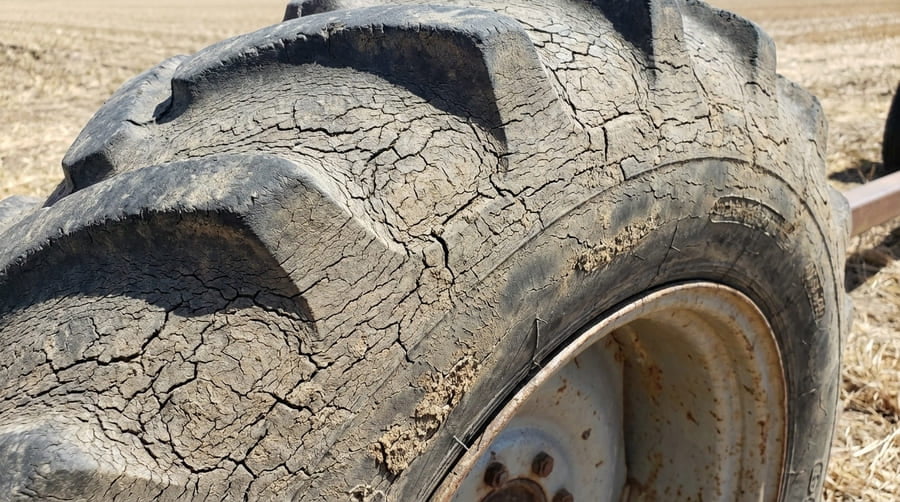
All rubber is not created equal. Think of the rubber compound as a recipe. A basic recipe might just have the bare essentials, while a gourmet recipe has special ingredients that enhance the flavor and texture. In tires, these special ingredients are chemical stabilizers7, anti-ozonants8, and antioxidants9. A premium irrigation tire uses a compound rich in these protective chemicals. This allows it to withstand the double assault of intense UV radiation from the sun and the internal heat generated by constant flexing. A tire made with a cheaper, less stable compound will degrade quickly. The rubber molecules break down, the tire loses its flexibility, and deep cracks form. This isn't just a cosmetic issue; these cracks can penetrate deep into the tire's structure, leading to catastrophic failure.
Why Did This Batch of Irrigation Tires Fail When the Last One Was Perfect?
You reorder the exact same irrigation tire model that has worked well for years. But this new batch is failing at an alarming rate, causing chaos and making you question your supplier.
This happens because of inconsistent manufacturing. Even with the same design, variations in production quality—like improper curing or poor material mixing—can create a weak batch of tires. A reliable supplier guarantees every tire from every batch meets the same standard.
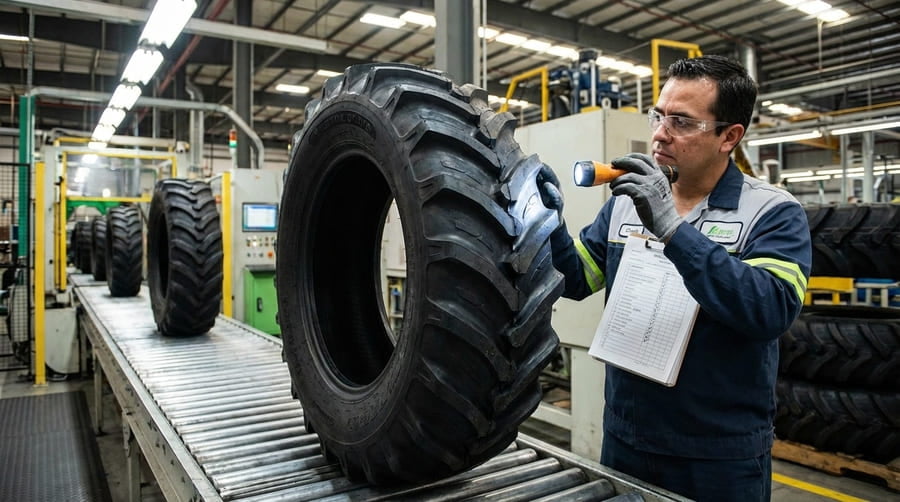
A irrigation tire's specification sheet is a promise, but the manufacturing process is where that promise is kept or broken. Top-tier manufacturers invest heavily in quality control at every step. They test all raw materials before they enter the production line. They use automated systems to ensure that every batch of rubber is mixed perfectly and that every tire is cured at the precise temperature for the exact amount of time. They conduct multiple inspections throughout the process and perform a 100% final inspection on every single tire before it ships. In contrast, a lower-quality factory might cut corners. They might spot-check instead of inspecting every tire, or their machinery might not be calibrated correctly, leading to inconsistencies. This is why you can get one great batch followed by a terrible one. You're not just buying a tire; you're buying the quality control system10 behind it.
If the Dimensions Match, Isn't It the Right Tire for the Job?
You replace a 14.9-24 tire with another 14.9-24, assuming it will perform the same. But the new tire gets stuck in soft soil where the old one used to float.
No. Identical dimensions do not guarantee identical field performance11. Two tires of the same size can have different load capacities%%%FOOTNOTE_REF12%%%, [tread designs](https://en.wikipedia.org/wiki/Crane(machine))13, and internal structures, making one suitable for hard ground and the other for soft soil.
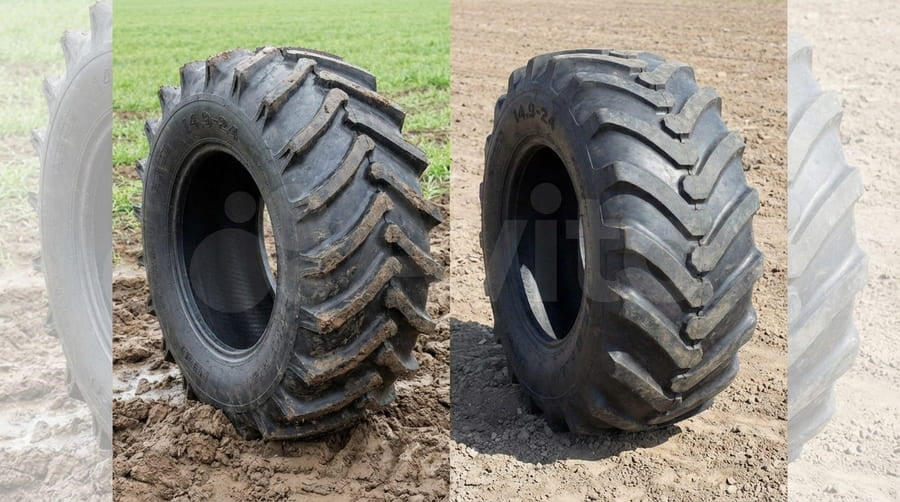
The size designation, like "14.9-24," only tells you the irrigation tire's width and the rim diameter it fits. It tells you nothing about its intended purpose. Within that same size, there are huge variations. One irrigation tire might have a high ply rating and a flat tread profile, designed to carry a heavy load on hard, compacted ground. Another tire of the exact same size might have a more flexible carcass and a rounded, bar-lug tread designed for flotation and traction in soft, muddy conditions. Using the hard-ground tire in a muddy field will lead to deep ruts and potential structural failure from over-flexing. Using the soft-ground tire on abrasive surfaces could lead to rapid tread wear. It's critical to look beyond the size and match the irrigation tire's specific design features to your unique combination of soil, load, and operational demands14.
Conclusion
Irrigation Tire size is just the beginning. Real performance comes from hidden differences in construction, compound, and quality control. Understanding these factors is the key to choosing a truly reliable tire.
Understanding the internal construction of irrigation tires helps in selecting durable options that withstand field conditions better. ↩
Exploring rubber compound quality reveals why some tires crack under sun exposure while others last longer, impacting maintenance costs. ↩
Manufacturing consistency ensures that each tire meets quality standards, preventing unexpected failures and ensuring reliability. ↩
Carcass structure determines a tire's ability to handle load and stress, making it essential for long-lasting performance. ↩
Ply design affects a tire's stiffness and load capacity, crucial for selecting the right tire for specific field conditions. ↩
Reinforcement layers provide additional strength to tires, preventing premature failure and ensuring reliable service life. ↩
Chemical stabilizers enhance a tire's resistance to environmental stress, prolonging its lifespan and reducing replacement costs. ↩
Anti-ozonants prevent rubber degradation from ozone exposure, maintaining tire integrity and performance over time. ↩
Antioxidants protect tires from oxidative damage, ensuring they remain flexible and durable under harsh conditions. ↩
A robust quality control system ensures each tire is manufactured to high standards, reducing the risk of defects and failures. ↩
Field performance is affected by internal construction and design, crucial for selecting the right tire for specific applications. ↩
Different load capacities affect a tire's suitability for various terrains, influencing performance and preventing damage. ↩
Tread designs determine traction and suitability for specific soil conditions, impacting a tire's effectiveness in the field. ↩
Matching tires to operational demands ensures optimal performance and prevents issues like getting stuck in unsuitable conditions. ↩