
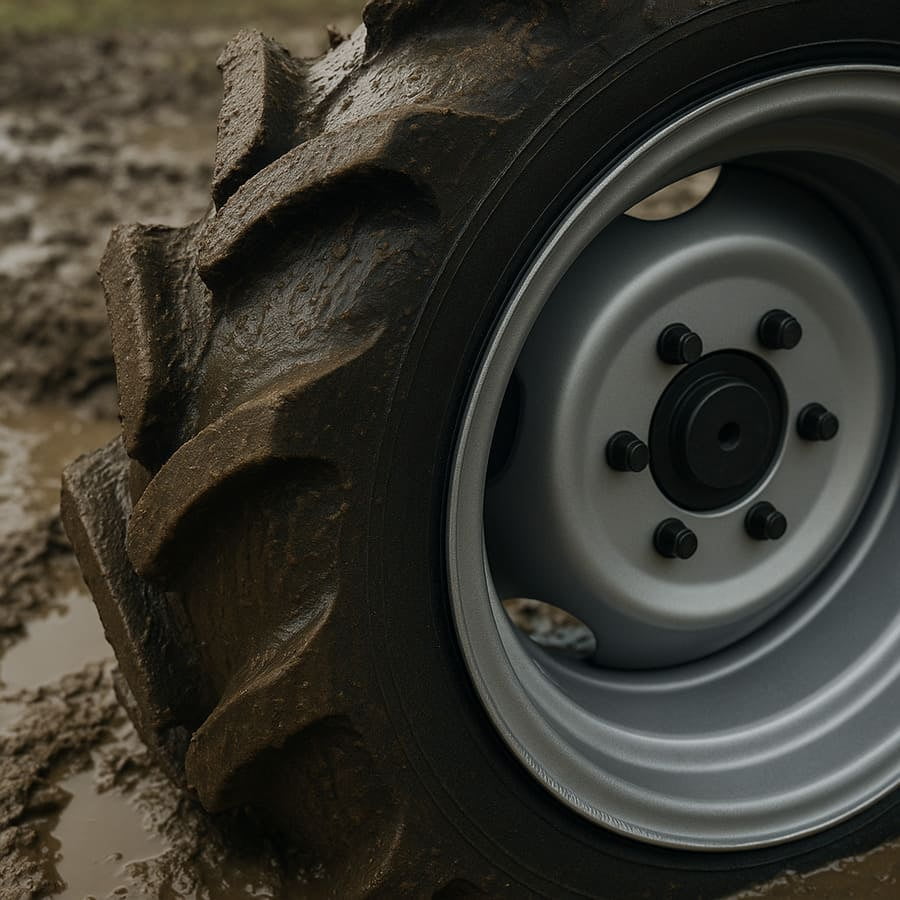
Your tractor tires are slipping, and the rim edges are getting chewed up by abrasive mud. Paddy field work is tough, and standard equipment just can't handle the corrosive, high-suction environment.
We engineer our paddy field rims1 with two key features: fully sealed, continuous welds to prevent internal corrosion2 from water entry, and thickened, reinforced rim flanges3 to resist the extreme abrasive wear from sand-filled mud4.
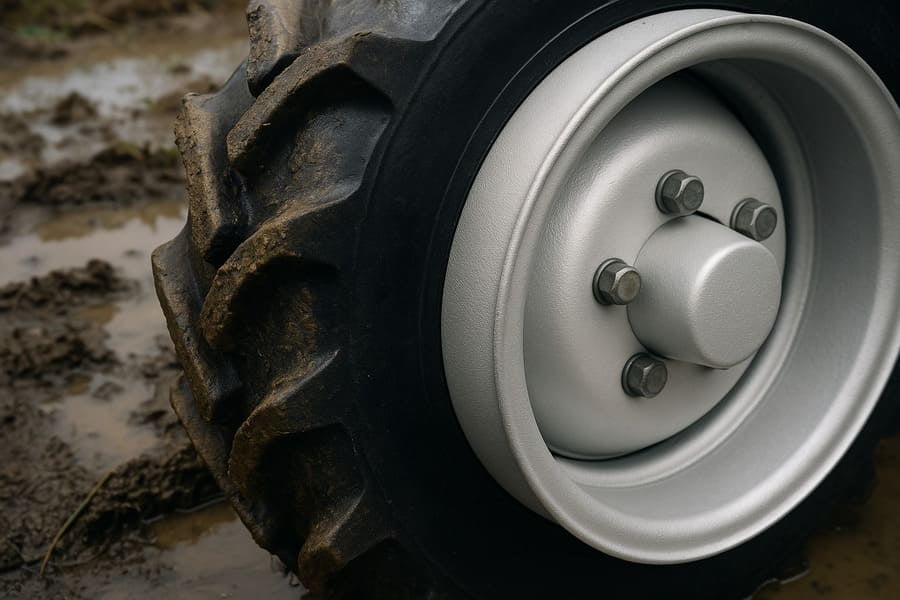
I’ll never forget visiting a partner in Southeast Asia and seeing a pile of discarded rims behind his barn. They didn't look that old, but he explained that after just one or two seasons in the rice paddies, they were failing. The problem wasn't obvious from the outside. The rims were rusting from the inside out. Muddy water had seeped through tiny gaps in the welds, silently eating away at the steel. It was a powerful lesson: in paddy fields, the most dangerous threat is the one you can't see. That's why we don't just build stronger rims; we build smarter, completely sealed ones.
Why Is Paddy Field Mud So Destructive to Standard Rims?
You've seen it happen. A standard rim that works perfectly in dry fields gets destroyed after a single season in wet paddies. It's a costly and frustrating cycle of replacement.
Paddy field mud is a dual threat. Its abrasive sand5 grinds away at the rim's outer edges, while the water and corrosive elements seep through incomplete welds, causing hidden internal rust that leads to structural failure6.
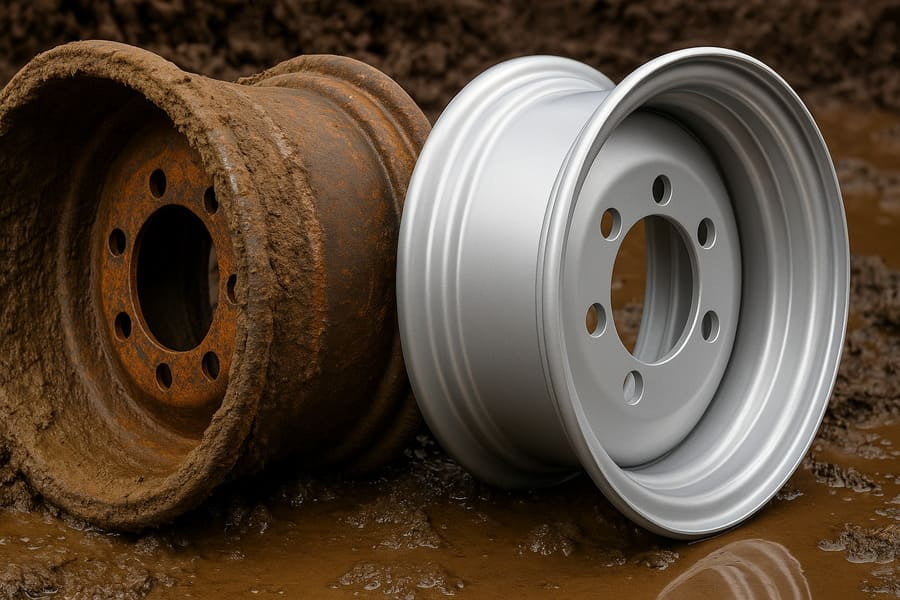
The unique environment of a flooded paddy field creates a perfect storm for destroying agricultural rims. It's not just about getting stuck; the mud itself is an engineering challenge. We have to design for two distinct types of attack happening at the same time.
The External Threat: Abrasive Wear
The mud in a paddy field isn't just soft soil; it's a slurry filled with fine, hard sand particles. As the wheel turns, this mixture creates a powerful suction force that compacts the mud against the rim. This compacted, sandy mud acts like coarse sandpaper, constantly grinding against the rim flange. A standard rim with a normal thickness simply can't withstand this relentless abrasion and will wear down prematurely, compromising the tire seal and the structural integrity of the wheel.
The Internal Threat: Hidden Corrosion
This is the more insidious problem. Most standard agricultural rims are not designed to be watertight. They often have intermittent or incomplete welds, leaving tiny gaps. In a paddy field, the rim is submerged in water for long periods. This corrosive water is forced into the hollow sections of the rim through these gaps. Trapped inside, it silently causes rust and corrosion from the inside out. By the time you notice a problem, the structural damage is already severe, leading to unexpected and dangerous equipment failure.
What Are the Key Features of a Purpose-Built Paddy Field Rim?
You're tired of rims failing from hidden rust7 and premature wear. You need a solution that is specifically designed for the harsh reality of deep mud and constant water exposure.
A true paddy field rim has two non-negotiable features: 100% fully sealed welds8 to create an airtight, waterproof barrier, and heavily reinforced, thickened flanges to provide a durable defense against abrasive wear.
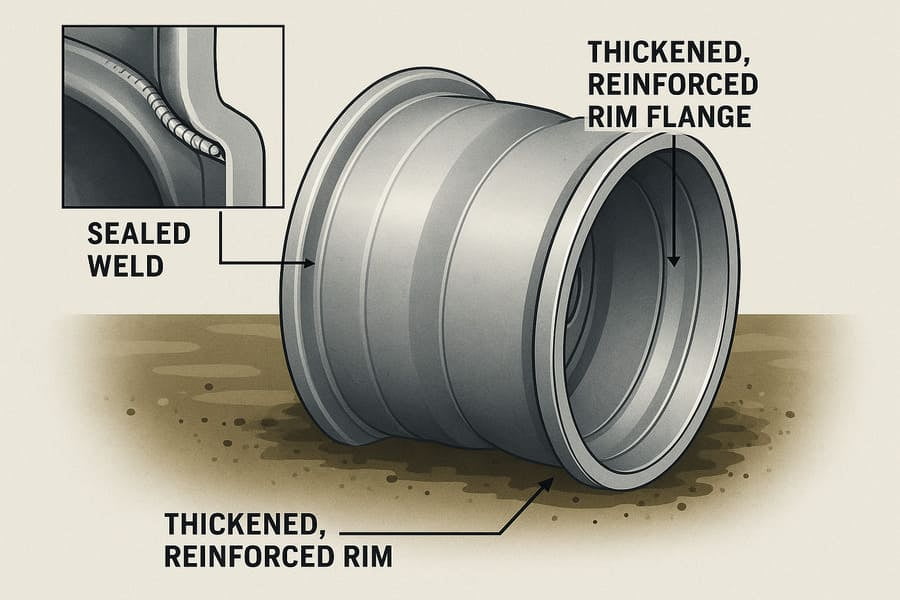
To solve the dual threats of external abrasion and internal corrosion2, we had to engineer solutions that directly addressed the root causes. Just using more steel isn't enough; the design itself has to be fundamentally different from a standard dry-field rim. It comes down to focusing on the two most vulnerable areas. First, we ensure every single seam is fully and continuously welded. This process is more time-consuming, but it creates a hermetically sealed chamber inside the rim. No water can get in, so internal rust becomes impossible. Second, we add material where it matters most: the rim edge, or flange. By significantly increasing the thickness of this leading edge, we build a robust barrier that can endure season after season of grinding from sand-filled mud4 without failing.
Standard Rim vs. Paddy Field Rim Engineering
| Feature | Standard Agricultural Rim | Gescomaxy Paddy Field Rim |
|---|---|---|
| Welding | Intermittent or spot-welded; not watertight. | Fully sealed, continuous welds for a 100% waterproof seal. |
| Corrosion Risk | High risk of hidden, internal rust from water entry. | No risk of internal corrosion2; the rim is a sealed unit. |
| Rim Flange | Standard thickness, vulnerable to abrasive wear. | Reinforced and thickened to resist wear from sandy mud. |
| Service Life | Shortened significantly in wet, muddy conditions. | Engineered for long-term durability in paddy fields. |
Why Do We Recommend Complete Assemblies for Paddy Fields?
You've got the perfect rim, but what about the tire? In deep mud, the tire and rim must work together seamlessly to provide the traction and passability you absolutely need.
We strongly recommend a complete assembly because pairing our sealed paddy rim with a high-lug R1W or R2 tire creates a synergistic system. This combination guarantees maximum traction and flotation9, preventing slippage and ensuring peak performance in the muddiest conditions.
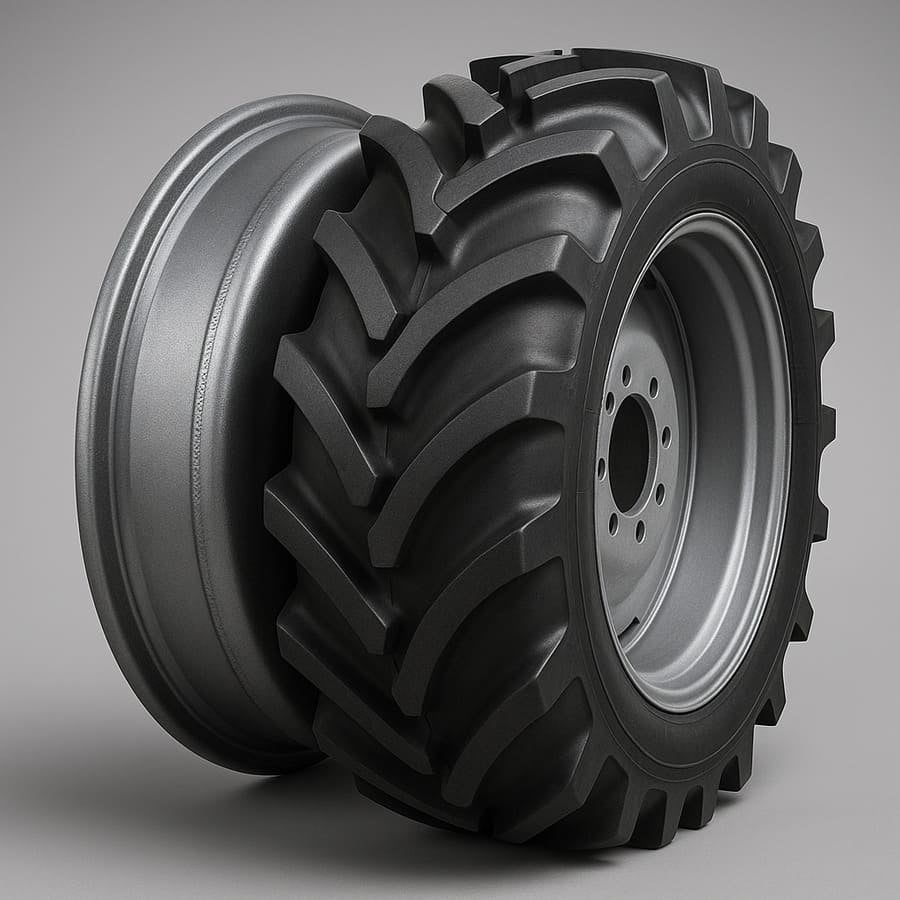
A great rim can be let down by the wrong tire. In the deep, thick mud of a paddy field, standard R1 tires often don't have deep enough lugs to get a good grip. The tire spins, but the tractor goes nowhere. This is not only inefficient but also puts extra stress on the equipment. That's why we advocate for a complete, purpose-built solution. We pair our specially engineered paddy rims with R1W tires, which have lugs that are about 20% deeper than standard R1s, or even more aggressive R2 tires, which have lugs that can be twice as deep. By delivering a professionally mounted and assembled wheel, we eliminate any potential mounting errors and provide a ready-to-install solution that is optimized for one thing: conquering deep mud. This ensures the entire wheel system delivers the high passability and powerful traction required for paddy operations.
Conclusion
Stop letting paddy field mud destroy your equipment. Our purpose-built rims with sealed welds and reinforced edges, especially when paired with high-lug tires, offer the durable, reliable solution you need.
Explore how paddy field rims are engineered to withstand harsh conditions, ensuring durability and performance. ↩
Find out how internal corrosion occurs and the best practices to prevent it in paddy field conditions. ↩
Discover how reinforced rim flanges protect against abrasive wear, extending the life of your agricultural equipment. ↩
Learn about the challenges posed by sand-filled mud and how to design equipment to withstand it. ↩
Understand the impact of abrasive sand on rims and how specialized designs can mitigate damage. ↩
Explore the causes of structural failure in rims and how to prevent it through better engineering. ↩
Explore the dangers of hidden rust in rims and effective strategies to combat it. ↩
Learn about the significance of fully sealed welds in preventing internal corrosion and enhancing rim longevity. ↩
Discover the importance of traction and flotation in agricultural operations, especially in muddy conditions. ↩