
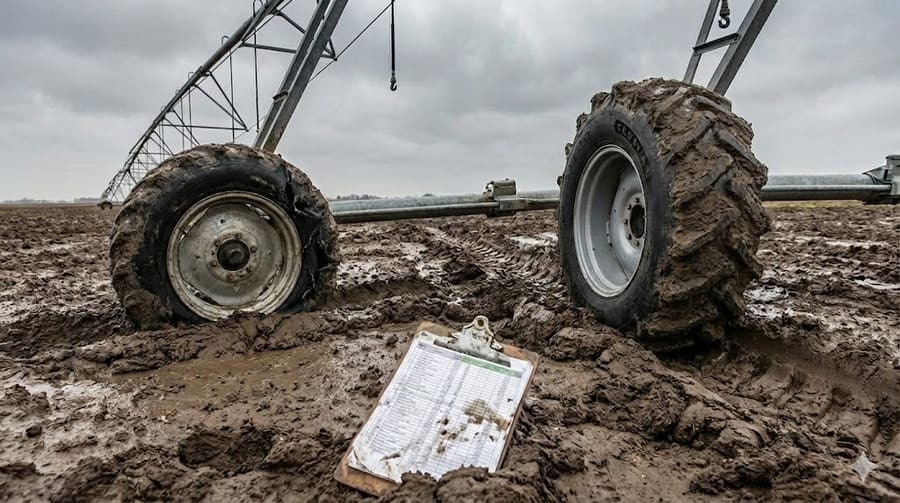
You choose a irrigation tire based on its load index1 and speed rating2, thinking you've made a smart, data-driven choice. But you're planning for a world that doesn't exist.
To account for extreme conditions, select irrigation tires3 based on their ability to handle peak stress4, not average use. Prioritize robust construction5, stronger sidewalls6, and a higher load capacity7 than your "normal" calculations require. This builds a necessary buffer for unavoidable field realities8.
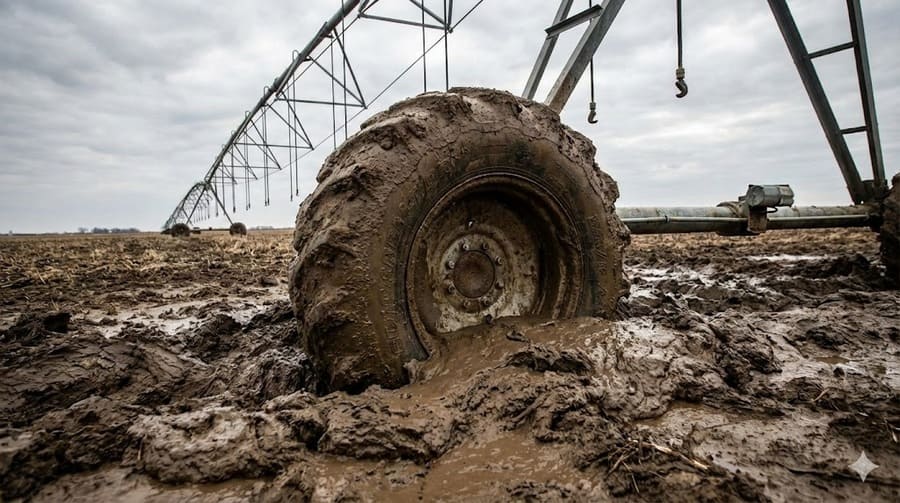
I remember visiting a potential client who was frustrated with constant tire failures9 on his pivots. He showed me his spreadsheets, proving that the tires he bought were perfectly rated for the system's weight and speed. On paper, he was right. But then we walked the fields. We saw deep ruts from the previous season, a low-lying area that was always soggy, and the steep grade on one section of the pivot's path. His tires weren't failing because his math was wrong; they were failing because they were chosen for the spreadsheet, not for the challenging reality of his actual farm.
Why Do 'Standard' Tires Fail in 'Normal' Field Conditions?
You bought a irrigation tire that meets the manufacturer's specifications, yet it fails prematurely. It feels like the product is defective, but the real issue is a flawed assumption.
Standard irrigation tires3 often fail because they are selected for ideal, "acceptable" conditions, while they operate in a world of "abnormal but unavoidable" variables like mud, ruts, and temporary overloads. The spec sheet assumes a perfect world; your field is not one.
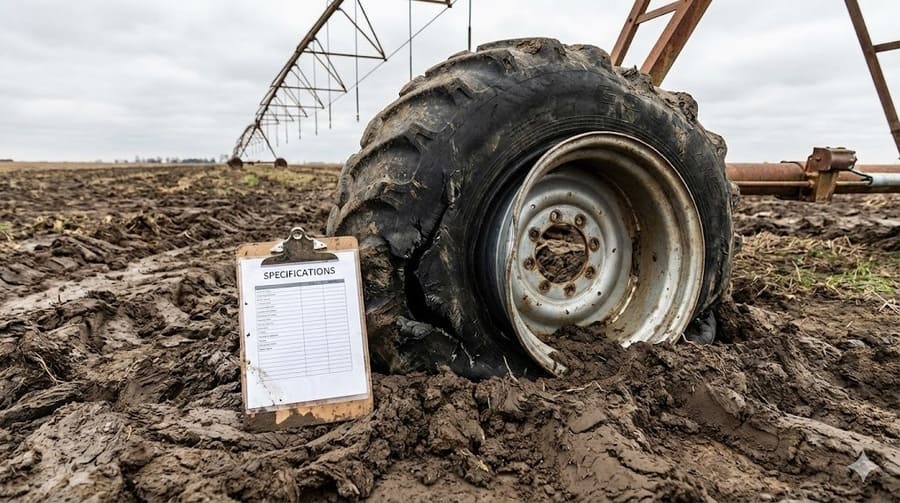
There's a fundamental gap between the laboratory where a irrigation tire's specs are defined and the field where it actually works. The datasheet assumes a hard, flat surface and an evenly distributed load. But your irrigation system operates in reality. Mud isn't an exception; it's a seasonal guarantee. Localized ground settlement isn't a freak event; it's a constant variable that creates unseen stresses. When a single tower sinks into a soft spot, the load on that irrigation tire can spike dramatically, far exceeding the "average" load you calculated. These real-world events aren't edge cases; they are the normal operating environment. Choosing a irrigation tire based only on its datasheet specs is like planning a hike using a map that doesn't show any hills.
The Gap Between the Datasheet and the Dirt
| Factor | The Datasheet Assumption (The Ideal) | The Field Reality (The Unavoidable) |
|---|---|---|
| Ground Condition | Firm, dry, and perfectly level. | Soft spots, deep mud, ruts, and uneven terrain. |
| Load Distribution | Evenly spread across all tires. | Concentrated point loads on tires in soft ground or on inclines. |
| Operational Stress | Consistent, low-level stress. | Short bursts of extreme sidewall and bead stress. |
How Do Extreme Moments, Not Averages, Determine Irrigation Tire Failure?
Your pivot tire works perfectly 99% of the time. You think that one time it got stuck in deep mud was just bad luck, but that single moment sealed its fate.
A irrigation tire's survival is determined by its ability to withstand peak stress4, not its performance during average use. One extreme event can cause irreversible internal damage that leads to eventual system collapse, rendering the other 99% of its performance irrelevant.
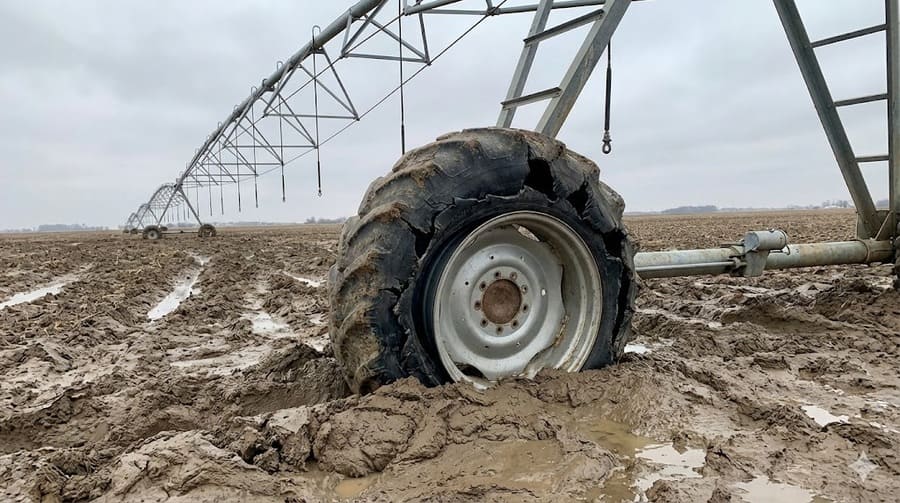
Think of it like a chain. The strength of a chain isn't its average link strength; it's the strength of its single weakest link. A irrigation tire's structural integrity works the same way. It can handle thousands of hours of normal operation, but its lifespan is ultimately decided by its ability to survive the few seconds of intense pressure when a wheel sinks into a rut or gets dragged sideways. During these moments, the sidewall is put under immense strain, and the bead can be forced against the rim. This can cause micro-tears in the rubber and damage the internal cord structure. The tire might not fail right then, but the damage is done and it's permanent. The system doesn't fail on an average Tuesday; it fails when faced with an extreme test.
What's the Real Risk of Assuming Reality Will Cooperate?
You save a little money by choosing a standard tire, hoping you'll avoid the worst-case scenarios. You're not just buying a tire; you're making a bet.
Ignoring extreme conditions is a gamble that assumes your field will always be ideal. It's a bet you will eventually lose, because reality never cooperates. The cost of failure—crop loss10, downtime, and emergency repairs11—always outweighs the initial savings.
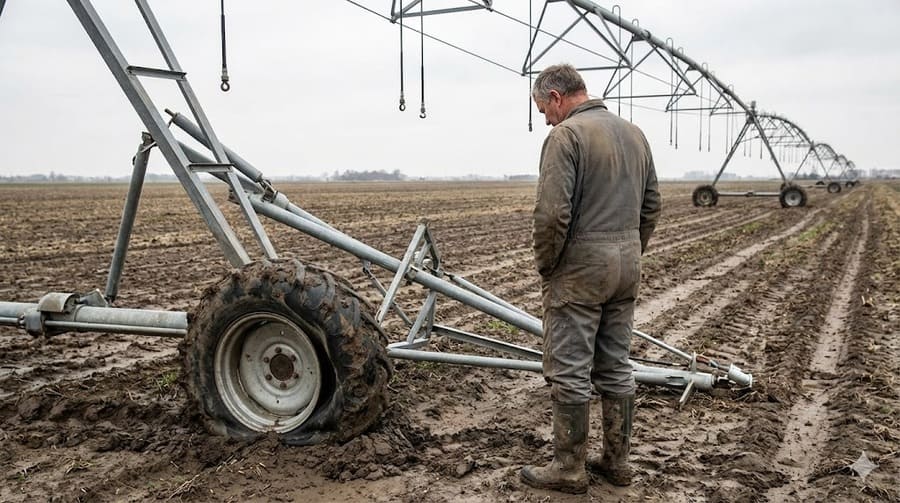
When you select a tire without building in a buffer for extreme conditions, you are fundamentally assuming that nothing will ever go wrong. You are assuming the ground will stay firm, the ruts won't get too deep, and the system will never get stuck. This is not a strategy; it's wishful thinking. As a business that has specialized in agricultural tires for 13 years, I've seen the outcome of this gamble time and time again. The client saves a few hundred dollars on tires, only to lose thousands in lost productivity and emergency replacement costs when the pivot goes down during a critical watering cycle. The real risk isn't just a flat irrigation tire; it's a compromised harvest. The smart choice is to invest in a tire designed for the world as it is, not as you wish it would be.
The Cost of a Bad Bet
| The 'Savings' (The Bet) | The Inevitable Cost (The Reality) |
|---|---|
| Lower upfront irrigation tire cost. | Emergency repair costs and labor. |
| Meeting the minimum spec. | Pivot downtime during critical growth stages. |
| Assuming "it won't happen to me." | Lost yield and reduced crop quality. |
| - | Damage to other pivot components. |
Conclusion
Stop selecting tires for a perfect world. Build a buffer for reality by choosing robust tires designed for peak stress4, not average use. This turns a gamble into a sound investment.
Understanding load index is crucial for selecting the right tires; this resource explains its impact on agricultural tire performance. ↩
Learn why speed rating matters for irrigation tires and how it affects their performance in the field. ↩
Explore this link to find top-rated irrigation tires that can withstand harsh field conditions and ensure reliability. ↩
Discover how peak stress influences tire longevity and performance in challenging agricultural environments. ↩
Find out what makes a tire robust and how it can enhance performance in tough field conditions. ↩
Explore the significance of stronger sidewalls in preventing tire failures during extreme conditions. ↩
Learn how higher load capacity can improve tire performance and reduce the risk of failures. ↩
Understanding field realities is key to selecting the right tires; this link provides valuable insights. ↩
This resource outlines the main reasons for tire failures, helping you make informed decisions. ↩
This resource explains the connection between tire selection and crop yield, emphasizing the importance of making the right choice. ↩
Explore the financial implications of emergency repairs and how proper tire selection can mitigate these costs. ↩