
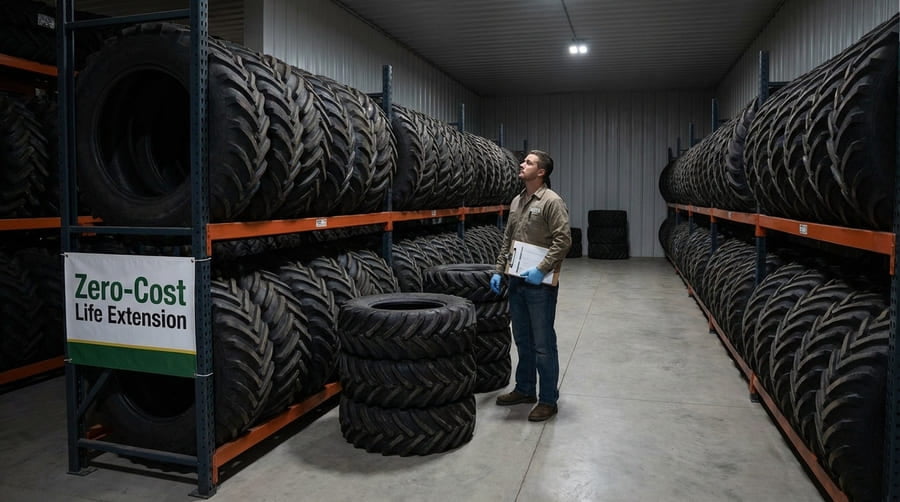
You spend good money on quality irrigation tires, but they seem to wear out even when they're not being used. This invisible aging feels like you're just throwing money away.
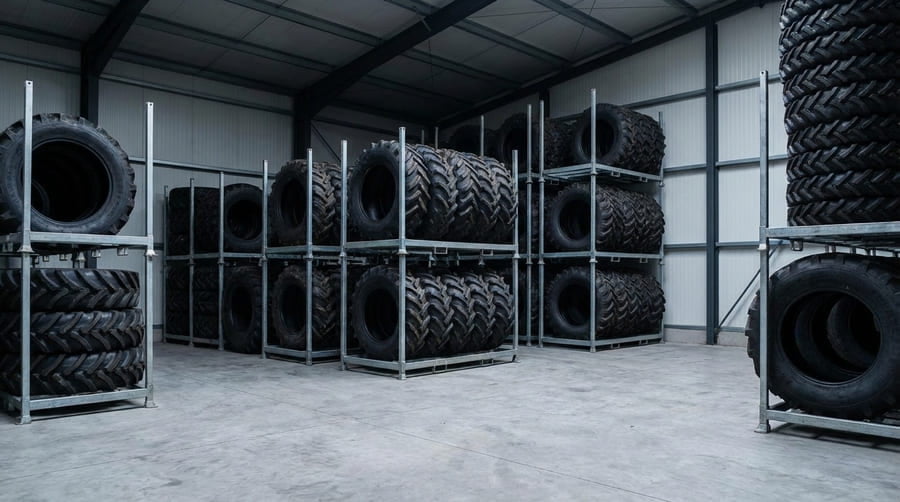
You can get a "zero-cost" life extension by storing tires properly. Keep them in a clean, dry, dark space1, away from electric motors, and stack them correctly to prevent deformation. This simple discipline costs nothing but adds years to a tire's life.
I once visited a dealer's yard where he had a pile of brand-new, expensive irrigation tires sitting outside, exposed to the blistering summer sun. He complained that his inventory seemed to have a short shelf life. I pointed to the tires and said, "That's your problem right there. You're letting the sun and rain destroy them for free." He thought that since they weren't on a pivot, they were safe. But he was learning a hard lesson: a tire’s life is measured in more than just operational hours. How you treat it during its downtime is just as important. That conversation changed how he managed his inventory and saved him a fortune in the long run.
Why Does an Unused Irrigation Tire Still Get Old?
You have irrigation tires sitting in storage that have never been used, yet they develop cracks and feel stiff. You assume a irrigation tire only ages when it's working, but the evidence says otherwise.
An unused irrigation tire ages because environmental factors2 like UV light3 and ozone4 break down the rubber. This process causes invisible micro-cracks and hardening, reducing the tire's flexibility and strength long before it's even installed.
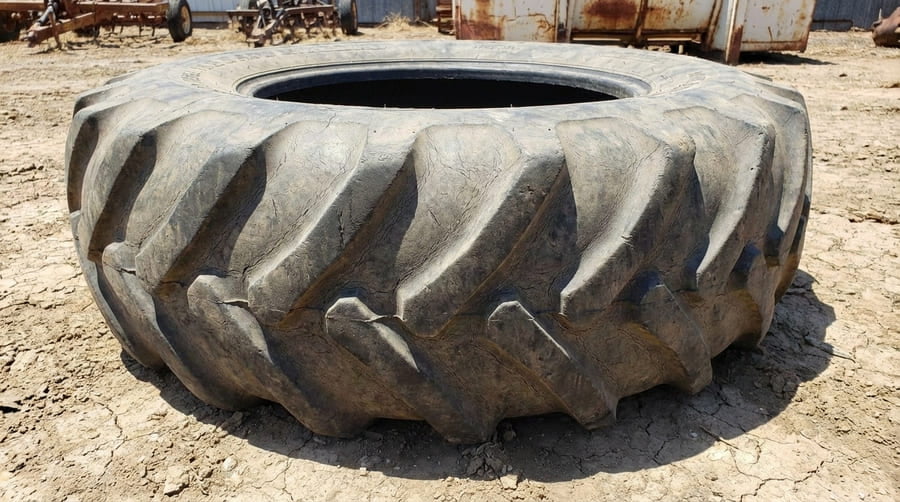
Think of rubber like skin. Even when you're just sitting still, sunlight can cause a sunburn. For a irrigation tire, ultraviolet (UV) light from the sun does something similar. It attacks the chemical bonds in the rubber, making it brittle and weak over time. Another invisible enemy is ozone4, a gas that is often produced by electric motors, welders, and other workshop equipment. Ozone is extremely aggressive and accelerates rubber aging, causing cracks to form. Add in humidity5, and you have a perfect recipe for premature degradation. A tire that looks perfect on the outside might already be compromised internally. This is why storing tires inside a dark, climate-controlled space isn't just about being tidy; it's about protecting them from the invisible forces that are constantly trying to destroy your investment.
The Invisible Enemies of Stored Tires
| Threat | Source | Damage Caused |
|---|---|---|
| UV Light | Direct or indirect sunlight | Makes rubber brittle, causes surface cracks |
| Ozone | Electric motors, generators, welders | Accelerates aging, causes deep cracks |
| Humidity/Moisture | Damp floors, rain, poor ventilation | Can corrode steel belts, degrades rubber |
| Extreme Temps | Uninsulated sheds, outdoor storage | Speeds up all chemical degradation |
How Can the Way You Stack Irrigation Tires Ruin Them Before They're Even Used?
To save space, you stack your irrigation tires in a tall, flat pile. But this convenient method is secretly damaging them, creating problems that will only appear once they're put into service.
Incorrect stacking puts constant pressure on the tire's structure, deforming the sidewalls and bead areas6. This hidden damage can lead to air leaks, vibrations, and uneven wear after the tire is finally installed.
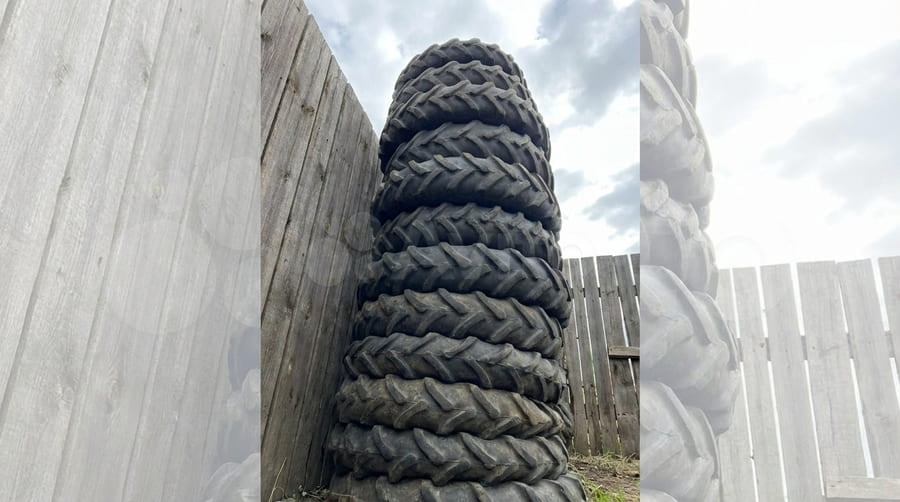
A irrigation tire is designed to handle immense pressure from the inside out when it's inflated. However, its sidewalls are not built to bear heavy loads for long periods. When you lay tires flat on top of each other in a tall stack, the tires at the bottom are being crushed. This constant, uneven pressure can cause the sidewalls to distort and the bead—the part that seals against the rim—to bend out of shape. Another common mistake is leaning irrigation tires against a wall at an angle. Over months, gravity will cause the tire to warp. You won't see this damage right away. But when you go to mount that irrigation tire, you may find it won't seal properly against the rim, or it causes a persistent vibration on the pivot. You saved a few square feet of floor space, but you may have just ruined a perfectly good tire without it ever touching a field.
Stacking: The Right Way vs. The Wrong Way
| Method | Outcome |
|---|---|
| Right: Standing upright in racks | No pressure on sidewalls, bead remains perfectly round. |
| Right: Short stacks (max 4 high) if flat | Minimizes weight on the bottom tire, reducing distortion risk. |
| Wrong: Tall, flat stacks (5+ high) | Crushes bottom tires, deforms sidewalls and beads. |
| Wrong: Leaning against a wall | Causes the tire to warp and lose its round shape over time. |
What's the Real Cost of Forgetting About Your Tires in the Off-Season?
The season ends, and you push your tires into a corner and forget about them. You think you're saving time, but this neglect is setting you up for a major headache next spring.
The true cost is the surprise failure7 during peak season. Unchecked tires can develop hidden damage from improper storage. When you need them most, they fail, causing expensive downtime and emergency replacement costs8.
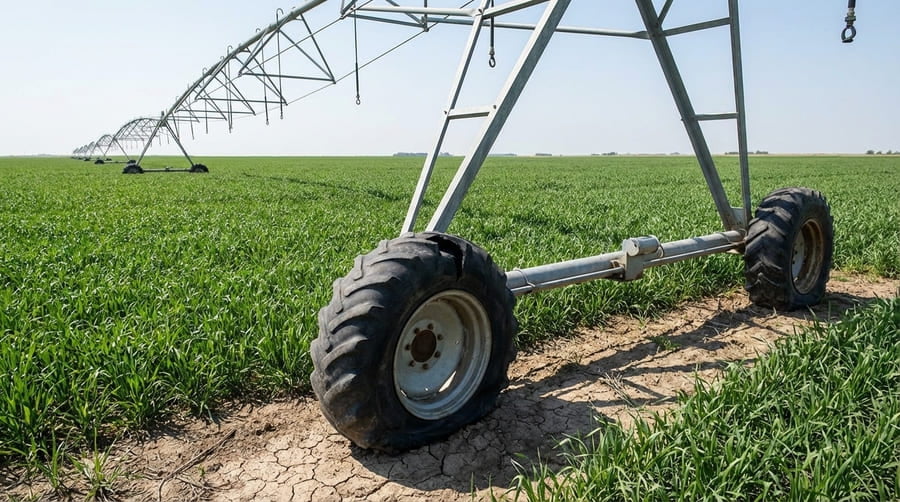
The biggest risk of off-season neglect isn't the tire itself; it's the timing of its failure. A tire that sits in a damp corner all winter might develop slow, unseen corrosion on its internal steel belts. A tire leaning against a wall might slowly go out of round. You won't notice these problems until you pull the pivot out for the first run of the season. Then, suddenly, a tire that looked fine goes flat, or you notice a severe wobble on one of the towers. Now you're in crisis mode. You have to stop operations, find a replacement, and pay for an emergency service call, all while your crops are waiting for water. The cost of "forgetting" about your tires isn't zero. It's the full price of a new tire, plus the cost of labor, plus the value of the lost productivity. A simple 15-minute inspection in the middle of the off-season could have prevented all of it.
How Can a Simple Storage Checklist Become Your Best Form of Risk Control?
You know you should store tires properly, but it seems like a lot of work. So you put it off, accepting that some tires will just go bad, and you treat it as a normal business cost.
Proper storage isn't complicated; it's a discipline. A simple checklist is your best form of risk control9, costing nothing to implement but preventing the premature aging and damage that forces you to buy new tires sooner.
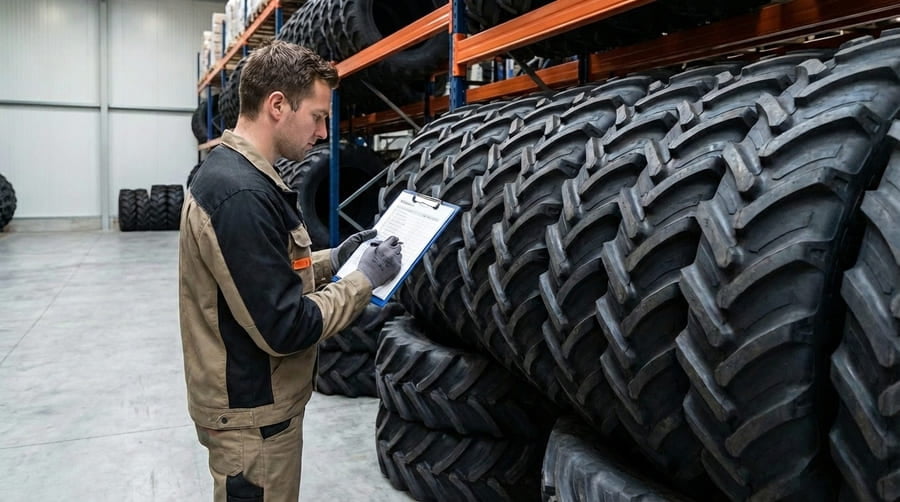
The most effective risk management tools are often the simplest ones. You don't need a fancy facility to double the useful life of your stored tires. You just need a process. Creating a simple storage checklist10 and following it every time is the closest you can get to free insurance for your tire inventory. This process removes guesswork and ensures that every tire is protected from the key threats: environment and deformation. It's a habit that transforms a "cost center" (wasted inventory) into a preserved asset11. The checklist doesn't cost a dime to create, and the actions on it are practically free. But by preventing just one or two premature tire failures a year, that simple piece of paper can save you thousands of dollars. It’s the highest return on investment12 you can get in your workshop.
The "Zero-Cost" Storage Checklist
- [ ] Clean: Wash off dirt, mud, and chemicals before storing.
- [ ] Dry: Ensure tires are completely dry to prevent moisture damage.
- [ ] Dark: Store indoors, away from windows and direct sunlight.
- [ ] Cool: Avoid areas with extreme heat or temperature swings.
- [ ] Ozone-Free: Keep away from electric motors, chargers, and welders.
- [ ] Stack Right: Stand upright or in short, flat stacks (max 4).
- [ ] Inspect Periodically: Give them a quick check once mid-season.
Conclusion
Proper off-season storage isn't an expense; it's an investment that pays for itself. A simple, disciplined approach will extend tire life for free and ensure your equipment is ready when you need it.
Discover the importance of storing tires in optimal conditions to prevent premature aging and damage. ↩
Understand how elements like UV light and ozone can degrade tires even when not in use. ↩
Explore how UV light can cause rubber to become brittle and develop surface cracks over time. ↩
Learn about the aggressive nature of ozone and how it accelerates rubber aging, causing deep cracks. ↩
Find out how moisture can corrode steel belts and degrade rubber, impacting tire durability. ↩
Understand the significance of protecting these areas to prevent deformation and ensure proper sealing. ↩
Explore how improper off-season storage can lead to unexpected tire failures when you need them most. ↩
Learn about the financial impact of neglecting tire storage, resulting in costly replacements. ↩
Understand how implementing risk control measures can prevent premature tire aging and damage. ↩
Discover how a simple checklist can serve as an effective risk control tool for tire storage. ↩
Learn how disciplined storage practices can transform tires from a cost center to a valuable asset. ↩
Explore how simple storage practices can save thousands of dollars by preventing premature tire failures. ↩