
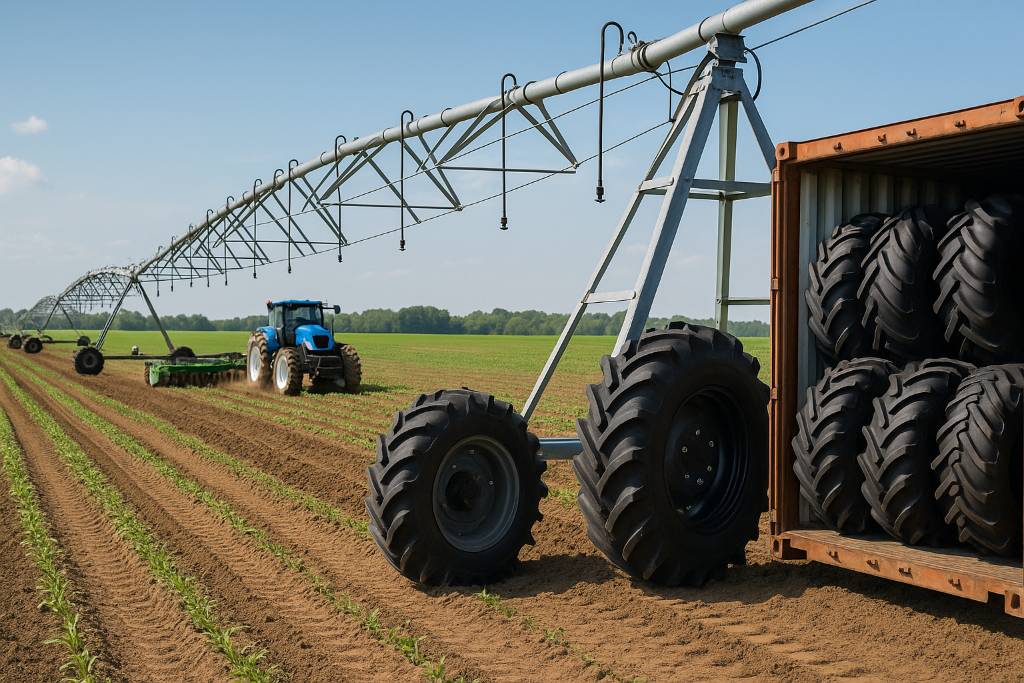
You see farm mechanization1 simply as bigger tractors and harvesters. This view causes you to overlook the equally important support equipment, like irrigation systems, that require specialized components.
Global mechanization1 is driving demand for irrigation tires2 by expanding the use of heavy center-pivot systems3. These automated machines require specialized tires4 designed to handle constant loads and protect soil, creating a new, predictable replacement market for durable tires.
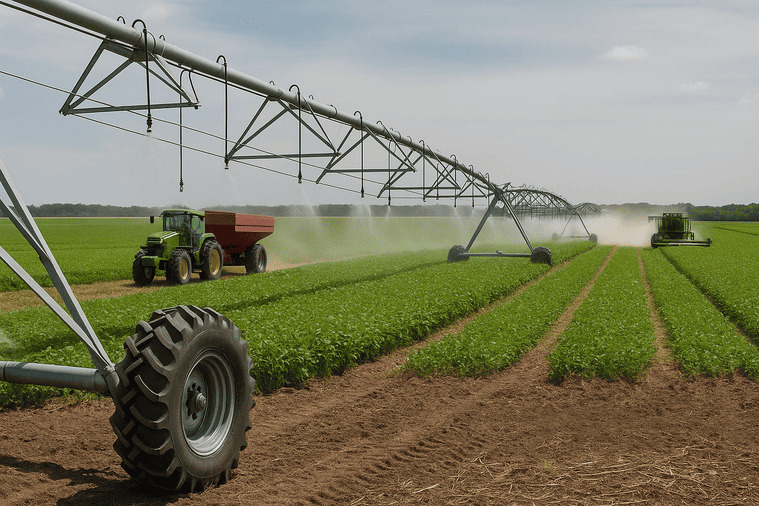
I remember talking with a distributor who was focused entirely on tires for tractors and combines. He saw mechanization1 only through the lens of primary field equipment. I asked him about the irrigation systems in his region, and he dismissed them as "just pipes on wheels." I explained that as farms get bigger and more mechanized, those "pipes on wheels" become multi-ton, automated systems. A standard tire failure on one of them is a catastrophe. He started carrying a few irrigation tire sizes as an experiment. Today, it’s a core part of his business because he realized that mechanization1 affects the entire farm ecosystem, not just the tractors.
How Do Center-Pivot Systems Drive the Need for Specialized Tires?
You assume that a tire for an irrigation system is just a basic agricultural tire. This assumption leads you to offer products that can't handle the job, resulting in failures and dissatisfied customers.
Center-pivot systems place unique, constant stress on tires that standard farm tires are not built for. They demand reinforced casings for heavy loads and special treads for traction in wet conditions, creating a need for a completely different class of tire.
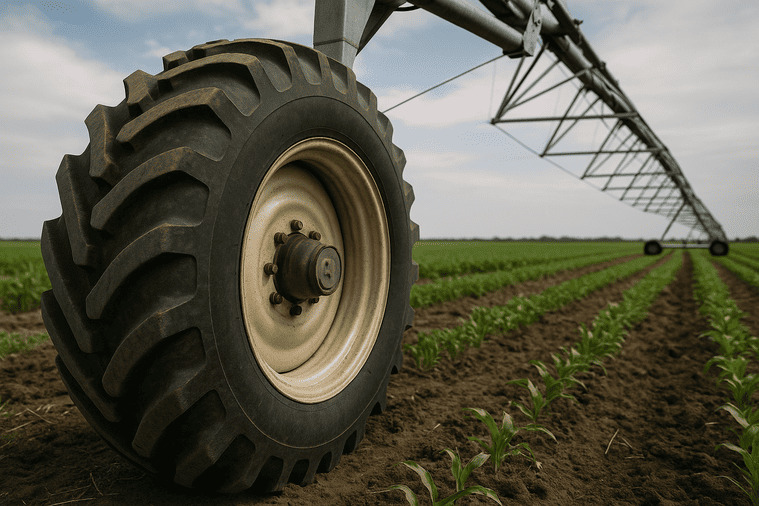
A tractor tire is designed for high torque and variable loads. It works hard, then it rests. An irrigation tire has a completely different job. It supports a massive, water-filled structure that is constantly moving, 24/7, for months. The load is constant, not intermittent. The tire is always exposed to UV rays and ozone, which degrade rubber. Standard tires will crack and fail under this pressure. That's why specialized irrigation tires2 are essential. They use different rubber compounds with UV inhibitors and have reinforced casings designed for continuous flexing. Their tread isn't for pulling; it's for floating and providing traction without digging ruts. This is a classic case where applying a standard solution to a specialized problem just doesn't work.
Tractor Tire vs. Irrigation Tire Requirements
| Feature | Tractor Tire | Irrigation Tire |
|---|---|---|
| Primary Stress | High torque, impact loads | Constant load, UV exposure5 |
| Load Cycle | Intermittent (work/rest) | Continuous (months of operation) |
| Tread Function | Pulling power, traction | Flotation, minimal soil disturbance |
| Failure Consequence | Downtime for one machine | Potential collapse of entire system |
Why Does Modern Farming Demand More Than Just Load Capacity?
You think the main selling point for a heavy-duty tire is its ability to carry weight. This focus on load capacity6 alone makes you miss the farmer's real concern: protecting their soil and yield.
Modern, mechanized farming is data-driven. Farmers know that soil compaction7 from heavy equipment reduces yield. They now demand irrigation tires2 that not only carry the load but also distribute the weight to protect the soil structure and prevent crop-damaging ruts8.
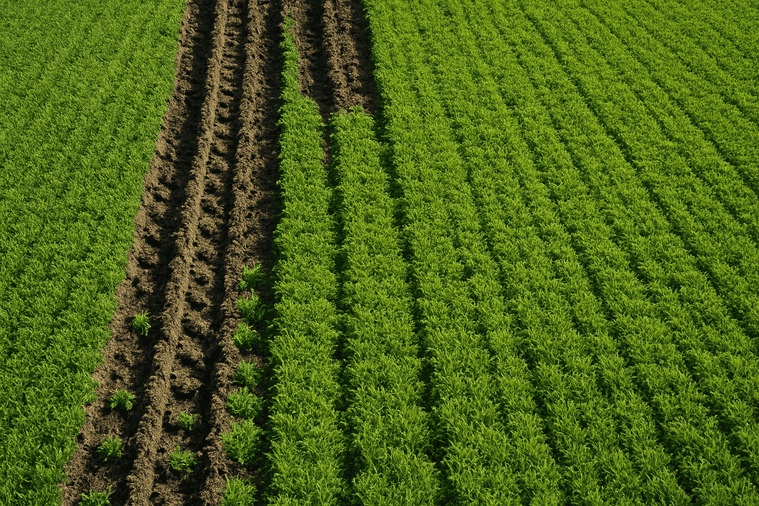
I had a client, a large corporate farm, who was using advanced sensors to monitor soil health. Their data showed a direct link between the deep ruts created by their irrigation system and lower yields in those rows. The compacted soil prevented water absorption and stunted root growth. For them, the problem wasn't that their old tires were failing; it was that the tires were "succeeding" in a way that cost them money. They weren't looking for a stronger tire; they were looking for a smarter one. This is why tread design9 and footprint are now critical selling points. A non-directional tread with a wide, flat profile minimizes ground pressure. The tire floats on top of the soil instead of digging in. This is a perfect example of how mechanization1 isn't just about power; it's about precision.
How Does Mechanization Create a Standardized Global Market?
You believe agricultural markets are hopelessly fragmented, with different needs in every region. This makes you hesitant to build a global strategy, thinking it’s too complex.
The major manufacturers of center-pivot systems3 are global companies that use standardized designs and tire sizes worldwide. This mechanization1 creates a predictable, uniform market, allowing a single high-quality tire10 to serve customers from North America to Africa.
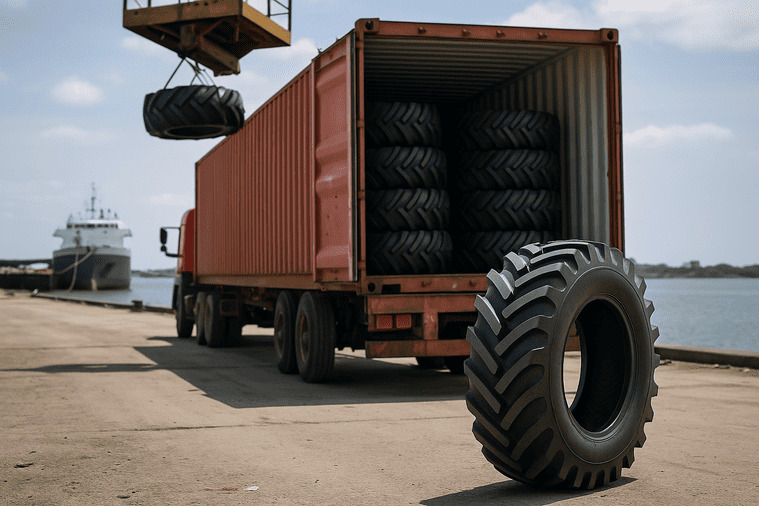
Unlike tractors, which can have countless regional variations, the leading center-pivot systems3 are engineered to a global standard. A system sold in Brazil uses the same core components, including tire sizes, as one sold in the United States or Australia. This is a huge advantage for distributors and manufacturers. It means we can develop and perfect a specific range of high-quality tire10s and know they will meet the needs of a global customer base. My company, for example, can produce a 14.9-24 irrigation tire that meets ISO 9001 standards11, and we can confidently ship it to partners in dozens of countries. This standardization simplifies inventory, streamlines procurement for our clients, and turns a niche product into a global commodity with high-value characteristics. Mechanization has effectively erased the borders for this specific tire category.
Conclusion
Global farm mechanization1 is creating a powerful and predictable new demand for specialized irrigation tires2. Success now depends on providing quality and performance, not just a low price.
Explore the transformative effects of mechanization on farming practices and productivity. ↩
Explore how specialized irrigation tires enhance performance and protect soil health in modern farming. ↩
Learn about the mechanics of center-pivot systems and their impact on agricultural efficiency. ↩
Discover the unique features of specialized tires that cater to specific farming needs. ↩
Discover the impact of UV exposure on tire longevity and performance in agriculture. ↩
Learn why load capacity is a key factor in tire selection for agricultural machinery. ↩
Understand the critical relationship between soil compaction and agricultural productivity. ↩
Learn effective strategies to minimize soil disturbance and protect crop health. ↩
Find out how tread design influences traction and soil preservation in farming. ↩
Understand the characteristics that make a tire suitable for modern agricultural needs. ↩
Explore the importance of ISO 9001 standards in ensuring tire quality and reliability. ↩