
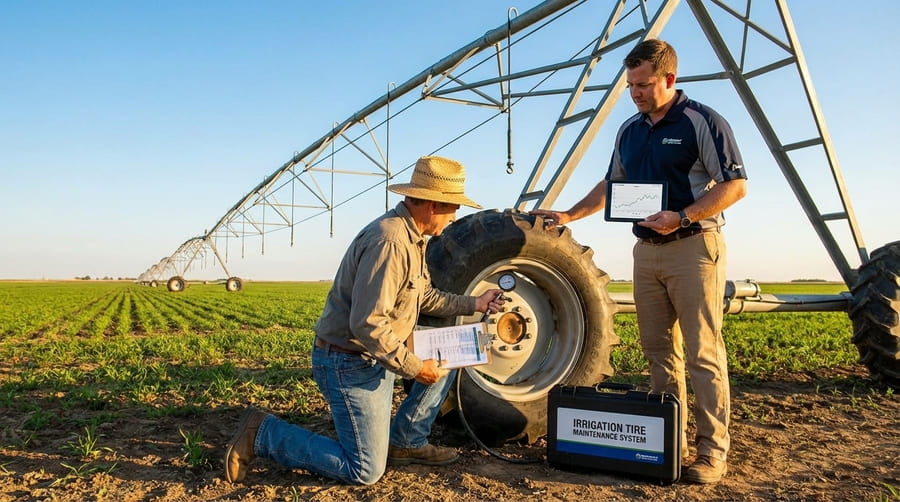
You check your irrigation tire pressures, but still get unexpected flats and costly downtime. Your routine feels like a chore that isn't actually preventing problems.
You create a downtime-prevention system1 by scheduling checks, tracking the data over time, and acting on trends. This transforms a simple reactive task into a proactive process2 that predicts failures before they happen, saving you from expensive emergency repairs.
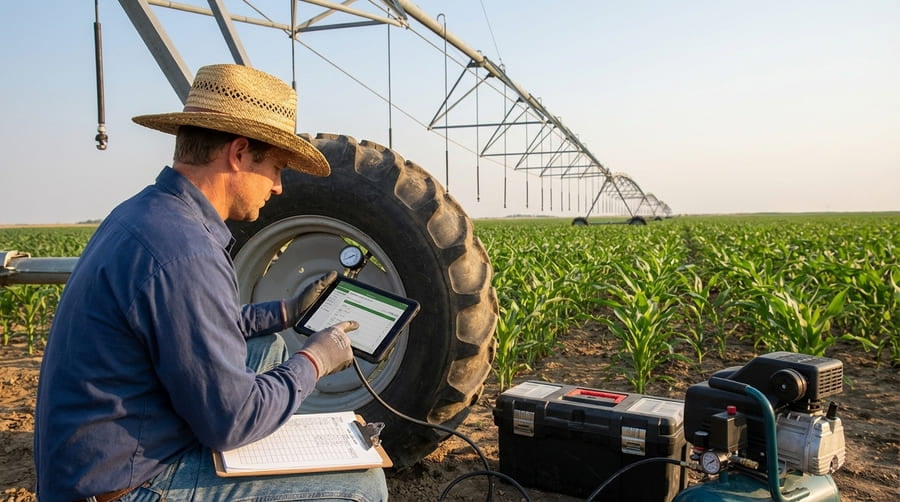
I remember talking to a procurement manager who was frustrated with warranty claims. His team insisted they were checking pressures, but tires were still failing prematurely. The problem wasn't that they didn't check; it was that they didn't have a system. A check here, a check there, with no records. They missed a tire that was consistently losing 1 PSI a week. It wasn't a problem on day one, but by week four, the underinflation had destroyed the irrigation tire's sidewall. That's when I realized that data is the difference3 between simply checking and truly managing your assets.
Why Isn't a Random Pressure Check4 Enough?
You check a irrigation tire's pressure when you happen to be nearby, and it seems fine. But this reactive approach leaves you vulnerable to the slow-burn problems that cause most failures.
A random check5 only gives you a snapshot in time, which can be misleading. A fixed routine6, done at the same time and under similar conditions, establishes a reliable baseline. This makes it easy to spot small changes that signal a bigger problem.
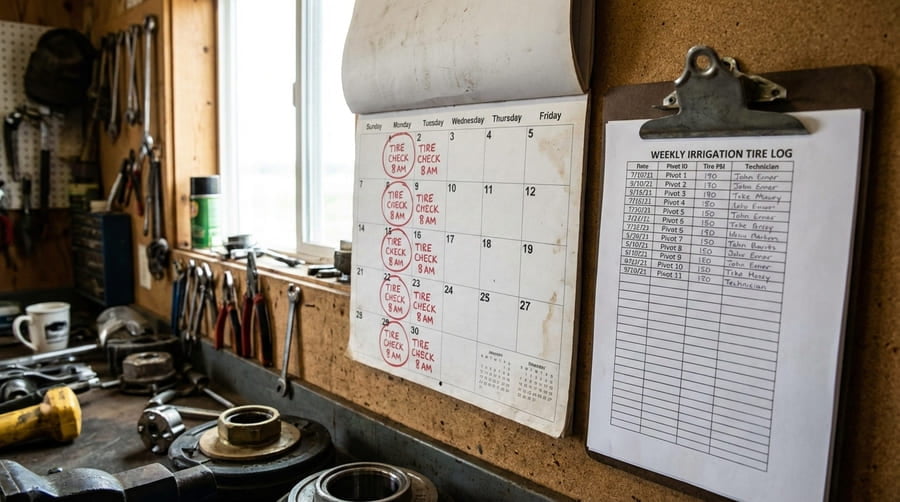
Turning a random action into a system begins with a schedule. Inconsistent checks are almost as bad as no checks at all because you can't compare the data. A tire's pressure changes with the ambient temperature throughout the day. A reading at 2 PM on a hot day will be very different from one at 7 AM the next morning. By making inspection a fixed part of your operational cadence, you eliminate these variables and start collecting meaningful data.
Building Your Inspection Cadence
The goal is consistency. Pick a day and time and stick to it. This creates a standard process that anyone on your team can follow and gives you data you can actually trust.
| Action Item | Recommended Schedule | Why It Matters |
|---|---|---|
| Pressure Check4 | Every Monday at 8 AM (before starting pivot) | Controls for temperature variables, creates a baseline. |
| Visual Check7 | During every pressure check | Catches cuts, cracks, or bulges early. |
| Log All Data8 | Immediately after each check | Prevents forgetting; creates an accurate historical record. |
By committing to this simple schedule, you’re no longer just putting air in tires. You’re gathering intelligence. You're building a dataset that will tell you the health of each tire, moving you from a reactive state of fixing flats to a proactive one of preventing them entirely.
How Does Tracking Data Predict Irrigation Tire Failures?
You get a pressure reading, and the number looks good. But that single piece of information tells you almost nothing about what will happen next week or next month.
A single reading only tells you the tire's status now. Tracking that reading over time reveals trends. A tire that consistently loses a small amount of pressure is broadcasting a clear warning sign of a slow leak9 or a failing valve.
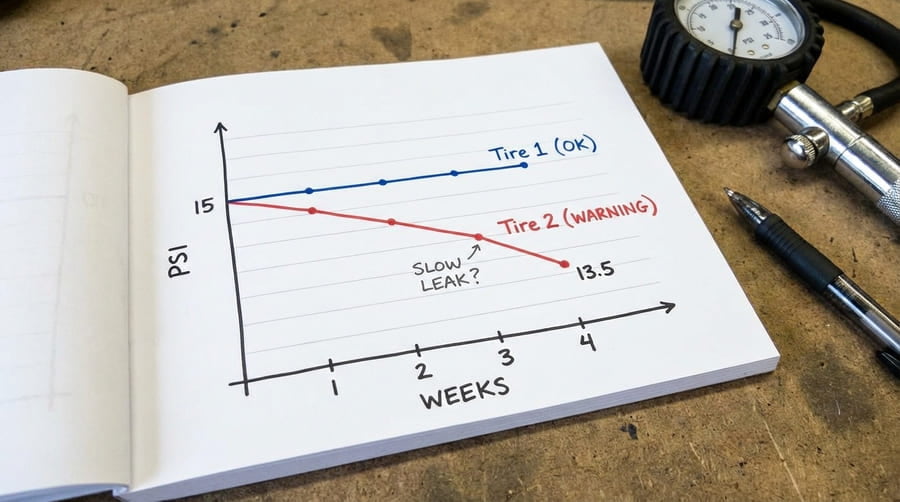
This is where a simple logbook or spreadsheet becomes your most powerful tool. Data points in isolation are just numbers. Data points in a series tell a story. A healthy irrigation tire will maintain a relatively stable pressure week after week, with minor fluctuations due to major temperature shifts. A compromised tire will show a clear, downward trend. I worked with a large farm that implemented a simple logging system, and within a month, they identified two "problem" tires that were headed for failure.
From a Number to a Narrative
Look at this simple log for one tire on a pivot. It shows how data tells a story that a single check never could.
| Week | Date | Target PSI | Actual PSI | Notes |
|---|---|---|---|---|
| 1 | June 3 | 20 | 20.0 | Inflated to spec. |
| 2 | June 10 | 20 | 19.0 | Topped up 1 PSI. |
| 3 | June 17 | 20 | 18.5 | Losing pressure faster. |
| 4 | June 24 | 20 | 17.0 | ACTION REQUIRED |
By Week 2, you have a suspicion. By Week 3, you have a confirmed trend. By Week 4, you know you have a slow leak9 that needs to be fixed before it destroys the tire. You didn't wait for the tire to go flat; the data allowed you to intervene early, saving the tire and preventing downtime.
What Do You Do When You Find a Problem Irrigation Tire?
You've found a tire with a consistent pressure drop or a bulge in the sidewall. Leaving it on the pivot is a gamble that puts the entire system at risk.
When you identify an abnormal irrigation tire, you must isolate it immediately10. Tag it, document the issue, and schedule it for repair or replacement. This prevents the problem from causing a mid-field failure that can lead to catastrophic system downtime.
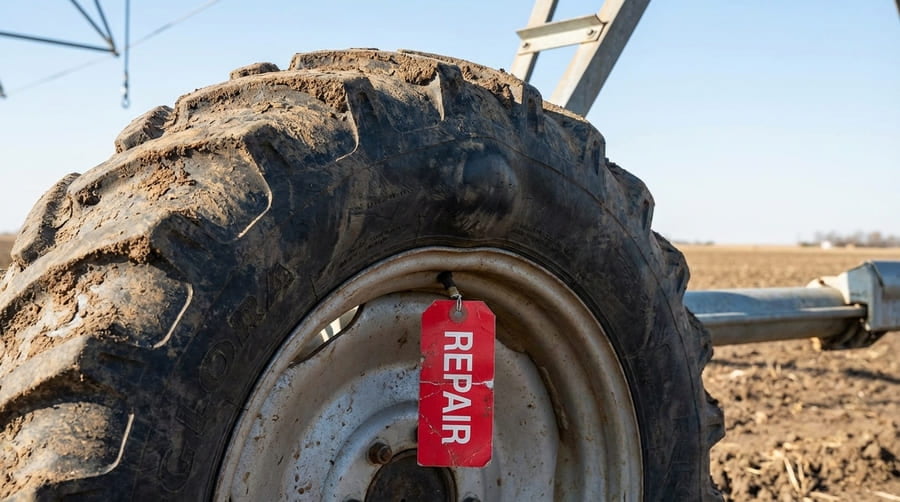
A failing irrigation tire is a liability. If it goes flat in the field, the entire pivot stops. This can cause other towers to get stuck, potentially damaging drive components and other tires. The principle here is the same as in any quality control system: contain the problem before it can spread. Once your data system flags a irrigation tire, the next step is a clear and decisive action plan. Don't just top it off and hope for the best. That's ignoring the warning sign.
The correct response is to treat it like a scheduled maintenance event11. If it's a slow leak9, you can plan to have it repaired at the end of a watering cycle. If it's a structural issue like a bulge, it needs to be replaced before the pivot is run again. This planned intervention is far less costly and disruptive than an emergency field repair. By isolating the problem early, you keep control of the situation. You dictate when and where the repair happens, minimizing its impact on your overall operation.
How Can Dealers Use This System to Build Loyalty?
As a dealer, you sell irrigation tires. But what if you could sell a system that makes those irrigation tires last longer and perform better? This is how you stop competing on price alone.
Dealers can strengthen customer retention12 by providing simple, branded inspection checklists13. This adds tangible value beyond the sale, positions you as an expert partner, and keeps your brand top-of-mind, directly increasing long-term customer engagement.

Your customers are busy. They are managing crops, employees, and a dozen other variables. While they know tire maintenance is important, it can easily fall down the priority list. You can solve this problem for them. By providing a simple, laminated checklist or a digital template, you are giving them a ready-made system. This simple tool helps them implement the very practices we've been discussing: scheduled checks and data logging.
This strategy does several things for you as a dealer:
- Adds Value14: You're no longer just a supplier; you're a partner in their operational success.
- Builds Trust15: You are demonstrating expertise and a genuine interest in their long-term performance, not just the initial sale.
- Creates Stickiness: When a customer uses your checklist every week, your company name is front and center. When they finally do need a replacement, who will they think of first?
This is a low-cost, high-impact way to differentiate yourself. You are embedding your brand into your customer's daily operations and proving that you offer more than just a product.
Conclusion
Transforming checks into a system is about shifting from reaction to prevention. It’s a simple change in process that delivers a massive return through reduced downtime and longer irrigation tire life.
Understanding a downtime-prevention system can help you avoid unexpected flats and costly repairs by predicting failures before they occur. ↩
Learn how a proactive approach can save you from expensive emergency repairs by predicting and preventing tire failures. ↩
Discover how data can transform simple checks into effective management, preventing premature tire failures. ↩
Understand the importance of regular pressure checks to control temperature variables and create a baseline for tire health. ↩
Find out why random checks can be misleading and how a fixed routine can establish a reliable baseline for tire maintenance. ↩
Explore how a fixed routine helps in spotting small changes that signal bigger problems, ensuring better tire management. ↩
Visual checks can catch early signs of damage like cuts or bulges, preventing more serious issues later. ↩
Logging data immediately after checks prevents forgetting and creates an accurate historical record for better decision-making. ↩
Identifying a slow leak early can prevent tire destruction and costly downtime, saving you time and money. ↩
Isolating a problematic tire prevents it from causing further damage, ensuring the safety of the entire system. ↩
Planned interventions for tire issues are less costly and disruptive than emergency repairs, maintaining operational efficiency. ↩
Dealers can offer value-added services like inspection checklists to enhance customer loyalty and engagement. ↩
Branded checklists position dealers as expert partners, adding value and keeping the brand top-of-mind for customers. ↩
Providing additional services like checklists enhances customer relationships by showing genuine interest in their success. ↩
Building trust through expertise and value-added services ensures long-term customer engagement and loyalty. ↩