
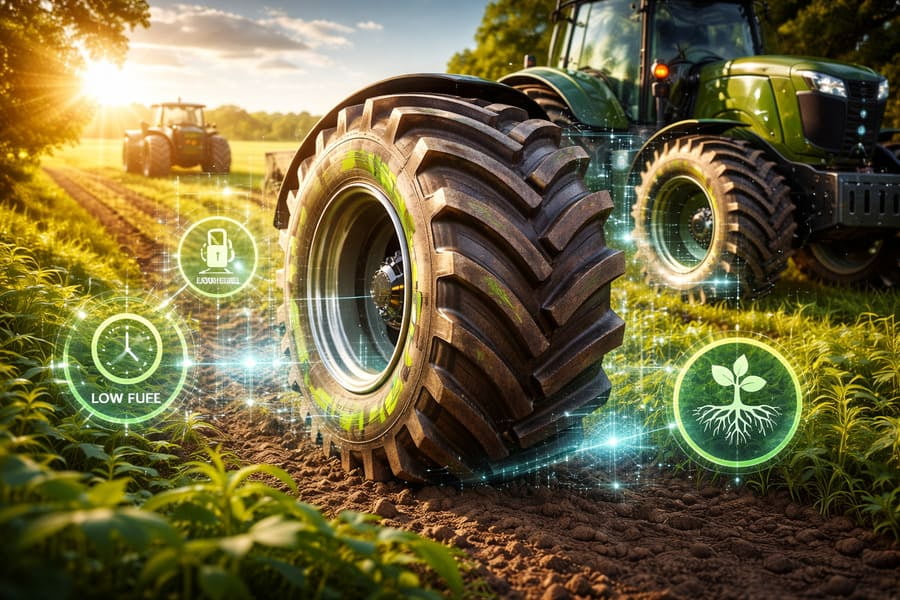
You still view tires as a simple line item, a necessary cost. This overlooks their massive impact on efficiency, soil health1, and the total operational cost of modern farming.
Sustainability and technology are transforming agricultural tires2 from mere consumables into strategic performance assets. They now directly influence fuel efficiency3, soil protection, and operational uptime, making them critical components for modern, data-driven agriculture and a key factor in purchasing decisions.
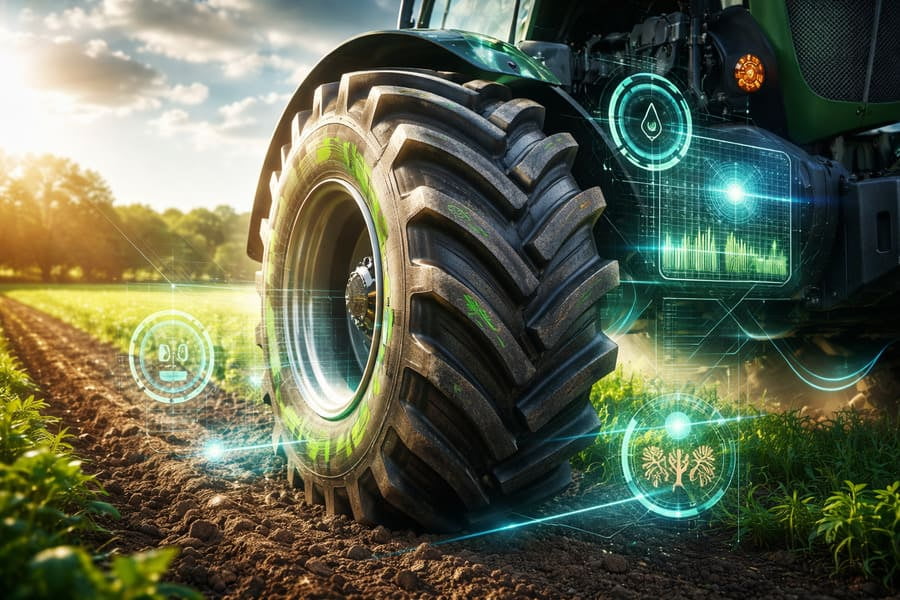
When I started in this industry 13 years ago, the conversation with buyers was almost always about two things: size and price. Today, I spend most of my time discussing things like rolling resistance coefficients4, soil compaction data5, and even how our tires can integrate with a farm's management software. The change is profound. We've moved past the era of the tire as a disposable part. For OEMs and large-scale operators, the tire is now a critical piece of technology that can either unlock or limit the potential of their multi-million dollar investments in machinery and land.
Why Are Agricultural Tires Now Considered Strategic Performance Assets?
Focusing only on the upfront cost of a tire is a common mistake. This ignores the huge downstream impact on fuel consumption, labor hours, and long-term soil health1, costing you much more.
Tires are now strategic assets because their design directly impacts a farm's profitability. Advanced features like low rolling resistance and optimized footprints reduce fuel costs, protect soil for better yields, and maximize the efficiency of expensive machinery.
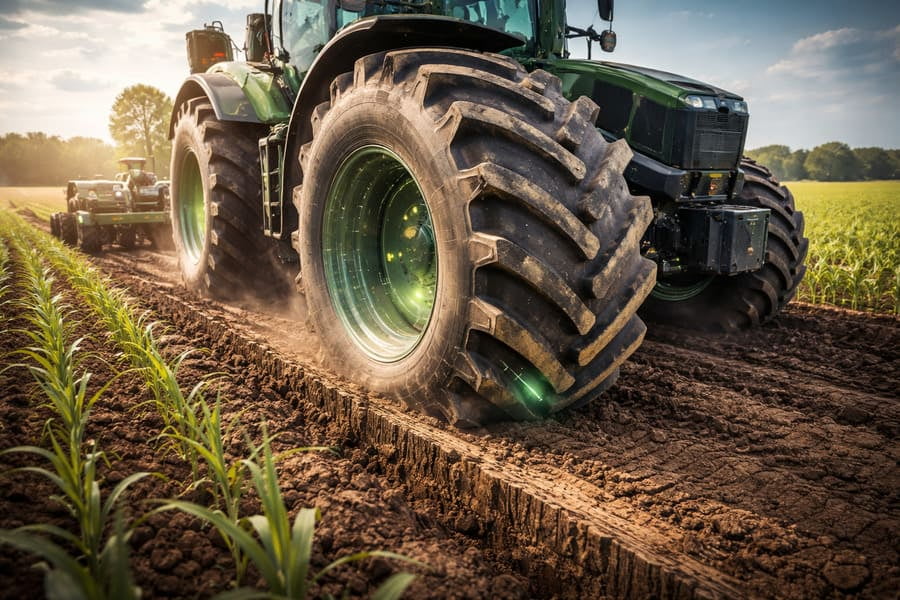
In the past, a tire's job was simple: hold air and provide traction. Its value was judged on its purchase price and how many seasons it lasted. That thinking is now dangerously outdated. Today's agricultural operations are complex systems where every component must contribute to overall efficiency. The tire is the final link between a half-million-dollar tractor and the soil that generates revenue. Choosing a cheap, poorly designed tire is like putting economy car tires on a Formula 1 racer—it bottlenecks the performance of the entire system. A modern tire is an investment that pays dividends in several key areas.
From Component Cost to System Contribution
- Impact on Fuel Efficiency: Advanced rubber compounds and tread designs are engineered to reduce rolling resistance. For a large fleet, a 5-10% reduction in fuel consumption translates into massive annual savings.
- Protection of Soil Capital: Soil isn't just dirt; it's a farm's primary capital asset. Modern tires, especially IF/VF technologies, minimize compaction. This protects the soil structure, improves water absorption, and directly leads to higher crop yields year after year.
- Maximizing Equipment ROI: A high-performance tire6 allows machinery to operate at its optimal speed and load capacity, increasing productivity and ensuring the return on investment for that expensive equipment is fully realized.
How Is Precision Agriculture Changing Tire Performance Demands?
You believe a durable tire that lasts a long time is all you need. But in the age of precision farming, durability alone is not enough to be considered "high-performance" anymore.
Precision agriculture demands tires that do more than just last. High-performance now means providing superior traction control, actively minimizing soil impact, and adapting to variable conditions to support data-driven farming7 operations.
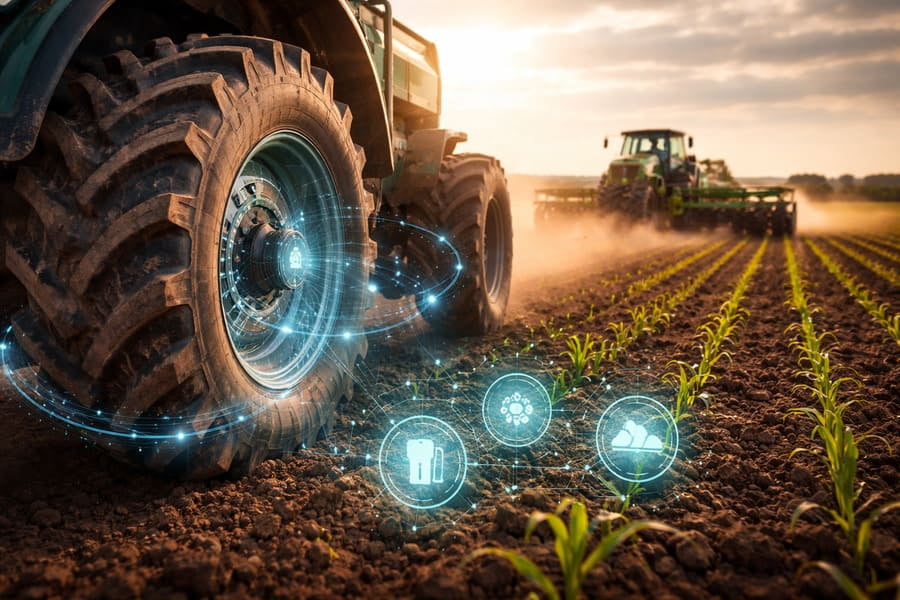
Precision agriculture is all about data and control—applying the right input, at the right place, at the right time. This philosophy extends directly to the tires. A "dumb" tire that is merely durable can work against the goals of a precision system. For example, excessive wheel slip from poor traction control can throw off GPS-guided planting calculations, leading to uneven spacing and wasted inputs. A tire that compacts the soil in one pass negates the benefits of variable-rate fertilization in that zone. The new definition of performance is about synergy. The tire must work with the technology, not against it. As a supplier, our design process at Gescomaxy is now heavily influenced by these needs. We engineer tread patterns for specific traction requirements and use advanced compounds that adapt to different soil types, ensuring the tire is an active contributor to the precision farming mission.
Are Smart Tires a Gimmick or a Genuine Operational Tool?
You hear about "smart tires8" with sensors and AI, and you dismiss it as a marketing gimmick. This skepticism could cause you to miss out on one of the biggest leaps in operational efficiency and risk reduction.
Smart tires are a genuine operational tool, not a gimmick. By providing real-time data on pressure, temperature, and load, they enable predictive maintenance9, reduce catastrophic failures, and give farm managers the information needed to optimize performance.
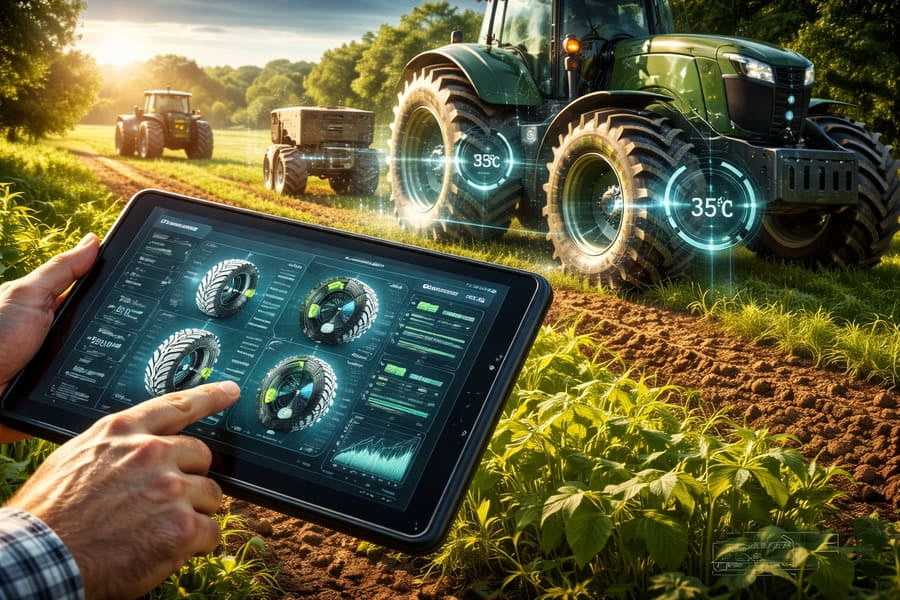
The most expensive tire on a farm is the one that fails unexpectedly during a critical time like planting or harvesting. A single day of downtime can cost more than an entire set of tires. This is the problem that smart technology solves. It's not about features for the sake of features; it's about eliminating risk. Imagine a fleet manager getting an automatic alert that a specific tire is underinflated for its current load, or that its temperature is rising abnormally. They can address the issue before it leads to a blowout and costly downtime. Over time, AI can analyze this data across the fleet to predict wear patterns and recommend optimal rotation and replacement schedules. At Gescomaxy, we're developing systems where each tire has a unique scannable ID, linking it to its entire production and quality control history. The next step is embedding live sensors that feed directly into farm management systems. This transforms the tire from a passive component into an active, data-providing node in the farm's digital ecosystem.
Is Sustainability Now a Requirement for Market Access?
You see sustainability10 as a "nice-to-have" feature or a marketing angle. But for many markets and large corporate buyers, it is quickly becoming a non-negotiable purchasing criterion.
Yes, sustainability10 is becoming a core requirement. Buyers are now evaluating tires on their entire lifecycle, prioritizing longer service life, lower energy consumption during use, and soil-friendly designs that support regenerative agriculture11 principles.
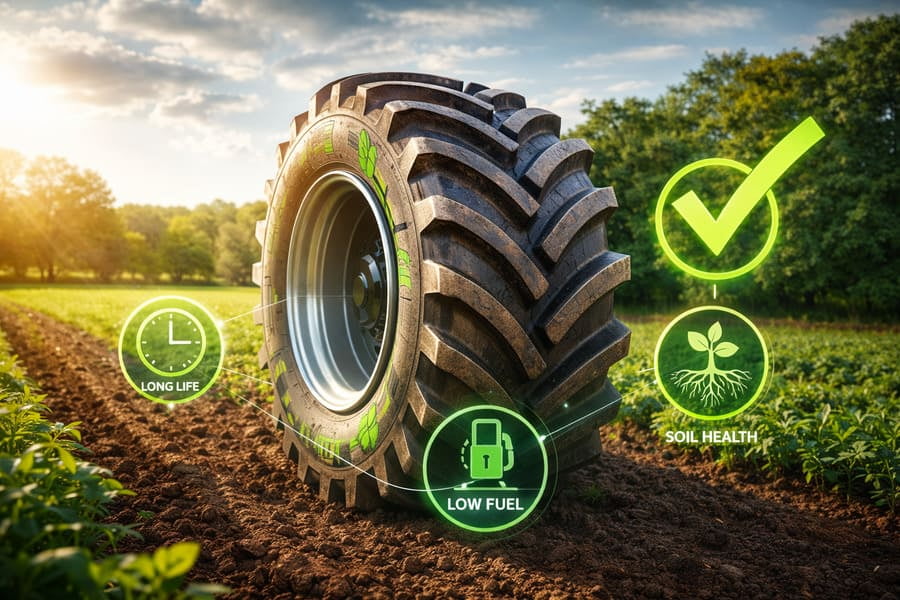
The push for sustainability10 is coming from all angles: consumers, regulators, and large food corporations that need to report on the carbon footprint of their entire supply chain. This scrutiny goes all the way down to the tires used on the farms that grow the food. A tire is no longer judged only on its performance but also on its impact. This has created a new set of purchasing criteria for savvy brand managers and OEMs. Can the supplier demonstrate the use of more sustainable materials? Does the tire's design contribute to lower fuel consumption (reducing carbon emissions)? Does it have a longer service life, reducing waste? Is the tire design12ed to protect the soil, which is a core tenet of regenerative agriculture11? Answering "yes" to these questions is no longer just good PR; it's becoming a prerequisite for doing business with the most valuable customers in the global market.
Conclusion
The next generation of agricultural tires2 is here. They are strategic, intelligent, and sustainable assets that are fundamental to the profitability and resilience of modern farming. The choice is yours.
Understand the critical role of soil health in crop yields and sustainable farming. ↩
Explore how agricultural tires enhance efficiency and sustainability in farming operations. ↩
Learn about the impact of tire design on fuel savings and operational costs. ↩
Discover how rolling resistance affects fuel consumption and tire performance. ↩
Find out how managing soil compaction can lead to better crop yields. ↩
Explore the features that make tires high-performance for agricultural use. ↩
Find out how data-driven approaches are transforming agricultural practices. ↩
Learn how smart tires can enhance operational efficiency and reduce risks. ↩
Explore how predictive maintenance can prevent costly downtime in farming. ↩
Understand the growing importance of sustainability in agricultural practices. ↩
Discover how regenerative agriculture practices can improve soil health and sustainability. ↩
Learn about the importance of tire design in enhancing farming efficiency. ↩